
TL;DR:
- Tracked stairlifts are versatile, custom-fit solutions that attach directly to stair treads, fitting various staircase layouts without damaging walls. They significantly enhance safety, independence, and daily comfort, especially for curved or narrow stairs in UK homes. Proper assessment, reputable aftercare, and long-term planning ensure a cost-effective investment in mobility and confidence.
Many people assume stairlifts are bulky, one-size-fits-all contraptions that only suit wide, perfectly straight staircases in newer homes. The truth is quite different. Tracked stairlifts are engineered to work in a remarkable variety of UK homes, from narrow Victorian terraces to sprawling country houses with winding staircases. If you or a loved one is struggling with the stairs, understanding exactly how tracked stairlifts work, what they cost, and what to expect from installation can make the difference between staying safely at home and facing far more disruptive alternatives.
Table of Contents
- What is a tracked stairlift?
- How tracked stairlifts improve home mobility
- Tracked stairlifts vs alternative options
- Costs, installation, and maintenance explained
- A fresh perspective on tracked stairlifts: what most guides overlook
- Find your perfect tracked stairlift solution
- Frequently asked questions
Key Takeaways
| Point | Details |
|---|---|
| Clear definition | A tracked stairlift uses a specially fitted rail to carry users safely up and down stairs. |
| Versatile fit | Tracked stairlifts can be installed on straight or curved staircases, even in compact UK homes. |
| Broad benefits | They restore independence, reduce fall risks, and adapt to changing mobility needs. |
| Affordable options | Costs vary by staircase type and features, with competitive financing and grants available in the UK. |
| Simple installation | Most stairlift installations are quick, require no major building work, and are easy to maintain. |
What is a tracked stairlift?
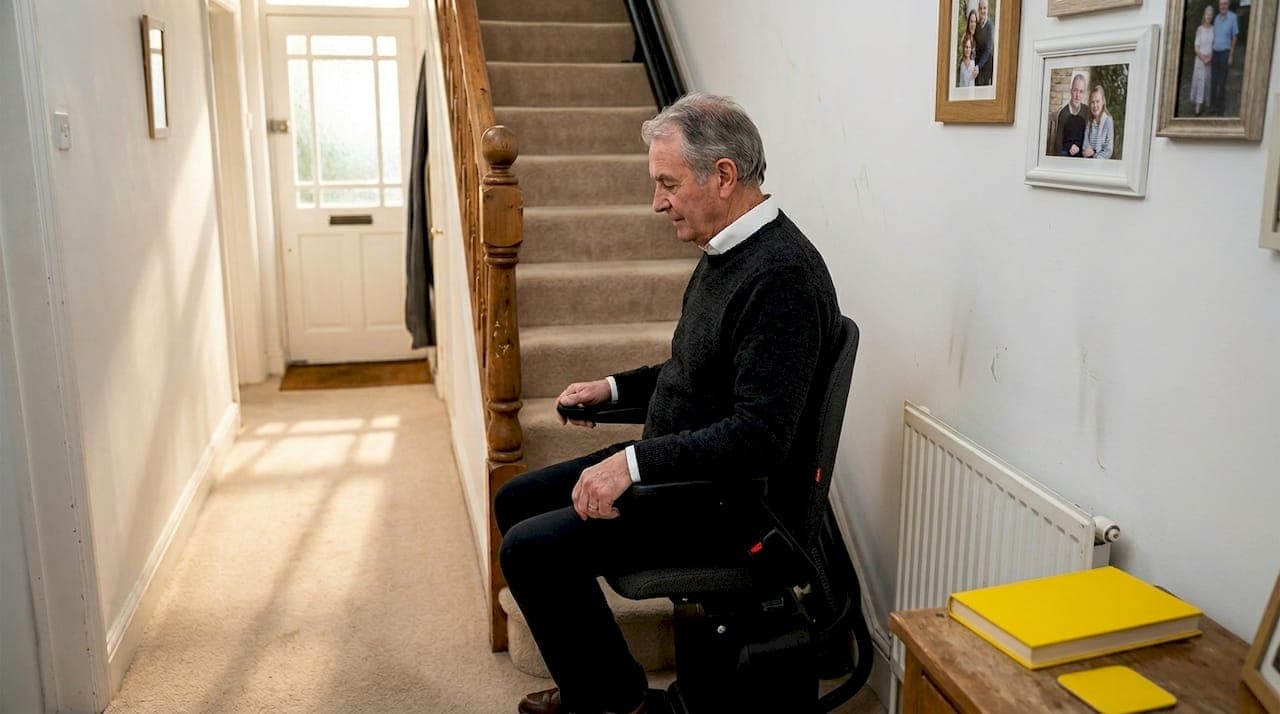
A tracked stairlift is a motorised chair that travels along a fixed rail, or track, which is securely bolted directly to the stair treads rather than to the wall. This is an important distinction. Because the rail attaches to the stairs themselves, the stairlift causes no structural damage to your walls and fits into narrower spaces than you might expect.
The home mobility planning guide explains the main features and benefits of tracked stairlifts for domestic use in clear, practical terms. The track acts as a guiding pathway, while a motor housed within the chair unit drives it smoothly up and down the staircase. Modern systems are remarkably quiet and operate on standard household electricity, with a battery backup so the lift still works during a power cut.
The key components of a typical tracked stairlift include:
- Track (rail): Custom cut and shaped to fit your specific staircase, whether straight or curved.
- Motor unit: Housed in the chair carriage, usually quiet and energy-efficient.
- Seat, armrests, and footrest: Padded for comfort, with folding designs to keep the stairway clear for other household members.
- Controls: Handheld remote and armrest joystick, both simple enough for anyone with limited hand strength.
- Safety sensors: Obstruction detection that stops the chair immediately if anything is in the path.
- Charging points: Located at each end of the track to keep the battery topped up automatically.
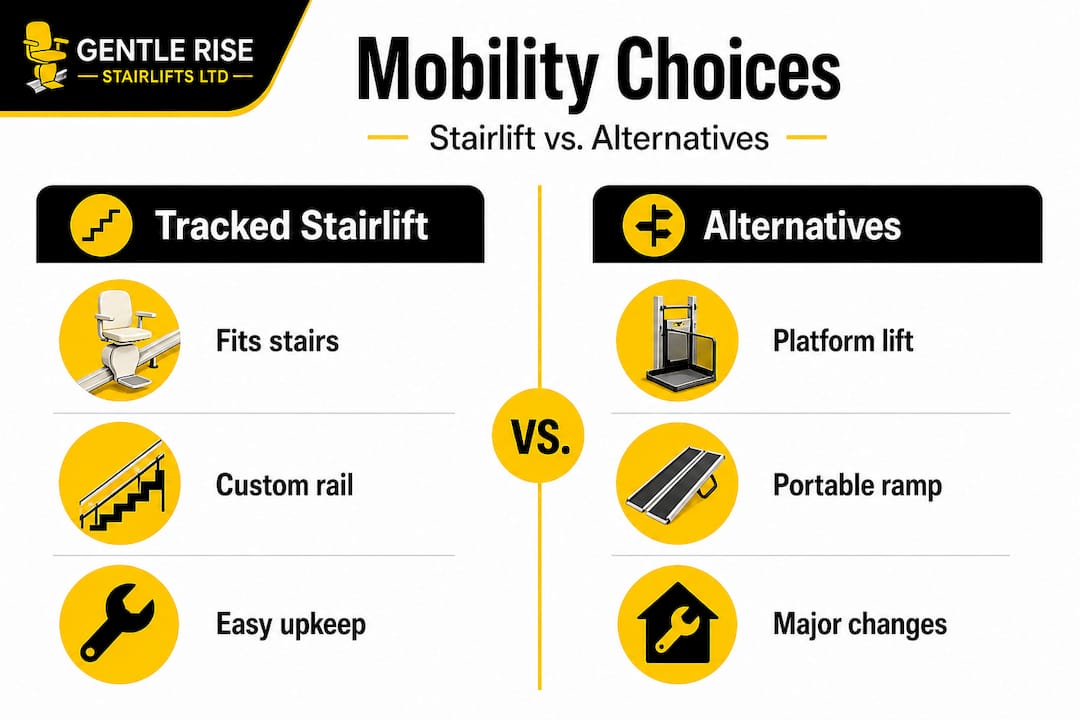
Where tracked stairlifts differ from alternatives is in their precision. A vertical platform lift, for instance, travels straight up through a purpose-built shaft rather than following the line of the stairs. Portable, trackless ramps address a completely different need and cannot replace a stairlift for anyone who genuinely cannot manage stairs unaided. Tracked models follow the exact contour of your staircase, making them the most practical solution for the vast majority of UK homes where a full lift shaft is neither affordable nor practical.
| Feature | Tracked stairlift | Vertical platform lift | Portable ramp |
|---|---|---|---|
| Fits existing staircase | Yes | No, needs shaft | Limited use |
| Suitable for curved stairs | Yes | No | No |
| Structural work required | Minimal | Significant | None |
| Typical starting cost | From £2,000 | From £5,000+ | From £100 |
| Best for | Stairs with any layout | Bungalows or between floors | Small steps only |
Pro Tip: Most UK homes, including older Victorian and Edwardian properties with narrow or winding stairs, can accommodate a tracked stairlift with the right professional assessment. Never assume your staircase is unsuitable before getting expert advice. You can explore stairlift accessibility upgrades and affordable stairlift solutions to understand your full range of options.
How tracked stairlifts improve home mobility
The practical difference a tracked stairlift makes to daily life is hard to overstate. For older people or those recovering from surgery, the stairs can feel like a genuine barrier, separating them from their bedroom, bathroom, or garden. A tracked stairlift removes that barrier entirely, restoring safe and reliable access to every level of the home.
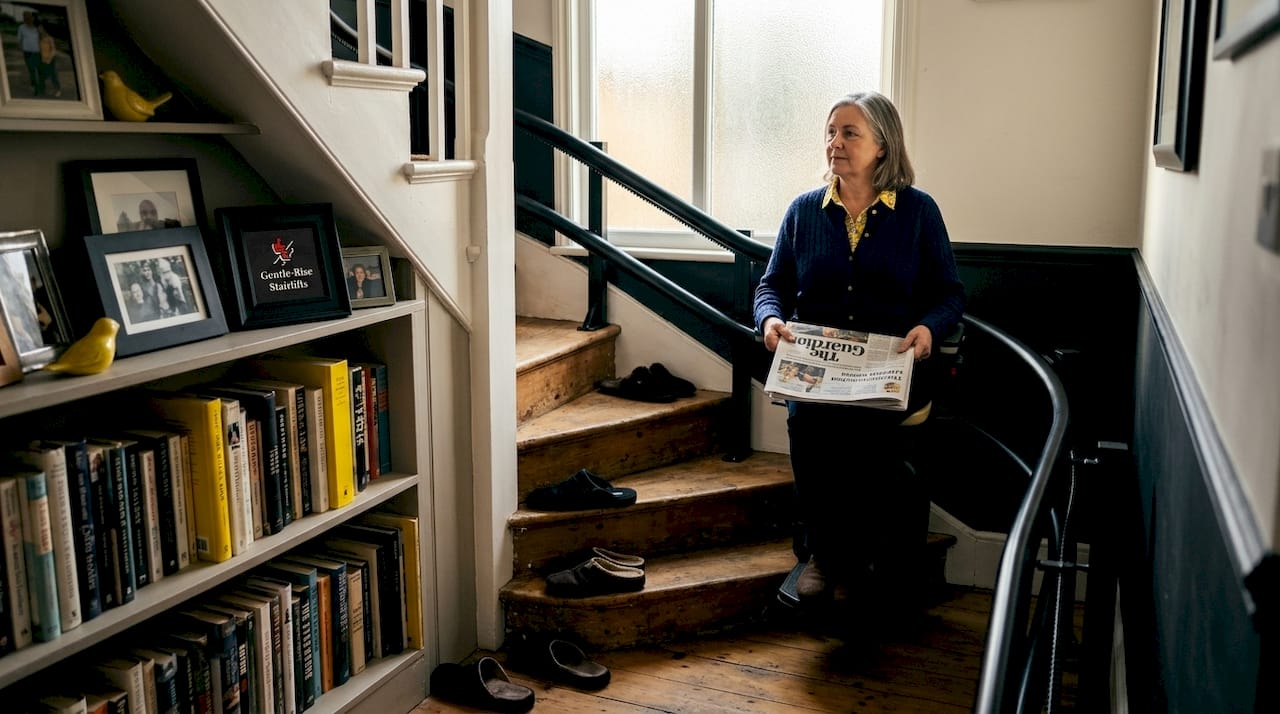
Fall prevention is one of the most compelling reasons to act. Stair falls are among the leading causes of serious injury in older UK adults, and the consequences can be life-changing. A tracked stairlift eliminates the risk of losing footing on the stairs entirely. Families report enormous peace of mind once a stairlift is fitted, knowing their relative is not attempting the stairs unaided at night or when tired.
The benefits for day-to-day independence are equally significant. Consider the home modifications for independence guide, which highlights how small adaptations can preserve dignity and reduce reliance on carers. A stairlift is not just a safety tool. It is a confidence booster. Many users describe the first time they ride the lift to bed independently as genuinely emotional.
Key mobility benefits of a tracked stairlift include:
- Safer movement on stairs: Eliminates the need to grip banisters or take stairs one slow step at a time.
- User-friendly controls: Simple joystick and remote operation, suitable for those with arthritis or limited grip strength.
- Tailored to straight or curved staircases: Custom tracks mean almost no staircase is off-limits.
- Reduced carer burden: Family members spend less time supervising stair use and worrying about accidents.
- Maintained independence: Users can access all rooms without assistance, preserving privacy and dignity.
"Our mum has a curved staircase in her 1930s semi in Leeds. We were told by one company that curved stairs were too complicated. GentleRise measured up, fitted a custom curved track within a day, and she has not needed help getting to bed since. The difference to her confidence has been remarkable." Family member of a GentleRise customer
This scenario is far more common than people realise. Older UK properties with quarter-turn or half-turn landings are perfectly suited to curved tracked stairlifts, provided the right assessment is carried out. The impact on daily routine extends beyond safety. People return to using the whole house, not just the ground floor, which has a measurable effect on mood, sleep quality, and overall wellbeing.
Tracked stairlifts vs alternative options
Understanding where a tracked stairlift sits among the broader range of home mobility options helps you make a genuinely informed decision. This is especially important when you are comparing upfront costs against long-term suitability. As affordable elderly home mobility solutions highlights, tracked stairlifts regularly provide the best value for money when fitted to a staircase with bends, tight turns, or limited width. They fit into the existing structure of your home without the kind of building work that a through-floor lift or platform lift would require.
| Option | Best suited to | Average cost range | Key limitation |
|---|---|---|---|
| Straight tracked stairlift | Simple straight staircases | £2,000 to £3,500 | Not suitable for curved stairs |
| Curved tracked stairlift | Curved, angled, or multi-landing stairs | £3,500 to £7,000+ | Higher cost due to custom rail |
| Through-floor vertical lift | Bungalows or open-plan homes | £5,000 to £14,000+ | Requires significant structural work |
| Outdoor stairlift | Garden steps or external access | £2,500 to £4,000 | Weather-resistant but limited range |
| Portable ramp | Single shallow steps | £100 to £600 | Not suitable for stairs |
When deciding which option fits your home, work through these decision factors in order:
- Stair configuration: Is your staircase straight, curved, or does it include a landing? This is the single most important factor.
- User needs: Consider weight limits, whether the user can sit comfortably for the duration of the journey, and whether perch or standing models might be appropriate.
- Household needs: Will other family members still need to use the stairs freely? A folding rail design keeps the staircase accessible for everyone.
- Budget: Straight tracked stairlifts offer the most affordable entry point, while curved models require a larger investment but deliver superior fit and reliability.
- Future-proofing: Your mobility needs today may not reflect your needs in two or three years. Consider age-friendly home modifications holistically rather than choosing the minimum solution.
Pro Tip: For complex or curved staircases, a custom curved tracked stairlift almost always provides better long-term value than workarounds like repositioning furniture or fitting additional handrails. A precise rail fit means a smoother, safer ride and fewer mechanical issues over time.
Costs, installation, and maintenance explained
One of the most common questions we hear is, "How much does a tracked stairlift really cost, and what am I actually paying for?" The honest answer is that price varies significantly depending on staircase type, brand, and the level of aftercare included. As safely and affordably installing stairlifts explains, pricing is shaped by several transparent factors once you know what to look for.
For a standard straight tracked stairlift, expect to pay roughly £2,000 to £3,500 fully fitted. Curved models, which require a custom-bent rail manufactured specifically for your staircase, typically range from £3,500 to £7,000 or above depending on complexity. Reconditioned models offer a genuine way to reduce costs, with quality refurbished straight stairlifts available from as little as £795, which is the entry point offered by GentleRise Stairlifts. Rental is another option worth considering for short-term needs such as post-surgical recovery, where a long-term investment may not be justified.
Financing, grants, and VAT relief are three avenues worth exploring before you commit to any purchase. Some UK homeowners qualify for a Disabled Facilities Grant through their local council, which can contribute towards the cost. Stairlifts also qualify for VAT exemption for people with a long-term illness or disability, meaning you pay zero VAT on the purchase, which represents a meaningful saving. Reputable providers can advise you on eligibility as part of a free home survey.
The installation process itself is far less disruptive than most people expect. A typical straight stairlift installation takes between two and four hours. Curved models may take a full day due to the custom rail fitting. Here is what to expect:
- Pre-installation survey: A specialist visits to measure the staircase and assess the best rail configuration.
- Rail delivery and fitting: The rail is cut or custom-bent and bolted directly to the stairs, not the wall.
- Chair unit attachment: The powered carriage is fitted to the rail and tested for smooth, consistent travel.
- Controls and safety testing: The engineer demonstrates the controls and tests all safety sensors before leaving.
- User handover: You receive a full briefing on use, charging, and basic troubleshooting.
Maintenance is straightforward and mostly routine. Regular cleaning of the rail with a dry cloth keeps grit from building up in the drive mechanism. The stairlift maintenance tips guide covers the key steps in accessible detail. An annual service by a qualified engineer is highly recommended and forms the basis of aftercare programmes like GentleRise's Protect+ plan.
| Item | Cost range | Timeframe | Notes |
|---|---|---|---|
| Straight stairlift supply and fit | £2,000 to £3,500 | 2 to 4 hours | VAT exempt for eligible users |
| Curved stairlift supply and fit | £3,500 to £7,000+ | 1 full day | Custom rail adds time and cost |
| Reconditioned straight model | From £795 | 2 to 4 hours | Good option for tighter budgets |
| Annual service | £80 to £150 | 1 to 2 hours | Protect+ plans often include this |
| Rental (per month, approximate) | £50 to £150 | Flexible term | Ideal for post-surgery recovery |
You can also explore the mobility solutions and cost guide for a broader breakdown by staircase type and user requirement.
A fresh perspective on tracked stairlifts: what most guides overlook
Most guides about tracked stairlifts focus on specifications, prices, and features. Those things matter. But after years of fitting stairlifts across the UK, we have noticed a pattern that very few articles address honestly: the biggest mistake people make is choosing a stairlift based purely on the lowest price at the time of purchase, without thinking about what the lift needs to do for them in five years.
Mobility conditions rarely stay static. Someone recovering from a hip replacement may appear to need only a temporary solution. But in many cases, that same person goes on to develop arthritis or balance issues that make the stairlift a permanent fixture rather than a short-term aid. Choosing a budget model with no aftercare provision and no upgrade path leaves families scrambling later, often paying more in the long run for a second installation.
The latest stairlift trends reflect this shift, with more homeowners now asking about warranty terms, local service availability, and whether a given model can be adapted over time. These are exactly the right questions. A stairlift from a provider with no local engineer network is a gamble. When the lift stops working at 11pm on a Sunday, you do not want to discover that support means a phone line in another country.
Pro Tip: When comparing quotes, ask each provider three questions: How long is the warranty? Where is your nearest servicing engineer? Can this model be adapted if my needs change? The answers will tell you far more than the price tag alone.
Warranties, genuine local aftercare, and adaptable features are not premium extras. They are the core of a sensible long-term investment. Flexibility built into your choice at the outset costs far less than reacting to a crisis later.
Find your perfect tracked stairlift solution
Choosing a tracked stairlift is one of the most meaningful decisions you can make for your safety and independence at home. Getting it right means working with a team that knows UK homes, understands varied mobility needs, and offers genuine aftercare rather than a sale and a wave goodbye.
GentleRise Stairlifts specialises in straight, curved, and reconditioned tracked stairlifts across the UK, with prices starting at just £795 and installation often completed within hours. Whether you are exploring reliable stairlift options for the first time or want a transparent stairlift cost breakdown before committing, our team is ready to help with a free, no-obligation home survey. Reach out today to take the first step towards safer, more confident living at home.
Frequently asked questions
Can tracked stairlifts be fitted to curved stairs?
Yes, tracked stairlifts are custom-designed for curved and straight staircases alike, making them suitable for the vast majority of UK homes, including older properties with quarter-turn or half-turn landings.
How much does a tracked stairlift typically cost?
Tracked stairlifts for straight stairs usually start around £2,000 when fully installed, while curved models cost more due to the bespoke rail required, with reconditioned options available from £795.
Are tracked stairlifts difficult to maintain?
No. Regular cleaning and annual servicing keep a tracked stairlift running reliably for many years, and aftercare plans like Protect+ make scheduling maintenance straightforward.
Do tracked stairlifts require major changes to my home?
Installation is typically quick and non-invasive, as the rail bolts directly to the stair treads rather than requiring any wall fixings or structural alterations to your home.