
TL;DR:
- Investing in home adaptations significantly reduces fall risks and supports independent living.
- Funding options like grants and VAT exemptions make modifications affordable for many families.
- Planning early for home improvements enhances safety, emotional wellbeing, and long-term cost savings.
Most people assume home adaptations are a last resort — something you sort out after a fall, not before. Yet fall prevention investments yield a social return of £7.23 for every £1 spent, which turns the whole argument on its head. Making your home age-friendly is not about admitting defeat. It is about staying in control of your own life, on your own terms. This guide walks you through exactly which modifications matter most, what they genuinely cost, and how to fund them without draining your savings. Whether you are a homeowner, a council tenant, or a carer planning ahead, you will find practical, honest answers here.
Table of Contents
- What makes a home age-friendly?
- Core modifications: from grab rails to stairlifts
- Costs and funding: making home adaptations affordable
- Choosing and maintaining stairlifts for lasting mobility
- Our perspective: why home adaptations are about planning, not reacting
- Take the next step towards a safer home
- Frequently asked questions
Key Takeaways
| Point | Details |
|---|---|
| High ROI adaptations | Prevention-focused home modifications deliver excellent social and financial value. |
| Range of solutions | From grab rails to stairlifts, both small and major changes can make a significant difference. |
| Accessible funding | Means-tested grants and VAT exemptions make essential modifications more affordable. |
| Professional support | Occupational therapist assessments ensure solutions are tailored to individual needs. |
| Proactive approach | Acting early with home adaptations maximises long-term independence and safety. |
What makes a home age-friendly?
Before diving into specific solutions, it is worth clarifying what an age-friendly home actually means, and why the changes involved are so impactful.
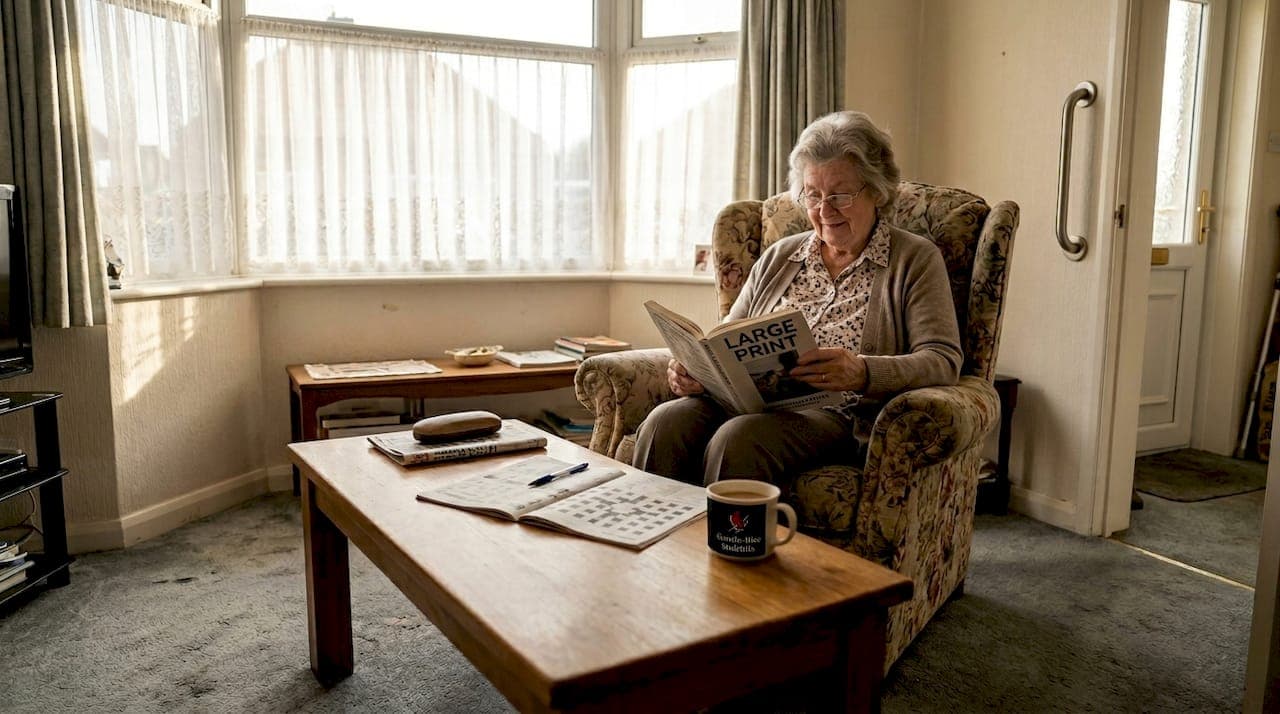
An age-friendly home is one designed to reduce physical risk and support independent living as mobility changes over time. It does not have to look clinical or institutional. Small, targeted changes often make the biggest difference, and many are invisible to visitors. The core idea is simple: your home should work for you, not against you.
The key features that define an age-friendly home include:
- Step-free or managed access between floors and at entry points
- Secure staircases with sturdy handrails on both sides
- Adequate lighting in hallways, on stairs, and in bathrooms
- Non-slip flooring and bath mats in wet areas
- Grab rails near the toilet, bath, and shower
- Lever-style door handles rather than round knobs
- Clear, clutter-free pathways throughout the home
Falls are the leading cause of injury-related hospital admissions among older adults in England. A well-adapted home significantly reduces the risk. Beyond physical safety, these changes support emotional wellbeing too. When you feel safe moving around your own home, confidence grows and social withdrawal decreases.
The most important thing to understand is that there is no one-size-fits-all solution. An occupational therapist assessment is essential for tailored solutions, since the right combination of grab rails, lighting, and stair support depends entirely on your specific needs, layout, and condition. A professional assessment also means you are more likely to access funded support, as councils typically require one before approving grants.
For anyone unsure where to begin, reviewing stairs accessibility tips is a practical starting point, especially if stair navigation is already causing concern.
| Feature | Why it matters | Typical cost range |
|---|---|---|
| Grab rails | Reduces slip and fall risk | £50–£200 fitted |
| Non-slip flooring | Prevents trips in wet areas | £100–£500 |
| Improved lighting | Reduces night-time falls | £30–£150 |
| Stairlift | Restores floor-to-floor independence | From £795 |
| Ramp (entrance) | Enables wheelchair or frame access | £300–£1,500 |
Core modifications: from grab rails to stairlifts
Now that we know the guiding principles, let us look at concrete home modifications that make the greatest difference, including how to combine big and small changes for the best effect.
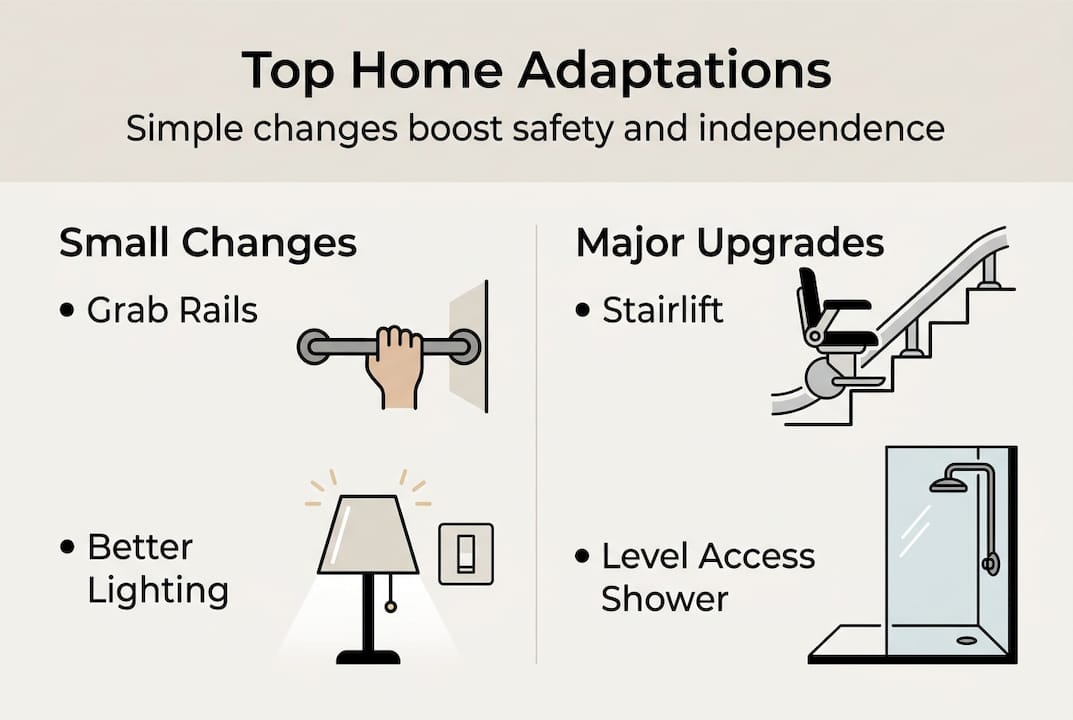
Home modifications exist on a spectrum. Some cost very little and take an afternoon to fit. Others require professional installation and planning. The key is identifying where risk is highest in your home, then addressing those areas systematically rather than randomly.
Here is a practical step-by-step approach:
- Request an occupational therapist (OT) assessment through your local council. This is free and forms the basis of any grant application.
- List the areas of concern — stairs, bathroom, entrance — in order of urgency.
- Start with low-cost, high-impact changes such as grab rails and better lighting before tackling larger projects.
- Get quotes from at least two qualified installers for any major work like ramp installation or stairlift fitting.
- Revisit the plan annually, since mobility needs can change gradually.
Minor modifications are often underestimated. A well-placed grab rail by the toilet, for instance, can prevent a serious fall that leads to surgery and months of recovery. These small investments are genuinely transformative.
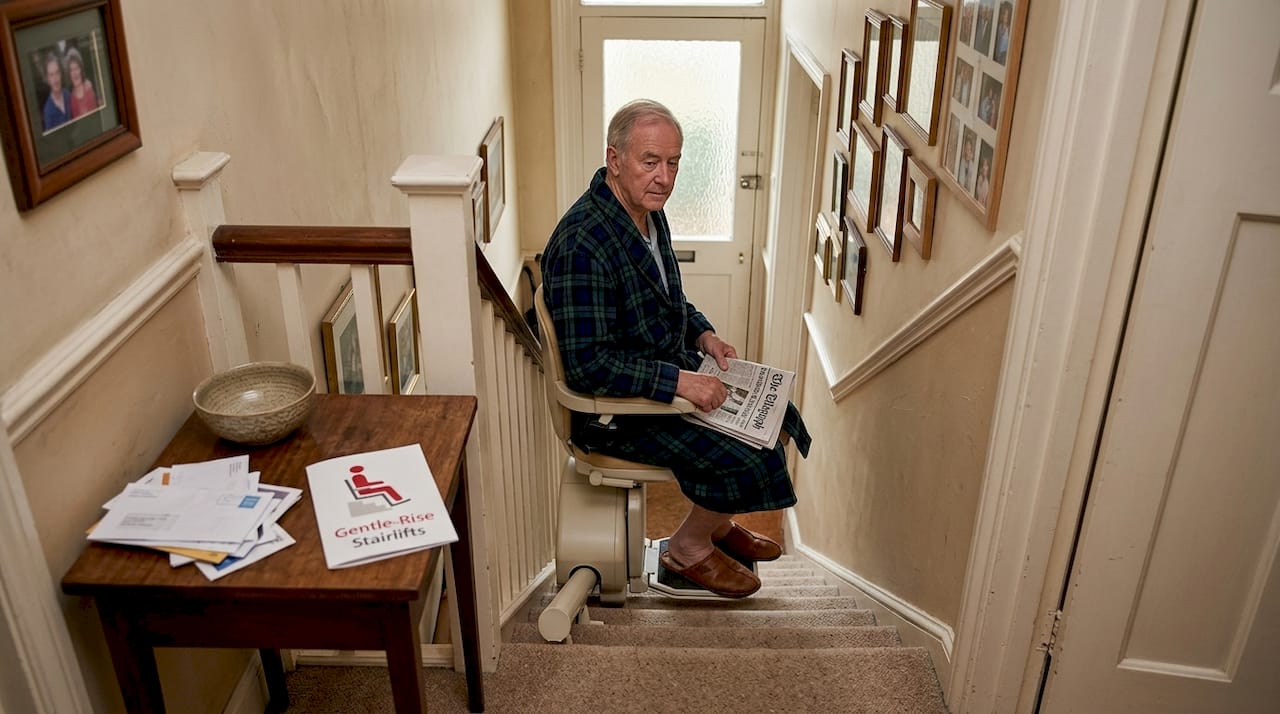
For larger modifications, stairlifts deserve particular attention. They are not just for people who cannot walk at all. Many users have the strength to walk on flat ground but find stairs painful, exhausting, or risky due to balance issues. A stairlift restores access to the whole home without the need to move or sleep downstairs. Explore affordable mobility solutions and the stair lift installation guide for detailed guidance on getting started.
Funding is a major concern, but Disabled Facilities Grants cover up to £30,000 for means-tested applicants, minor aids under £1,000 are often provided free, and VAT exemption applies to qualifying disabled individuals.
Pro Tip: Before your OT assessment, write down a detailed description of every task you find difficult at home. Include time of day, which areas cause problems, and whether you have had any near-misses. The more specific you are, the more targeted and useful the recommendations will be.
Costs and funding: making home adaptations affordable
Understanding the options is key, but many people worry about cost. Let us clarify what is affordable, what support is available, and how to access financial help for your home adaptation journey.
The honest picture is that many essential modifications cost far less than people expect, and a significant portion can be covered by grants or provided free of charge through local councils.
Here is a summary of the main funding routes available in 2026:
- Disabled Facilities Grant (DFG): Up to £30,000 for means-tested applicants in England. Covers major works including stairlifts, ramps, and accessible bathrooms.
- Minor aids and adaptations: Items costing under £1,000, such as grab rails or non-slip mats, are often provided free by councils without means testing.
- VAT exemption: Qualifying disabled individuals pay no VAT on adaptations and equipment, including stairlifts, which represents a 20% saving.
- Charitable support: Organisations such as Foundations, Turn2us, and local housing associations may offer top-up grants or low-interest loans.
- Local authority home improvement loans: Some councils offer loan schemes for those who do not fully qualify for DFG but still need support.
Means testing considers your income and savings, but do not assume you will be ineligible. Many people on modest pensions qualify for partial or full grants. The application process begins with contacting your local council's housing or adult social care department.
Preventative home modifications are not a luxury. They are a cost-effective alternative to care home admission, hospitalisation, and carer dependency. Investing early almost always saves more than it costs.
The social return figure bears repeating. Every £1 spent on fall prevention generates £7.23 in social value. That includes reduced NHS burden, avoided social care costs, and improved mental health outcomes. These are not abstract statistics. They reflect real savings for real families.
For a clear breakdown of what to expect financially, the stairlift costs overview and affordable home mobility tips are worth reading before approaching any provider or council department.
Choosing and maintaining stairlifts for lasting mobility
With a clear path to funding and installation, securing safe mobility hinges on choosing and maintaining the right stairlift. Here is how to make this pivotal decision with confidence.
Not all stairlifts are equal, and picking the wrong model creates frustration rather than freedom. Follow this numbered guide to make the right choice:
- Get a home survey first. Staircase width, shape, and length determine which models are suitable. Straight staircases accommodate the most options. Curved staircases require custom-fitted units.
- Consider new versus reconditioned. Reconditioned stairlifts are fully serviced, safety-tested, and often half the price of new models. For many users, they are an excellent choice.
- Check the weight capacity and seat comfort. Users spend real time in these seats. A comfortable, well-fitting chair matters enormously for daily use.
- Ask about aftercare plans. A stairlift without a servicing agreement is a liability. Look for annual inspection plans that include call-out cover.
- Confirm grant eligibility before you buy. Stairlifts can be covered by DFG if they are deemed necessary for independence, so always check before committing to self-funding.
Regular maintenance is non-negotiable. A stairlift that fails mid-journey is dangerous. Annual servicing catches worn components before they become problems. Most reputable providers, including those offering a Protect+ style maintenance programme, include routine checks as standard.
Common pitfalls to avoid include buying on price alone, skipping the home survey, and ignoring the track condition over time. Also, do not assume a stairlift is your only option. Sometimes combining a stairlift with grab rails and bathroom adaptations creates a far safer overall environment than any single modification alone. Review the stairlift upgrade guide and explore most reliable stairlifts for a deeper look at what to prioritise.
Pro Tip: Ask your installer whether the model you are considering has a battery backup. Power cuts are rare but not unknown, and being stranded on the stairs during one is avoidable with the right specification.
Our perspective: why home adaptations are about planning, not reacting
Most families contact us after something has already gone wrong. A fall. A hospital stay. A frightening near-miss on the stairs. We understand, and we never judge. But we also know that the families who act before a crisis consistently fare better in every way.
Early modifications preserve independence for longer. They cost less when funded through grants. They prevent the emotional disruption of emergency care decisions made under pressure. And they protect the deeply personal connection people have with their homes.
What mainstream guides rarely say is this: the emotional return on adaptation is often greater than the practical one. Feeling safe in your home changes how you sleep, how you socialise, and how you engage with daily life. That restoration of confidence is something no statistic fully captures.
Waiting until crisis point forces rushed, expensive decisions. Planning ahead means you choose the solution that fits your life, not the one that fits the emergency. Explore mobility solutions insights to understand the full range of options available before you need them urgently.
Take the next step towards a safer home
If this guide has helped you think more clearly about age-friendly adaptations, the logical next step is speaking with someone who can assess your specific situation and recommend the right solutions.
At GentleRise Stairlifts, we offer free home surveys with no obligation and no pressure. Our team helps you understand what modifications will make the most difference, whether that is a straight stairlift, a reconditioned model, or a short-term rental for post-surgery recovery. We also guide you through funding options so you know exactly what support you may be entitled to. Visit our UK stairlift cost guide or browse our range of affordable reconditioned stairlifts to get started today.
Frequently asked questions
What are the most cost-effective age-friendly home modifications?
Minor aids such as grab rails and improved lighting are often provided free by councils for items under £1,000, while major modifications like stairlifts may be covered by DFG grants for those who qualify.
How do I qualify for Disabled Facilities Grant support?
You qualify through a means test following a council occupational therapist assessment that confirms the modification is essential for independence, with grants of up to £30,000 available in England.
Are stairlifts VAT exempt for disabled people in the UK?
Yes, stairlifts and other qualifying adaptations are VAT exempt for individuals who meet the government's disability criteria, representing a 20% saving on the purchase price.
How long does it take to install a stairlift after approval?
Most installations are completed within a few hours to one day, depending on staircase type, once funding and assessments are in place, as outlined in our stairlift installation guide.
Can I get funding for a stairlift as a private homeowner?
Yes, homeowners who meet the eligibility criteria — including means testing and a council OT assessment — can access DFG funding for stairlifts and other essential adaptations.