
TL;DR:
- Stairlifts are affordable, quick to install, and preserve home independence without major renovations.
- Costs vary: straight models £1,900-£3,300, curved models £4,000+, with reconditioned and rental options available.
- Professional assessment and proper installation are vital for safety and long-term reliability.
Most people assume that solving stair mobility at home means a costly home lift or major building work. The reality is quite different. Stairlifts are the most widely chosen mobility solution across UK homes, and for very good reason: they cost a fraction of alternatives, can be fitted in a matter of hours, and restore genuine independence without turning your home into a building site. Whether you are recovering from surgery or managing a long-term condition, understanding your options clearly can save you thousands of pounds and weeks of unnecessary stress.
Table of Contents
- Mobility solutions explained: From stairlifts to home adaptations
- Types of stairlifts: Straight, curved, reconditioned and rentals
- Brands and reliability: How to choose a stairlift with confidence
- Choosing and installing a stairlift: What most people miss
- Our perspective: The real impact of stairlifts on daily independence
- Looking for an affordable, reliable stairlift?
- Frequently asked questions
Key Takeaways
| Point | Details |
|---|---|
| Stairlifts are the top home solution | Stairlifts offer the best balance of affordability, speed, and daily independence for elderly or post-surgery UK homeowners. |
| Multiple stairlift models available | Choose from straight, curved, reconditioned, and rental stairlifts to match your budget and staircase type. |
| Compare brands and features | Brands like Stannah, Acorn, and Handicare offer different levels of reliability, fit, and price — research carefully before buying. |
| Avoid DIY installation pitfalls | Always use professional installers and request surveys, especially for complex stairs or unique home situations. |
| Look for VAT relief and aftercare | Disabled homeowners may qualify for VAT relief, and checking warranties and buyback policies ensures long-term value. |
Mobility solutions explained: From stairlifts to home adaptations
A mobility solution is any device, adaptation, or modification that helps you move safely and independently within your home. The range is broader than most people realise. It spans everything from grab rails and ramps to full bathroom conversions and through-floor lifts. Each option sits at a different point on the scale of cost, disruption, and suitability.
The most common home mobility tips focus on low-cost, low-disruption changes first. That is sensible. A grab rail costs under £50 and can prevent a fall. A ramp over a doorstep costs a few hundred pounds. But when stairs become the main barrier, these smaller fixes simply are not enough.
Here is where stairlifts stand apart from the alternatives:
- Stairlifts: Fitted to the stair rail, not the wall. Minimal structural work. Installed in hours.
- Through-floor lifts: Require cutting through the ceiling and floor. Expensive and disruptive.
- Home lifts: Full shaft construction. Planning permission often needed. Costs run into tens of thousands.
- Ramps: Only useful for single steps or gentle gradients. Not a stair solution.
- Bathroom adaptations: Wet rooms, walk-in baths. Useful alongside a stairlift, not instead of one.
Experts are clear on the priority order. As Which? notes, stairlifts are prioritised over through-floor or home lifts for affordability and suitability, particularly for elderly users and those recovering from surgery.
"For most people, a stairlift is the most practical and cost-effective way to maintain independence on the stairs without major home alterations."
If you want to explore stair lift alternatives before committing, it is worth doing so with a clear understanding of what each option actually involves in terms of time, money, and disruption to your home.
Types of stairlifts: Straight, curved, reconditioned and rentals
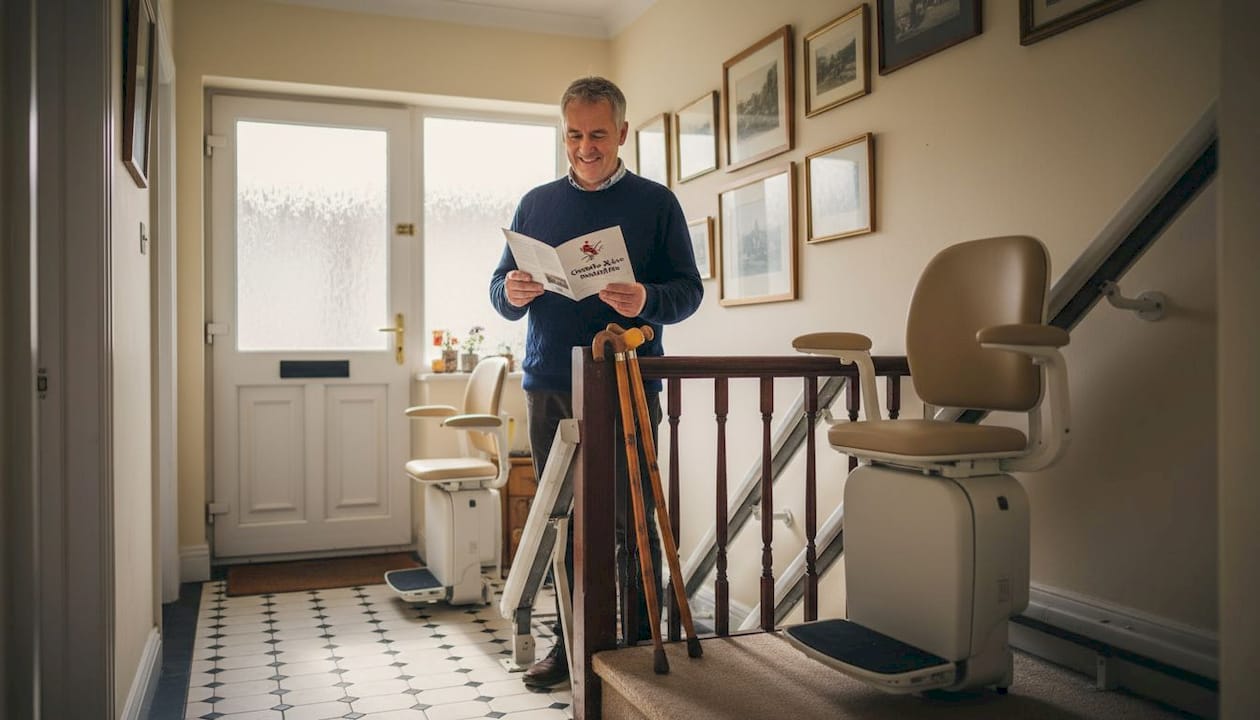
Not all stairlifts are the same, and the differences in cost between types are significant. Choosing the right one depends on your staircase, your budget, and how long you need it.
| Type | New cost | Reconditioned cost | Rental cost |
|---|---|---|---|
| Straight stairlift | £1,900 to £3,300 | £1,200 to £2,000 | £40 to £150/month |
| Curved stairlift | £4,000 to £7,000+ | £2,500 to £4,500 | £100 to £200/month |
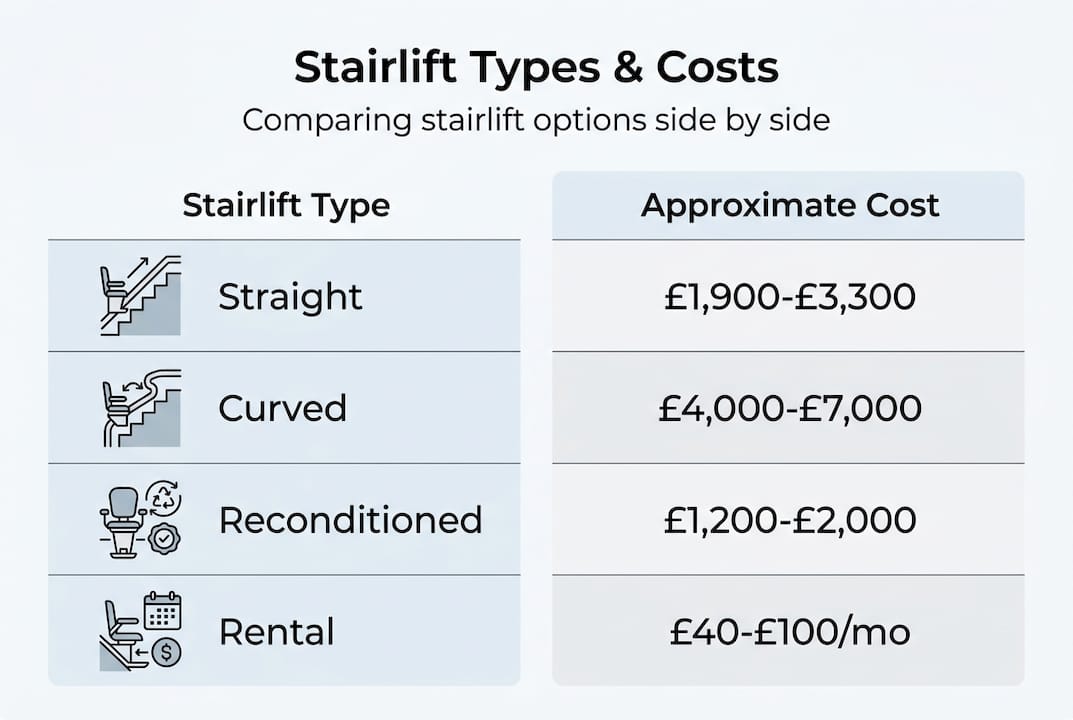
As Which? reports, straight stairlifts cost £1,900 to £3,300 new, reconditioned models £1,200 to £2,000, curved models £4,000 to £7,000+, and rentals range from £40 to £150 per month. These figures give you a realistic starting point for budgeting.
Here is what each option means in practice:
- Straight stairlifts suit the vast majority of UK homes. If your staircase runs in a single straight line, this is your most affordable and quickest option.
- Curved stairlifts are custom-built to match your specific staircase shape. They cost more and take longer to manufacture, but they are the only viable option for stairs with bends or intermediate landings.
- Reconditioned stairlifts are previously owned units that have been serviced and refurbished. They offer real savings but typically come with shorter warranties, so always check what is covered.
- Rental stairlifts make sense for short-term needs, such as post-surgery recovery, or when you want to try before committing to a purchase.
One important financial point many people overlook: if you have a disability or a long-term health condition, you may qualify for VAT relief on UK stairlift costs, which removes the 20% VAT from your purchase. That is a meaningful saving on any model.
Pro Tip: Always get at least three quotes before agreeing to a purchase. Prices vary considerably between suppliers, and many will negotiate. Also ask about buyback policies upfront. A good supplier will offer to buy the unit back if your circumstances change, which protects your investment.
For a broader look at affordable stairlift solutions across the UK, comparing models and funding options side by side can help you narrow down the right fit faster.
Brands and reliability: How to choose a stairlift with confidence
With several major brands competing in the UK market, it helps to know what separates them before you invite anyone in for a survey.
| Brand | Score | Key strength | Weight limit |
|---|---|---|---|
| Stannah | 82% | Reliable mechanical system | Standard |
| Acorn/Brooks | Good value | Quick installation | Standard |
| Handicare | Slim profile | Narrow staircases | Standard |
| Platinum Ergo | Premium | Powered features | Up to 160kg |
According to Which? brand testing, Stannah scores 82% overall with a particularly reliable mechanical system, Acorn and Brooks offer strong value with quick installation, Handicare suits narrow staircases with its slim profile, and the Platinum Ergo supports users up to 160kg with powered features including powered swivel and footrest.
When comparing brands, consider these factors in order:
- Warranty length and what it covers: Some warranties cover parts only. Others include labour. Know the difference before signing.
- Custom fit for your staircase: A unit that fits well from day one will cause fewer problems over time.
- After-sales service: Can the company respond quickly if something goes wrong? Local engineers matter.
- Electronic complexity: More electronic features mean more potential failure points. Simpler models often prove more dependable over years of daily use.
For those on a tighter budget, reliable stairlift options from reconditioned ranges can perform well, provided they come from a reputable supplier with a clear service history.
"A well-maintained reconditioned stairlift from a trusted brand can offer years of reliable service at a significantly lower cost than a new equivalent."
If you are managing mobility challenges for an older family member, exploring elderly mobility solutions alongside stairlift options helps build a fuller picture of what the home needs.
Choosing and installing a stairlift: What most people miss
The buying process matters as much as the product itself. Many problems with stairlifts come not from the unit but from a rushed or poorly managed installation.
Here is the process done properly:
- Book a free home survey: Every reputable supplier will offer this. It is the only way to accurately assess your staircase and recommend the right model. Never buy without one.
- Get multiple written quotes: Verbal estimates are not enough. A written quote locks in the price and the specification.
- Check the buyback policy: As stairlift experts advise, always review buyback and warranty details before committing. Circumstances change, and a buyback option protects your investment.
- Confirm the installation timeline: Most straight stairlifts can be fitted within hours. Curved models take longer due to custom manufacture.
- Arrange aftercare before installation day: Know who to call if something goes wrong. A maintenance plan agreed upfront avoids scrambling later.
DIY installation is not a viable option. Stairlifts carry people, and a poorly fitted unit creates serious safety risks. Steep, narrow, or unusually heavy-load staircases need specialist assessment to avoid motor strain or mechanical failure over time. This is not an area to cut corners.
Pro Tip: Ask your installer about the safe stairlift installation process in detail. A good engineer will walk you through every step, including the safety tests carried out before they leave. If they cannot explain it clearly, that is a warning sign.
For a full breakdown of what to expect from survey to handover, the UK stairlift guide 2026 covers every stage in plain language.
Our perspective: The real impact of stairlifts on daily independence
We have seen hundreds of installations across the UK, and the pattern is consistent. People wait too long. They assume a stairlift is a last resort, something for the very frail or the very old. By the time they act, the stairs have already become a source of daily anxiety, and in some cases, people are sleeping downstairs and avoiding entire floors of their own home.
The truth is that a stairlift installed early, before a fall or a crisis, makes a far greater difference to daily life than one fitted after confidence has already been lost. We have seen people return to their bedrooms, their bathrooms, their routines, within hours of installation. That is not a small thing.
The comparison with home lifts is also worth challenging directly. A home lift signals a significant, permanent change to a property. A stairlift does not. It fits onto the stairs, leaves the walls intact, and can be removed if needed. For most people managing elderly mobility tips day to day, that flexibility is exactly what they need. Bigger is not always better. Sometimes the most effective solution is also the simplest one.
Looking for an affordable, reliable stairlift?
If this guide has helped clarify your options, the next practical step is speaking with someone who can assess your specific staircase and circumstances.
GentleRise Stairlifts offers free home surveys across the UK, with straight stairlift prices starting from £795 and flexible rental options for short-term needs. Whether you are comparing new and reconditioned models or simply want an honest conversation about what suits your home, the team is there to help without pressure. Explore reliable stairlift choices or browse budget stairlift options to find a solution that fits both your home and your budget.
Frequently asked questions
What qualifies as a mobility solution for UK homes?
Mobility solutions include stairlifts, ramps, bathroom adaptations, and any device or modification that enhances safe movement indoors. The term covers everything from simple grab rails to full stairlift installations, depending on the level of need.
How much does a stairlift cost in the UK?
New straight stairlifts cost £1,900 to £3,300; reconditioned models range from £1,200 to £2,000; curved models from £4,000 to £7,000+; and rentals from £40 to £150 per month.
Is VAT relief available for stairlift purchases in the UK?
Yes, those with disabilities or chronic illnesses can qualify for VAT relief on stairlifts, which removes the 20% standard rate and meaningfully reduces the total cost.
Are reconditioned stairlifts reliable?
Reconditioned stairlifts offer 40 to 50% savings compared to new models but may carry shorter warranties. Choosing a reputable brand and supplier with a clear service history significantly reduces the risk.
Why should stairlifts be professionally installed?
Professional installation prevents safety risks and ensures that complex cases such as steep, narrow, or heavy-load stairs receive proper specialist assessment, avoiding motor strain or mechanical failure.