
TL;DR:
- Modern stairlifts feature AI controls, obstacle sensors, and remote diagnostics for enhanced safety and reliability.
- The UK stairlift market exceeds £250 million annually, driven by aging populations and declining urban expansion costs.
- Affordable options include grants and reconditioned models, making advanced features accessible for more households.
Most people assume stairlifts are simple mechanical chairs bolted to a wall. The reality in 2026 is far more impressive. The UK stairlift market exceeds £250 million annually, and the technology powering today's models would surprise even those who installed a lift just five years ago. Sensor-driven safety, AI-assisted controls, and flexible funding options have transformed what's possible. Whether you're planning ahead, recovering from surgery, or simply finding the stairs harder each year, this guide covers the latest innovations, top providers, real costs, and how to get the best value in 2026.
Table of Contents
- Why stairlifts are surging in UK homes
- The breakthrough innovations shaping stairlifts in 2026
- Comparing top stairlift providers and solutions in 2026
- Making stairlifts affordable: costs, funding options, and reconditioned solutions
- The real opportunity: how smarter stairlifts unlock independence
- Find the right stairlift for your home
- Frequently asked questions
Key Takeaways
| Point | Details |
|---|---|
| UK stairlift demand rising | More UK homeowners are investing in stairlifts due to aging populations and a focus on accessible, independent living. |
| 2026 tech upgrades | This year's stairlifts feature AI controls, sensors, and smart connectivity, improving both safety and ease of use. |
| Cost-saving options exist | Grants and quality reconditioned models are making advanced stairlifts more affordable for all. |
| Provider choice matters | Comparing brands and aftercare is essential to find reliable, future-proofed stairlift solutions. |
Why stairlifts are surging in UK homes
The numbers tell a clear story. Demand for home mobility aids is rising sharply across the UK, driven by an ageing population, longer life expectancy, and a strong cultural preference for staying at home rather than moving into care. The UK stairlift market now exceeds £250 million each year, with forecasters predicting continued growth through to 2030.
Europe leads the global stairlift market with roughly 35% of worldwide share, and the UK is one of its strongest contributors. Much of this growth is happening in rural areas and multi-storey homes, where alternatives like ground-floor extensions are simply not practical or affordable.
Here are some key facts driving this surge:
- Over 1 million UK people currently use home mobility aids, including stairlifts
- The proportion of UK residents aged 65 and over is projected to keep rising well into the 2030s
- Multi-storey Victorian and Edwardian terraced homes, common across Britain, create a natural demand for stair mobility solutions
- Rural households, often without easy access to care facilities, are adopting stairlifts at a faster rate than urban areas
Did you know? The majority of stairlift purchases are made proactively, not in a crisis. Homeowners are increasingly planning ahead rather than waiting for a fall or injury to prompt action.
This shift in attitude matters. People are exploring affordable mobility solutions earlier, which means they have more time to compare options, secure funding, and choose the right fit for their home. The old image of stairlifts as a last resort is fading fast. Today, they're seen as a sensible, forward-thinking investment in comfort and independence.
The growing market has also attracted more competition, which is good news for buyers. More providers mean more choice, better technology, and stronger pressure on pricing.
The breakthrough innovations shaping stairlifts in 2026
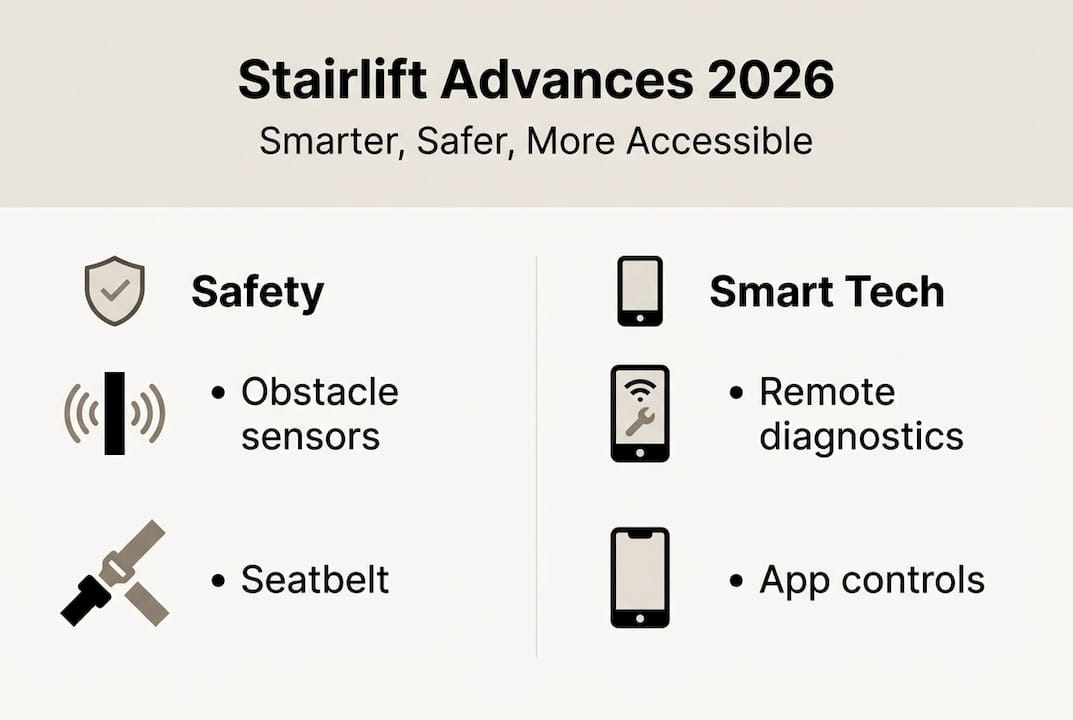
Modern stairlifts have moved well beyond a simple motor and a seat. The key 2026 innovations include sensor-based obstacle detection, AI-assisted controls, compact foldable designs, and remote monitoring capabilities. These aren't gimmicks. Each feature solves a real problem that older stairlift users and their families face every day.
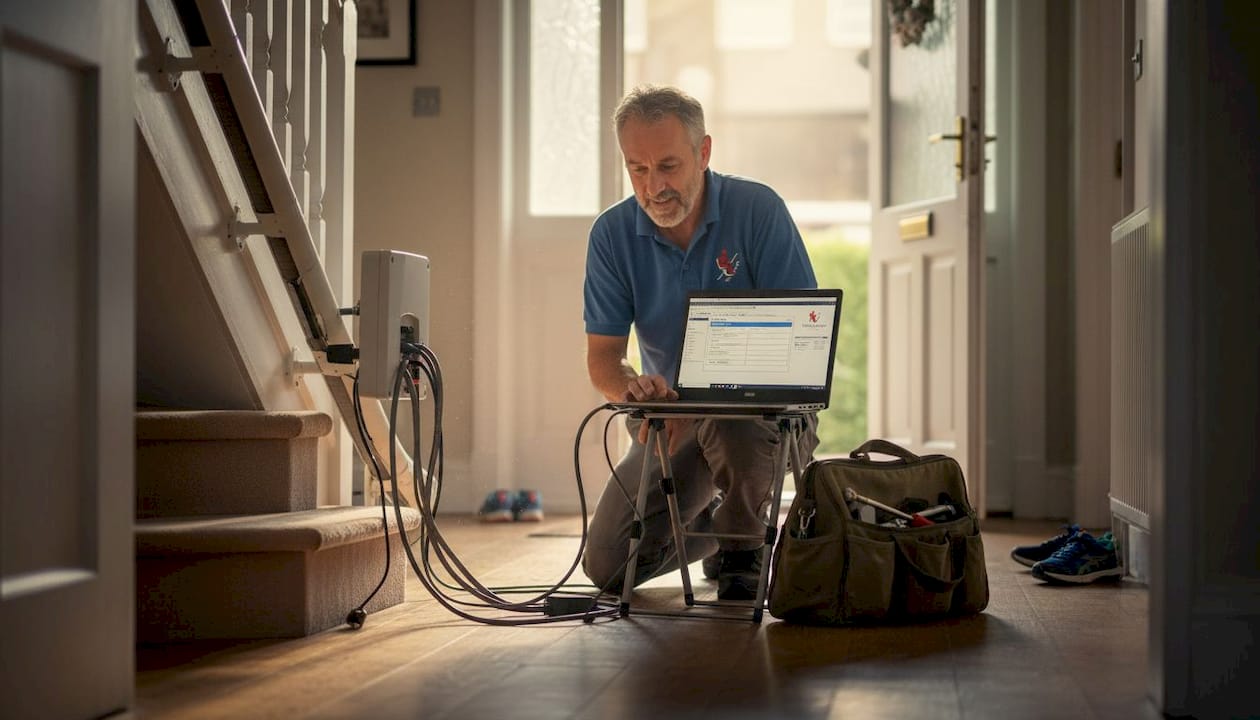
Obstacle detection sensors are now standard on most mid-range and premium models. If a pet, bag, or person is on the stairs, the lift stops automatically before making contact. This single feature has significantly reduced the most common stairlift-related incidents.
Remote diagnostics allow engineers to identify faults before they become breakdowns. Your stairlift can send data to the manufacturer or service provider, meaning issues are often resolved without a home visit. Paired with a solid aftercare and support plan, this keeps your lift running reliably year-round.
Here's a quick comparison of feature generations:
| Feature | Pre-2020 models | 2026 models |
|---|---|---|
| Obstacle detection | Basic pressure sensors | Multi-point infrared sensors |
| Controls | Simple rocker switch | AI-assisted joystick or app |
| Fold design | Bulky, manual fold | Slim, powered auto-fold |
| Diagnostics | Engineer visit required | Remote monitoring built in |
| Power backup | Rare | Standard battery backup |
Compact and foldable designs now make it possible to install stairlifts in hallways as narrow as 65cm, which previously ruled out many older UK homes. Power-folding footrests and armrests mean the staircase remains usable by other household members.
Pro Tip: Always ask your installer whether the model you're considering meets ISO 9386-2 safety standards and complies with LOLER regulations. These are the two key benchmarks for stairlift safety in the UK, and any reputable provider should confirm compliance without hesitation.
For a full breakdown of what these features mean for your household, exploring safer home mobility options is a useful next step. The full innovation report also outlines where the market is heading through 2028.
Comparing top stairlift providers and solutions in 2026
With new innovations raising the bar, choosing the right provider has never been more important. Not every brand offers the same quality, and customer service after installation matters just as much as the product itself.
Here's how the leading UK providers compare in 2026:
| Provider | Customer rating | Key strength | Best suited for |
|---|---|---|---|
| Acorn | 4.8/5 | Reliability and range | Most home types |
| Halton | 4.6/5 | Award-winning service | Service-focused buyers |
| Handicare | 4.3/5 | Curved stair expertise | Complex staircases |
| Stannah | 4.0/5 | Brand heritage | Traditional buyers |
Top stairlift providers in 2026 are rated as follows: Acorn leads at 4.8 out of 5, followed by Halton at 4.6, Handicare at 4.3, and Stannah at 4.0. Halton has earned particular recognition, winning its sixth consecutive Feefo Platinum award for trusted service in 2026.
When evaluating providers, consider these factors in order:
- Safety certification — Does the model meet ISO 9386-2 and LOLER standards?
- Aftercare availability — Is there a local engineer who can respond quickly?
- Warranty terms — What's covered and for how long?
- Rental or short-term options — Useful if your need is temporary, such as post-surgery recovery
- Customer reviews — Look for consistent feedback on installation speed and after-sales support
"The best stairlift isn't the one with the most features. It's the one that's still working perfectly two years after installation, with a phone number you can actually get through to."
If you're weighing up different brands, reviewing top stairlift alternatives can help you understand what separates genuine quality from clever marketing.
Making stairlifts affordable: costs, funding options, and reconditioned solutions
Cost is often the first concern, and understandably so. The good news is that 2026 offers more routes to affordability than ever before. Smart features and new technology improve stairlifts considerably, but they can push prices up, which is why grants and reconditioned models remain essential options for those on a tighter budget.
Here's a realistic breakdown of what to expect:
- New straight stairlift: £2,000 to £3,500 installed
- New curved stairlift: £4,000 to £8,000 or more, depending on staircase complexity
- Reconditioned straight stairlift: from £795, professionally installed
- Short-term rental: from around £100 to £200 per month
For a detailed look at what affects pricing, the current stairlift costs page covers the main variables clearly.
The Disabled Facilities Grant (DFG) is the most significant source of funding available to UK homeowners. It can provide up to £30,000 in England for approved home adaptations, including stairlifts. Applications are made through your local council, and eligibility is assessed on need rather than income alone. Some councils also offer top-up grants or interest-free loans for those who don't fully qualify.
Pro Tip: Apply for the Disabled Facilities Grant before committing to a purchase. Approval can take several weeks, and some providers will hold a quote open while you wait for a decision.
Reconditioned stairlifts are a smart choice for many buyers. They are fully refurbished, tested to current safety standards, and professionally installed. The savings can be substantial, and the performance is comparable to new units in most everyday situations. You can also review the benefits and costs explained in full before making any decisions.
One question we hear often is about running costs. Stairlifts are actually very economical to operate. For more detail, the energy use information page explains what to expect on your electricity bill.
The real opportunity: how smarter stairlifts unlock independence
Most conversations about stairlifts focus on specs and price. That's understandable, but it misses the bigger picture entirely.
The real value of a modern stairlift is not the sensor array or the app connectivity. It's the moment someone walks back into their own bedroom without asking for help. It's the confidence to stay in the home they've lived in for decades, surrounded by familiar things, on their own terms. That's what the technology is actually delivering.
We see buyers who spend weeks comparing features, then tell us afterwards that what they most appreciate is simply not worrying about the stairs anymore. Remote monitoring and obstacle sensors matter not because they're clever, but because they give families peace of mind at a distance. A son or daughter living two hours away can stop lying awake wondering.
The rapid growth of this market signals something important. Society is shifting towards proactive, dignified ageing at home. Stairlifts are no longer a sign of decline. They're a practical decision made by people who value their independence enough to protect it. That reframing is long overdue, and the 2026 generation of technology makes it easier to act on.
Find the right stairlift for your home
Understanding the market is the first step. Taking action is the one that actually changes things at home.
At GentleRise Stairlifts, we specialise in making this process straightforward and stress-free. Whether you want to understand UK stairlift costs before committing to anything, explore our range of reconditioned options for the best value, or simply speak to someone who can advise on your specific staircase and budget, we're here to help. Our free home surveys carry no obligation, and our installations are typically completed within hours. Get in touch today and take the first step towards a safer, more independent home.
Frequently asked questions
How much do stairlifts typically cost in 2026?
Most new stairlifts in the UK range from £2,000 to £5,000 installed, while reconditioned models can start significantly lower. Prices vary based on staircase type and chosen features, as reflected in global market segment values for 2026.
Are there grants or funding help available for stairlifts?
Yes, the Disabled Facilities Grant and local council support may help cover costs for those who qualify. The DFG is widely available for approved home accessibility upgrades across England, Wales, and Northern Ireland.
What safety features are standard on modern stairlifts?
Current models include obstacle sensors, remote monitoring, seatbelts, and battery backup, all built to meet ISO 9386-2 safety standards and LOLER compliance requirements.
Who are the top-rated stairlift brands in the UK?
The leading brands for 2026 are Acorn, Halton, Handicare, and Stannah, with Acorn rated highest at 4.8 out of 5 for overall customer satisfaction.
Is a reconditioned stairlift as safe as a new one?
Yes, provided it is installed professionally and meets current safety standards. Reconditioned units are widely chosen by buyers who want to balance budget with reliable, tested performance.