
TL;DR:
- Mobility solutions like stairlifts benefit families of all ages by reducing fall risks and enhancing independence.
- Reconditioned stairlifts offer cost-effective, reliable options compared to new models, with proper warranties.
- Regular assessments and complementary home modifications ensure long-term safety and adaptability for changing needs.
Many UK families assume stairlifts are either unaffordable or only relevant once someone reaches a certain age. Both ideas are wrong. Mobility challenges affect people of all ages, from those recovering after surgery to family members managing a long-term condition, and the solutions available today are far more flexible and budget-friendly than most people realise. This guide walks you through everything you need to know: the real costs, the smartest product choices, and how to build a home environment where everyone feels safe and confident moving around.
Table of Contents
- Why mobility solutions matter for families
- Understanding stairlift options: new vs reconditioned
- How to choose a reliable stairlift: safety, support and long-term value
- Beyond stairlifts: additional home mobility enhancements
- A perspective families rarely hear: why 'one size fits all' mobility plans fail
- Explore more mobility solutions with GentleRise
- Frequently asked questions
Key Takeaways
| Point | Details |
|---|---|
| Invest early in safety | Proactive home mobility upgrades prevent falls and support family independence. |
| Balance cost and reliability | Reconditioned stairlifts provide reliable solutions at 40-50% less than new models. |
| Choose trusted suppliers | Opt for BHTA-member companies to ensure quality, safety, and full aftercare. |
| Think beyond stairlifts | Complement stairlifts with home modifications like ramps and bathroom rails for total accessibility. |
Why mobility solutions matter for families
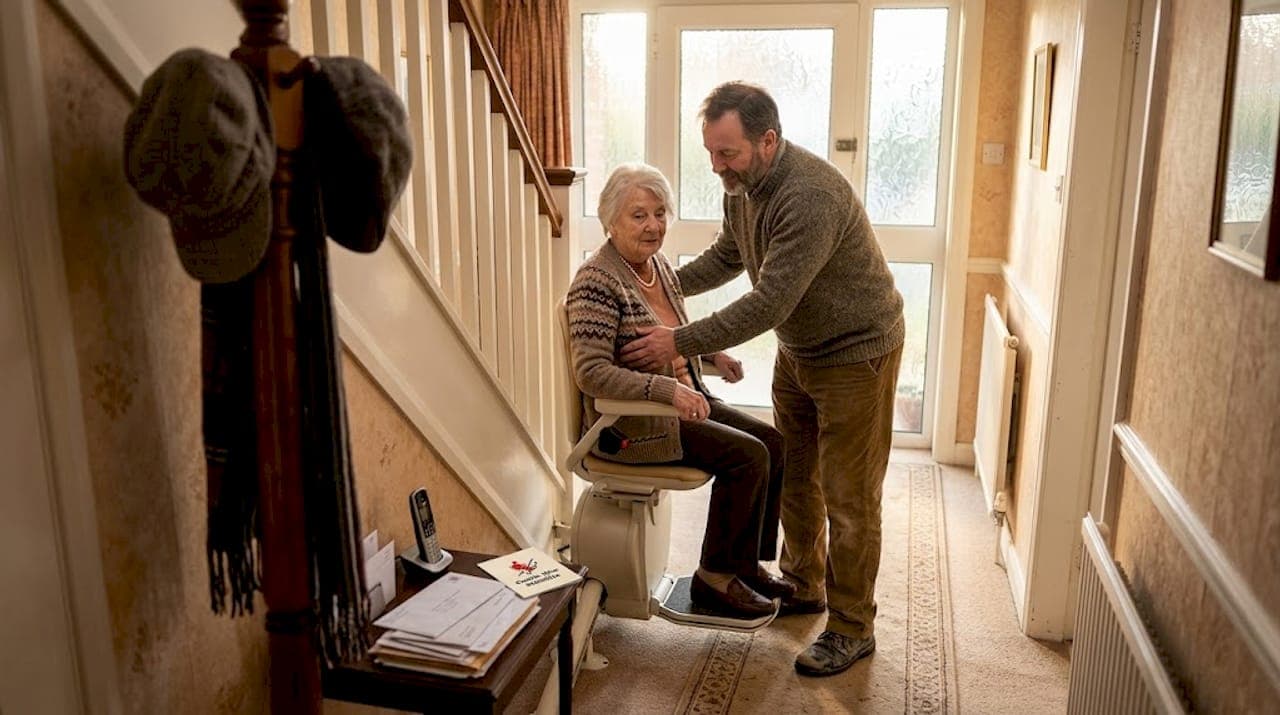
Falls at home are far more serious than many people acknowledge. They are one of the leading causes of injury, hospital admission, and loss of independence across the UK, and stairs are among the most common danger points. What often goes unnoticed is that the risk is not limited to older adults. A parent recovering from a knee operation, a teenager with a disability, or a grandparent visiting for the holidays can all be put at risk by an inaccessible staircase.
The good news is that the evidence for home-based solutions is strong. Home modifications reduce falls and improve independence, with 65% of studies confirming their effectiveness in fall prevention and cost savings. Stairlifts sit at the heart of that evidence. They are not a luxury. They are a practical tool that restores confidence and reduces daily risk.
Here is what well-designed home mobility can do for your family:
- Reduce the chance of a serious stair-related fall
- Allow family members with mobility challenges to remain at home longer
- Relieve the physical strain on carers and family members who currently assist with stairs
- Improve the overall accessibility of the home for all generations
- Add long-term value by future-proofing the property
"The greatest gift you can give someone with a mobility challenge is not assistance. It is the ability to do things independently and safely."
If you want to start thinking more broadly, there are practical mobility tips for safer homes worth exploring, as well as guidance on affordable stairlift solutions for UK households at different budgets.
With the need established, we can examine what affordable mobility solutions look like today.
Understanding stairlift options: new vs reconditioned
One of the biggest decisions families face is whether to buy new or reconditioned. Both options have genuine merit, and the right choice depends on your staircase, budget, and how long you expect to need the lift.
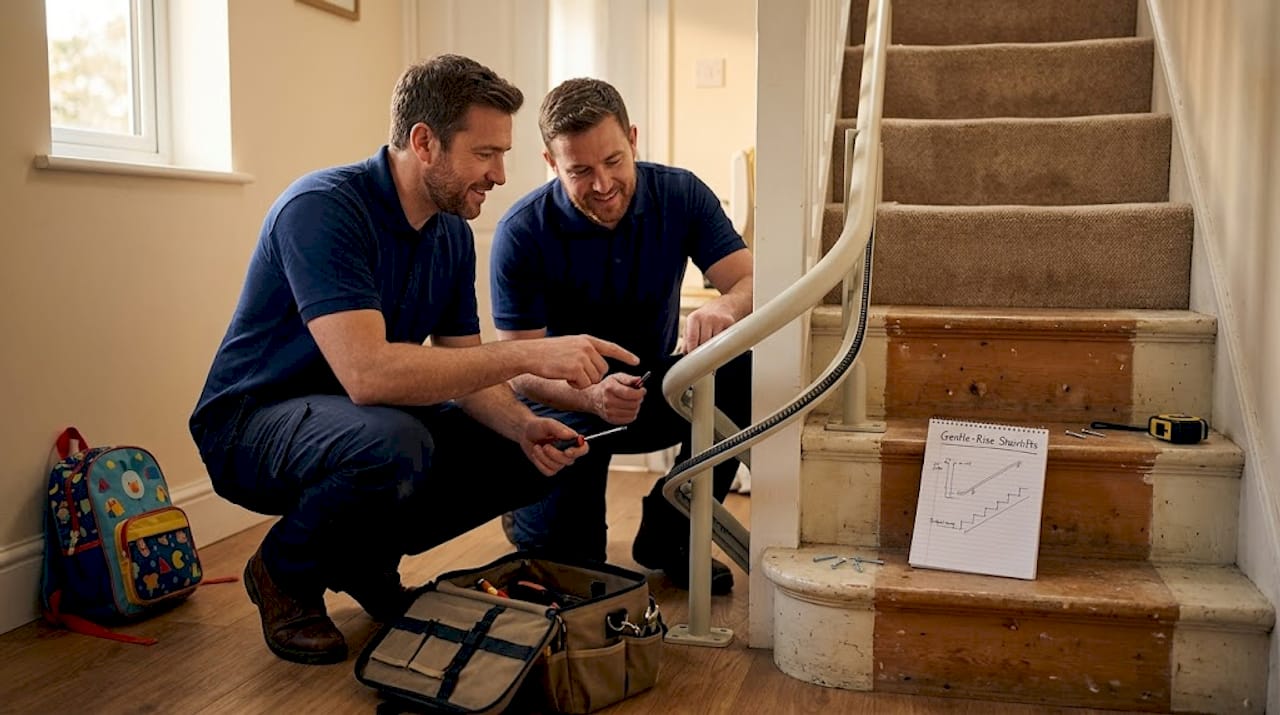
New straight stairlifts cost £1,900 to £2,500 installed, while reconditioned models start at £1,250, offering savings of 40 to 50%. Curved stairlifts cost £4,000 or more new, and around £2,950 or more reconditioned.
| Type | New cost (installed) | Reconditioned cost | Potential saving |
|---|---|---|---|
| Straight stairlift | £1,900 to £2,500 | £1,250 to £2,000 | 40 to 50% |
| Curved stairlift | £4,000 or more | £2,950 or more | Up to 30% |
Reconditioned models are refurbished to manufacturer standards, meaning they are tested, serviced, and supplied with a warranty. For most families, they represent the best balance of cost and reliability.
Key things to consider when comparing options:
- Warranty length: New models typically come with a longer manufacturer warranty, but reputable reconditioned suppliers offer comparable cover
- Installation speed: Straight stairlifts, new or reconditioned, can often be installed within hours
- Track compatibility: Curved stairlifts require a bespoke track, which affects both cost and lead time regardless of whether the seat unit is new or reconditioned
- After-sales support: Confirm that servicing and parts are available before committing
Pro Tip: If your need is temporary, for example following surgery or a short recovery period, a rental stairlift is often the most cost-effective route and avoids a large upfront outlay entirely.
For a wider view of your options, the affordable stairlift options guide covers additional models and funding routes worth considering.
To make informed choices, it is crucial to understand the real differences between stairlift types.

How to choose a reliable stairlift: safety, support and long-term value
Once families recognise the range of stairlift options, the next step is choosing the right supplier and product. This is where many people make costly mistakes, often by focusing only on the lowest headline price.
Follow these steps when evaluating a stairlift supplier:
- Request a free home survey: A reputable supplier will assess your staircase in person before quoting. Avoid any company that quotes without a site visit.
- Check for BHTA membership: The British Healthcare Trades Association sets the code of practice for stairlift suppliers. BHTA membership is a meaningful quality signal.
- Compare at least three quotes: Prices vary more than most people expect. Multiple quotes protect you from overpaying.
- Ask about VAT relief: If the user has a qualifying disability or long-term illness, stairlifts are zero-rated for VAT, which is a saving of 20% you should not miss.
- Confirm aftercare terms: Understand what is included in the warranty and what servicing will cost once the warranty expires.
Servicing costs £80 to £300 per visit, and batteries typically need replacing every three years. These are predictable costs, but they are real, and ignoring them makes budgeting harder later.
| Long-term cost | Typical range | How to manage it |
|---|---|---|
| Annual servicing | £80 to £300 per visit | Choose a supplier with a maintenance plan |
| Battery replacement | Every 3 years | Factor into total cost of ownership |
| Extended warranty | Varies | Negotiate at point of sale |
"Never fit a stairlift yourself. Professional installation is not just about safety. It is about preserving your warranty and ensuring the equipment performs as designed."
Pro Tip: Ask your supplier whether a maintenance plan, such as an annual service agreement, is available at a fixed annual cost. It makes budgeting far simpler and ensures the lift stays in good working order.
For more guidance on evaluating suppliers, the affordable mobility supplier guide and stairlift safety tips are both practical starting points.
Beyond stairlifts: additional home mobility enhancements
Stairlifts are often the centrepiece, but they are part of a wider home transformation. True accessibility means thinking about every room and every transition point in the house, not just the staircase.
Here are some of the most effective home enhancements that work alongside a stairlift:
- Bathroom grab rails and wet room conversions: The bathroom is statistically one of the most dangerous rooms in the home for falls. Rails near the toilet and bath make a significant difference.
- Threshold ramps: Small raised thresholds between rooms can be a hidden trip hazard. Low-profile ramps eliminate this risk with minimal disruption.
- Non-slip flooring: Replacing smooth tiles or worn carpet with textured, grip-friendly flooring reduces fall risk across the whole home.
- Wider doorways: Where possible, widening key doorways improves access for anyone using a wheelchair or walking frame.
- Stair gate adaptations: For families with young children as well as older relatives, a well-placed gate can protect both ends of the age spectrum.
- Improved lighting: Poor visibility is a major factor in home falls. Motion-sensor lighting in hallways and stairwells is a low-cost but highly effective change.
Research confirms that home modifications improve independence consistently across age groups, reinforcing why a joined-up approach delivers better outcomes than any single product.
Pro Tip: Review your home's accessibility every year, not just when a crisis arises. Family needs change gradually, and catching small issues early is far cheaper than reacting to a fall or injury.
For families thinking beyond the stairlift, exploring best home mobility alternatives gives a broader picture of what is possible at different budgets.
A perspective families rarely hear: why 'one size fits all' mobility plans fail
Most conversations about stairlifts focus on price comparison or product features. That is useful, but it misses something important. Families who focus only on the initial purchase often find themselves stuck with a solution that no longer fits their needs two or three years later.
The truth is that mobility needs change. A person recovering from surgery will have different requirements in six months. A family member with a progressive condition will need more support over time. Locking into a single product or a single supplier without considering future flexibility is a mistake we see far too often.
The families who get this right tend to do three things differently. They treat their home as a living system that needs regular reassessment. They choose suppliers who offer ongoing support, not just a one-off sale. And they think about the whole household, not just the individual with the most visible mobility challenge.
There is also a stigma worth addressing directly. Stairlifts and grab rails are sometimes seen as an admission of decline. In reality, they are tools that preserve independence and reduce the burden on everyone in the household. Recognising that early, rather than waiting for a fall or a crisis, is the single most valuable shift a family can make. Explore broader family mobility strategies to see how other UK families are approaching this.
Explore more mobility solutions with GentleRise
If this guide has helped clarify your options, the next step is getting personalised advice tailored to your home and your family's specific needs.
At GentleRise Stairlifts, we offer new, rental, and affordable reconditioned stairlifts with full aftercare and our Protect+ maintenance programme. Every customer starts with a free home survey, so you get a recommendation that actually fits your staircase and your budget. You can also review detailed stairlift pricing before your survey so you know exactly what to expect. Book your free assessment today and take the first step towards a safer, more independent home for everyone in your family.
Frequently asked questions
How much does a stairlift cost for a typical UK family home?
A new straight stairlift costs £1,900 to £2,500 installed, while reconditioned models start at £1,250, offering savings of 40 to 50% compared with buying new.
Are reconditioned stairlifts reliable for family use?
Yes. Reconditioned stairlifts from BHTA members offer a strong balance of affordability and reliability, particularly when they come with a warranty and a clear aftercare plan.
What other home changes improve mobility besides a stairlift?
Bathroom grab rails, threshold ramps, non-slip flooring, and improved lighting all complement a stairlift and help create a safer, more accessible home for every family member.
How often do stairlifts need servicing or new batteries?
Most suppliers recommend annual servicing at £80 to £300 per visit, and stairlift batteries typically need replacing around every three years.