
TL;DR:
- Losing confidence on your stairs due to aging or mobility issues can be addressed effectively with a carefully chosen stairlift.
- Assessing your long-term needs, comparing straight versus curved models, and planning installation thoughtfully ensures safety and value.
Losing confidence on your own staircase is one of the most unsettling experiences a homeowner can face. Whether it's a recent knee replacement, creeping arthritis, or simply the growing fatigue that comes with age, the stairs that once felt entirely ordinary can suddenly feel like an obstacle. The good news is that a stairlift, chosen carefully and planned properly, can restore that confidence quickly and affordably. This guide walks you through every stage of the process, from assessing your needs to choosing the right type, planning the installation, and keeping your investment working safely for years to come.
Table of Contents
- Assessing mobility needs and home requirements
- Comparing stairlift types and features
- Planning the stairlift installation process
- Maximising safety, independence and long-term value
- Why futureproofing your home mobility plan matters more than price
- Take the next step to a safer, more comfortable home
- Frequently asked questions
Key Takeaways
| Point | Details |
|---|---|
| Assess needs first | Evaluate your home's layout and your physical requirements before selecting a stairlift. |
| Compare models and costs | Straight and curved stairlifts differ in price and features—identify what fits your stairs and budget. |
| Prioritise aftercare | Supplier support and servicing plans are essential for ongoing safety and reliability. |
| Futureproof your choice | Choose a stairlift and supplier with adaptability for future changes in health and mobility. |
Assessing mobility needs and home requirements
Before you look at a single brochure or request a quote, it pays to get honest about what you actually need. Not just today, but over the coming years. Many people make the mistake of buying for their current condition and then finding their needs change sooner than expected.
Start by thinking through the main mobility challenges in your daily routine:
- Limited knee bend or hip movement, which makes sitting down and standing up from a standard seat difficult
- Fatigue or breathlessness, which makes climbing even a short flight of stairs feel exhausting
- Balance problems, where the risk of a trip or fall is the primary concern
- Higher body weight, which affects which models are suitable
- The shape and width of your staircase, including whether it has a bend, a landing, or unusually narrow treads
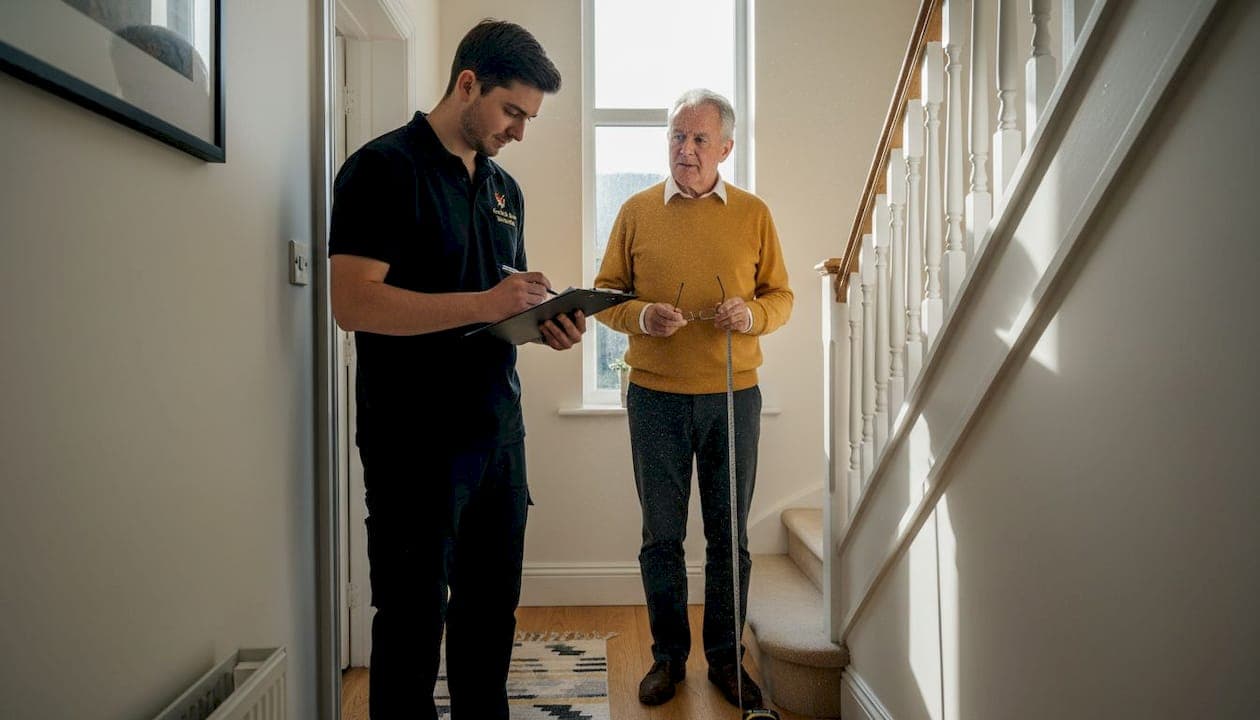
Your staircase itself is just as important as your physical condition. Assessing stairlift needs properly means measuring the width of your stairs, noting any doorways at the top or bottom, and identifying whether the staircase is straight or has a curve or intermediate landing.
It is also worth speaking with your GP or an occupational therapist (OT) before committing to a purchase. An OT can carry out a formal home assessment and may even be able to refer you for funding support through your local council. They can also advise whether a stairlift is the most suitable solution, or whether other adaptations might work alongside it.
Edge cases are more common than people expect. Narrow stairs may require a slimline model such as the Handicare 1100, which is specifically designed for tighter spaces. Heavier users need to check that any model they consider has a weight capacity of at least 30 stone. And for those recovering from surgery, a short-term rental often makes far more sense than an outright purchase.
Pro Tip: Think about where your mobility might be in five to ten years, not just right now. A stairlift that suits mild fatigue today should ideally also accommodate reduced leg strength or worsening arthritis down the line. Choosing a model with a powered swivel seat and adjustable armrests costs a little more upfront but can save you from needing a full replacement in a few years.
Comparing stairlift types and features
Once you have a clear picture of your needs, you can start comparing the types of stairlift available and the features that will make the most meaningful difference to your daily life.
The two main categories are straight stairlifts and curved stairlifts. The distinction matters enormously for both suitability and cost. Straight stairlifts suit staircases without bends and typically cost between £1,850 and £6,000 fully installed. Curved stairlifts, which are built with custom rails to follow bends or intermediate landings, can cost anywhere from £3,000 to well over £15,000 depending on the complexity of the staircase.
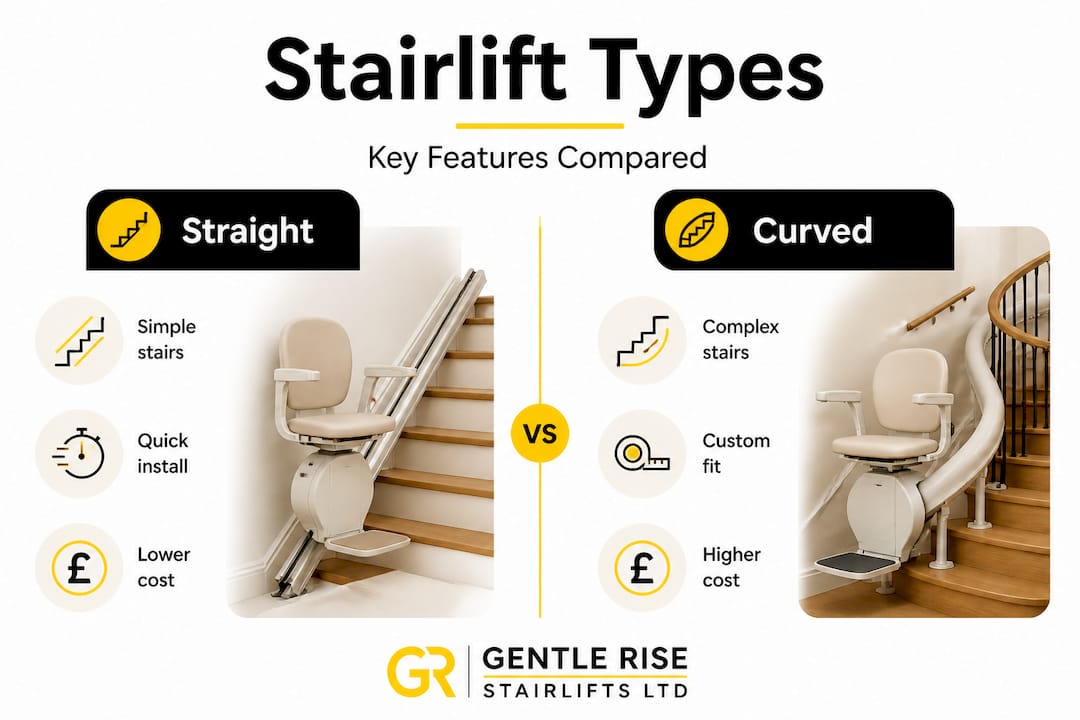
Here is a straightforward comparison to help you decide which type fits your situation:
| Stairlift type | Best suited to | Approximate installed cost | Installation time |
|---|---|---|---|
| Straight | Straight staircases, no bends | £1,850 to £6,000 | A few hours |
| Curved | Staircases with bends or landings | £3,000 to £15,000+ | One to two days |
| Reconditioned (straight) | Budget-conscious buyers, straight stairs | From £795 | A few hours |
| Heavy-duty | Users over 20 stone | Varies by type | Varies |
| Perch/standing | Users with very limited knee bend | From £2,000 | A few hours |
Beyond type, the features you choose will define how comfortable and safe the stairlift feels every single day. You can explore the full range of types of stairlifts to understand what is available at different price points.
Key features worth prioritising include:
- Powered swivel seat: rotates automatically so you can mount and dismount facing away from the stairs, reducing the risk of stumbling
- Folding footrest and armrests: keep the stairlift compact when not in use, particularly important in narrow hallways
- Perch seat: a tilted seat design that allows users with very limited knee bend to ride in a near-standing position
- Battery backup: ensures the stairlift continues to work during a power cut, which is a genuine safety concern
- Higher weight capacity: heavy-duty models offer capacities up to 30 stone, making them suitable for a much wider range of users
- Remote controls: allow family members or carers to send the stairlift to the top or bottom of the stairs when needed
Do not overlook the perch seat option. Many people assume it is a niche product, but for anyone with rheumatoid arthritis, a recent hip replacement, or stiffness from long-term knee problems, it can be the difference between using a stairlift comfortably and finding it frustrating from day one.
Planning the stairlift installation process
With your preferred type and features identified, the next stage is planning the installation itself. This is where many buyers make avoidable mistakes, most often by focusing too heavily on the upfront price and not enough on the full process.
Here is a step-by-step approach that covers the essentials:
- Request a free home survey from at least two or three suppliers. A survey is not a commitment. It allows engineers to measure your staircase accurately, discuss your specific needs, and provide a proper written quote.
- Compare quotes carefully, looking beyond the headline price. Check what is included: fitting, removal of packaging, a demonstration of the controls, and what happens if something goes wrong within the first few weeks.
- Review the aftercare offer. This is arguably more important than the initial price. Ask specifically about warranty length, what the call-out response time is, and whether servicing is included or charged separately.
- Agree a clear installation timeline, including who will be present and how long the process is expected to take.
- Arrange for someone to be at home on the day of installation to sign off the work and receive a full demonstration.
For straight stairlifts, installation typically takes just a few hours with no structural changes needed to your home. Curved models take longer due to the bespoke nature of the rail. After installation, most reputable suppliers offer a two-year warranty as standard, and annual servicing costs typically fall between £200 and £600 depending on the model and supplier.
"The single most common regret we hear from customers who came to us after a disappointing experience elsewhere is that they chose on price alone. The installer who offered the lowest quote was also the slowest to respond when something needed attention."
Good stairlift maintenance tips make a real difference to the lifespan of your equipment. Regular lubrication of the rail, keeping the track free from debris, and testing the safety sensors periodically are all tasks a competent homeowner can manage between annual services. If you want peace of mind without the guesswork, it is also worth reading about reliable stairlift servicing so you know what to look for in a servicing contract.
Pro Tip: When comparing aftercare packages, ask each supplier specifically what their average response time is for emergency call-outs. Some providers promise next-day visits; others may leave you waiting several days. For someone who relies on a stairlift as their only safe means of using the stairs, that difference matters enormously.
Maximising safety, independence and long-term value
A stairlift is not a one-off purchase you forget about once it is fitted. Getting lasting value from your investment means thinking about maintenance, supplier reliability, and how your needs might shift over time.
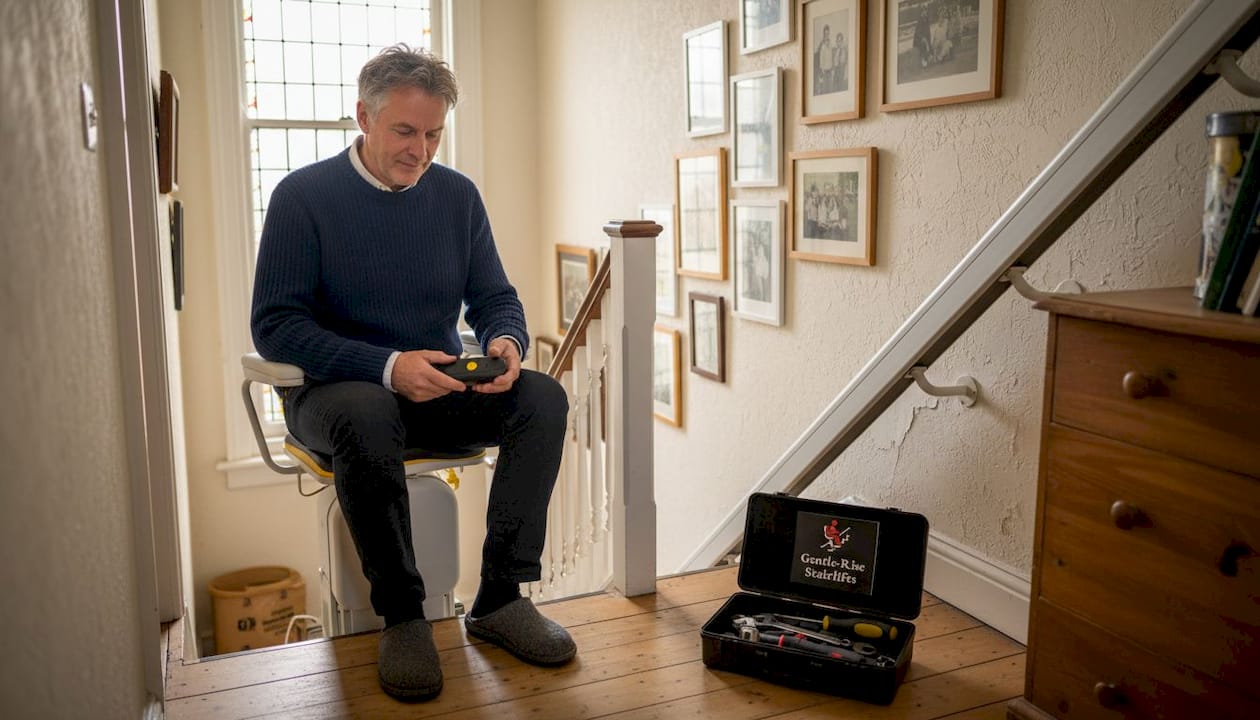
One of the most significant choices you will make is whether to buy new or reconditioned. New stairlifts offer full manufacturer warranties and tend to be the better long-term option if your staircase requires a curved rail or if you anticipate using the stairlift for many years. Reconditioned straight stairlifts, on the other hand, can be a genuinely cost-effective solution, particularly for shorter-term needs or tighter budgets. The trade-off is that warranties tend to be shorter and parts availability can occasionally be limited for older models.
It is also worth knowing that some well-known brands have attracted criticism for the cost of post-warranty servicing and parts. This is not a reason to avoid any particular brand outright, but it is a very good reason to ask detailed questions about long-term running costs before you sign anything.
Here is a checklist to help you assess ongoing value before you commit:
- Warranty length: is it one year, two years, or longer, and does it cover parts and labour?
- Servicing costs: is there a fixed-price annual service plan available, and is it competitively priced?
- Upgrade pathway: if your needs change significantly, can the seat or other components be upgraded, or would you need a full replacement?
- Parts availability: how long does the supplier or manufacturer commit to keeping spare parts in stock?
- Response times: what is the guaranteed call-out response time if the stairlift stops working?
For those looking at affordable stairlift solutions without compromising on safety, reconditioned models from reputable suppliers with clear aftercare commitments can represent excellent value. The key is to never sacrifice the quality of aftercare support in order to save a few hundred pounds on the purchase price.
Pro Tip: Schedule your first annual service before the manufacturer warranty expires. This ensures any wear or minor faults are identified and rectified under warranty rather than at your own cost. Keep a simple log of each service visit, including dates and any work carried out, as this can also support future warranty claims.
Why futureproofing your home mobility plan matters more than price
Here is something that does not get said often enough: the decision most people regret is not the one where they spent a little more than they planned. It is the one where they chose the cheapest option available and found themselves calling for help eighteen months later.
We see this pattern regularly. A homeowner buys a stairlift based on a promotional price, without asking about servicing costs, upgrade options, or how the supplier handles complaints. The stairlift works fine for a year or so. Then a part wears, or the user's condition changes and a powered swivel seat becomes essential. Suddenly the "bargain" involves either an expensive retrofit or a full replacement.
The smarter approach is to prioritise supplier aftercare over brand recognition and to plan for the next stage of your mobility needs, not just the present one. If you know your knees are likely to worsen, ask specifically about perch seat options before you buy. If you live alone, ask how quickly the supplier can respond in an emergency.
For elderly mobility solutions to deliver their full value, they need to grow with the person using them. A stairlift that restores independence today but becomes inadequate in three years has not really solved the problem. The goal is a solution that keeps you safe, comfortable, and independent for as long as possible, and that means asking harder questions at the survey stage rather than just accepting the lowest quote.
The best stairlift is not the cheapest one available. It is the one that still serves you well in five years, supported by a supplier who answers the phone when you need them.
Take the next step to a safer, more comfortable home
If you have been weighing up your options and want expert guidance tailored to your specific staircase and needs, the right move is to arrange a free home survey with a supplier you can trust.
At GentleRise Stairlifts, we offer a straightforward, no-obligation survey process where our engineers visit your home, measure your staircase, and walk you through the options that genuinely suit your situation. Straight stairlifts start from £795, and we carry both new and reconditioned models backed by clear aftercare plans including our Protect+ maintenance programme. If you are not ready to commit to a purchase, short-term rental options are also available. For a clearer picture of budgeting, our guide to UK stairlift costs covers everything from entry-level options to curved staircase solutions.
Frequently asked questions
How long does a stairlift installation take?
A straight stairlift can usually be fitted in a few hours with no structural changes to your home, while a curved model may take one to two days due to the custom-built rail. You can find more detail in the stairlift installation guide used to inform this article.
Are reconditioned stairlifts safe and reliable?
Yes, when sourced from a reputable supplier with proper checks, reconditioned stairlifts can be safe and cost-effective, though they are generally limited to straight staircases and carry shorter warranties than new models.
What features should I prioritise in a stairlift?
Focus on safety and comfort essentials: powered swivel seats, battery backup, folding footrests, and appropriate weight capacity are the features that make the greatest practical difference to daily use.
How much does annual stairlift servicing cost?
Annual servicing typically costs between £200 and £600 per year, depending on the model, its age, and the supplier's pricing structure. A fixed-price service plan often works out more economical over time.
Can a stairlift be fitted to any type of staircase?
Most staircases can be fitted with a stairlift, but very narrow stairs may require a slimline model such as the Handicare 1100, and unusually steep or winding configurations may need a custom solution. A home survey will confirm suitability.