
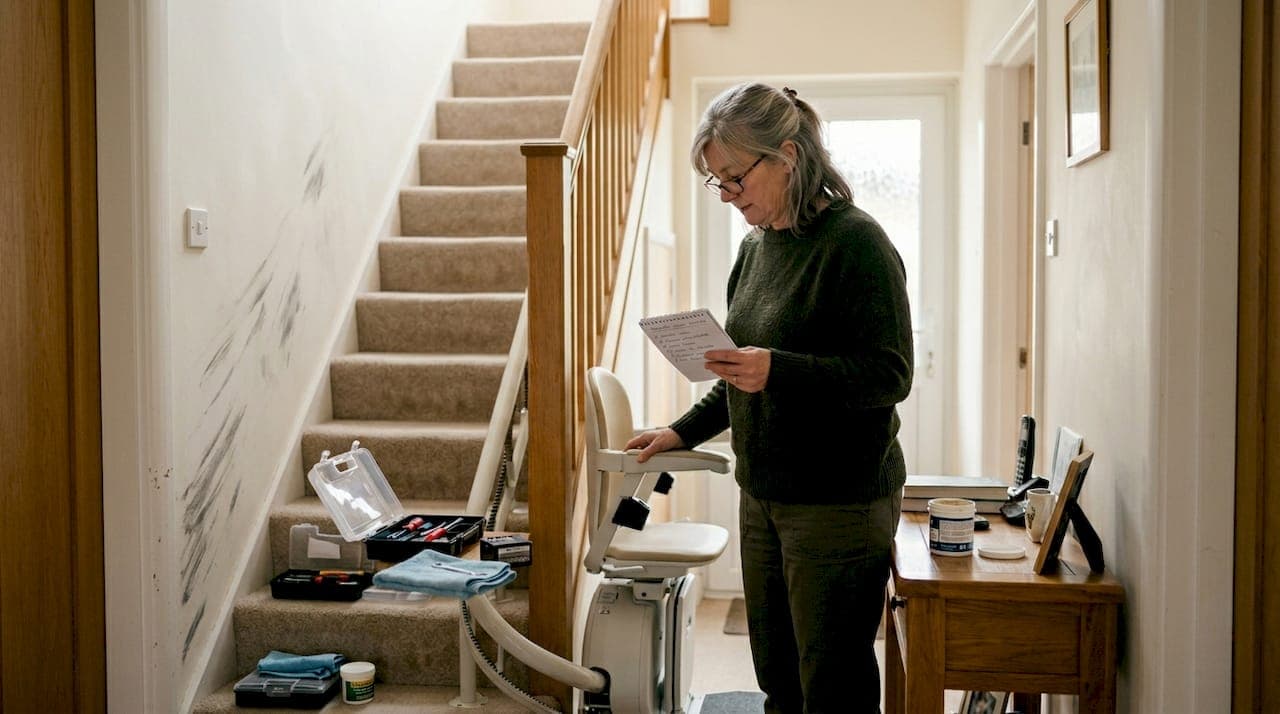
Stairlift malfunctions can leave elderly homeowners stranded, anxious, and at risk of dangerous falls. Regular maintenance is not just about keeping your lift running smoothly, it is essential for preserving your independence and ensuring your safety on the stairs. Without proper upkeep, even the most reliable stairlift can develop faults that compromise your mobility and peace of mind. This guide walks you through everything you need to maintain your stairlift effectively and affordably, from gathering the right tools to performing routine checks, troubleshooting common problems, and knowing when to call in professional help.
Table of Contents
- Key Takeaways
- What you need for stairlift maintenance
- How to perform routine stairlift maintenance
- Troubleshooting common stairlift problems
- Expected results and maintaining your stairlift's lifespan
- Discover reliable stairlift maintenance and support
- FAQ
Key Takeaways
| Point | Details |
|---|---|
| Routine maintenance | Regular upkeep is essential for safety and to prolong the life of your stairlift. |
| Servicing costs | Annual professional servicing typically costs £60 to £150 with plans available that charge £5 to £25 per month. |
| Replacement costs | Batteries usually last three to five years and cost £100 to £200 to replace. |
| Safety practices | Always switch off the power before maintenance and seek professional help if you are unsure. |
| Maintenance log | Keep a simple log to record maintenance dates and any parts replacements for reference. |
What you need for stairlift maintenance
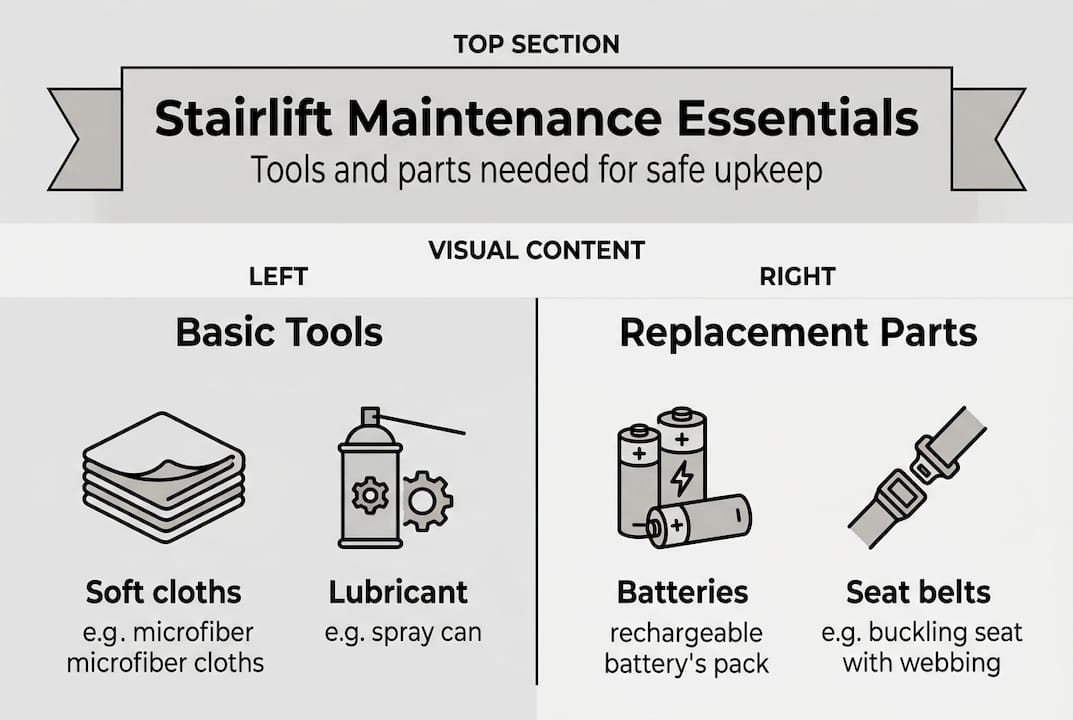
Before you start any maintenance work, gather the right tools and understand the safety precautions. Having everything prepared makes the process smoother and safer. You will need a few basic items: soft, non-abrasive cloths for cleaning, a mild household cleaner or specialist stairlift cleaning solution, a small screwdriver set for tightening screws, and a silicone-based lubricant designed for moving parts. Avoid harsh chemicals or abrasive materials that could damage the rail or seat surfaces.
Safety comes first. Always switch off the power to your stairlift before performing any maintenance tasks. This prevents accidental movement and protects you from electrical hazards. If you feel uncertain about any task, do not attempt it yourself. Professional technicians have the training and tools to handle complex issues safely. For peace of mind, consider enrolling in a stairlift Protect+ service plan that includes regular professional visits and priority support.
Replacement parts are another consideration. Batteries typically last 3-5 years and cost £100-£200 to replace. Seat belts may need replacing if they show wear or damage. Fuses can blow occasionally and should be kept as spares. Annual professional servicing costs £60-£150 one-off or £5-£25 per month via plans, with total running costs around £150-£300 per year including electricity. These expenses are modest compared to the cost of emergency repairs or the risk of injury from a poorly maintained lift.
Here is a quick reference table for typical maintenance tools and their purposes:
| Tool or item | Purpose | Approximate cost |
|---|---|---|
| Soft cloths | Cleaning rail and seat | £5-£10 |
| Mild cleaner | Removing dust and grime | £3-£8 |
| Silicone lubricant | Lubricating moving parts | £8-£15 |
| Small screwdriver set | Tightening screws and bolts | £10-£20 |
| Replacement batteries | Powering the lift | £100-£200 every 3-5 years |
| Spare fuses | Electrical safety | £5-£10 |
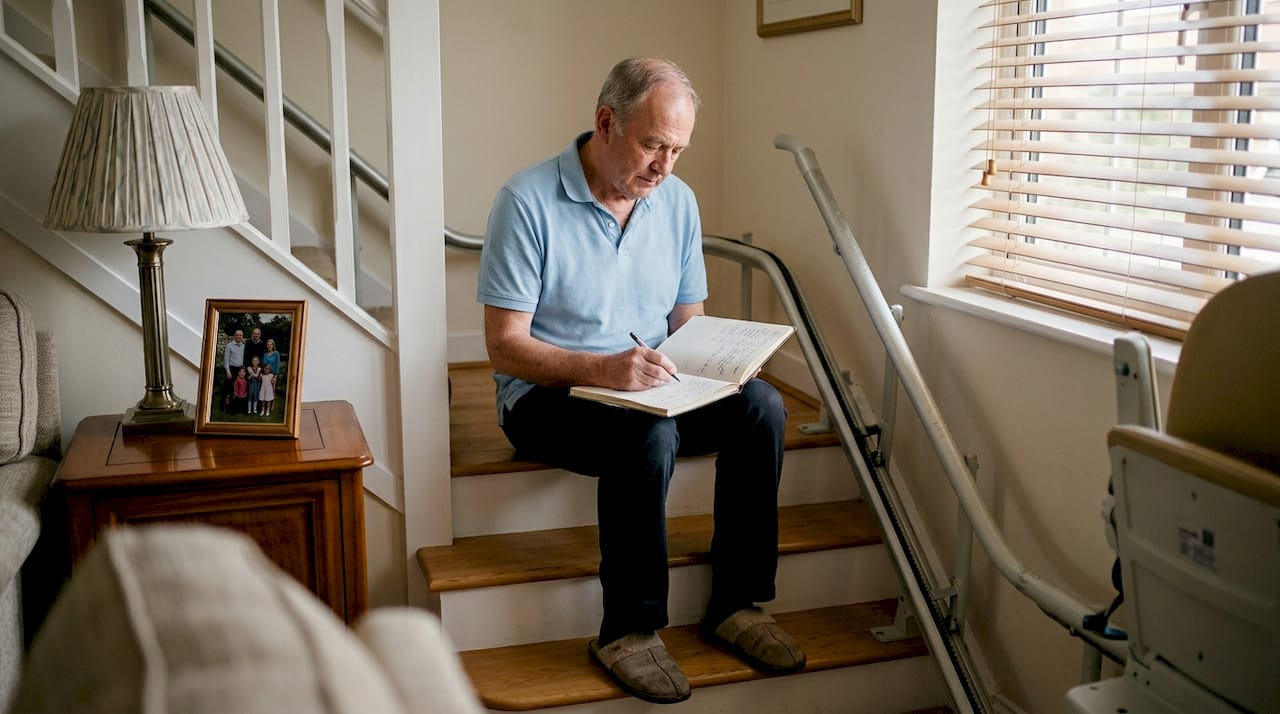
Pro Tip: Keep a simple maintenance log in a notebook or on your phone. Record the date and tasks completed each time you perform maintenance. This log helps you track when batteries were last replaced, when professional servicing is due, and any recurring issues. It also provides valuable information for technicians if you need to call for support. Regular documentation ensures nothing gets overlooked and supports enhancing accessibility for independence through consistent care.
How to perform routine stairlift maintenance
Now that you have your tools and understand the safety precautions, follow these steps to carry out effective routine maintenance. Regular upkeep keeps your stairlift running smoothly and helps you spot potential problems before they become serious.
-
Clean the rail and seat thoroughly. Use a soft, non-abrasive cloth and a mild cleaning solution to wipe down the rail from top to bottom. Remove dust, dirt, and any debris that could interfere with smooth movement. Clean the seat, armrests, and footrest as well. Avoid getting water or cleaner into electrical components or the motor housing.
-
Inspect and tighten loose screws or bolts. Check all visible screws and bolts on the seat, armrests, footrest, and rail brackets. Use your small screwdriver to gently tighten any that have worked loose over time. Do not overtighten, as this can strip threads or damage components. A snug fit is sufficient.
-
Lubricate rails and moving parts sparingly. Apply a small amount of silicone-based lubricant to the rail where the carriage moves. Wipe away any excess to prevent buildup of dust and grime. Lubricate hinges on the footrest and armrests if they squeak or feel stiff. Avoid over-lubricating, as this attracts dirt.
-
Check battery status regularly and replace if performance drops. Most stairlifts have a battery indicator light or display. Check this regularly to ensure the batteries are charging properly. If the lift moves more slowly than usual, struggles on inclines, or the battery warning light comes on frequently, it may be time for replacement. Batteries typically last 3-5 years with normal use.
-
Test safety switches and armrest functions. Sit in the stairlift and test the armrest safety switches. The lift should not move unless the armrests are down and locked. Test the footrest sensor if your model has one. These safety features are critical for preventing falls and injuries, so ensure they work correctly every time.
Pro Tip: Schedule a quick monthly check covering these five steps, and arrange annual professional servicing to meet UK safety guidelines. Research shows that while perceived stair safety is often high, around 40% of UK homes do not fully comply with safety guidelines. Regular maintenance is low cost compared to repair risks, and it is especially important for curved or standing stairlifts where mobility-challenged elderly users face higher risks. By staying on top of maintenance, you are choosing a reliable stairlift experience and protecting your investment. Consider a stairlift Protect+ aftercare service plan to ensure professional oversight and rapid response if issues arise.
Troubleshooting common stairlift problems
Even with regular maintenance, stairlifts can develop issues. Knowing how to identify and resolve common problems helps you maintain safety and minimise downtime before professional help arrives. Here are the most frequent issues and their solutions.
-
Stairlift will not move. This is often caused by a tripped safety switch, low battery, or a blown fuse. Check that the armrests are fully down and locked. Ensure the key switch is in the on position. If the battery is low, charge it fully and try again. Check the fuse box and replace any blown fuses.
-
Unusual noises during operation. Squeaking, grinding, or rattling sounds usually indicate a need for lubrication or a loose component. Clean and lubricate the rail as described earlier. Inspect for loose screws or bolts and tighten them. If the noise persists, stop using the lift and contact a technician, as it may indicate worn gears or motor issues.
-
Battery drains quickly. Rapid battery drain suggests the batteries are nearing the end of their lifespan or not charging properly. Check the charging points at the top and bottom of the rail for dirt or corrosion and clean them gently. If the problem continues, arrange for battery replacement.
-
Safety sensor faults. If the lift stops unexpectedly or refuses to move, a safety sensor may be detecting an obstruction. Check the rail and carriage for objects, dirt, or debris blocking the sensors. Clean the sensors carefully with a dry cloth. If the fault persists, do not override the sensor, call a professional.
Here is a quick comparison table of problems, causes, and solutions:
| Problem | Likely cause | Solution |
|---|---|---|
| Lift will not move | Safety switch, low battery, blown fuse | Check switches, charge battery, replace fuse |
| Unusual noises | Lack of lubrication, loose parts | Lubricate rail, tighten screws |
| Battery drains quickly | Ageing batteries, dirty charging points | Clean contacts, replace batteries |
| Safety sensor faults | Obstruction, dirty sensors | Remove obstruction, clean sensors |
| Slow or jerky movement | Low battery, worn parts | Charge battery, call technician |
Ignoring faults is especially risky with curved or steep stairs, where a sudden stop or malfunction could lead to a fall. Stairlift safety research shows that steep or narrow stairs, heavy use, and outdoor exposure can shorten lifespan from the average 10-15 years. Standing stairlifts carry balance risks, and reconditioned models need thorough checks to ensure safety. Falls from stairlifts have a mortality rate of 15.7%, making proper maintenance a matter of life and death. If you have a reconditioned stairlift, pay extra attention to wear and tear, and do not hesitate to seek professional help if you notice any concerning signs.
Expected results and maintaining your stairlift's lifespan
Proper maintenance delivers tangible benefits that go beyond simply keeping your stairlift operational. You will enjoy improved safety, reduced fall risk, and sustained independence in your own home. Regular upkeep also extends the lifespan of your stairlift, which typically ranges from 10-15 years. However, heavy use, outdoor exposure, or steep stairs can shorten this, making consistent care even more important.
Financially, maintenance is a wise investment. By spending £150-£300 per year on routine servicing, battery replacements, and minor repairs, you avoid costly emergency call-outs and major component failures that could run into thousands of pounds. Home adaptations like stairlifts reduce falls, improve independence and quality-adjusted life years, and are highly cost-effective. For example, studies show costs as low as NZD 5,480 per QALY gained. While UK Disabled Facilities Grants may cover initial installation, ongoing maintenance remains your responsibility, making affordable upkeep essential.
Here are practical tips to maximise your stairlift's useful life:
- Schedule professional servicing annually and keep up with monthly quick checks.
- Monitor battery performance closely and replace batteries proactively rather than waiting for complete failure.
- Protect outdoor or exposed stairlifts from weather with covers or enclosures where possible.
- Avoid standing stairlifts if you have balance concerns, as they increase fall risk compared to seated models.
- Address minor issues immediately before they escalate into expensive repairs.
- Keep the rail and moving parts clean and free from obstructions at all times.
Without proper maintenance, even a well-installed stairlift can become a serious safety hazard. Falls from stairlifts carry a 15.7% mortality risk, and neglected equipment is far more likely to fail at critical moments. Regular servicing and vigilant upkeep are not optional extras, they are essential safeguards for your health and independence.
By following the guidance in this article, you can confidently maintain your stairlift, enjoy years of reliable service, and keep your home safe and accessible. Understanding stairlift costs in the UK helps you budget for both initial installation and ongoing care, ensuring you get the best value from your investment.
Discover reliable stairlift maintenance and support
Maintaining your stairlift safely and affordably is within reach, but you do not have to do it alone. GentleRise Stairlifts Ltd offers comprehensive solutions designed specifically for UK homeowners who value reliability, safety, and peace of mind. Whether you need a new installation, a reconditioned model, or professional aftercare, we provide tailored options to suit your needs and budget.

Our Stairlift Protect+ aftercare plans deliver affordable, hassle-free maintenance with regular servicing, priority support, and rapid response when issues arise. Prices start from just £5 per month, ensuring your stairlift remains in peak condition without breaking the bank. Explore our range of straight, curved, and reconditioned stairlifts to find the perfect fit for your home. Visit GentleRise Stairlifts Ltd today to schedule a free home survey and discover how we can help you maintain your independence safely and confidently. Our Stairlift Protect+ aftercare ensures you are never alone when it comes to keeping your stairlift running smoothly.
FAQ
How often should I schedule professional stairlift servicing?
You should arrange professional servicing at least once a year to ensure your stairlift meets UK safety standards and operates reliably. Annual servicing typically costs £60-£150 one-off or £5-£25 per month through a maintenance plan. More frequent servicing may be needed if you use your stairlift heavily or if it is exposed to outdoor conditions.
Can I do stairlift maintenance myself safely?
Yes, you can safely perform basic maintenance tasks like cleaning the rail, checking batteries, and tightening visible screws. Always switch off the power before starting any work. However, complex repairs, electrical faults, or safety sensor issues should be left to trained professionals to avoid injury or further damage.
What are signs my battery needs replacing?
Common signs include the lift moving more slowly than usual, struggling on inclines, frequent battery warning lights, or the lift stopping unexpectedly. Batteries typically last 3-5 years, so if your batteries are approaching this age and showing performance issues, it is time for replacement.
Are reconditioned stairlifts safe with proper maintenance?
Yes, reconditioned stairlifts are safe when they have been thoroughly inspected, refurbished by professionals, and maintained regularly. Ensure your reconditioned model comes with a warranty and service history. Pay close attention to wear and tear, and schedule professional checks to confirm all safety features work correctly.
What does a stairlift maintenance plan typically cover?
Most maintenance plans include annual or bi-annual professional servicing, priority call-out for repairs, replacement of worn parts like batteries and fuses, and telephone support for troubleshooting. Plans like Stairlift Protect+ offer comprehensive coverage starting from £5 per month, giving you peace of mind and budget certainty. Explore stairlift subscription services to find the right plan for your needs.