
TL;DR:
- The UK stairlift market offers tailored options for various staircase layouts at accessible prices.
- Reconditioned and rental stairlifts provide affordable, flexible solutions for short-term or budget-conscious needs.
- Proper home surveys and ongoing support ensure safety, reliability, and value over the stairlift's lifespan.
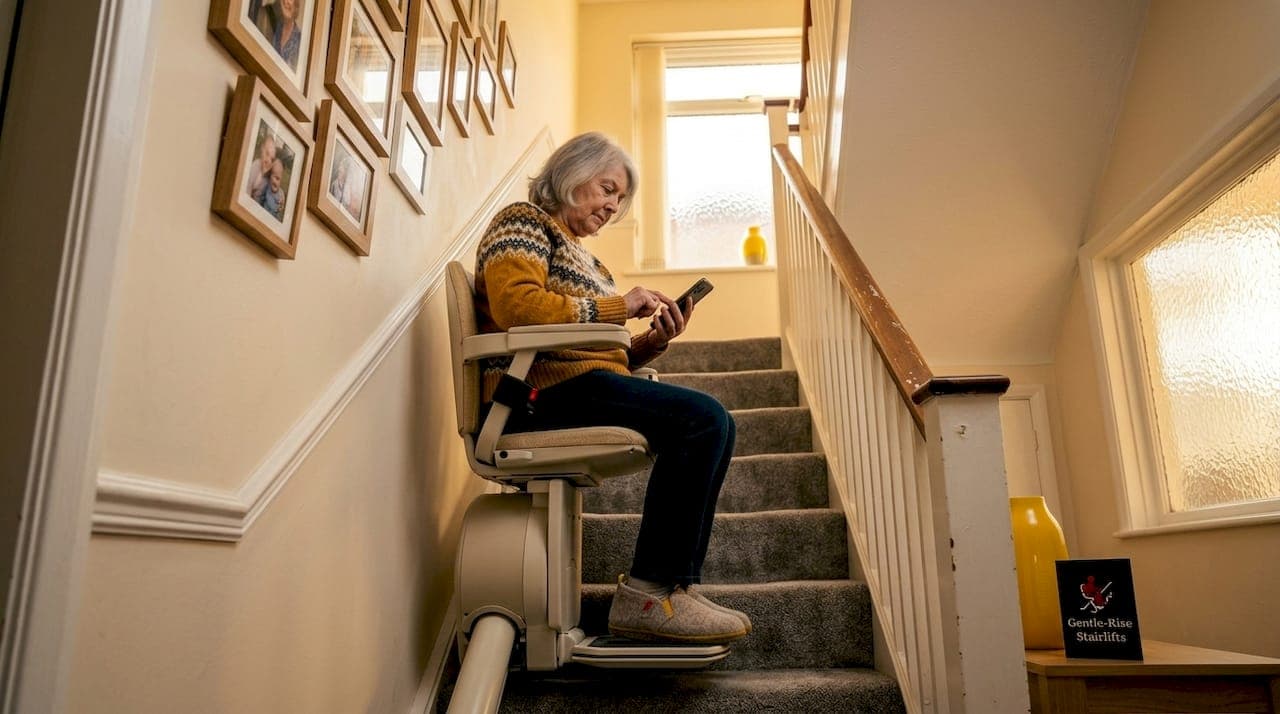
Stairlifts have a reputation problem. Many people across the UK assume they are expensive luxuries reserved for wealthier households, or believe their home simply is not suited to one. Neither of these things is true. The reality is that the stairlift market in the UK has expanded enormously, with options to suit terraced houses, bungalows with external steps, post-war semis with tight bends, and virtually every layout in between. Whether you are recovering from a hip replacement, managing a long-term condition, or simply finding the stairs more challenging each year, there is a practical, affordable path forward.
Table of Contents
- Understanding your stairlift options
- Cost considerations and funding support
- The installation process: What to expect
- Making the right choice for your needs
- Why a tailored stairlift solution trumps a bargain buy
- Take the next step to safer independence at home
- Frequently asked questions
Key Takeaways
| Point | Details |
|---|---|
| Tailored solutions available | A wide range of stairlift options ensures a fit for nearly any home and mobility need in the UK. |
| Affordable access possible | UK residents can find cost-effective stairlift options through reconditioned models and grants. |
| Professional installation matters | Expert assessment and installation provide safety and long-term confidence for mobility-impaired individuals. |
| Support beyond installation | Reputable stairlift providers include aftercare, warranty, and ongoing support for peace of mind. |
Understanding your stairlift options
The first thing to know is that various stairlift types have been developed specifically to suit UK homes and a wide range of mobility needs. This is not a one-size-fits-all market. Three main categories cover the vast majority of situations.
Straight stairlifts are the most common and the most affordable. If your staircase runs in a single uninterrupted line from bottom to top, a straight model can be fitted quickly and efficiently. These are standard in most UK semi-detached and terraced homes built before the 1980s.
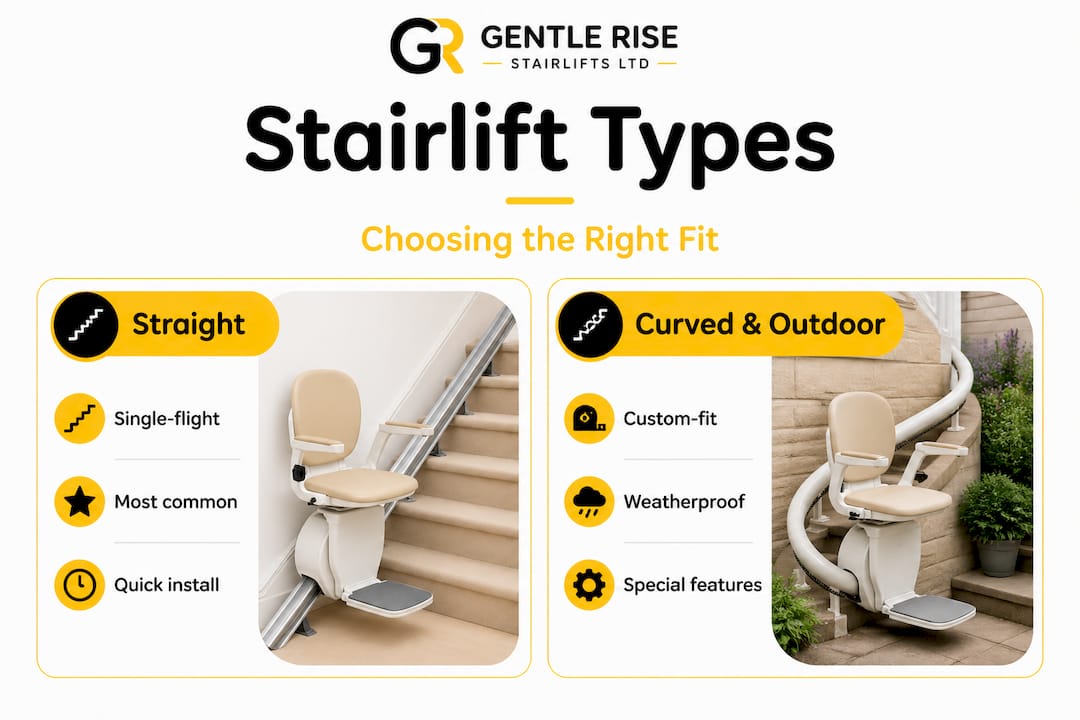
Curved stairlifts are custom-built to follow the exact geometry of staircases that bend, turn, or spiral. Every curved track is manufactured to the precise measurements of your staircase. This increases both cost and lead time, but it means no home with a curved stair is automatically excluded from having a stairlift fitted.
Outdoor stairlifts are weatherproofed units designed for external steps, garden terraces, or front doorway access. These are especially valuable for people whose mobility challenge begins before they even reach the front door.
Beyond the basic type, there are several features worth understanding before you make any decisions. A swivel seat, for instance, allows the user to rotate safely at the top or bottom of the stairs before standing, significantly reducing the risk of a fall at the most dangerous moment of the journey. Safety belts, footrest sensors, and obstruction detection are all standard on reputable models. Remote controls and wireless call stations let a carer or family member summon the chair from another floor.
When choosing a reliable stairlift, always match the feature set to the user's actual needs today and likely needs in the near future. Someone with limited grip strength, for example, should ask specifically about joystick controls versus traditional toggle switches.
| Stairlift type | Best suited to | Key features | Typical lead time |
|---|---|---|---|
| Straight | Single-flight staircases | Swivel seat, safety belt, remote | Same day to 48 hours |
| Curved | Staircases with bends or turns | Custom rail, swivel seat, call stations | 1 to 3 weeks |
| Outdoor | External steps and terraces | Weatherproof casing, covered rail | 2 to 5 days |
| Reconditioned | Budget-conscious buyers | All safety checks, warranty included | 48 hours or less |
For most UK stairlift solutions, the right type becomes clear once a surveyor has visited your home. That visit costs nothing with most reputable providers and removes a great deal of uncertainty.
Cost considerations and funding support
Price is often the first barrier people cite, and it is worth being direct about what things actually cost. The cost of UK stairlifts varies significantly depending on whether you choose a new or reconditioned model, the type of staircase, and which features are included. At Gentle Rise Stairlifts, straight stairlifts start from £795. Curved models, given their custom manufacture, typically range from £2,500 upward. These are not insignificant sums, but they compare favourably against the cost of care home placement or repeated call-out charges for fall-related injuries.
Reconditioned stairlifts represent one of the smartest options for buyers working to a tight budget. These are fully refurbished units that have been inspected, serviced, and tested to meet current safety standards. They carry a warranty and are installed professionally. For many households, the savings compared to a brand-new model are substantial, often 30 to 50 per cent less, without any compromise on safety.
Rental is another option that is frequently overlooked. If you are recovering from surgery and need a stairlift for three to six months, purchasing one outright makes little financial sense. Short-term rental arrangements allow you to use a properly installed, safe stairlift for as long as you need it, then have it removed when you no longer require it.
What drives the final price? Several factors come into play:
- Staircase type: Curved staircases require custom-manufactured rails, which adds to cost.
- Staircase length: Longer staircases need longer rails, which increases material cost.
- Weight capacity requirements: Heavy-duty models designed for users over 20 stone carry a premium.
- Additional features: Powered swivel seats, folding rails, and premium upholstery all add to the base price.
- Installation complexity: Tight corners, unusual wall materials, and listed building considerations can affect fitting time and cost.
On the funding side, there is more support available than most people realise. Local authority Disabled Facilities Grants (DFGs) can provide up to £30,000 in England for home adaptations, including stairlifts, for eligible residents. Your GP or occupational therapist can initiate an NHS referral that may lead to a funded assessment. Charities including the Royal British Legion, Turn2us, and local Age UK branches sometimes offer grants or signposting to financial assistance. It is always worth asking your council's adult social care team what you may be entitled to before assuming you must self-fund the entire cost. Grants and financial support may be available for eligible residents, and many people are pleasantly surprised by what they qualify for.
For a thorough breakdown of what you might pay, you can explore stairlift cost details or browse affordable reconditioned stairlifts that might suit your budget.
"The most expensive option is rarely the only option. When you factor in grants, reconditioned units, and rental agreements, a stairlift becomes financially accessible to a far wider range of people than most initially assume."
Pro Tip: Before you agree to any quote, ask your provider three questions: Does the quoted price include full installation and removal of packaging? What does the warranty cover, and for how long? Are there ongoing service charges not included in the upfront cost? These three questions alone will protect you from the most common sources of post-purchase frustration.
| Option | Approximate cost range | Best for |
|---|---|---|
| New straight stairlift | £795 to £1,500 | Long-term home use, single-flight stairs |
| New curved stairlift | £2,500 to £6,000+ | Staircases with bends or landings |
| Reconditioned stairlift | £500 to £1,200 | Budget-conscious permanent users |
| Rental stairlift | £20 to £100 per week | Post-surgery recovery or temporary need |
The installation process: What to expect
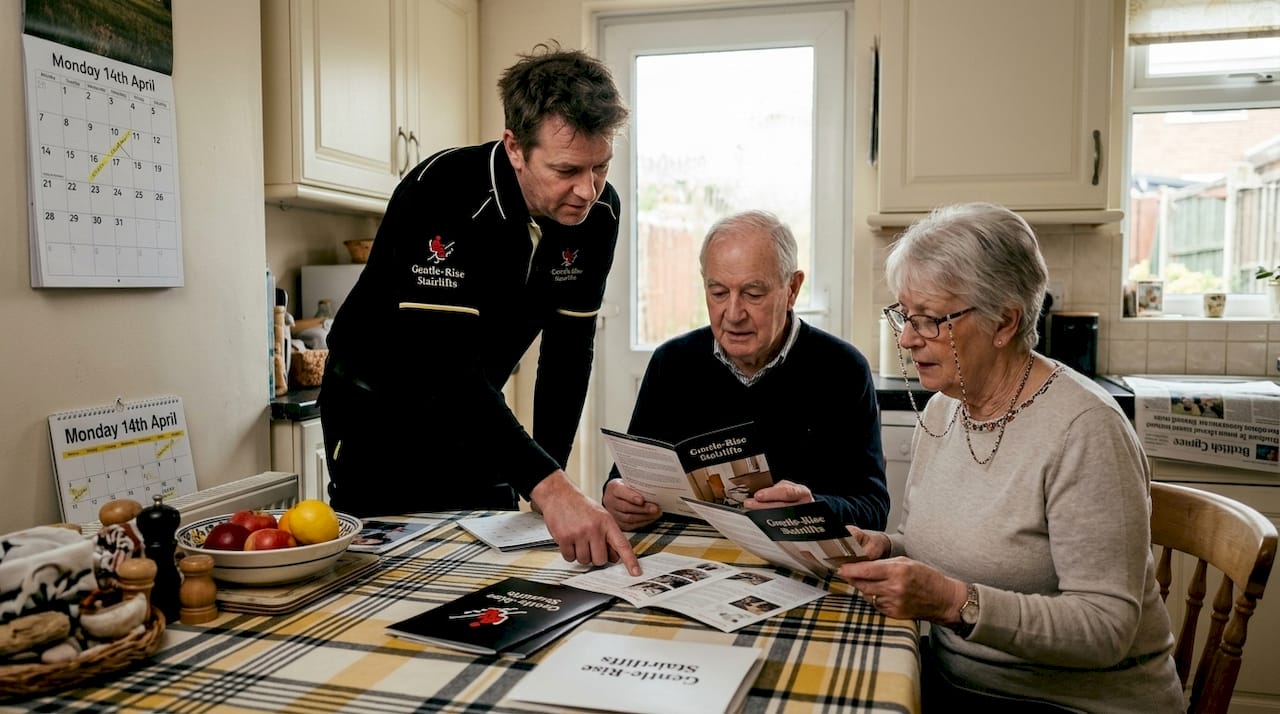
Many people put off enquiring about stairlifts because they imagine the process will be disruptive, lengthy, or complicated. In practice, it is considerably more straightforward than most home improvement projects. Professional assessment and installation ensure your stairlift is safe and precisely suited to your home, and the entire process typically follows a clear sequence.
- Free home survey: A qualified surveyor visits your home to take precise measurements of the staircase, assess any structural considerations, and discuss your specific mobility needs. This is the most important step in the entire process.
- Quote and agreement: Based on the survey findings, you receive a written quote covering the unit, installation, and any relevant aftercare package. No reputable provider should pressure you to commit on the day.
- Rail manufacture (curved only): For curved stairlifts, the custom rail is manufactured to the exact measurements taken during the survey. This typically takes one to three weeks.
- Installation day: For straight stairlifts, installation is often completed within a few hours on the day agreed. The rail is secured to the staircase treads, not the walls, which means minimal disruption to your décor. The unit is tested fully before the engineer leaves.
- User training: Before the engineer departs, they will walk you or a family member through all controls, safety features, and basic maintenance checks. You should feel entirely confident before they leave.
- Aftercare and servicing: A good provider schedules a follow-up check and offers a maintenance plan to keep the unit running reliably for years.
The fact that rails are fixed to the treads rather than walls is worth understanding. It means that the installation does not damage plasterwork, does not require drilling into wall tiles, and in most cases leaves no permanent marks on the property. For rented homes or council properties, this is particularly relevant.
Pro Tip: Before your survey appointment, note down any specific concerns: Does the user have difficulty with grip? Are there narrow doorways at the top of the stairs? Is there a child gate currently in place? The more detail you share with the surveyor, the more precisely the solution can be tailored. Also check whether your chosen provider offers stairlift subscription options as an alternative to outright purchase, which can simplify budgeting considerably.
Making the right choice for your needs
Choosing a stairlift is not simply about picking a model from a catalogue. It is about matching a solution to a person's life, home, and likely future requirements. Reliability and ongoing support are two of the most important factors in this decision, yet they are the ones most frequently overlooked in the rush to find the lowest price.
Here is a practical checklist to work through before committing to any provider or model:
- Assess current mobility needs: Can the user transfer from the seat independently? Do they require a powered swivel seat? Is their weight within the standard capacity range?
- Think forward, not just today: If the user's condition is progressive, will the stairlift still be appropriate in two or three years? Future-proofing at the point of purchase saves significant cost later.
- Evaluate your staircase: Width, length, the presence of intermediate landings or bends, and the condition of the treads all affect which solution is appropriate.
- Check provider credentials: Is the company a member of the British Healthcare Trades Association (BHTA)? Do they have verifiable reviews and local references? How long have they been operating?
- Understand the warranty: What exactly is covered? Labour, parts, call-outs? For how long? What is the response time if the unit stops working?
- Enquire about aftercare: Does the provider offer a maintenance plan? Is there a 24-hour helpline? What happens if you need the unit removed or adjusted after installation?
It is also worth looking at local stairlift offers in your area, as regional providers often have better knowledge of local authority grant schemes and can sometimes offer quicker installation turnarounds than national chains.
Why a tailored stairlift solution trumps a bargain buy
There is something that most comparison guides will not say out loud: the cheapest stairlift is often not the most affordable one over time. We have seen this repeatedly. A customer saves a few hundred pounds on a unit that is not precisely suited to their staircase, and within eighteen months they are dealing with unusual wear on the rail, a warranty dispute, or worse, a safety concern that requires a full replacement.
The real cost of a stairlift is not the purchase price. It is the total cost over the years of use, including any remedial work, call-outs outside warranty, and the less quantifiable cost of anxiety when a unit is unreliable.
A stairlift purchased without a proper home survey is a risk. Some online sellers will quote a price based on a rough staircase measurement provided by the customer. This might work out fine. But a staircase that is two centimetres narrower than expected, or has an unusual nosing profile on the treads, can mean the difference between a smooth installation and one that requires costly modifications.
Aftercare matters more than most people anticipate at the point of purchase. When a stairlift stops working, the impact is immediate and serious. It is not like a boiler fault where you manage with cold showers for a few days. A non-functioning stairlift can trap someone on the wrong floor of their own home. Knowing that there is a responsive maintenance plan in place, and a provider who answers the phone, is a genuine safety consideration, not a luxury add-on.
Our honest recommendation, informed by years of installations across the UK, is this: use the full stairlift guide to do your research, then invest in a proper home survey with a qualified engineer before making any commitment. The survey is free. The peace of mind that comes from a correctly matched, professionally installed, and well-supported stairlift is not.
Take the next step to safer independence at home
If anything in this guide has resonated with you, or someone you care for, the most useful next step is straightforward: book a free home survey. No obligation, no pressure, and no cost. A qualified engineer will visit your home, assess your staircase, discuss your needs honestly, and provide a written quote covering everything.
At GentleRise Stairlifts, we offer straight stairlifts from £795, reconditioned models, curved options, and flexible rental arrangements for those with temporary needs. Our Protect+ aftercare plan keeps your unit running reliably long after installation. You can review UK stairlift prices at your own pace, or explore our broader accessibility solutions to see what might suit your home. Regaining confidence on the stairs is entirely within reach, and we are here to make it straightforward.
Frequently asked questions
Can stairlifts be fitted to any type of staircase in the UK?
Yes, most UK homes can have stairlifts fitted, including straight, curved, and outdoor stairs. Bespoke stairlifts are available to suit unusual layouts, meaning very few properties are genuinely unsuitable.
Are grants or financial support available to help pay for a stairlift?
Yes, many UK councils offer Disabled Facilities Grants or other financial aid for stairlifts if you meet the eligibility criteria. Financial support options exist for eligible residents, so it is always worth checking with your local authority.
How long does stairlift installation take in the UK?
Most stairlift installations are completed within a few hours to one day after the initial survey. Installation times can be as short as a few hours for standard straight models, with curved installations taking longer due to custom rail manufacturing.
Is a reconditioned stairlift a good option for saving money?
Reconditioned stairlifts are reliable and cost-effective, typically costing 30 to 50 per cent less than a new equivalent. Reconditioned stairlifts provide genuine affordability without compromising on safety when sourced from a reputable provider.
What aftercare is included with a UK stairlift?
Most professional suppliers include a warranty period and offer maintenance plans covering parts, labour, and call-outs. Ongoing maintenance and support services are typically offered post-installation, and providers like Gentle Rise Stairlifts offer structured aftercare through programmes such as Protect+.