
TL;DR:
- Proactive stairway adaptation enhances safety, maintains independence, and reduces injury risks for mobility-challenged homeowners. Proper planning, assessment, and professional installation are essential, while ongoing maintenance ensures reliable, worry-free use. Delaying adaptation often leads to avoidable accidents and emotional hardship, making early action highly beneficial.
Struggling with the stairs can quietly chip away at your confidence and independence. For many UK homeowners living with mobility challenges, the staircase shifts from a simple feature of daily life into a genuine obstacle. According to survey findings, 67% cite cost as a barrier and 20% only act after a fall or near-miss. That is a costly delay. The good news is that thoughtful, affordable stairway adaptation can restore both safety and peace of mind, and this guide walks you through every practical stage in plain language.
Table of Contents
- Understanding stairway adaptation: why and when it matters
- What you'll need: tools, materials, and pre-checks
- Step by step stairway adaptation: the practical process
- Ensuring reliability and safety: aftercare and common pitfalls
- What most stairway adaptation guides overlook
- Get expert help for your stairway adaptation
- Frequently asked questions
Key Takeaways
| Point | Details |
|---|---|
| Prevention is safer | Adapting prior to an accident offers the best outcome and avoids regret. |
| Assess your needs first | A thorough check of your staircase and mobility requirements ensures a smooth adaptation. |
| Follow a stepwise process | Approaching adaptation with clear, ordered steps makes installation manageable and affordable. |
| Regular maintenance matters | Frequent aftercare is essential for safety and reliability post-installation. |
| Expert help is available | Professional advice and trusted services can make stairway adaptation stress-free and more successful. |
Understanding stairway adaptation: why and when it matters
After previewing the journey to safer stairways, let's clarify what stairway adaptation involves and why timing is key.
Stairway adaptation is the process of modifying your staircase and its surroundings to allow a stairlift or similar mobility aid to be fitted and used safely. It goes beyond simply buying a chair and a rail. It includes clearing obstacles, confirming appropriate power supply, checking structural integrity, and ensuring the finished result is comfortable for daily use. When you are assessing mobility needs early, you give yourself far more options and far less stress.
Most people wait longer than they should. The reasons are understandable. Cost feels daunting, denial plays a part, and for many there is a quiet hope that the situation will improve on its own. Unfortunately, survey data from 2026 confirms that 20% only act post-fall or near-miss, and the emotional and physical toll of reaching that point is entirely avoidable.
Here is why proactive adaptation pays off:
- Safety first. Falls on stairs are among the most common causes of serious injury in older adults in the UK. Acting early dramatically reduces this risk.
- Greater choice. When you plan ahead, you can research reconditioned or straight-rail models at lower prices instead of rushing into a costly purchase under pressure.
- Easier installation. An organised, unhurried adaptation is smoother for engineers and better for your home.
- Emotional reassurance. Knowing the stairs are safe removes a low-level anxiety that many people do not even realise they carry every day.
"Cost is cited as a barrier by the majority of people who delay stairway adaptation. Yet when you calculate the cost of a hospital visit, rehabilitation, or even a care arrangement following a fall, the maths shifts considerably."
There are also brilliant resources covering practical stairs accessibility tips that apply whether you are preparing for full stairlift installation or simply making the staircase safer in the short term.
What you'll need: tools, materials, and pre-checks
Knowing why and when to adapt is step one. Now let's look at what you actually need to get started.
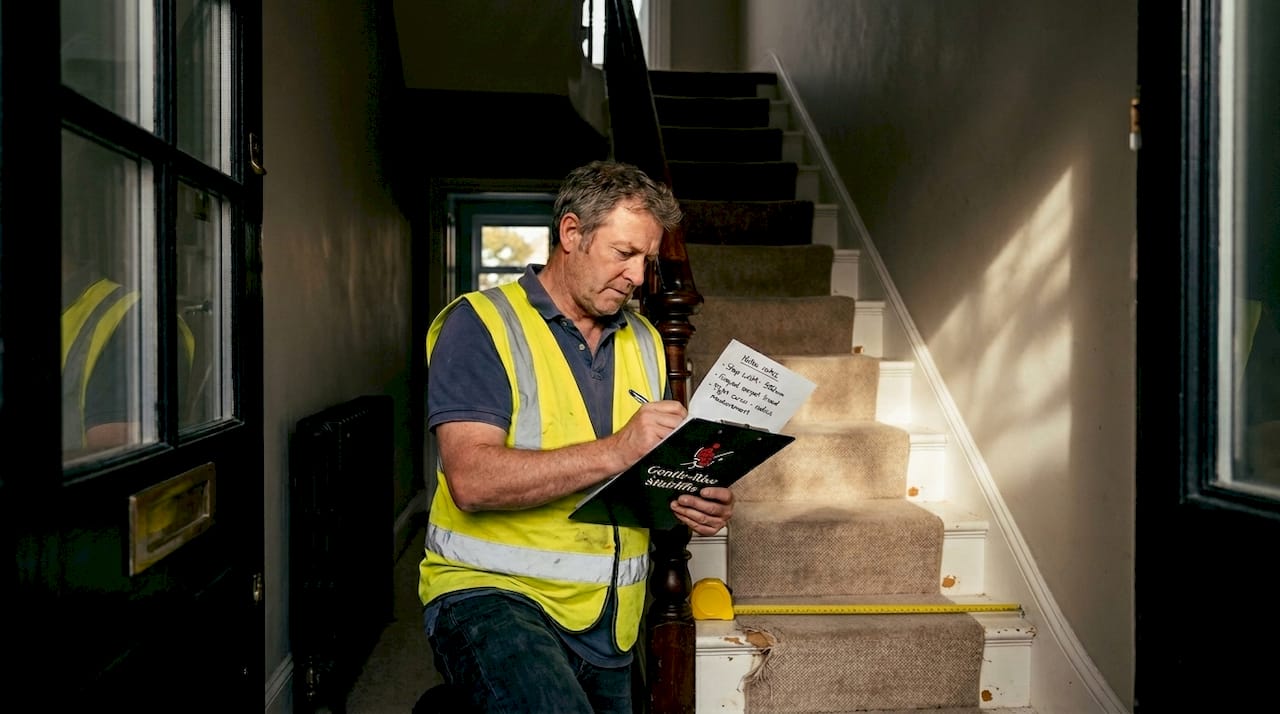
Before any physical work begins, a thorough pre-adaptation assessment saves time, money, and frustration. This is not about technical expertise. It is about gathering the right information so that the installer arrives prepared, and so that you understand what is involved.
Pre-adaptation checklist
| Check | What to confirm | Why it matters |
|---|---|---|
| Staircase type | Straight, curved, or split landing | Determines rail design and cost |
| Width of staircase | Minimum 28cm clear after rail fitted | Ensures safe passage for others |
| Power supply | Standard 240V socket near top or bottom | Stairlifts run off a standard plug |
| Obstructions | Radiators, light switches, door frames | Must be clear before fitting |
| Wall and tread condition | No loose steps or damp patches | Rail must be secured to sound structure |
| Landing space | Enough room to park the seat safely | Avoids blocking doorways |
Beyond this table, you will also want to consider whether you are looking at a brand new straight model, a curved installation, or a reconditioned option that offers excellent reliability at a lower price point.
Essential items and tools typically required on the day of installation include:
- A tape measure and spirit level for accurate positioning
- Wall plugs and fixings suitable for your staircase wall material
- The rail sections and mounting brackets supplied with your chosen model
- A 240V power source confirmed and accessible before the engineer arrives
- Adequate lighting so the installer can work safely and accurately
- A cleared staircase, with no loose rugs, stored items, or obstacles
Pro Tip: Take photographs of your staircase from top to bottom and share them with your provider before the survey visit. This saves time and allows engineers to arrive with the right components, avoiding a second appointment.
Reliability does not end at installation. A staggering 78% of users expect stairlift repairs within 24 hours of reporting a fault. That expectation tells you something important: support and aftercare matter as much as the product itself. Ask your provider about response times before you commit to a purchase. A good homeowners guide to quick stairlift preparation will always include aftercare as part of the planning process, not an afterthought.
Step by step stairway adaptation: the practical process
Once equipped and prepared, follow these step-by-step instructions to safely adapt your stairway.
This is where the process becomes concrete. Whether you are working with a professional installer or simply trying to understand what to expect on the day, this sequence covers the key stages from start to finish.
-
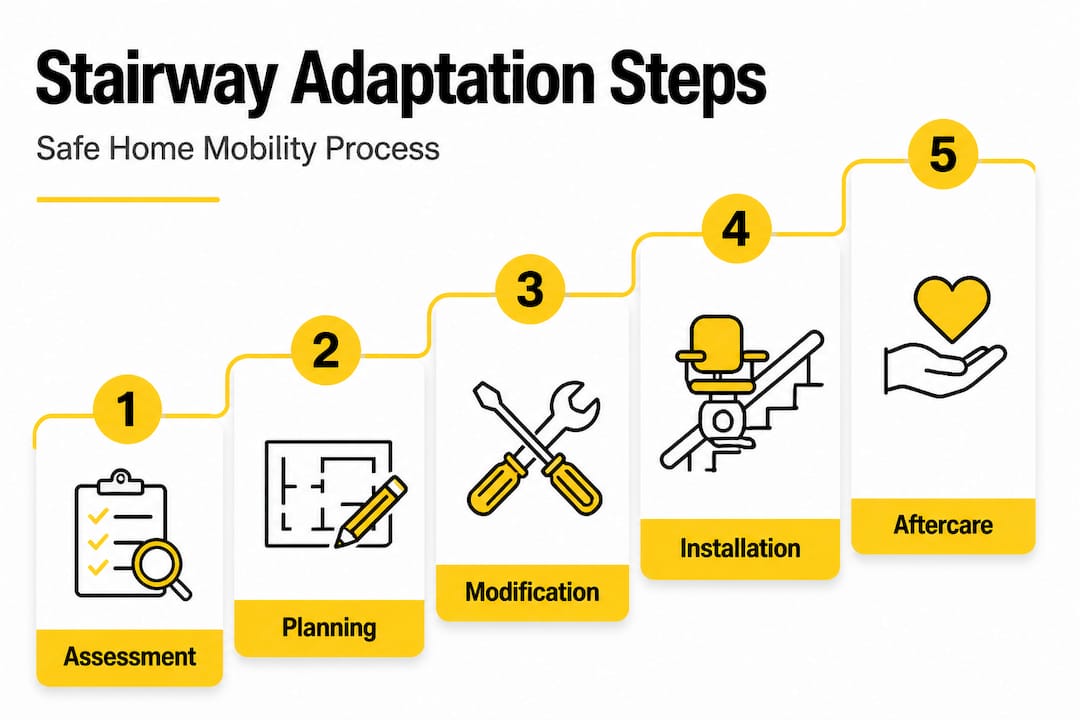
Measure and confirm. Using your pre-checks, confirm the exact length of the staircase and note any bends, landings, or obstructions. Mark the position of the power socket. A professional will re-measure on arrival, but having your own notes avoids surprises.
-
Clear the staircase completely. Remove any stair rods, loose carpet edges, stored boxes, or decorative items. This is not just about access. It is a safety requirement. Loose materials can shift during installation and create a hazard.
-
Position the rail sections. For a straight stairlift, the rail runs along the width of one tread from bottom to top. Brackets are fixed into the stair treads themselves, not the wall, which means even plaster in poor condition does not prevent installation. The rail is assembled in sections and then secured in sequence.
-
Connect the power supply. The drive unit on the rail connects to a standard 240V plug socket. There is no specialist wiring required for most domestic installations. The socket should be positioned so the cable does not trail across the walking area of the stairs.
-
Fit the seat, armrests, and footrest. These components clip or bolt onto the carriage that travels along the rail. Seat height, armrest width, and footrest angle are usually adjustable to suit the user. This stage is important because a poorly fitted seat is uncomfortable and discourages regular use.
-
Test the full range of movement. The engineer will run the chair up and down several times, checking for smooth travel, obstruction sensors, and correct parking at both ends. Most modern stairlifts include sensors that stop the chair if an obstacle is detected mid-journey.
-
User familiarisation. The installer should walk through how to operate the controls, how to fold the seat and footrest when not in use, and how to use the remote handset. Do not skip this step. Confidence in operation is part of what makes the adaptation worthwhile.
Pro Tip: If you are unsure whether a full stairlift is the right choice for your home layout, exploring stairlift alternatives such as modular ramps or rise-and-fall platforms can help you make a fully informed decision before committing.
Comparing stairway adaptation options
| Option | Best for | Typical cost range | Installation time |
|---|---|---|---|
| Straight stairlift | Simple, single-flight stairs | From £795 | A few hours |
| Curved stairlift | Staircases with bends or landings | £2,500 upward | One to two days |
| Reconditioned stairlift | Budget-conscious buyers | From £595 | One day |
| Modular ramp system | Step access at ground level | £300 upward | A few hours |
| Rise-and-fall platform | Wheelchair users or severe mobility issues | £1,500 upward | One to two days |
When it comes to knowing whether to call in professionals or to attempt any element yourself, the guidance from trusted installation experts is consistent: rail fitting, bracket securing, and electrical connections should always be handled by a qualified engineer. What you can do independently is preparation, measurement, and clearing the area. This partnership approach speeds up the job and helps keep costs manageable.
Data from the 2026 stairlift survey confirms a focus on trusted and affordable solutions above all other factors. That is reassuring, because it shows that UK homeowners are practical and value-focused rather than chasing the most expensive option on the market.
Useful reference on planning the wider home environment is available in this accessibility upgrade guide, which covers everything from handrail reinforcement to lighting improvements that complement stairlift installation.
Ensuring reliability and safety: aftercare and common pitfalls
With your stairway adapted, let's cover how to keep everything safe, reliable, and worry-free.
Installation day is not the finish line. A stairlift is a mechanical device used multiple times each day by someone whose safety depends on it. That means ongoing care is not optional. The 78% of users expecting 24hr repairs reflects how important responsiveness is when something does go wrong, but routine maintenance is what prevents faults in the first place.
Here is what good aftercare looks like in practice:
- Keep the rail clean and clear. Dust and debris can affect the drive mechanism over time. A quick wipe-down of the rail with a dry cloth every two weeks takes minutes and prevents build-up.
- Check the battery charge regularly. Most stairlifts run on rechargeable batteries that top up at the parking stations. If the chair is not parked at a charging point overnight, battery life reduces faster than expected.
- Test the safety sensors monthly. Place a soft item in the path of the footrest and send the chair downward to confirm the obstruction sensor stops the movement correctly.
- Inspect armrest and seat bolts every six months. Regular use means fixings can loosen gradually. A quick visual and tactile check takes two minutes and matters enormously.
- Schedule annual professional servicing. Even if everything feels fine, a qualified engineer can spot wear on the drive belt, carbon brushes, or charging contacts that a homeowner cannot easily detect.
"Most stairlift faults that cause disruption are preventable. The combination of basic user care and an annual service means the vast majority of adapted stairways operate without any meaningful downtime for years."
Common pitfalls to avoid include:
- Ignoring the instruction manual. Most users operate the basics confidently but miss features such as remote parking, which clears the stairs for other family members.
- Using the stairlift during a power cut without knowing battery capacity. Most models store enough charge for a limited number of cycles. Knowing this figure means you are never caught in an unexpected position.
- Delaying fault reports. If the chair feels sluggish, makes an unusual sound, or stops unexpectedly, report it immediately. Small mechanical issues become bigger ones quickly when the root cause is ignored.
- Allowing children to use the lift unsupervised. The safety sensors protect against accidental obstruction, but unsupervised use by children increases wear and raises the risk of misuse incidents.
Consistent care matters. Detailed guidance on stairlift maintenance tips and wider home accessibility planning can help you build a reliable routine from day one.
What most stairway adaptation guides overlook
Every practical guide covers measurements and installation sequences. Very few talk honestly about the emotional dimension of this decision.
At Gentle Rise Stairlifts, we have supported hundreds of UK homeowners through stairway adaptation. What we hear most often is not "I wish I had chosen a different model." It is "I wish I had done this sooner." That phrase matters. The regret of delaying adaptation after a fall is a very real and very common experience, and it is entirely preventable.
There is a quiet shift that happens when someone uses their adapted staircase for the first time. The stairs stop being a source of anxiety and become unremarkable again. That is the actual value of stairway adaptation. Not the rail or the seat, but the restoration of ordinary life. Getting upstairs to sleep in your own bed. Going down to make a cup of tea in your own kitchen. Hosting family without the background worry of navigating the staircase safely.
Cost will always be a genuine consideration. But when you weigh the price of a budget-friendly stairlift solution against the cost of even one hospital admission following a fall, including the rehabilitation, the care arrangements, and the months of reduced independence, the financial calculation becomes far less intimidating.
Community support matters more than most guides acknowledge. Talking to neighbours, local carers, or community groups who have been through the same process brings practical clarity that no article can fully replicate. If you are hesitating, seek out those conversations. The experience of someone who has already adapted their home is one of the most reassuring resources available.
Get expert help for your stairway adaptation
If you are ready to make your home safer and regain independence, professional help can ease every stage of the process.
At Gentle Rise Stairlifts, we believe that no one should feel overwhelmed by the prospect of stairway adaptation. Our team of expert installers is available to carry out free home surveys, discuss your specific staircase layout, and recommend the most suitable and affordable solution for your needs.

Whether you are exploring options for enhancing accessibility at home or you want clear guidance on finding a reliable stairlift that fits your budget and your home, we are here to help. Our Protect+ maintenance programme ensures you stay supported long after installation day, with rapid response times that match what UK homeowners rightly expect. Straight stairlift prices start from just £795, and reconditioned models are available for even greater savings without compromising on safety or quality.
Frequently asked questions
How long does stairway adaptation for a stairlift typically take?
Most domestic stairway adaptations are completed within a single day, though particularly complex or curved staircases may require two to three days to complete properly.
What is the average cost barrier for stairway adaptation in the UK?
According to 2026 survey data, 67% of surveyed homeowners cite cost as a major barrier, though reconditioned and straight models offer accessible entry points from £795.
Are there reliable alternatives to full stairlift installation?
Yes, modular ramps and rise-and-fall platforms are viable alternatives depending on your home layout, the nature of your mobility challenge, and your available budget.
How quickly can repairs be expected after installation?
The majority of stairlift users expect a repair or service response within 24 hours of reporting a fault, and reputable providers such as Gentle Rise Stairlifts aim to meet this expectation.
Is ongoing maintenance really necessary after adaptation?
Absolutely. Regular maintenance keeps your stairlift operating safely, extends its lifespan, and ensures that small issues are identified and resolved before they become costly problems.