
TL;DR:
- Simple rail and handrail adaptations are cost-effective and can significantly reduce fall risk.
- Portable ramps, step climbers, and transfer aids offer flexible solutions for temporary or less severe mobility issues.
- Permanent options like through-floor lifts and home elevators are suitable for long-term, severe mobility needs and may require structural work.
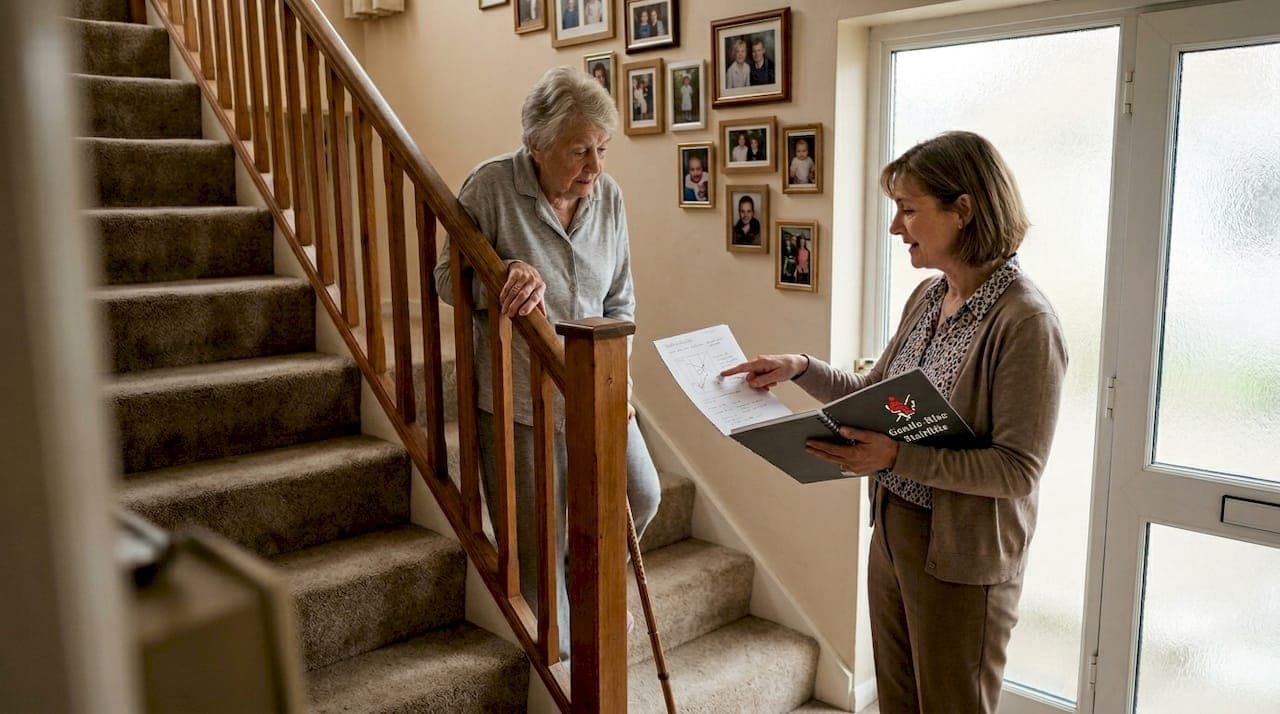
Stairs are a fact of life in most UK homes, but for anyone managing reduced mobility, they can quickly become a source of real anxiety. Whether you are recovering from a hip replacement, living with arthritis, or supporting an older relative who is becoming less steady on their feet, the question of how to manage stairs safely is urgent and often expensive. Over 60% of elderly fall-related deaths involve stairs, which makes finding the right solution genuinely important, not just convenient. The good news is that a full stairlift is not always necessary. This article walks you through the most practical, affordable alternatives, so you can make a well-informed decision based on your actual needs.
Table of Contents
- How to choose a stair lift alternative: criteria and priorities
- Portable stair solutions: ramps, step climbers, and transfer aids
- Permanent adaptations: through-floor lifts and home elevators
- Handrails, grab rails, and minor adaptations: simple and effective alternatives
- Cost and comparison: which stair lift alternative is right for you?
- Our take: why the best stair lift alternative is not always the most expensive
- Trusted mobility support for your next step
- Frequently asked questions
Key Takeaways
| Point | Details |
|---|---|
| Assessment first | Speak to an OT before choosing any stair solution to ensure it's safe and eligible for funding. |
| Simple wins | Minor adaptations like handrails can drastically reduce fall risk with minimal cost or disruption. |
| Match solution to need | Portable, permanent, or community-funded options suit different budgets and mobility levels, so select the right one for your unique home. |
| Compare costs | Always compare installation, maintenance, and grant eligibility for each alternative before committing. |
How to choose a stair lift alternative: criteria and priorities
Before you spend a penny, it is worth stepping back and thinking clearly about what you actually need. The right solution for a 70-year-old with mild arthritis is very different from what suits someone permanently using a wheelchair. Getting this wrong is not just costly; it can be genuinely dangerous.
Here are the key factors to weigh up before choosing any alternative:
- Your current mobility level and whether it is likely to change in the coming months or years
- The type and layout of your staircase, including whether it is straight, curved, or unusually steep
- Whether you need a permanent or temporary solution, for example after surgery versus managing a long-term condition
- Your budget, including whether you may qualify for NHS or council funding
- Installation requirements, including whether you own or rent your property
Experts at Which? recommend an OT assessment before committing to any mobility adaptation, and Age UK echoes this strongly. An occupational therapist (OT), arranged through your local council, can assess your home and recommend solutions that genuinely match your risk level. This step is free and can also unlock funding routes you may not know about.
Speaking of funding, the NHS provides free minor adaptations under £1,000, such as grab rails, and the Disabled Facilities Grant (DFG) can cover more significant work up to £30,000 for those who qualify. These are means-tested, but many people are surprised to find they are eligible. Exploring mobility aids for independence alongside formal assessment gives you the clearest possible picture before committing.
Pro Tip: Do not wait until a fall happens to act. Booking an OT assessment early means you can plan gradually rather than making rushed decisions under pressure.
Portable stair solutions: ramps, step climbers, and transfer aids
Once you know what matters for your safety and lifestyle, you can explore the most flexible alternatives to a fixed lift. Portable solutions are particularly well-suited to people with temporary mobility reductions, those in rented accommodation, or households where multiple people with different needs share the space.
Portable ramps are the simplest entry point. They work best for wheelchair users or those who only need to overcome one or two steps, such as at a front door threshold. They fold away easily, require no installation, and can be moved between locations. However, they are not practical for a full staircase.
Step climbers are battery-powered devices that can carry a person in a wheelchair up a flight of stairs with the assistance of a carer. They are impressive pieces of kit, but they come with important caveats. Weight limits apply, and they require a trained operator. They are better suited to occasional use or care settings than daily independent living.
Transfer aids cover a range of manual equipment, from stair-climbing frames to sliding boards, designed to help a carer assist someone who cannot manage stairs independently. These are low-cost but do require physical input from another person.
Here is a quick summary of portable option trade-offs:
- Pros: No permanent installation, lower upfront cost, easy to remove or share, suitable for renters
- Cons: Not suitable for complex staircases, may require carer assistance, limited for severe mobility impairment
"The cheapest option is rarely the right option unless it genuinely fits the user's needs and home layout. Matching the solution to the individual is everything." This is a point stairlift experts consistently make when advising on cost-effective alternatives.
For those who need something more structured, exploring affordable stairlift solutions or checking eligibility for the Disabled Facilities Grant can open up additional routes. Our mobility aids guide also covers a wider range of assistive equipment worth considering.
Permanent adaptations: through-floor lifts and home elevators
For those whose mobility challenges are ongoing or complex, investing in permanent adaptations could make the home future-proof. Through-floor lifts and home elevators sit at the higher end of the investment scale, but for the right person, they can be genuinely life-changing.
Through-floor lifts are vertical platforms that travel between floors through an opening cut in the ceiling and floor. They are designed for wheelchair users or people with severe mobility limitations who cannot use a stairlift at all. They take up more space than a stairlift and require structural work, but they offer full accessibility for those who need it most.
Home elevators are a step further again. They are enclosed, more aesthetically integrated into the home, and carry a significantly higher price tag. They tend to suit larger properties where long-term investment makes financial sense, particularly if the property is being adapted for resale value as well as personal use.
Here is a comparison of the two permanent options:
| Feature | Through-floor lift | Home elevator |
|---|---|---|
| Typical cost | £5,000 to £15,000 | £15,000 to £30,000+ |
| Space required | Moderate | Significant |
| Structural work | Yes | Yes |
| Suitable for wheelchairs | Yes | Yes |
| DFG funding possible | Sometimes | Rarely |
| Ongoing maintenance | Required | Required |
As research on stair-related falls notes, vertical lifts can significantly improve quality of life, but they are best chosen after a thorough OT assessment rather than based on cost alone. Funding through the Disabled Facilities Grant is sometimes available for through-floor lifts, but home elevators generally fall outside NHS funding scope. For guidance on safer home mobility options, it is worth speaking to a specialist before committing to structural work.
Handrails, grab rails, and minor adaptations: simple and effective alternatives
Not every solution needs heavy investment or disruption. Simple adaptations can make the biggest difference, particularly for people with moderate rather than severe mobility challenges.
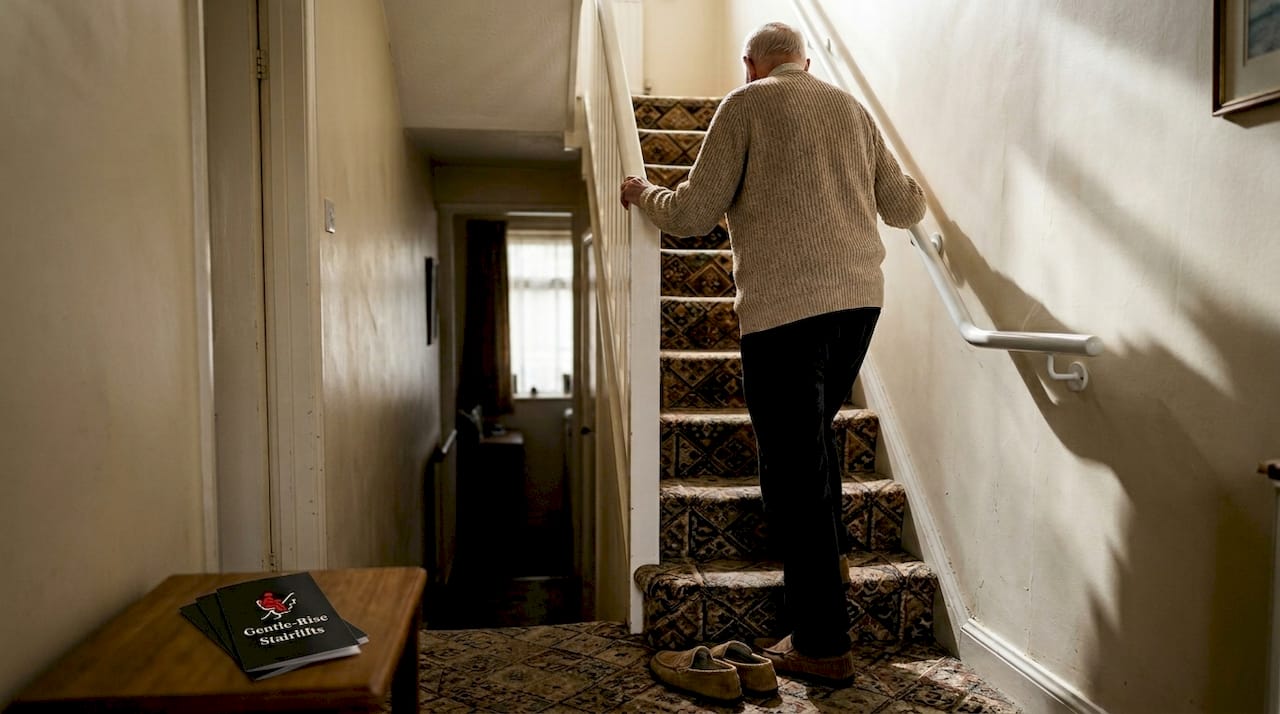
Handrails are one of the most underestimated stair safety tools available. Many UK homes have a rail on only one side of the staircase, or rails that do not extend the full length of the stairs. Doubling up, extending rails to cover every step, and ensuring they are firmly anchored can dramatically reduce fall risk. This is a quick, low-cost fix that is often overlooked.
Grab rails serve a slightly different purpose. Positioned at key transition points, such as at the top or bottom of the stairs, near doorways, or in hallways, they give users a stable anchor point when moving between surfaces. They are particularly effective for people who are unsteady when changing direction or rising from a seated position.
Key benefits of minor adaptations:
- Cost: Often free under NHS minor adaptations (under £1,000)
- Disruption: Minimal, typically fitted within hours
- Effectiveness: Statistically proven to reduce home fall risk
- Eligibility: Most homeowners and many renters qualify
Statistic to note: Over 60% of elderly fall-related deaths involve stairs, yet simple rail adaptations are among the most cost-effective interventions available. The NHS minor adaptations programme covers grab rails at no cost, making this the logical first step for anyone with moderate stair difficulty. You can also find broader guidance on improving home accessibility and check the Disabled Facilities Grant guidance for further support.
Cost and comparison: which stair lift alternative is right for you?
With the main alternatives covered, it is time to compare them side by side and decide based on your circumstances. The table below gives a practical overview:
| Solution | Typical cost | Installation | NHS/DFG funding | Best suited for |
|---|---|---|---|---|
| Grab rails and handrails | Free to £300 | Hours | Yes (free under £1,000) | Moderate mobility issues |
| Portable ramps | £50 to £500 | None | Sometimes | Wheelchair users, 1-2 steps |
| Step climbers | £2,000 to £5,000 | None | Rarely | Occasional use with carer |
| Reconditioned stairlift | £795 to £2,500 | Same day | DFG possible | Regular independent use |
| Through-floor lift | £5,000 to £15,000 | Structural work | DFG sometimes | Wheelchair users, permanent need |
| Home elevator | £15,000+ | Major work | Rarely | High-end, long-term investment |
Straight stairlifts cost between £1,250 and £4,000 new or reconditioned, while curved models start at around £3,000. Rentals from approximately £40 per month make stairlifts accessible for post-surgery recovery too, which is worth factoring in if your need is temporary.
Here is a practical action list for your next steps:
- Book an OT assessment through your local council to understand your risk level and funding eligibility
- Start with minor adaptations such as rails if your mobility is moderate and your risk is low to medium
- Explore portable options if you rent, need flexibility, or require a short-term fix
- Consider a reconditioned stairlift or rental if you need regular, independent stair access
- Investigate DFG funding before committing to a through-floor lift or home elevator
For a broader look at home accessibility solutions or to read home adaptations advice from Age UK, both are excellent starting points alongside professional assessment.
Our take: why the best stair lift alternative is not always the most expensive
After years of working with people across the UK on stair mobility, one pattern stands out clearly. People consistently overestimate what they need and underestimate what already works. There is a tendency, often driven by worry or marketing, to jump straight to the most expensive, most permanent solution available. In many cases, that is simply not necessary.
The research backs this up. Simple rail adaptations, properly installed and positioned, are among the most effective fall-prevention tools available. Yet they are often dismissed as "not enough" by people who assume that a more technical solution must be safer. That assumption is wrong more often than you might expect.
A staged approach makes far more sense for most people. Start with what is least invasive and least costly. Escalate only when genuine need demands it. This is not about cutting corners. It is about matching the solution to the person, not to the price tag. Independence through mobility aids is achievable at many different investment levels, and an OT assessment will tell you far more than any brochure.
Trusted mobility support for your next step
If you have worked through this guide and are ready to explore professional support, GentleRise Stairlifts offers a range of solutions designed around real budgets and real homes across the UK. Whether you are considering a new installation, a short-term rental, or want to explore what affordable reconditioned stairlifts could offer, the team is ready to help without pressure.
We offer free home surveys with no obligation, so you can get expert advice tailored to your specific staircase and mobility needs before making any decision. From straight and curved models to rental options for post-surgery recovery, our focus is on enhancing accessibility in a way that works for your life and your budget. Get in touch today to book your free survey.
Frequently asked questions
Can I get funding for stair lift alternatives in the UK?
Yes. The NHS covers free minor adaptations under £1,000, such as grab rails, and the Disabled Facilities Grant can fund more significant adaptations up to £30,000 for eligible applicants. Your local council can advise on what you qualify for after an assessment.
Are portable ramps and step climbers safe for the elderly?
They can be safe when properly matched to the user's physical needs and used correctly, but over 60% of elderly fall-related deaths involve stairs, so professional guidance before choosing any portable solution is strongly recommended.
What is the cheapest safe alternative to a stairlift?
Adding handrails or grab rails is usually the most affordable and immediately effective option. These are often available free under NHS minor adaptations for eligible individuals, making them the logical first step.
Who should assess my suitability for stairlift alternatives?
A professional occupational therapist arranged through your local council should assess your needs first. OT assessment is recommended before choosing any home mobility adaptation, both for safety and to confirm funding eligibility.