

Choosing the wrong stairlift is an expensive mistake that families make more often than you might expect. The problem usually starts not with the product itself, but with skipping a proper mobility assessment beforehand. Without a clear picture of your needs, you risk buying a model that does not fit your staircase, cannot support your weight, or becomes unsuitable within a year as your condition changes. This guide walks you through every stage of the process, from spotting early warning signs to verifying your stairlift is still right for you after installation, so you spend wisely and stay safe.
Table of Contents
- Understanding mobility challenges and signs to act
- Preparing for your mobility assessment: what you need
- The step-by-step process: getting your needs assessed
- Making sense of your results: choosing the right stairlift
- Verifying the fit: post-installation checks and ongoing needs
- What most guides miss about mobility needs assessments
- Next steps: expert help and cost-efficient stairlift solutions
- Frequently asked questions
Key Takeaways
| Point | Details |
|---|---|
| Early assessment is vital | Recognising mobility challenges and seeking an OT assessment prevents injury and ensures the right home adaptation. |
| Prepare for your OT visit | Organising documents and questions helps streamline the assessment and improves outcomes. |
| Choose solutions by need | Let the OT report and user requirements guide your stairlift selection, not just price. |
| Reconditioned means savings | Opting for a reconditioned stairlift can deliver reliable performance and significant cost cuts. |
| Review needs regularly | Revisit your mobility and stairlift suitability every year or when needs change, to ensure ongoing safety. |
Understanding mobility challenges and signs to act
Mobility does not decline overnight. It tends to shift gradually, which makes it easy to dismiss early warning signs as temporary tiredness or a bad day. Recognising the real signals early is what separates a proactive decision from a reactive one made after a fall.
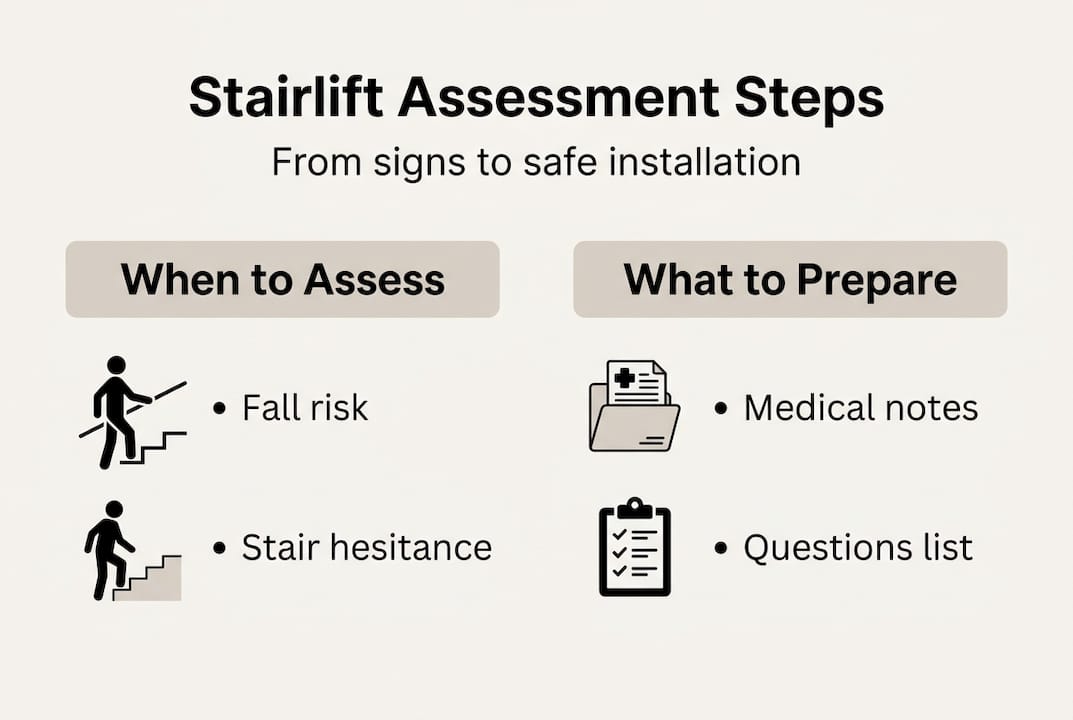
Common signs that a formal mobility review is overdue include:
- Gripping the banister tightly every time you climb or descend stairs
- Pausing mid-staircase to catch your breath or steady yourself
- Unexplained bruising from minor knocks you did not notice at the time
- A recent fall or near-miss on the stairs, even if no injury occurred
- New diagnoses such as Parkinson's, arthritis, or post-surgical recovery affecting balance
- Increased reliance on others to help you move between floors
Any one of these is a signal worth taking seriously. Two or more together suggest that a structured assessment is not optional. The NICE multifactorial falls assessment covers gait, balance, and mobility for older people at risk, and it is widely used as a clinical benchmark for determining whether home adaptations like stairlifts are appropriate.
The urgency matters too. Falls risk affects 30% of over-65s, and many of those falls happen on stairs. Early intervention does not just prevent injury. It preserves independence for longer, which is often the outcome families care about most.
For practical guidance on safer home mobility, reviewing your current setup before a crisis occurs is always the better path.
Pro Tip: Keep a simple weekly mobility diary for one month. Note any moments of unsteadiness, pain, or hesitation on the stairs. This record becomes genuinely useful evidence when you speak to an occupational therapist.
Preparing for your mobility assessment: what you need
Walking into a mobility assessment unprepared wastes everyone's time and can result in a less accurate outcome. Occupational therapists (OTs) are thorough, but they work with the information available to them during a single visit. The more you bring to the table, the better the result.
An OT or council assessor will typically examine:
- The staircase itself: width, number of steps, any bends or landings, wall fixings
- Your physical ability: how you currently manage stairs, grip strength, balance
- Your home layout: where you sleep, where the bathroom is, and whether a stairlift would genuinely solve the problem
- Safety hazards: loose carpet, poor lighting, inadequate handrails
Before the visit, gather the following documents:
| Document | Why it matters |
|---|---|
| GP's medical summary | Confirms diagnoses relevant to mobility |
| Current medication list | Some medications affect balance and alertness |
| Record of recent falls or incidents | Helps the OT assess risk level accurately |
| Any previous OT or physio reports | Provides a baseline for comparison |
Free OT assessments via local council social services determine whether a stairlift is necessary and suitable, and the home visit involves observing how you actually use your stairs rather than relying on self-reported ability alone. That distinction matters because people often underestimate or overestimate their own risk.
For families exploring affordable stairlift solutions, the OT assessment is the foundation that connects your real needs to the right product.
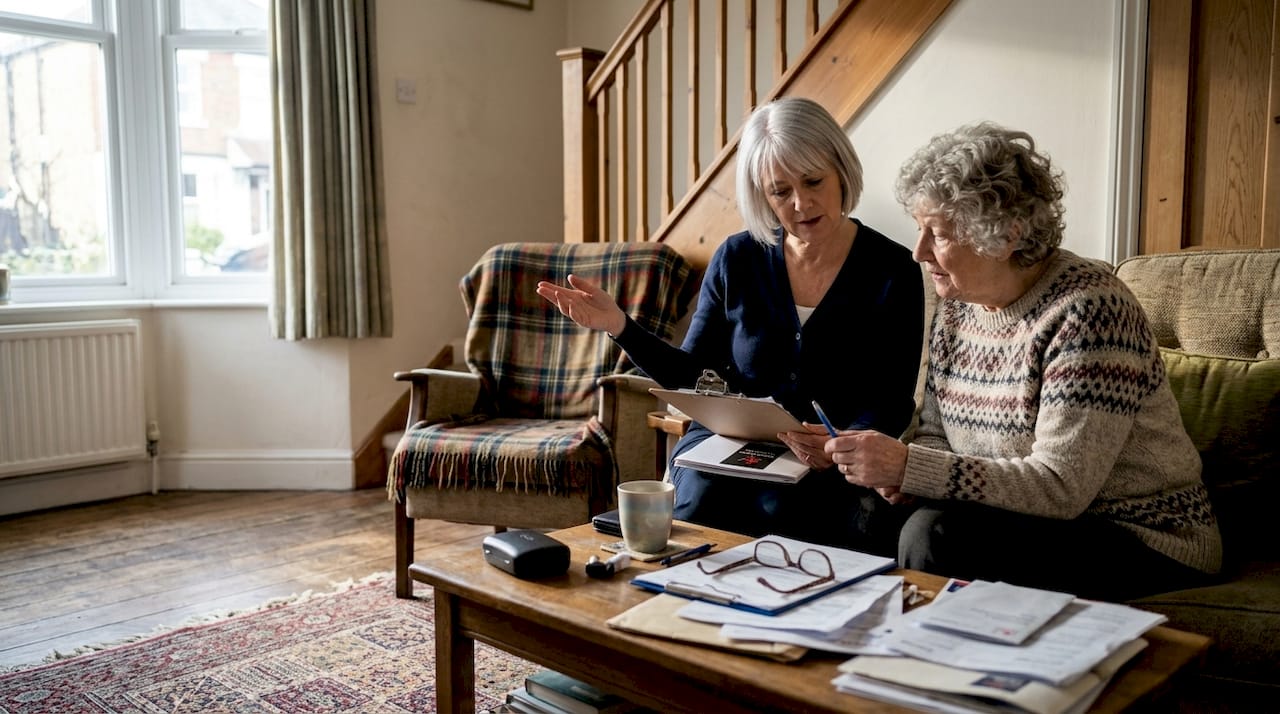
Pro Tip: Write down three or four specific questions before the OT visits. Ask about future-proofing, maintenance responsibilities, and what happens if your needs change. You will get far more useful answers than if you wait to see what comes up.
The step-by-step process: getting your needs assessed
Knowing what to expect at each stage removes a lot of the anxiety around the assessment process. Here is how it typically unfolds:
- Contact your local council's social services department and request a care needs assessment. This is your legal right under the Care Act 2014.
- Wait for an OT to be assigned and a home visit scheduled. Waiting times vary by council, but you can ask for an urgent review if there is an immediate safety risk.
- The OT visits your home and observes your mobility, your staircase, and your living arrangements in person.
- A written report is produced outlining recommended adaptations, which may include a stairlift, grab rails, or other modifications.
- The report links to grant eligibility, particularly the Disabled Facilities Grant (DFG).
If the OT confirms a stairlift is needed, you could access up to £30,000 in funding through the Disabled Facilities Grant in England. This is means-tested for adults but not for children, and it requires evidence of medical need and no cheaper suitable alternative.
The NHS Social Care Needs Assessment process is the recommended starting point before any private assessment, because it combines mobility evaluation with grant eligibility in a single step. Paying privately for an assessment when you could access the same service free through the council is simply unnecessary.
| Route | Cost | Grant eligible | Speed |
|---|---|---|---|
| Council OT assessment | Free | Yes | 2 to 8 weeks typically |
| Private OT assessment | £150 to £300 | No direct link | 1 to 2 weeks |
For those curious about flexible funding models, stairlift subscription assessments are worth exploring alongside the complete stairlift guide for a fuller picture of your options.
Making sense of your results: choosing the right stairlift
Once you have your assessment report, the next challenge is matching its findings to an actual product without overspending or choosing something that will not last. This is where many families make avoidable errors.
The first decision is usually new versus reconditioned. Straight stairlifts cost £2,250 to £2,750 new on average, while reconditioned models run £1,200 to £2,200, and curved stairlifts start at £4,000. All stairlifts are zero-rated for VAT when purchased by a disabled person, which is a saving worth confirming with your supplier. Reconditioned stairlifts offer 40 to 50% savings versus new models and typically come with warranties, making them a genuinely sensible choice for standard straight staircases.
Beyond price, match features to your specific needs:
- Straight vs curved: Curved models are required for staircases with bends or intermediate landings
- Seat style: Perch seats suit those who struggle to bend their knees; standard seats suit most users
- Controls: Large, simple joystick controls are essential for users with arthritis or cognitive impairment
- Safety sensors: Obstruction sensors on the footrest and carriage prevent accidents if something is in the path
- Weight capacity: Standard models carry up to 120 kg; heavier-duty options go higher
Unique user needs such as multi-user households, dementia, or very narrow staircases all require specific model consideration. A family where two people of different weights will use the same stairlift needs a model rated for the heavier user. Guidance on stairlift weight limits and safest stairlift features can help you narrow down the right specification.
Pro Tip: Always ask for the warranty terms in writing on any reconditioned model. A reputable supplier will offer at least 12 months of parts and labour cover as standard.
Verifying the fit: post-installation checks and ongoing needs
Installation day is not the finish line. It is the beginning of a new phase that requires its own attention. A stairlift that fits perfectly on day one may become unsuitable within 18 months if your health changes or a second family member starts using it regularly.
After installation, work through this checklist:
- Comfortable seating position: You should be able to sit and stand without straining
- Footrest height: Feet should rest flat without dangling or being cramped
- Controls within easy reach: Test the joystick or button from a seated position before the installer leaves
- Call and send functions: Confirm the remote controls work from both top and bottom of the stairs
- Charging indicator: The stairlift should park at a charging point when not in use
Watch for these warning signs as time passes:
- A new health diagnosis affecting your posture, grip, or weight
- A second household member needing to use the stairlift regularly
- Approaching the weight limit of your current model
- Difficulty operating the controls due to worsening arthritis or cognitive changes
User-specific needs evolve, and a stairlift that was right at purchase may need upgrading or adjusting. Reviewing stairlift weight safety annually is a sensible habit. Keeping your assessment documentation updated also matters practically: 76% of Disabled Facilities Grant assessments for stairlifts succeed, and having current records makes any future funding application far smoother.
Pro Tip: Schedule a brief annual review with your OT or stairlift provider. A 20-minute check-in can identify small issues before they become safety concerns.
What most guides miss about mobility needs assessments
Most articles about stairlifts focus almost entirely on product features and prices. That is understandable, but it misses the point. The assessment itself is the most important step, and it is the one most families rush or skip entirely.
The biggest errors we see are people buying on price alone without any professional input, then discovering the model does not suit their staircase or their condition. A written, formally reviewed assessment is not bureaucratic paperwork. It is your safety net and your evidence base for funding.
What most guides also fail to mention is how quickly needs can change. Someone recovering from a hip replacement may need a stairlift for six months. Someone with a progressive condition may need a completely different model within two years. Planning for that progression from the outset, rather than treating the first purchase as permanent, saves significant money and stress.
Choosing a most reliable stairlift means choosing a supplier who will still be there when your needs shift, not just one who offers the lowest upfront price. Aftercare, flexibility, and honest advice matter far more than the initial figure on a quote.
Next steps: expert help and cost-efficient stairlift solutions
Once your assessment is complete, matching its findings to the right stairlift is where we come in. At GentleRise Stairlifts, we work directly from your assessed needs rather than pushing a one-size-fits-all solution. Whether your report points to a straight, curved, or reconditioned model, we help you understand the full stairlift cost guide before you commit to anything.

Our affordable reconditioned stairlifts start from £795 and come with professional installation, often completed within hours. Our Protect+ aftercare programme means your stairlift stays safe and functional as your needs evolve. Book a free home survey today and let us match the right solution to your assessment results.
Frequently asked questions
How do I get a free mobility assessment for stairlift suitability?
Contact your local council's social services department to request an occupational therapist home visit. This free OT assessment determines whether a stairlift is necessary and appropriate based on a direct observation of your stair use and home layout.
What is covered by the Disabled Facilities Grant for stairlifts?
If an OT confirms a stairlift is needed, the DFG covers up to £30,000 in England, subject to means-testing for adults. Children are not means-tested, and the grant requires evidence of medical need with no cheaper suitable alternative available.
Should I buy a new or reconditioned stairlift?
Reconditioned models save 40 to 50% compared to new, and reputable suppliers include warranties. For standard straight staircases, a reconditioned stairlift is a reliable and cost-effective choice.
How often should mobility needs be reviewed after installing a stairlift?
Review your needs with your OT or stairlift provider at least once a year, or sooner if your health condition changes. Evolving user needs such as weight changes, new diagnoses, or additional household users can all affect whether your current model remains suitable.