
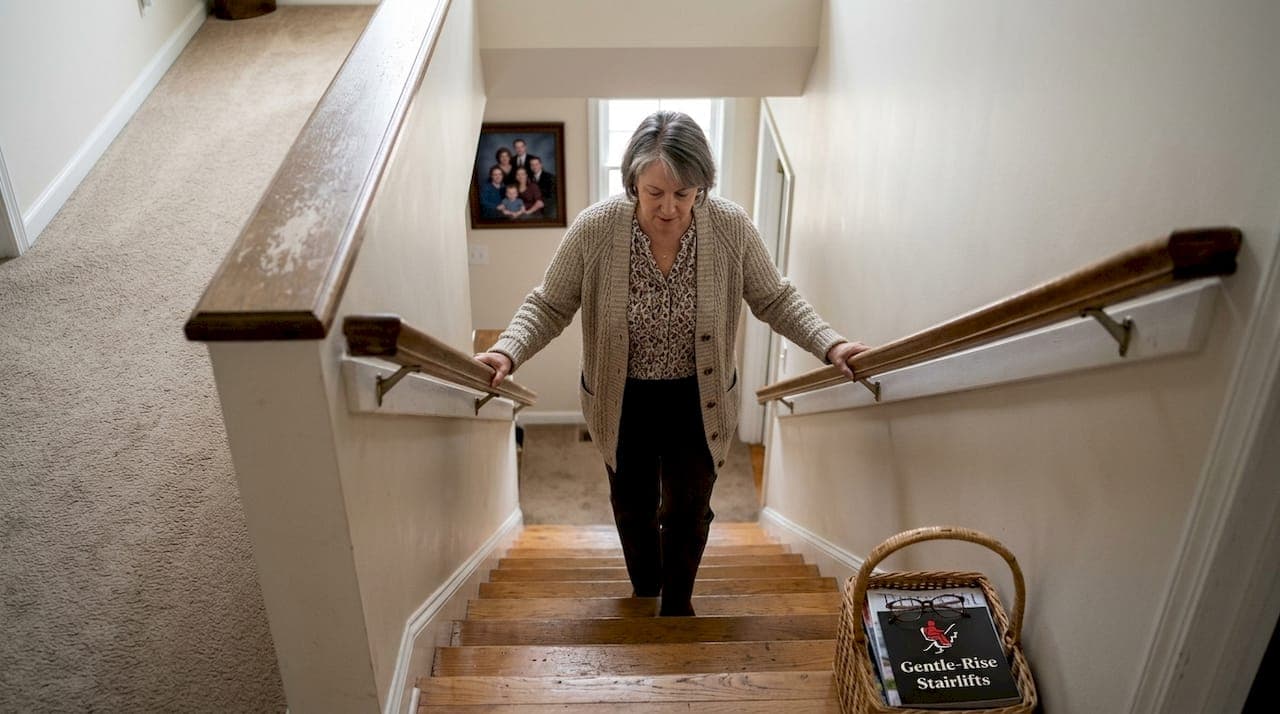
For many people with reduced mobility, the staircase is the most daunting part of the home. Whether you are recovering from a hip replacement, managing arthritis, or simply finding that stairs feel less certain than they once did, the risk of a fall on the stairs is real and serious. Falls on stairs account for a significant proportion of home injuries among older adults in the UK. The good news is that most homes can be made considerably safer with targeted, low-disruption improvements. This guide walks you through the key criteria, practical upgrades, and when to consider more advanced solutions.
Table of Contents
- Core criteria for accessible stairs
- Handrails: Essential support for every staircase
- Non-slip surfaces and clear markings
- Lighting and visibility: Bright ideas for safer stairs
- Declutter and adapt: Simple habits and big-impact changes
- A practical perspective: How much is 'enough' accessibility?
- Elevate your home: Accessible solutions from GentleRise
- Frequently asked questions
Key Takeaways
| Point | Details |
|---|---|
| Fit secure handrails | Handrails on both sides make stairs dramatically safer for those with balance issues. |
| Add non-slip solutions | Use anti-slip treads or securely fitted carpets to significantly reduce slip risk. |
| Upgrade stair lighting | Bright, even lighting and clear step edges help everyone spot hazards instantly. |
| Keep stairs clutter-free | Removing items from your stairs is a zero-cost habit that greatly improves safety. |
| Assess before major changes | Expert consultation ensures you choose only the adaptations your home actually needs. |
Core criteria for accessible stairs
Before making any changes, it helps to understand what makes a staircase genuinely accessible. The UK has clear standards that define safe stair design, and even if your home was built decades ago, these benchmarks give you a useful starting point for a self-assessment.
According to UK Building Regulations Part K, domestic stairs should have a maximum rise of 220mm, a minimum going (the horizontal depth of each tread) of 220mm, a pitch no steeper than 42 degrees, and a headroom clearance of at least 2 metres. Handrails are required on stairs wider than 1000mm. These figures are not arbitrary. They reflect decades of research into what keeps people safe on stairs.
When you walk your staircase with fresh eyes, look for these warning signs:
- Steps that feel uneven or inconsistent in height
- A steep pitch that forces you to lean forward
- Handrails that wobble, are too low, or are missing entirely
- Poor lighting that leaves any step in shadow
- Worn or slippery tread surfaces
- Loose carpet or exposed nail strips
"The staircase is only as safe as its weakest element. One loose handrail or one poorly lit step can undo every other precaution."
If your stairs fail on more than one of these points, prioritise the fixes that address the greatest risk first. For safer home mobility, the combination of handrails, surface grip, and lighting tends to deliver the most immediate benefit. If structural issues such as steep pitch or insufficient tread depth are present, a professional assessment is worth arranging sooner rather than later.
Handrails: Essential support for every staircase
Of all the improvements you can make, fitting robust handrails delivers the most immediate and measurable difference. A handrail gives you something to hold when balance wavers, and that split second of support can prevent a serious fall.
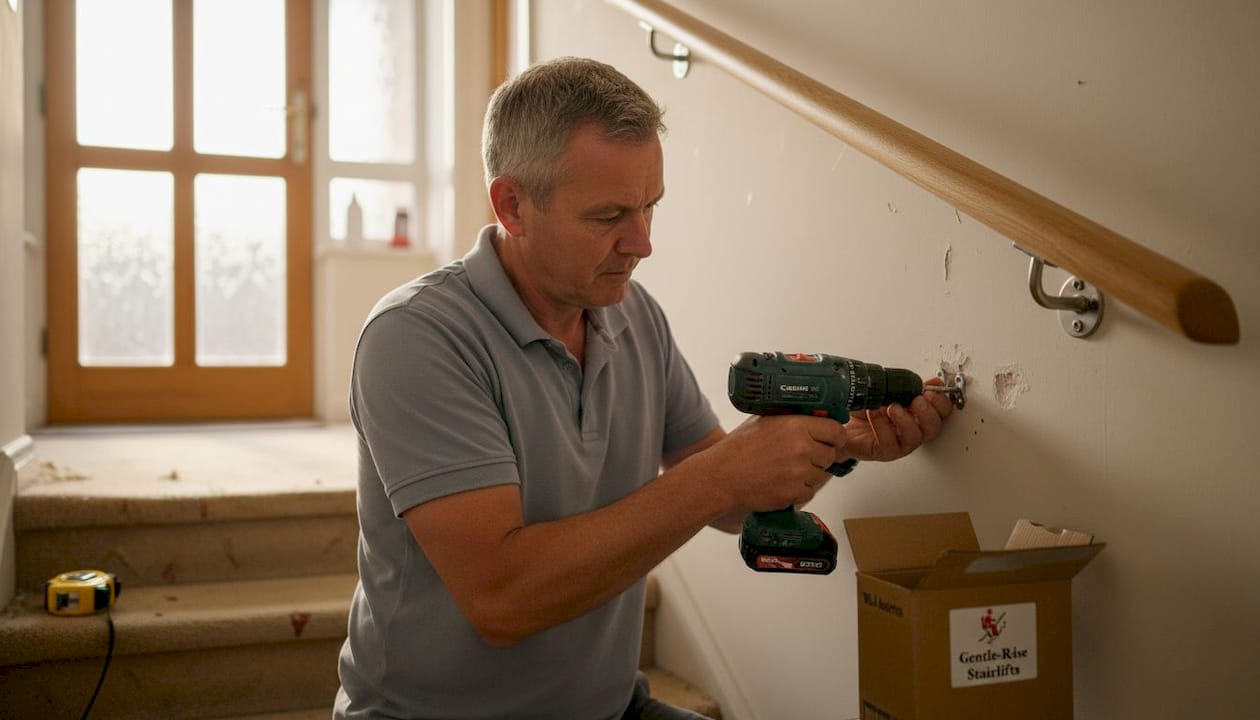
Install handrails on both sides of the staircase wherever possible. The recommended height is between 900mm and 1000mm from the pitch line of the stair. Both sides matter because people often favour one hand, and having support on the weaker side can be critical.
Here is a practical sequence for upgrading your handrails:
- Measure the existing rail height and compare it to the 900 to 1000mm standard.
- Test each rail for wobble by applying firm lateral pressure. Any movement means the fixings need attention.
- Check the grip profile. Round or oval rails with a diameter between 40mm and 50mm are easiest to hold firmly.
- Consider extending rails beyond the top and bottom steps so you have support before you even step onto the staircase.
- If arthritis or weak grip is a concern, look for rails with a textured or rubberised finish.
Pro Tip: Avoid ornate or square-edged handrails if you have reduced hand strength or arthritis. A smooth, round profile that your fingers can wrap around fully is far more secure and far less tiring to use.
For guidance on fitting handrails and other accessibility upgrades, a professional can assess your specific staircase layout and recommend the most suitable fixings. In some cases, where grip strength is severely limited or the staircase is very steep, handrails alone may not be sufficient. That is when affordable stairlift solutions become worth exploring as a natural next step.
Non-slip surfaces and clear markings
With handrails in place, the next critical aspect is the surface you step on. A well-gripped rail cannot fully compensate for a slippery tread, and many stair falls happen precisely because the foot slides on contact.
Non-slip surfaces such as anti-slip treads, grip strips, or fitted carpet all reduce the risk of slipping significantly. Each option has different characteristics worth comparing:
| Solution | Approximate cost | Installation | Best for |
|---|---|---|---|
| Stick-on anti-slip strips | £1 to £3 per step | DIY, 30 minutes | Hard wood or tile stairs |
| Fitted stair carpet | £200 to £600 full flight | Professional recommended | General use, warmth |
| Rubber or vinyl tread covers | £5 to £15 per step | DIY or professional | High-traffic stairs |
| Contrasting nosing strips | £3 to £8 per step | DIY or professional | Low vision, visibility |
Contrasting nosings deserve a special mention. A nosing is the front edge of each step, and marking step edges with a contrasting colour or material makes each step clearly visible, which is particularly valuable for anyone with reduced vision or depth perception. Many falls happen because a person misjudges where one step ends and the next begins.
A few important points about surface choices:
- Fitted carpet should be tightly secured with no lifting edges or bubbles
- Avoid loose rugs or mats at the top or bottom of the staircase entirely
- Replace worn anti-slip strips promptly as they lose effectiveness quickly
- Check tread covers regularly for any lifting corners that could catch a foot
For more practical stair safety tips, combining non-slip surfaces with good handrails creates a layered approach to fall prevention that is far more effective than either measure alone.
Lighting and visibility: Bright ideas for safer stairs
With safer steps beneath your feet, focus next on what you can see. Good lighting on a staircase is genuinely transformative, yet it is one of the most overlooked upgrades. A staircase that is perfectly safe in daylight can become hazardous in the evening if the lighting is dim or poorly positioned.
Bright, even lighting with switches at both the top and bottom of the stairs is the NHS-recommended baseline. Motion-activated sensors and LED strip lighting along the skirting or underside of treads are affordable modern additions that make a real difference, particularly for those who use the stairs at night.
Here are the key lighting principles to follow:
- Position lights so every tread is fully illuminated, with no step in shadow
- Fit two-way switches so you never have to navigate the stairs in darkness to reach a switch
- Use LED bulbs of at least 800 lumens for a bright, clear light
- Consider plug-in motion-sensor night lights on the landing and at the foot of the stairs
- Avoid bare bulbs that cause glare, which can be just as disorienting as dim light
Key fact: The NHS identifies poor lighting as one of the leading environmental risk factors for falls in the home among older adults. Addressing it costs very little compared to the consequences of a fall.
Pro Tip: Replacing standard bulbs with higher-lumen LED alternatives costs less than £10 and takes minutes. It is one of the fastest, cheapest, and most effective stair safety improvements available.
LED strip lighting installed along the base of the staircase wall is another option that costs under £30 and creates a clear visual guide to each step without harsh overhead glare. For further ideas, our guide on lighting solutions for stairs covers practical product choices and installation tips.
Declutter and adapt: Simple habits and big-impact changes
After optimising physical features, turn to daily habits and longer-term options for even greater safety. The physical environment matters, but behaviour plays an equally important role in preventing stair falls.
Keeping stairs clutter-free is one of the simplest and most effective habits you can adopt. Age UK highlights this consistently in its home adaptation guidance. Objects left on stairs, even temporarily, are a serious trip hazard.
Here is a practical routine to build into your week:
- Do a quick visual check of the staircase each morning and evening.
- Never leave items on the stairs with the intention of carrying them up later. Deal with them immediately.
- Check that handrails and treads remain secure, especially after any household work or cleaning.
- Inspect carpet and tread covers monthly for any lifting or wear.
- Ensure the stair light bulbs are working and replace them at the first sign of flickering.
Pro Tip: An Occupational Therapist (OT) assessment is free through the NHS in many areas and can identify hazards and solutions specific to your home and your condition. Many people are surprised by how much a single visit reveals.
When habits and physical upgrades are not enough, it is time to consider more significant adaptations. Altering stair pitch or tread depth is possible but disruptive and costly. For most people, the more practical route is a stairlift. Understanding stairlift maintenance is also important once you have one installed, ensuring it remains reliable for years.
A practical perspective: How much is 'enough' accessibility?
There is a tendency to assume that making a staircase truly accessible requires expensive structural work or high-tech equipment. In our experience, that assumption leads many people to delay making any changes at all, which is the worst outcome.
The reality is that simple low-cost fixes such as handrails, improved lighting, and non-slip surfaces resolve the majority of stair safety concerns before a stairlift ever becomes necessary. A stairlift is a life-changing piece of equipment, but it is most valuable when other measures genuinely are not enough, typically after an OT assessment confirms it.
What we see most often is people who have lived with a wobbly handrail or a dim stair light for years, never connecting those small deficiencies to their growing anxiety about the stairs. Fix those first. Measure the difference. Then make a considered decision about whether further adaptation is needed.
True accessibility is about removing barriers, not spending the most money. For expert stairlift tips and guidance on when a stairlift genuinely adds value, we are always happy to help you think it through.
Elevate your home: Accessible solutions from GentleRise
If you have worked through the steps in this guide and feel that a stairlift could be the right solution for your home, GentleRise Stairlifts is here to help. We specialise in straight, curved, and reconditioned stairlifts, with prices starting from £795 and installation often completed within hours.

Our team offers free home surveys across the UK, giving you a no-obligation assessment of your staircase and your options. Whether you need a permanent solution or a short-term rental while recovering from surgery, we have flexible plans to suit your situation. Explore our range of enhancing accessibility services or browse our reliable stairlift options to find the right fit for your home and your budget.
Frequently asked questions
What are the most important first steps to make my stairs safer?
Handrails on both sides and non-slip tread surfaces are the two highest-impact starting points, as they directly address the most common causes of stair falls.
Is it necessary to fit a stairlift for everyone with mobility issues?
No. Simple low-cost fixes such as rails, lighting, and non-slip treads are sufficient for many people. Stairlifts are most beneficial for those with severe mobility challenges, ideally confirmed through an OT assessment.
What type of lighting is best for stairs?
Bright, even lighting with two-way switches at the top and bottom of the stairs is the safest arrangement. LED strips and motion sensors are affordable additions that improve night-time safety considerably.
How do I maintain my stairs to keep them accessible?
Regularly keep stairs clutter-free, check for loose carpet or treads, and test handrails for stability every few weeks to catch any issues before they become hazards.
Do I need professional help to improve stair accessibility?
Many improvements are straightforward DIY tasks, but an OT assessment is invaluable for complex situations or significant mobility challenges, often revealing tailored solutions you would not have identified alone.