
TL;DR:
- Nearly half of UK adults fall on stairs annually, with serious risks for older adults.
- Mobility aids like stairlifts improve safety, confidence, and independence at home.
- Professional assessment and funding options are recommended for choosing the right solution.
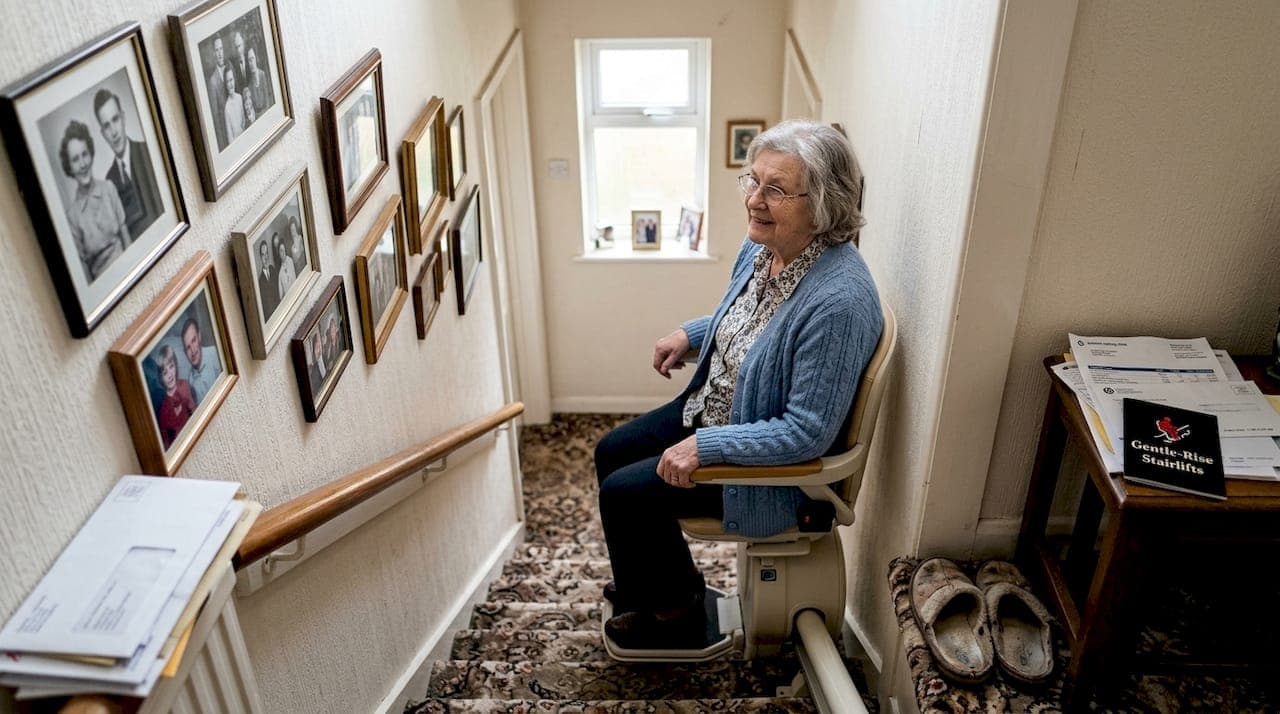
Nearly half of all UK adults experience a fall on the stairs every year. That figure is striking, but what makes it genuinely alarming is how rarely people treat stairs as a serious hazard at home. For older adults, the consequences are far worse: over 850 people died from stair-related falls in 2023 alone. Yet many households still rely on nothing more than a handrail and hope. This guide explains what mobility assistance really means, which solutions work best for UK homes, and how stairlifts in particular can restore the kind of independence and confidence that makes daily life genuinely enjoyable.
Table of Contents
- What is mobility assistance and who needs it?
- How mobility assistance reduces risks at home
- Comparing stairlifts to other common mobility aids
- Choosing and paying for the right solution
- Why traditional approaches to home safety underestimate stair risks
- Get expert help choosing your stairlift or home adaptation
- Frequently asked questions
Key Takeaways
| Point | Details |
|---|---|
| Mobility assistance defined | Mobility assistance comprises aids and adaptations that make daily life safer and more manageable for people with limited mobility. |
| Stairlifts reduce risk | Stairlifts dramatically lower the chance of falls at home for seniors and others with mobility challenges. |
| Choose solutions carefully | A professional assessment ensures mobility options, like stairlifts, fit your needs and home layout. |
| Affordable options exist | Reconditioned stairlifts and grants make home adaptations accessible for more UK households. |
What is mobility assistance and who needs it?
Mobility assistance is a broad term that covers any equipment, adaptation, or service that helps a person manage daily physical tasks more safely and independently. It is not just for people with severe disabilities. Anyone recovering from a hip replacement, managing arthritis, or simply finding the stairs harder than they used to can benefit from the right support.
According to Age UK, disability equipment and adaptations include walking aids, wheelchairs, and home modifications like stairlifts, all designed to help elderly or disabled individuals manage daily tasks more independently and safely. The range of options is wider than most people realise.
Common types of mobility assistance include:
- Walking sticks and frames for balance and short-distance support
- Wheelchairs and mobility scooters for those who cannot walk longer distances
- Bath lifts and shower seats to reduce bathroom fall risks
- Grab rails and handrails fitted at key points around the home
- Stairlifts for safe, effortless movement between floors
- Home lifts for full wheelchair access between storeys
Choosing the right solution depends on your specific mobility challenges, the layout of your home, and how your needs might change over time. A person with mild balance issues may only need a walking frame and a grab rail by the bath. Someone with significant leg weakness or breathlessness on the stairs needs something more substantial.
For those living in multi-storey homes, stairs are often the single biggest obstacle to maintaining independence. Our mobility aids guide covers the full range of options available, while our home mobility solutions resource explains how to match each aid to specific home layouts and needs. Getting this match right from the start saves both money and frustration.
Pro Tip: If you are unsure where to start, ask your GP or an occupational therapist for a home assessment. They can identify risks you may not have noticed and recommend the most appropriate aids for your situation.
How mobility assistance reduces risks at home
Understanding the options is one thing. Seeing the evidence for why they matter is another. Stairs are not just inconvenient for people with limited mobility; they are genuinely dangerous.
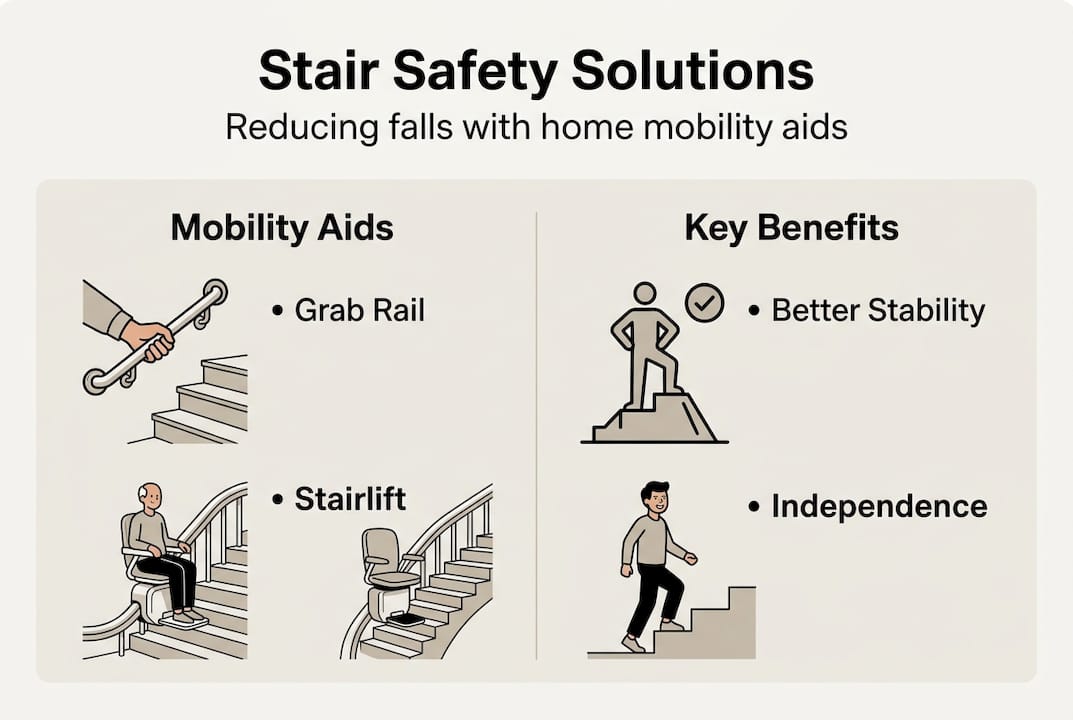
43% of UK adults fall on stairs every year, and for people over 65, the consequences of a stair fall are frequently life-changing. Fractures, head injuries, and long hospital stays are common outcomes. In 2023, stairs were responsible for more than 850 deaths in the UK, the majority involving older adults.
Mobility aids address this risk in several ways. Grab rails reduce the chance of losing balance on a single step. Walking frames provide a stable base when moving around the ground floor. But for navigating stairs themselves, a stairlift offers something no other aid can match: a seated, motorised journey from bottom to top without placing any weight or strain on the user's legs or joints.
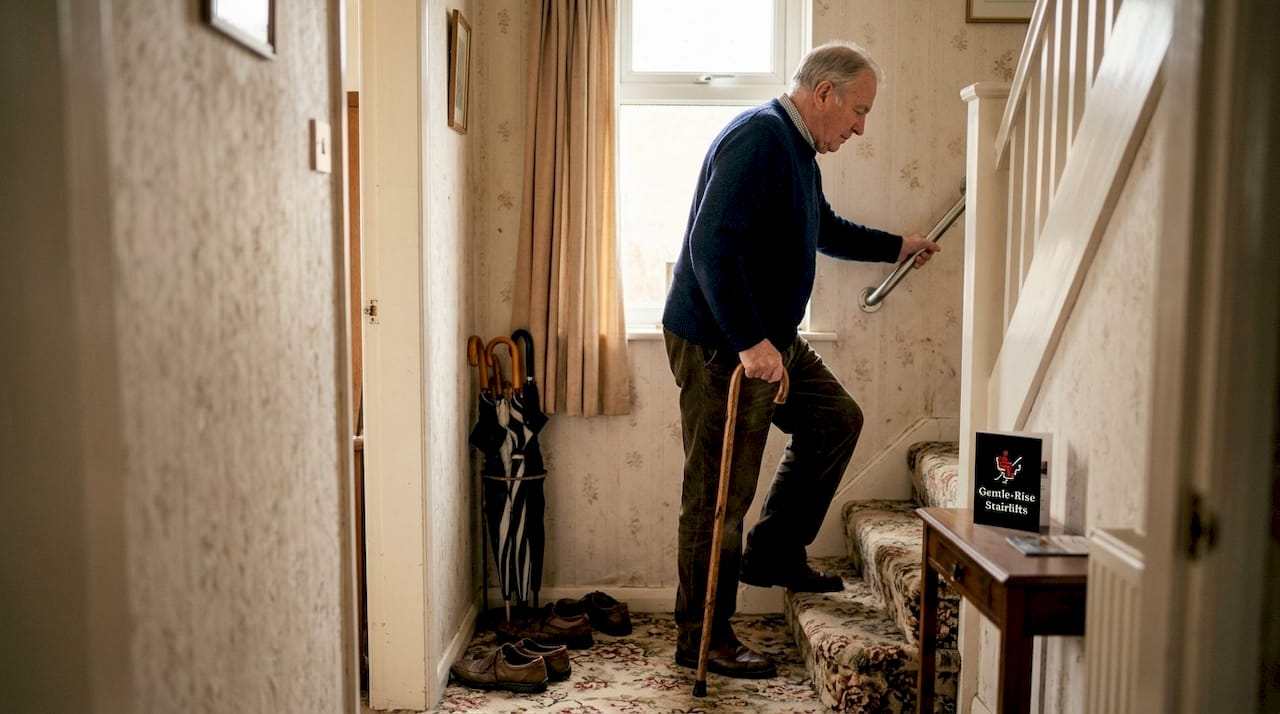
Here is how different aids compare when it comes to stair safety:
| Aid | Stair safety benefit | Suitable for stairs? |
|---|---|---|
| Walking stick | Minimal; adds one extra point of contact | Not recommended |
| Walking frame | Moderate on flat surfaces | Not suitable |
| Grab rail | Helpful but requires user strength | Partial support only |
| Stairlift | Full motorised support, no physical effort | Yes, ideal |
| Home lift | Complete access solution | Yes, for wheelchair users |
Beyond the physical safety benefit, reducing the fear of falling matters enormously. Many older adults begin avoiding the upstairs of their home entirely, sleeping in the living room and losing access to their bedroom and bathroom. This gradual retreat shrinks daily life in ways that affect mental health and overall wellbeing. Our resource on stairlift solutions for UK homes explores this in more detail, and our guide to safer home mobility options outlines how small changes can restore full use of the home.
Comparing stairlifts to other common mobility aids
Once you understand the safety case, the next step is working out which solution fits your circumstances. Not every home needs a stairlift, but for many households, it is clearly the best option.
Age UK's guidance on home adaptations for disabled individuals confirms that stairlifts are among the most effective and widely used adaptations for managing stairs safely. Here is how they compare to the main alternatives:
| Solution | Best for | Approximate cost | Stair access? |
|---|---|---|---|
| Walking stick or frame | Mild balance issues | £20 to £150 | No |
| Ramp | Shallow steps, wheelchair users | £200 to £1,500 | Limited |
| Stairlift (straight) | Standard straight staircases | From £795 | Yes |
| Stairlift (curved) | Curved or L-shaped stairs | £3,000 to £8,000 | Yes |
| Through-floor home lift | Full wheelchair access needed | £10,000 to £20,000 | Yes |
When choosing between these options, consider the following:
- Assess your staircase type. Straight staircases are the most affordable to fit with a stairlift. Curved staircases require a bespoke rail but are still very manageable.
- Think about future needs. A solution that works now should also work as mobility changes over time.
- Consider installation disruption. Stairlifts are typically installed within a few hours, with minimal impact on the home.
- Factor in portability. Rental stairlifts are available for short-term recovery, such as after surgery.
- Check the weight capacity. All stairlifts have rated weight limits; confirm yours before purchasing.
Walking aids are excellent for flat surfaces but offer very little protection on stairs. Ramps work well for shallow external steps but are impractical for internal staircases with significant height changes. A home lift is the most thorough solution but costs several times more than a stairlift and requires structural work. For most people in a standard UK home, a stairlift is the most practical, cost-effective, and immediate answer. Our guide to stairlift alternative options gives a fuller breakdown if you want to explore every possibility.
Pro Tip: Do not assume a curved stairlift is out of reach financially. Reconditioned curved models are available at significantly reduced prices and often come with a warranty, making them a realistic option for many households.
Choosing and paying for the right solution
Once you have identified the right type of mobility aid, the practical questions begin. How do you get the right fit? What does it cost? And how do you ensure it stays safe and reliable over time?
The first step should always be a professional home survey. A trained assessor measures your staircase precisely, checks for any obstacles or unusual angles, and recommends the most suitable model. This is not just a sales visit; it is a safety step. A poorly fitted stairlift is a hazard, not a help.
On cost, Which? research shows the average price for a straight stairlift is around £3,300, though prices vary significantly by brand, model, and features. Reconditioned models can bring that figure down considerably, with some available from as little as £795. These are professionally refurbished units that meet the same safety standards as new models and often include a warranty.
Key things to confirm before committing:
- Warranty coverage on both parts and labour
- What is included in the installation (rail, seat, remote controls, safety sensors)
- Ongoing maintenance options such as annual servicing plans
- Rental availability if your need is temporary
- Weight and size suitability for the user
Financial support is available in some cases. Some local councils offer Disabled Facilities Grants (DFGs) to help with the cost of home adaptations, including stairlifts. Eligibility depends on income and assessed need. It is always worth asking your council or a local occupational therapist about available funding before paying in full.
Our stairlift maintenance advice explains what regular servicing involves and why it matters, and our accessibility upgrade guide helps you think about broader home improvements alongside your stairlift choice.
Why traditional approaches to home safety underestimate stair risks
There is a cultural habit in the UK of treating home safety as something to address only after an accident. Handrails get fitted after a fall. Stairlifts get considered after a hospital stay. This reactive approach costs people their independence, and sometimes far more.
The data tells a clear story. Stairs cause hundreds of deaths annually and injure tens of thousands more, yet many households still treat a stairlift as a last resort rather than a sensible precaution. Part of this is cultural. There is a lingering sense that needing a stairlift means admitting defeat, when in reality it means choosing to stay in your own home, on your own terms.
At GentleRise Stairlifts, we see this shift in thinking happen regularly. Customers who were hesitant often tell us the stairlift was the single best decision they made for their home. The truth is that affordable, well-fitted mobility adaptations do not diminish independence. They protect it. Treating home safety as essential rather than optional is not a concession; it is a practical and empowering choice.
Get expert help choosing your stairlift or home adaptation
If this guide has helped clarify your options, the next step is getting advice tailored to your specific home and needs. Every staircase is different, and the right solution depends on a proper assessment rather than a guess.
At GentleRise Stairlifts, we offer free home surveys across the UK, with no obligation to buy. Whether you are interested in a new straight model, a reconditioned stairlift to keep costs down, or need advice on choosing the most reliable stairlift for your situation, our team is ready to help. We also offer rental options and our Protect+ aftercare plan for ongoing peace of mind. Get in touch today to take the first step towards a safer, more independent home.
Frequently asked questions
What types of mobility assistance are available for stairs?
The main options are stairlifts, home lifts, and adapted rails, with stairlifts being the most common and versatile choice for UK homes. Age UK confirms that stairlifts are a recognised home adaptation for helping elderly and disabled individuals manage stairs safely.
How do stairlifts help prevent falls?
Stairlifts provide stable, motorised transport up and down the staircase, removing the physical effort and balance demands that cause most stair falls. With 43% of UK adults falling on stairs each year, a stairlift directly addresses the most common accident point in the home.
Is it possible to get financial help for buying a stairlift?
Yes, some local councils offer Disabled Facilities Grants and reconditioned models can significantly reduce upfront costs. Which? stairlift experts recommend always asking providers about available funding and support before committing.
Do stairlifts work on all stair types?
Stairlifts can be customised for most straight or curved staircases, but a professional home assessment is essential for a safe, precise fit. Stairlift experts advise that a proper survey is the single most important step before any purchase.