
TL;DR:
- Practical, affordable home adaptations and government grants can significantly improve safety for families in 2026.
- Early assessment by a local occupational therapist and prompt application for grants streamline home safety improvements.
- Small changes like grab rails, lighting, and ramps offer high impact and cost little or nothing.
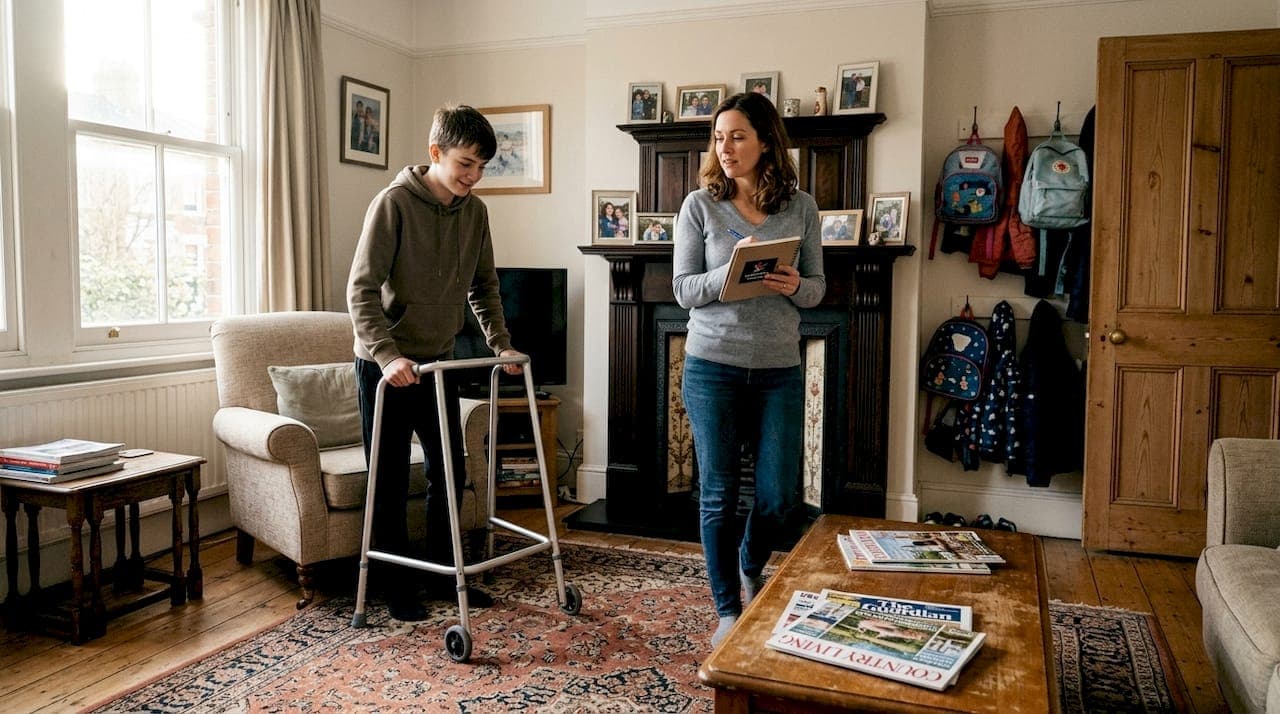
Coming home after surgery, or watching a parent struggle on the stairs, is one of those moments that forces a decision. The home that once felt perfectly comfortable suddenly feels full of hazards. Many UK families are caught off guard, unsure where to start or how much it will cost. The good news is that practical, affordable solutions exist right now, and a significant number of them are free or heavily subsidised. This guide walks you through the key criteria for choosing the right mobility solutions, the grants and free equipment available in 2026, and a clear action plan to make your home safer without breaking the bank.
Table of Contents
- Key criteria for evaluating mobility solutions
- Government grants and free equipment: what's available in 2026
- Practical, budget-friendly home adaptations for families
- Comparing mobility aids: temporary vs. permanent solutions
- Action checklist: making your home mobility-ready
- A fresh perspective on family home mobility
- Affordable mobility solutions for every family
- Frequently asked questions
Key Takeaways
| Point | Details |
|---|---|
| Plan ahead | Begin OT assessments and grant applications early, as major adaptations can take several months. |
| Use free resources | Local councils and the NHS offer vital low-cost and free adaptations and equipment for families. |
| Match needs to solutions | Compare temporary aids and permanent modifications to choose what works best for your family situation. |
| Track ongoing needs | Adjust home adaptations regularly as a family member’s mobility changes over time. |
Key criteria for evaluating mobility solutions
Before spending a penny, it pays to step back and think carefully about what your family actually needs. The wrong solution wastes money and time, and in some cases creates new hazards. When assessing mobility needs, consider these core factors:
- Safety: What are the immediate risks? Stairs, wet floors, and narrow doorways are the most common culprits.
- Cost: What is your budget, and what funding are you eligible for?
- Urgency: Is this a post-surgery recovery situation, or a gradual, long-term adjustment?
- Duration of need: Will the adaptation be needed for weeks or decades?
- Grant and aid eligibility: Have you checked what your local council or the NHS can provide?
Short-term needs, such as recovering from a hip replacement, often call for temporary or hired solutions. Long-term needs, such as supporting an elderly parent with a progressive condition, usually justify a permanent installation. Getting this distinction right from the start saves considerable stress later.
The most underused resource in the UK is the occupational therapist (OT) assessment offered free through your local council. An OT will visit the home, identify risks, and recommend specific adaptations, which can also streamline any grant application you make. The Disabled Facilities Grant (DFG) process can take anywhere from 3 to 18 months, so planning ahead is essential, particularly if surgery is scheduled in advance.
"The DFG process can take 3 to 18 months, so apply as early as possible. An OT assessment is the fastest route to the right recommendation and a smoother application."
Pro Tip: Book your council OT assessment before purchasing anything. Their report often unlocks grant funding and ensures you choose the most appropriate mobility aids for independence rather than guessing.
Government grants and free equipment: what's available in 2026
With your criteria established, the next step is understanding what financial support is on the table. The picture in 2026 is more generous than many families realise.
The Disabled Facilities Grant provides up to £30,000 in England for essential home adaptations, including stairlifts, ramps, grab rails, and level-access showers. Wales and Northern Ireland have their own equivalent schemes with similar values. Eligibility is needs-based rather than purely income-based, meaning many families qualify even if they are not on benefits.
For smaller changes, minor adaptations costing £1,000 or less, such as grab rails, handrails, short ramps, and automatic lighting, are provided free by local councils without a means test. No lengthy application. No waiting months for approval.
After a hospital stay, the NHS also provides interim equipment to support recovery at home. Common items provided on discharge include:
- Walking frames and crutches
- Raised toilet seats
- Bed rails and bed levers
- Shower chairs and bath boards
- Perching stools
Reablement support, which includes help from care workers to rebuild daily living skills, is available free for up to 6 weeks after leaving hospital. Always ask the discharge team what equipment and support your family member is entitled to before leaving the ward.
| Support type | Maximum value | Means tested? | Typical timeframe |
|---|---|---|---|
| Disabled Facilities Grant | £30,000 | Yes (partially) | 3 to 18 months |
| Minor adaptations | Up to £1,000 | No | Days to weeks |
| NHS post-discharge equipment | Varies | No | Immediate on discharge |
| Reablement support | Up to 6 weeks | No | Immediate on discharge |
For top home accessibility upgrades that qualify under the DFG, it is worth reviewing what counts as an eligible adaptation before your OT visit.
Practical, budget-friendly home adaptations for families
Beyond government support, many straightforward changes can dramatically improve safety and confidence at home. The best part is that several of these cost very little or nothing at all.
Here are the most effective adaptations to consider, along with who benefits most:
- Grab rails and handrails: Fitted in bathrooms, along stairs, and near doorways. Free via council for qualifying households. Ideal for elderly relatives and anyone post-surgery. One of the highest-impact changes per pound spent.
- Short ramps: Useful for wheelchair users or those with walking frames. Available free from councils for adaptations under £1,000. Portable options can be purchased from around £30.
- Lever handle taps and door handles: Replacing round knobs with lever handles costs very little and makes a significant difference for those with arthritis or reduced grip strength.
- Accessible bathroom changes: Removing a bath and fitting a level-access shower, or adding a shower seat, can transform daily independence. Larger changes may qualify for DFG funding.
- Automatic night lighting: Motion-activated lights in hallways and on stairs reduce the risk of falls in the dark. Inexpensive to buy and simple to fit, these are often overlooked but genuinely effective.
- Non-slip flooring and mats: Removing loose rugs and adding non-slip matting in bathrooms is a free or very low-cost change that prevents falls.
For a broader overview of what is available, the mobility aids guide covers a wide range of options suited to different conditions and living arrangements.
Pro Tip: Walk through every room of the home with fresh eyes, imagining you are using a walking frame or have limited balance. You will spot hazards that are easy to miss when you are fully mobile.
Comparing mobility aids: temporary vs. permanent solutions
Should you buy, hire, or borrow? The answer depends on how long the need is likely to last and how certain you are about the right solution.
| Option | Typical cost | Duration | Best suited for | Flexibility |
|---|---|---|---|---|
| NHS loan | Free | Up to 6 weeks | Post-discharge recovery | Low (returned when no longer needed) |
| Rental aid | £20 to £80 per week | Weeks to months | Surgery recovery, trialling | High |
| Permanent installation | £795 upwards | Long-term | Ageing in place, ongoing needs | Low |
Here is when to choose each option:
- NHS loan: Best immediately after a hospital stay. Request everything you need before leaving the ward.
- Rental: Ideal when you are unsure how long recovery will take, or want to trial a stairlift before committing. Rentals bridge short-term gaps without tying up capital.
- Permanent installation: The right choice for long-term or progressive conditions where the need is unlikely to reduce. Often the most cost-effective option over time.
"For short-term recovery, rent first. For ongoing needs, invest in a permanent solution. Trying to save money by buying cheap temporary equipment often costs more in the long run."
For a detailed breakdown of what suits different situations, the guide on temporary mobility aid options is a useful next read.
Action checklist: making your home mobility-ready
Pulling everything together, here is a practical checklist to move from assessment to action without missing a step.
- Request a council OT assessment. This is free, and the OT's report will guide every other decision you make.
- Check grant and free aid eligibility. Ask specifically about the DFG, minor adaptations, and any local authority top-up schemes.
- Identify immediate risks. Focus on stairs, bathrooms, and entrance points first. These are where most home falls occur.
- Implement minor adaptations quickly. Grab rails, lighting, and lever handles can often be arranged within days through your council.
- Request NHS post-discharge equipment. Interim aids like walking frames and raised toilet seats should be arranged before leaving hospital, not after.
- Plan for long-term solutions. If a stairlift or major bathroom adaptation is needed, apply for the DFG early. Use a rental in the interim if required.
- Review and reassess regularly. Needs change. What works today may not be sufficient in six months.
For inspiration on what changes make the biggest difference, the safer home upgrades guide covers the most impactful options across different budgets.
Pro Tip: Keep a simple mobility log, a notebook or phone note, recording what is working, what is becoming difficult, and any near-misses. This makes reassessments faster and helps you spot patterns before they become problems.
A fresh perspective on family home mobility
Most families focus almost entirely on equipment and funding, and that is understandable. A stairlift is visible. A grant application feels like progress. But in our experience, the families who achieve the best long-term results are the ones who treat accessibility as an ongoing habit rather than a one-off project.
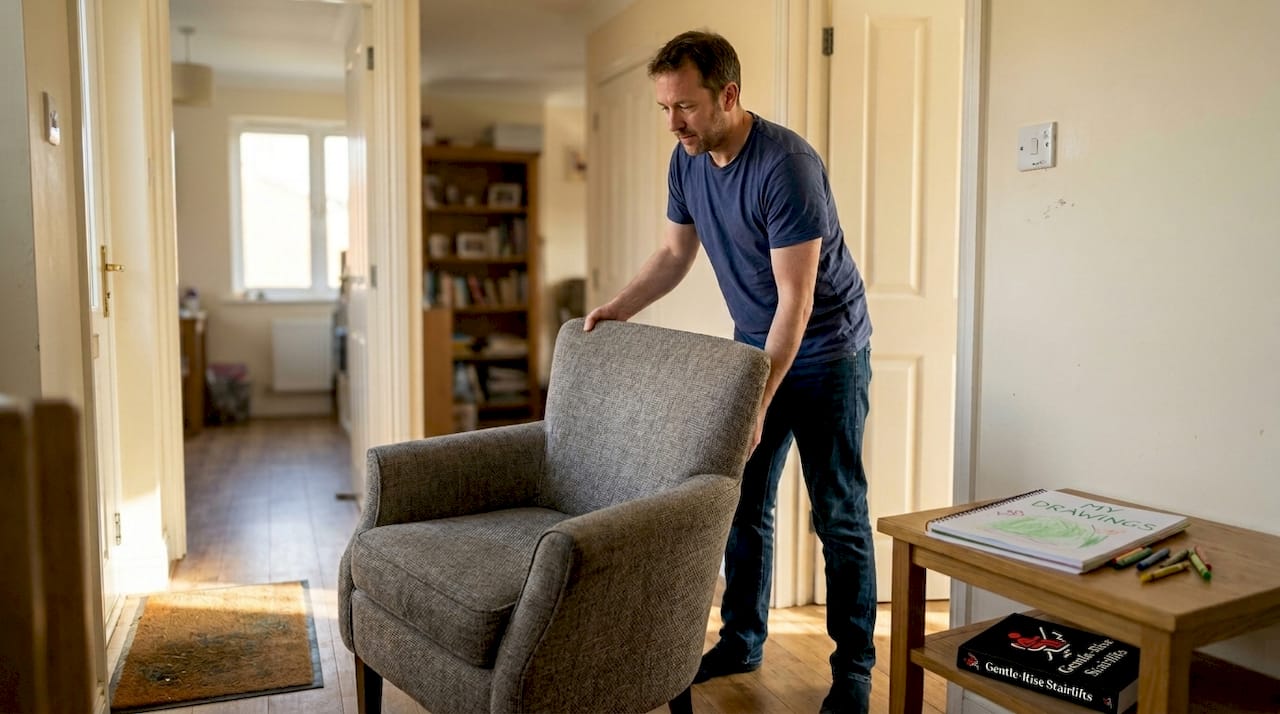
The real gains often come from small, regular adjustments: moving a favourite chair closer to the door, rearranging the kitchen so essentials are within easy reach, or simply checking in monthly to see what has become harder. These changes cost nothing and make a genuine difference.
We also find that involving the whole household matters. When everyone understands the risks and the reasoning behind each change, adaptations are maintained properly and new hazards get spotted sooner. True accessibility is as much about mindset and daily habits as it is about hardware.
For a broader view of how mobility aids fit into a wider approach to independence, it is worth thinking beyond the catalogue and considering how the whole home environment supports daily life.
Affordable mobility solutions for every family
If you are ready to move from planning to action, Gentle Rise Stairlifts is here to help. We work with families across the UK to find the right solution for their home, their budget, and their timeline.
Whether you need a new straight stairlift, a reconditioned stairlift at a lower price point, or a short-term rental to cover a recovery period, GentleRise Stairlifts offers options to suit most situations. Our team can advise on grant eligibility, arrange a free home survey, and install a stairlift often within hours of your order. We also offer the Protect+ maintenance programme for ongoing peace of mind. Speak to us before making any purchase decision and we will help you find the most cost-effective route forward.
Frequently asked questions
Are stairlifts covered by the Disabled Facilities Grant in 2026?
Yes, stairlifts are eligible under the DFG, with up to £30,000 available in England for essential home adaptations, provided the eligibility criteria are met.
What adaptations can I get for free from my local council?
Minor adaptations under £1,000, including grab rails, handrails, short ramps, and automatic lighting, are typically provided free by local councils without a means test.
How quickly can I get mobility equipment after a hospital stay?
Most families are offered free interim aids on discharge, such as walking frames and raised toilet seats, with up to six weeks of reablement support included.
Is it better to hire or buy mobility aids for short-term needs?
Hiring or borrowing from the NHS is usually the smarter choice for temporary needs, as rentals bridge short-term gaps without the upfront cost of buying outright.