
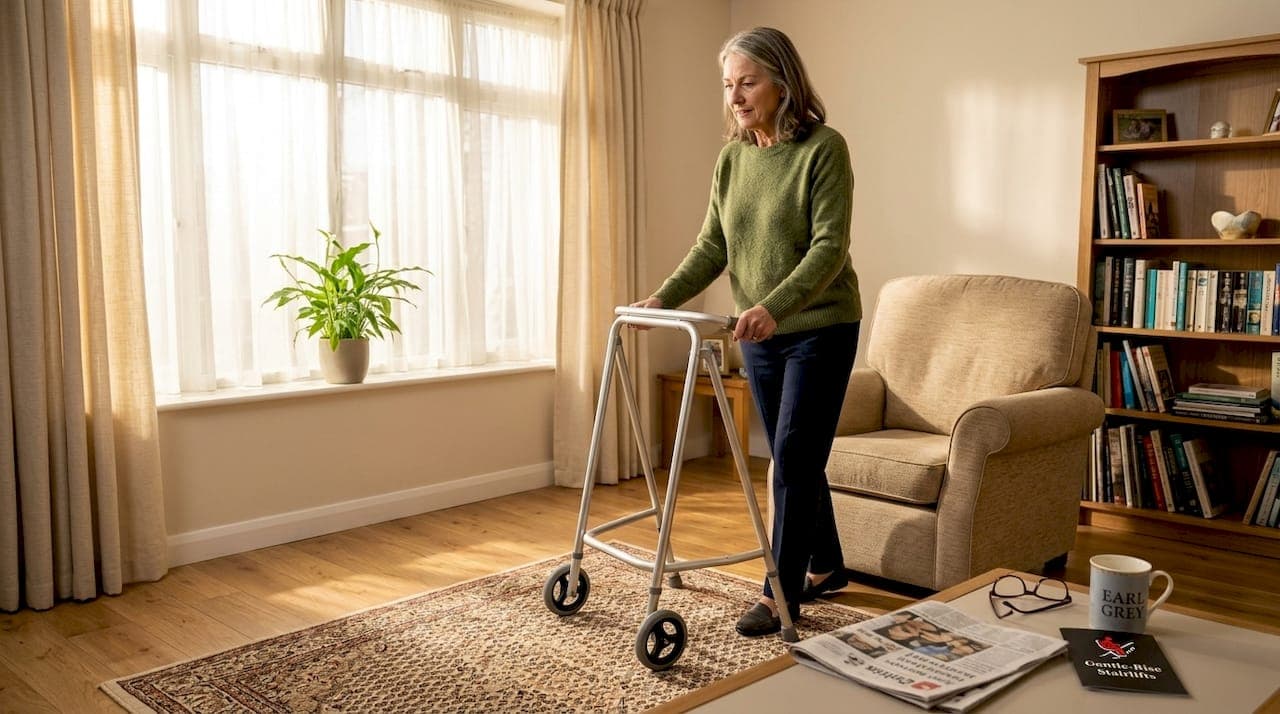
Choosing the wrong mobility aid can quietly erode your confidence at home. A stick that's too short strains your back; a stairlift that doesn't fit your staircase becomes a daily frustration. For UK homeowners managing age-related mobility changes or recovering from surgery, the stakes are real. The right aid keeps you safe, independent, and comfortable in your own home. This guide walks you through every major option, from walking sticks to stairlifts, with practical advice on costs, funding, and what to watch out for before you spend a penny.
Table of Contents
- How to choose the right mobility aid
- Walking sticks and canes
- Crutches for short-term and long-term support
- Walking frames and rollators
- Wheelchairs and mobility scooters
- Stairlifts: types, costs and practical considerations
- Making your decision: key comparisons, expert advice and common pitfalls
- Explore reliable stairlift options for your home
- Frequently asked questions
Key Takeaways
| Point | Details |
|---|---|
| Match aid to needs | Choose mobility aids based on personal mobility level, home layout, and length of support needed. |
| Stairlifts enable independence | Stairlifts dramatically improve safety and independence for anyone struggling with stairs. |
| Weigh cost and aftercare | Consider total cost, including reconditioned models and aftercare, to get both affordability and reliability. |
| Use expert guidance | Seek advice from NHS or installers and read customer reviews before purchasing a stairlift. |
| Test before you buy | Always ask for a home demo or trial to ensure the chosen mobility aid suits your needs. |
How to choose the right mobility aid
Before you look at any specific product, you need an honest picture of your situation. Think about your current mobility level, any medical advice you've received, and the layout of your home. A physiotherapist or occupational therapist can assess your needs and recommend aids that match your strength, balance, and daily routine.
Next, consider whether your need is short-term or long-term. Someone recovering from a hip replacement may only need support for a few weeks. Someone managing a progressive condition will need a more permanent solution. This distinction matters enormously for your budget.
Here are the key factors to weigh up:
- Current mobility level and any medical recommendations
- Home layout: number of floors, stair type, doorway widths
- Duration of need: temporary recovery or ongoing support
- Budget: purchase, rental, or reconditioned options
- Funding routes: NHS provision, Disabled Facilities Grant (DFG), or private payment
- Aftercare and maintenance costs over time
Understanding stairlift cost factors early helps you plan realistically rather than face surprises later. For a broader overview of all aid types, the walking aids advice resource from mobile physiotherapists is a solid starting point.
Pro Tip: Always test an aid before committing. Many suppliers offer home demonstrations, and some NHS services can arrange trials. What feels fine in a showroom may feel very different on your own stairs or in a narrow hallway.
Walking sticks and canes
Walking sticks are the simplest and most affordable mobility aids available. They're ideal for people who need a little extra balance or confidence when walking, particularly outdoors on uneven ground. They won't suit everyone, but for mild mobility challenges, they're often the first and best step.
The main types of walking sticks include standard single-point sticks, quad sticks with four feet for extra stability, and Fischer handle sticks with an ergonomic grip that spreads weight across the palm. Each suits a slightly different need.
Key features to look for:
- Adjustable height: essential for correct posture and reducing strain
- Grip comfort: foam, rubber, or moulded handles reduce fatigue
- Anti-slip ferrule (rubber tip): critical for safety on hard floors
- Weight: lighter sticks reduce arm fatigue on longer walks
- Quad base: better for those with weaker balance or tremors
Walking sticks are widely available through the NHS, pharmacies, and online retailers. Prices start from under £10 for a basic model. However, they do require reasonable upper body strength and a reasonably steady gait. If you find yourself leaning heavily on a stick, it may be time to consider something more supportive.
Crutches for short-term and long-term support
For those needing more stability than a stick, crutches are a natural progression. They're most commonly associated with post-surgery recovery, but elbow crutches in particular are used long-term by people with conditions such as multiple sclerosis or cerebral palsy.
Types of crutches fall into two main categories. Elbow (forearm) crutches have a cuff that wraps around the forearm, offering good control and suited to both temporary and permanent use. Axillary (underarm) crutches rest under the armpit and are typically used short-term after injury or surgery.
Features to check when choosing crutches:
- Adjustable height: both the handle and the cuff should be adjustable
- Forearm cuff fit: should be snug but not tight, sitting about 2.5 cm below the elbow
- Handle grip: padded handles reduce pressure on the palms
- Slip-resistant tips: rubber ferrules are non-negotiable for safe indoor use
- Weight capacity: check the manufacturer's rating matches your needs
Pro Tip: Always ask for a proper demonstration from a physiotherapist or healthcare professional. Incorrect height adjustment is the most common cause of shoulder and wrist strain with crutches. Getting it right from the start prevents injury.
Crutches are usually provided free through the NHS for post-surgery recovery. If you need them long-term, private purchase gives you more choice of style and material.
Walking frames and rollators
For users who need even more safety and balance, the next step up are frames and rollators. These aids offer a much larger base of support and are particularly useful for people with significant balance problems or those who tire quickly when walking.
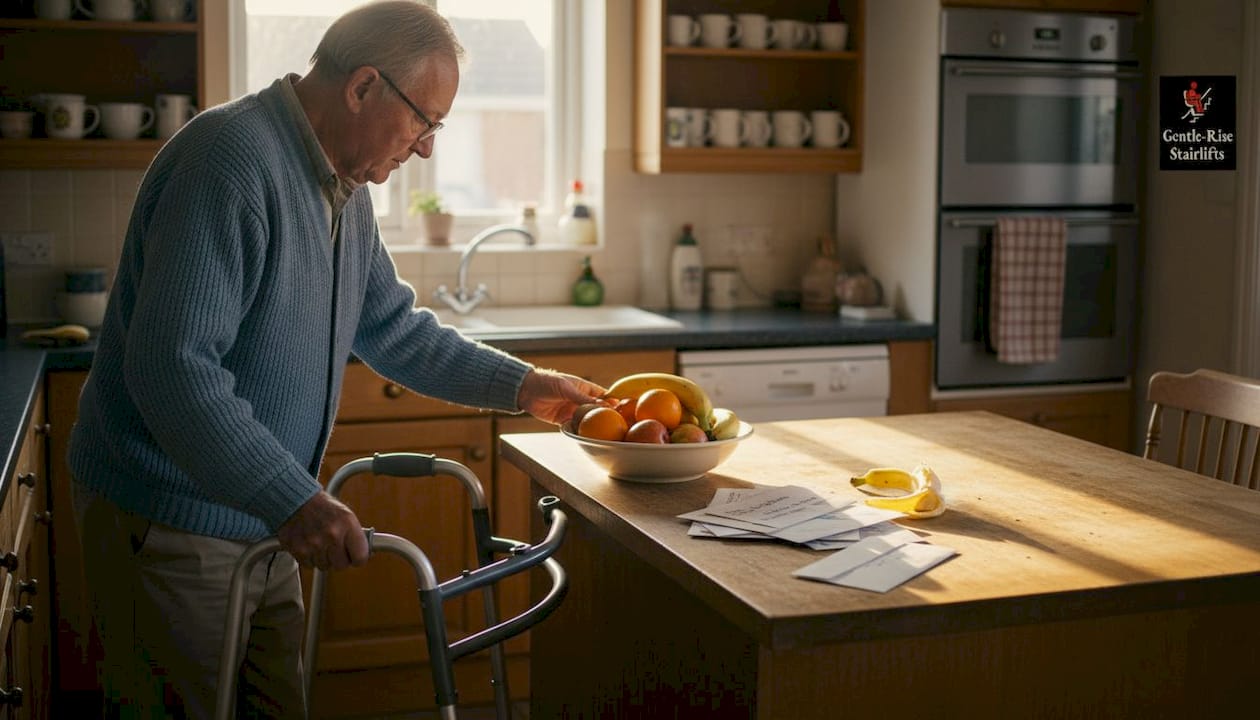
Walking frames and rollators come in several forms. Standard Zimmer frames are rigid, highly stable, and used mainly indoors. You lift them forward with each step. Pick-up frames are lighter and slightly more portable. Rollators have wheels and move more fluidly, making them easier to use over longer distances.
| Aid type | Best use | Key feature | Limitation |
|---|---|---|---|
| Zimmer frame | Indoors, post-surgery | Maximum stability | Must be lifted to move |
| Pick-up frame | Limited outdoor use | Lighter than Zimmer | Less stable than Zimmer |
| 3-wheel rollator | Narrow spaces, outdoors | Nimble, easy to manoeuvre | Less stable than 4-wheel |
| 4-wheel rollator | Outdoors, longer distances | Seat, basket, hand brakes | Bulkier to store |
Rollators with a built-in seat are particularly popular for those who need to rest frequently. The hand brakes are an important safety feature. Do check that the frame height is correctly adjusted, as stooping over a frame that's too low causes back pain quickly.
Wheelchairs and mobility scooters
Some situations call for seated and powered options. Wheelchairs and mobility scooters are appropriate when walking, even with support, is no longer safe or practical for any significant distance.
Manual and powered wheelchairs serve different needs. A manual wheelchair can be self-propelled or pushed by a carer, making it versatile for home use and short outdoor trips. A powered wheelchair uses an electric motor, which is essential for those with limited upper body strength or stamina.
Key considerations for this category:
- Manual wheelchair: affordable, lightweight options available; requires either user strength or a carer
- Powered wheelchair: greater independence but higher cost and heavier to transport
- Mobility scooter: best for outdoor public travel; not well-suited to indoor use due to size
- Storage: consider where the chair or scooter will be kept at home
- Battery maintenance: powered options require regular charging and occasional battery replacement
- Transport: will you need to fold it into a car boot?
The NHS may provide a manual wheelchair through the wheelchair service, but powered options and scooters are usually self-funded. Rental is a practical route for short-term needs.
Stairlifts: types, costs and practical considerations
With ground floor aids covered, let's address the challenge of stairs, which is the main hurdle for many people wanting to stay in their own home. A stairlift attaches to the stair treads (not the wall), so it can be fitted in most homes without major building work.
Stairlift types and safety features cover a wide range of options:
- Straight stairlift: fits a standard straight staircase; quickest to install
- Curved stairlift: custom-built to follow bends or landings; takes longer to manufacture
- Perch or standing stairlift: for those who struggle to bend their knees
- Narrow stairlift: designed for staircases as slim as 63 cm wide
- Platform stairlift: for wheelchair users who cannot transfer to a seat
- Outdoor stairlift: weatherproofed for external steps
- Heavy-duty stairlift: higher weight capacity for broader user needs
Safety features to look for include obstruction sensors (the lift stops if something is in the way), a safety belt, a swivel seat for easy dismounting at the top, and a remote control so family members can send the lift up or down.
| Stairlift type | New cost (approx.) | Reconditioned cost (approx.) |
|---|---|---|
| Straight | £2,000 to £5,000 | £1,200 to £2,500 |
| Curved | £4,000 to £12,000 | From £3,000 |
| Platform | £4,000 to £10,000 | Less commonly available |
Straight stairlifts cost £2,000 to £5,000 new and £1,200 to £2,500 reconditioned, while curved models can reach £12,000. Explore UK stairlift prices in detail to understand what drives the variation. For those on a tighter budget, affordable stairlift options and reconditioned stairlifts are worth serious consideration.
'Reconditioned stairlifts offer up to 50% savings with no compromise on safety or reliability.'
Pro Tip: Get at least three quotes, confirm the warranty is a minimum of two years, and ask specifically what the aftercare or service plan covers. A cheap installation with no aftercare can cost more in the long run.
Making your decision: key comparisons, expert advice and common pitfalls
With all major options explained, it's time for an at-a-glance comparison and some practical guidance to help you avoid the mistakes we see most often.
| Feature | New stairlift | Reconditioned stairlift |
|---|---|---|
| Cost | Higher (£2,000 to £12,000+) | Lower (£1,200 to £3,000+) |
| Warranty | Typically 1 to 5 years | Typically 1 to 2 years |
| Latest features | Yes | Not always |
| Safety standard | Fully certified | Fully certified if reputable |
| Lead time | Days to weeks | Often quicker |
New models offer reliability and warranty while reconditioned units deliver 40 to 50% savings with the same safety standards when sourced from a reputable supplier. The key is who you buy from.
Common pitfalls to avoid:
- Buying without a home survey: measurements matter; a stairlift that doesn't fit is a costly mistake
- Ignoring the warranty: always confirm what's covered and for how long
- Skipping the aftercare question: ask what happens if it breaks down at the weekend
- Choosing on price alone: the cheapest quote may not include installation or aftercare
- Not reading recent reviews: check local installers on independent review platforms
For guidance on choosing reliable stairlifts, look for suppliers with transparent pricing, verifiable customer reviews, and a clear aftercare policy.
Pro Tip: Read recent customer reviews specifically for the local installer, not just the brand. Installation quality and aftercare responsiveness vary significantly between companies.
Explore reliable stairlift options for your home
Turning this information into action is easier when you have a trusted local supplier to guide you. Gentle Rise Stairlifts specialises in new and reconditioned stairlift solutions for UK homeowners, with a focus on affordability, safety, and genuine aftercare.
Whether you need a straight stairlift installed within hours or a quality reconditioned stairlift that fits a tighter budget, Gentle Rise offers a free home survey to find the right fit for your staircase and your life. Our stairlift aftercare programme, Protect+, gives you ongoing peace of mind with regular servicing and priority call-outs. Book your free home assessment today and get a clear, no-obligation recommendation tailored to your home.
Frequently asked questions
Which mobility aid is best for stairs?
A stairlift is the safest and most practical option for stairs, particularly for those with limited mobility or confidence. Stairlifts are purpose-built for stair navigation and require minimal physical effort from the user.
Can I get a stairlift funded by the NHS or council?
The NHS covers basic aids but not usually stairlifts; however, you may be eligible for a Disabled Facilities Grant through your local council, which can contribute significantly towards the cost.
How long does it take to install a stairlift?
Most straight stairlifts are fitted within a few hours on the day of installation. Curved models take longer because the rail is custom-built to match your specific staircase shape.
What is the difference between new and reconditioned stairlifts?
New stairlifts offer the latest features and a longer warranty, while reconditioned models save 40 to 50% without compromising on safety, provided you buy from a reputable supplier.
Are stairlifts noisy?
Modern stairlifts use quiet electric motors and smooth track systems, making them far quieter than most people expect. You'll hear a gentle hum at most.