
TL;DR:
- There are at least eight different types of stairlifts designed for various staircase shapes and needs.
- Reconditioned stairlifts offer significant savings and are reliable with proper supplier warranties.
- Safety features like obstacle sensors and seatbelts are essential for secure stairlift use.
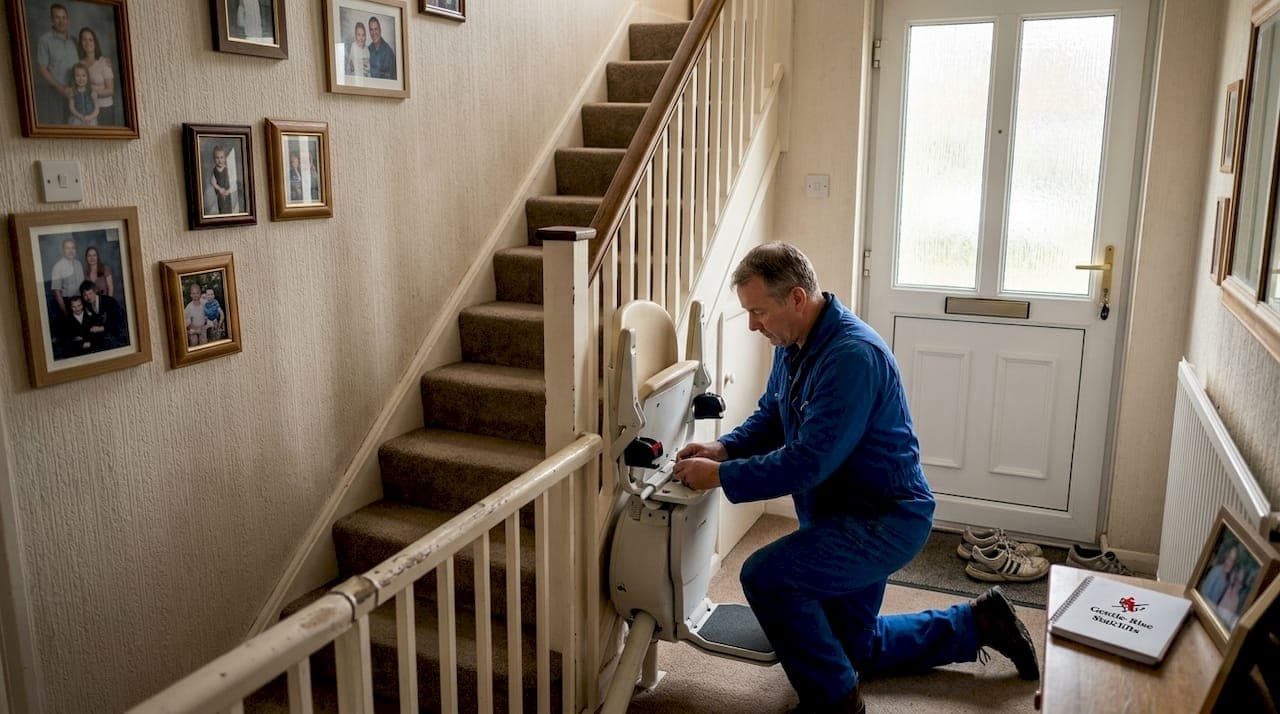
Many people assume a stairlift is simply a chair on a rail. In reality, the UK market offers at least eight distinct types, each designed for a specific staircase shape, body need, or budget. Getting this choice wrong can cost thousands or, worse, leave you with a lift that feels unsafe. Whether you're looking for something permanent or a short-term fix after surgery, understanding your options before you buy is the single most important step. This guide walks you through every main type, real costs, safety essentials, and practical buying advice so you can make a confident, well-informed decision.
Table of Contents
- Overview of stairlift types for UK homes
- Cost and value comparison: New vs reconditioned stairlifts
- Safety features and weight limits: What to look for
- Practical considerations: Edge cases, home surveys, and buyer advice
- Expert perspective: What most stairlift guides miss
- Ready to find your stairlift? Affordable options and expert support
- Frequently asked questions
Key Takeaways
| Point | Details |
|---|---|
| Multiple stairlift types | There are straight, curved, standing, outdoor, platform, heavy-duty, and reconditioned stairlifts for UK homes. |
| Big savings possible | Reconditioned stairlifts can save you 30-50% over new models and still offer reliable performance if properly serviced. |
| Safety and suitability matter | Choose models based on safety features and weight limits, and always get a home survey for the best fit. |
| Consider future needs | Select a stairlift with an eye on future mobility changes—maintenance and aftercare are vital. |
Overview of stairlift types for UK homes
The variety of stairlifts available today is far wider than most people realise. Main types available in the UK include straight, curved, narrow, standing (perch), platform, outdoor, heavy-duty, and reconditioned models. Each solves a different problem, so knowing the basics helps you shortlist quickly.
Straight stairlifts are the most common. They run on a fixed rail along a straight staircase and are the most affordable option. If your stairs go from bottom to top without any turn or landing, this is almost certainly your starting point.
Curved stairlifts are custom-built to follow bends, spirals, or intermediate landings. Because the rail is made to measure, they cost significantly more and take longer to manufacture. No two curved rails are identical.
Narrow and slim-rail models are designed for staircases that fall below the standard width. Some older terraced houses in the UK have stairs as narrow as 650mm, and a standard rail simply will not fit safely.
Standing or perch stairlifts allow the user to travel in a semi-standing position. They suit people who find it painful or difficult to bend their knees into a seated position, such as those with hip replacements.
Platform lifts carry a wheelchair and its occupant directly, making them the right choice when the user cannot transfer to a seat at all. They tend to be bulkier and more expensive.
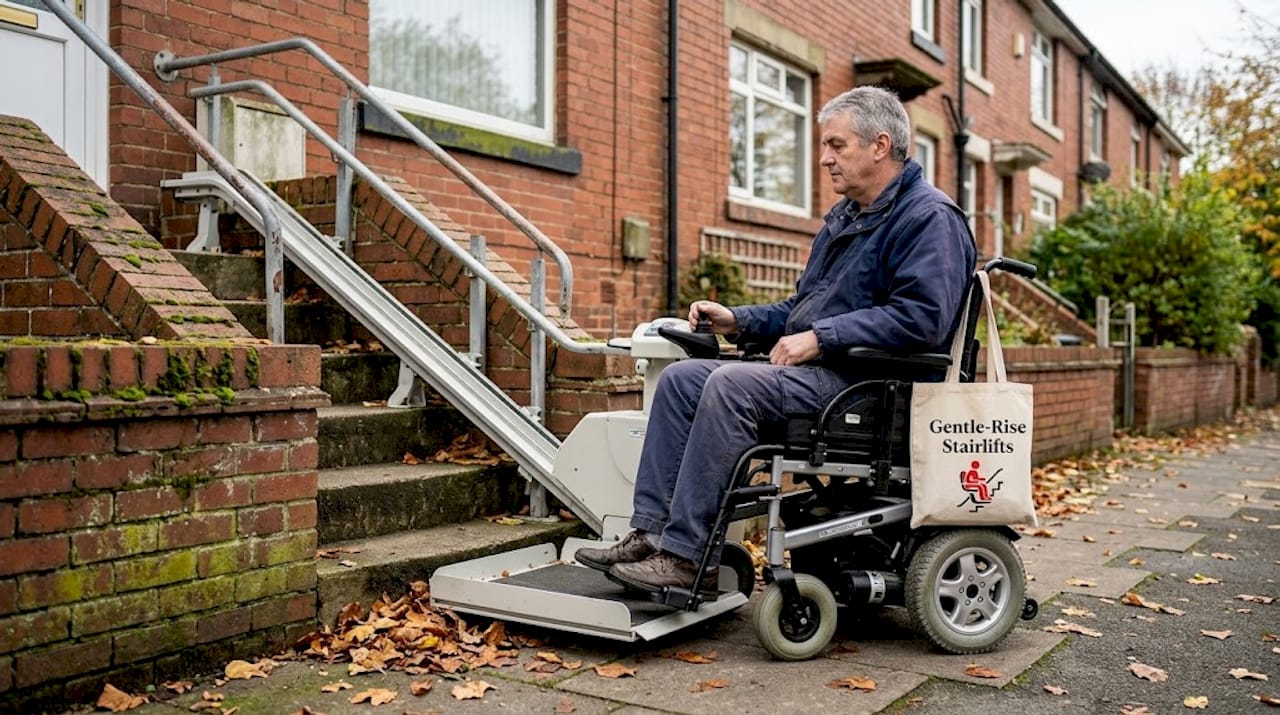
Outdoor stairlifts are weather-proofed for external steps leading to a garden or front door. Heavy-duty models support higher weight limits, typically up to 200kg or more. Reconditioned stairlifts are previously owned units that have been refurbished and tested, offering a lower entry price for buyers seeking affordable stairlift solutions without compromising on function.
To help you compare at a glance, here is a quick overview:
| Type | Best for | Relative cost |
|---|---|---|
| Straight | Straight stairs, most homes | Low |
| Curved | Bends, spirals, landings | High |
| Narrow | Slim staircases | Medium |
| Standing/perch | Hip or knee conditions | Medium |
| Platform | Wheelchair users | High |
| Outdoor | External steps | Medium |
| Heavy-duty | Higher weight needs | Medium-high |
| Reconditioned | Budget-conscious buyers | Low-medium |
Choosing the most suitable stairlift for your home depends on staircase shape, your physical needs, and how long you expect to use it. A free home survey removes the guesswork entirely.
Cost and value comparison: New vs reconditioned stairlifts
Once you've identified the right type, affordability becomes the next big question. Prices vary considerably depending on whether you buy new or reconditioned, and on the complexity of your staircase.
For new straight models, stairlift costs range from roughly £1,900 to £2,500, while reconditioned straight stairlifts typically fall between £1,250 and £1,900. Both usually come with battery power and a swivel seat as standard. Curved stairlifts are a different matter entirely, often starting at £3,000 and reaching £6,000 or more for complex staircases.
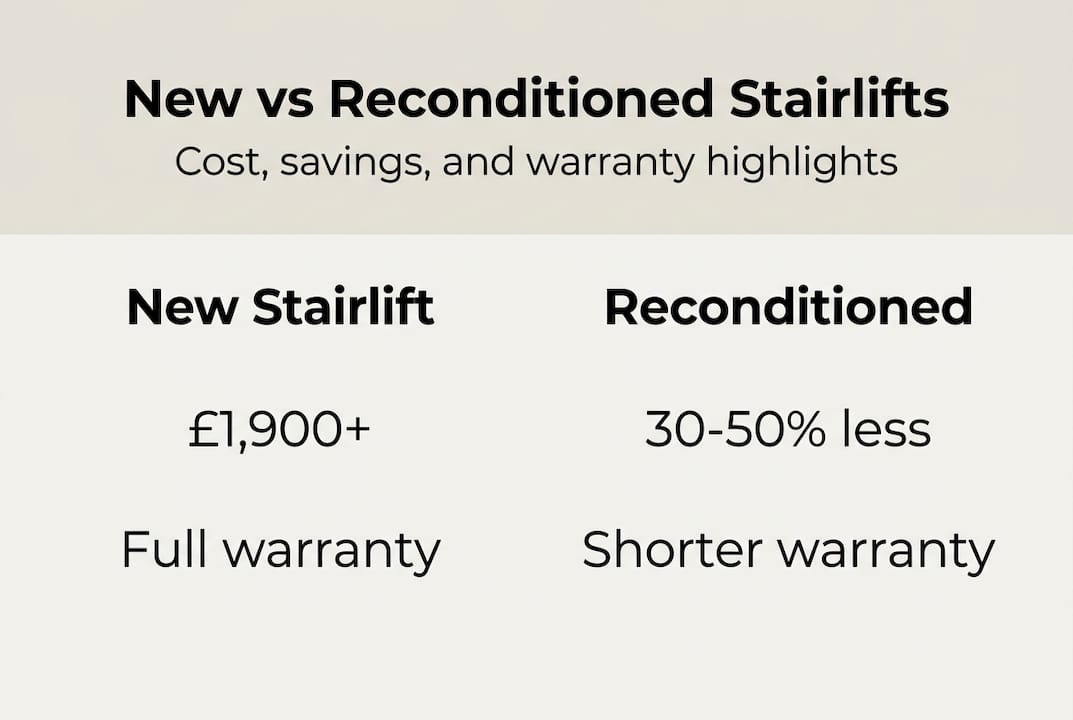
Reconditioned stairlifts are 30 to 50% cheaper than equivalent new models, though their lifespan is typically 5 to 10 years compared to 10 to 15 years or more for new units. For many buyers, particularly those who need a lift for a few years rather than decades, the reconditioned route offers outstanding value.
| New stairlift | Reconditioned stairlift | |
|---|---|---|
| Straight cost | £1,900 to £2,500 | £1,250 to £1,900 |
| Curved cost | £3,000 to £6,000+ | £2,000 to £4,000 |
| Typical lifespan | 10 to 15+ years | 5 to 10 years |
| Warranty | 1 to 2 years standard | 6 to 12 months typical |
| VAT relief | Yes (disability exemption) | Yes (disability exemption) |
One often-overlooked saving is VAT relief. If the stairlift is for a person with a long-term illness or disability, you can claim zero-rated VAT, reducing the purchase price by 20%. Always ask your supplier about this when requesting a quote.
Pro Tip: Ask for a written breakdown of what a reconditioned unit includes. A reputable supplier will list replaced parts, the service history, and the warranty terms before you commit.
For those exploring affordable elderly mobility solutions, reconditioned stairlifts with a solid warranty are often the smartest financial decision, particularly when paired with a good aftercare plan. You can also compare stairlift cost and types across providers before making any commitment.
Safety features and weight limits: What to look for
Cost matters, but safety must always come first. A stairlift that fails mid-journey is not just inconvenient; it can be dangerous. Knowing which features to insist on protects you every single day.
Key safety features to look for include obstruction sensors, a seatbelt, a powered swivel seat, an emergency stop button, battery backup, and a key lock. The full safety feature list covers obstruction sensors that halt the lift if something is on the stairs, seatbelts to keep the user secure, powered swivel seats (strongly recommended over manual), an emergency stop, battery backup so the lift works during a power cut, and a key lock to prevent unsupervised use by children.
Here is a checklist of features to confirm before purchase:
- Obstruction sensors on the footrest and carriage
- Three-point or lap seatbelt
- Powered swivel seat that rotates before you stand
- Emergency stop on the armrest and remote
- Battery backup (minimum 10 full journeys)
- Key lock switch
- Annual service plan included or available
All reputable UK stairlifts should meet BS EN 81-40 certification, the European safety standard for inclined stairlifts. Always ask your installer to confirm compliance.
"A powered swivel seat is not a luxury. For anyone with reduced hip mobility, it is the difference between a safe dismount and a fall."
Weight limits are equally important. Standard stairlifts support 120 to 140kg (roughly 18 to 22 stone), while heavy-duty models can support 200 to 227kg (up to 31 stone). Standing or perch models generally have lower weight limits and also require the user to have reasonable balance and leg strength.
For a detailed look at stairlift weight limits and how they apply to different models, it is worth reading up before your home survey. You may also find it useful to review accessibility stairlift upgrades that can be added to improve comfort and safety over time.
Pro Tip: Never estimate your weight when specifying a stairlift. Always weigh yourself with any mobility aids you carry, such as a walking frame, as these travel with you on the lift.
Practical considerations: Edge cases, home surveys, and buyer advice
Beyond features and prices, real-world situations often throw up complications that standard guides skip over. Being prepared for these makes your purchase far smoother.
Standing stairlifts are not suitable for anyone with poor balance, dizziness, or conditions affecting leg strength. Platform lifts for wheelchair users start at around £7,000 or more. Narrow stairs require slim rail systems, and homes with pets, young children, or cluttered hallways need extra thought around obstruction management.
Here are five practical steps to take before committing to a purchase:
- Book a free home survey. Every reputable supplier should offer this at no cost. A surveyor will measure your staircase, assess the wall and floor fixings, and recommend the right model.
- Think about future needs. A straight stairlift bought today may need replacing in five years if your condition progresses. Consider whether a more adaptable model is worth the extra outlay now.
- Budget for annual maintenance. Maintenance typically costs £100 to £200 per year, and skipping it on a reconditioned unit is a false economy. Always ask what the aftercare plan covers.
- Avoid unserviced reconditioned models. Buying a second-hand stairlift privately without a service history is a risk not worth taking. Insist on documented refurbishment from a registered supplier.
- Check removal and resale. Some suppliers will buy back or remove the lift at the end of its life. This is worth confirming upfront, especially in rented properties.
Pro Tip: If you are in a council property, speak to your local authority before purchasing. You may qualify for a Disabled Facilities Grant of up to £30,000 in England, which can cover the full cost of a straight stairlift.
For those weighing up whether a stairlift is the right solution at all, it is worth exploring best stairlift alternatives before making a final decision. And once you are ready to proceed, understanding safe stairlift installation will help you know what to expect on the day. For independent guidance, the stairlift expert advice from Which? is a solid starting point.
Expert perspective: What most stairlift guides miss
Most guides focus on features and prices, which is useful. But there is one thing we see buyers get wrong repeatedly: choosing rental when reconditioned would serve them far better.
Rental makes sense for a recovery period of a few weeks. Beyond that, the monthly fees add up fast. UK buyers pay on average £3,300 for a straight and £4,700 for a curved stairlift. If you need a lift for six months or more, buying a reconditioned unit almost always costs less in total.
Reconditioned stairlifts save 40 to 50% compared to new, and with a proper warranty and aftercare plan, they are every bit as reliable for daily use. The key is buying from a supplier who services what they sell.
The second thing guides miss is future-proofing. Buying the cheapest straight stairlift today without considering whether your needs might change in two or three years can mean paying twice. A slightly better model now, with a good aftercare plan, often costs less overall. We explore this further in our guide on GentleRise stairlift advantages. The honest truth is that the cheapest quote is rarely the best value.
Ready to find your stairlift? Affordable options and expert support
Now that you have a clear picture of types, costs, and safety essentials, the next step is straightforward. Getting the right stairlift starts with speaking to a local specialist who can assess your home properly.
At Gentle Rise Stairlifts, we offer free home surveys across the UK with no obligation to buy. Whether you are looking for stairlifts near you or want to explore reconditioned stairlift deals with a full warranty, our team is ready to help. We also publish clear guidance on UK stairlift costs so you always know what to expect before committing. Prices start from £795 for straight stairlifts, with professional installation often completed the same day.
Frequently asked questions
What is the difference between straight and curved stairlifts?
Straight stairlifts use standard rails suited to uninterrupted staircases, while curved stairlifts are custom-built for staircases with bends or landings. Straight models cost between £1,900 and £2,500 new, making them significantly more affordable than curved alternatives.
Are reconditioned stairlifts reliable and safe?
Yes, when professionally refurbished and sold with a warranty, reconditioned stairlifts are a reliable choice. They are 30 to 50% cheaper than new models, though their lifespan of 5 to 10 years is shorter than a new unit.
What features should I look for in a stairlift for safety?
Prioritise obstruction sensors, a seatbelt, a powered swivel seat, battery backup, and an annual service plan. These core safety features ensure the lift performs reliably and keeps you secure on every journey.
How do I get a stairlift suited to narrow stairs or unusual layouts?
A professional home survey is the only reliable way to assess unusual staircases. Surveyors can identify whether slim rails or custom curved options are needed for your specific layout.
Is installation included in the stairlift price?
Most UK providers include professional installation in their quoted price for new stairlifts. For reconditioned models, check the quoted price carefully and confirm installation and removal of packaging are included before signing anything.