
TL;DR:
- Safety certifications like BHTA membership and CE marking are crucial indicators of quality.
- Reconditioned stairlifts from certified suppliers are as safe and reliable as new models.
- Proper professional installation and regular maintenance ensure long-term safety and performance.
Many UK homeowners assume that the biggest brand name guarantees the safest stairlift. That assumption can lead you towards an overpriced product that does little more than carry a well-known logo. Research consistently shows that quality prioritises safety certifications over brand reputation, and that a properly certified reconditioned model can serve you just as well as a shiny new one costing twice the price. This guide cuts through the confusion and gives you practical, evidence-backed tools to choose a stairlift that is truly safe, reliable, and affordable for your UK home.
Table of Contents
- What really makes a stairlift 'quality'?
- Comparing stairlift types: straight, curved, and reconditioned models
- Safety standards, installation, and aftercare
- Quality stairlifts on a budget: practical tips
- Why homeowners often prioritise the wrong stairlift features
- Discover safer, certified stairlifts for your home
- Frequently asked questions
Key Takeaways
| Point | Details |
|---|---|
| Safety certifications first | Always check for respected UK and European safety marks before purchasing any stairlift. |
| Reconditioned savings | Reconditioned stairlifts from certified sellers provide safe, budget-friendly solutions for most homes. |
| Expert installation matters | Quality is only guaranteed when fitted and maintained by professionals using certified methods. |
| Assess your real needs | Choose functions and features that match your home’s layout and your mobility, not just the latest gadgets. |
What really makes a stairlift 'quality'?
With the myths addressed, let us break down what homeowners should look for in a truly high-quality stairlift. The word "quality" gets thrown around a lot in sales brochures, but for a stairlift, it has a very specific meaning. It is not about having the most polished casing or the most colourful brochure. Quality is about engineering standards, third-party verification, and day-to-day reliability when you need it most.
The single most important marker of a quality stairlift is independent certification. In the UK, the key accreditation to look for is membership of the British Healthcare Trades Association (BHTA). BHTA members commit to a strict code of practice that covers everything from honest sales conduct to after-sales support. Alongside BHTA membership, look for CE marking, which confirms the product meets European safety directives still recognised under UK conformity standards post-Brexit.
Beyond paperwork, a genuinely well-made stairlift should have:
- A reliable seat belt with a secure, easy-to-use buckle
- Smooth start and stop motion, with no sudden jolts
- Clearly marked controls that are large enough for arthritic hands
- Obstruction sensors on the carriage and footrest
- A battery backup so the lift keeps working during a power cut
- A swivel seat that locks safely before you stand up
"Quality prioritises safety certifications over brand; affordable reconditioned straight stairlifts suit many UK homes if from BHTA members."
These features are not luxury add-ons. They are baseline requirements. A stairlift missing any of them is not a bargain — it is a risk. You can learn more about what sets a well-engineered product apart by reading about GentleRise stairlift safety and how professional standards translate into real-world confidence.
Pro Tip: Before you agree to any installation, ask the supplier to show you their BHTA membership certificate and the CE documentation for the specific model you are buying. A reputable company will produce these without hesitation.
Comparing stairlift types: straight, curved, and reconditioned models
Now that you understand what a quality stairlift should offer, it is helpful to see how different types compare for your home and budget. Many UK buyers assume they need the most sophisticated model available. In most cases, that is simply not true. Matching the right type of stairlift to your staircase is what matters.
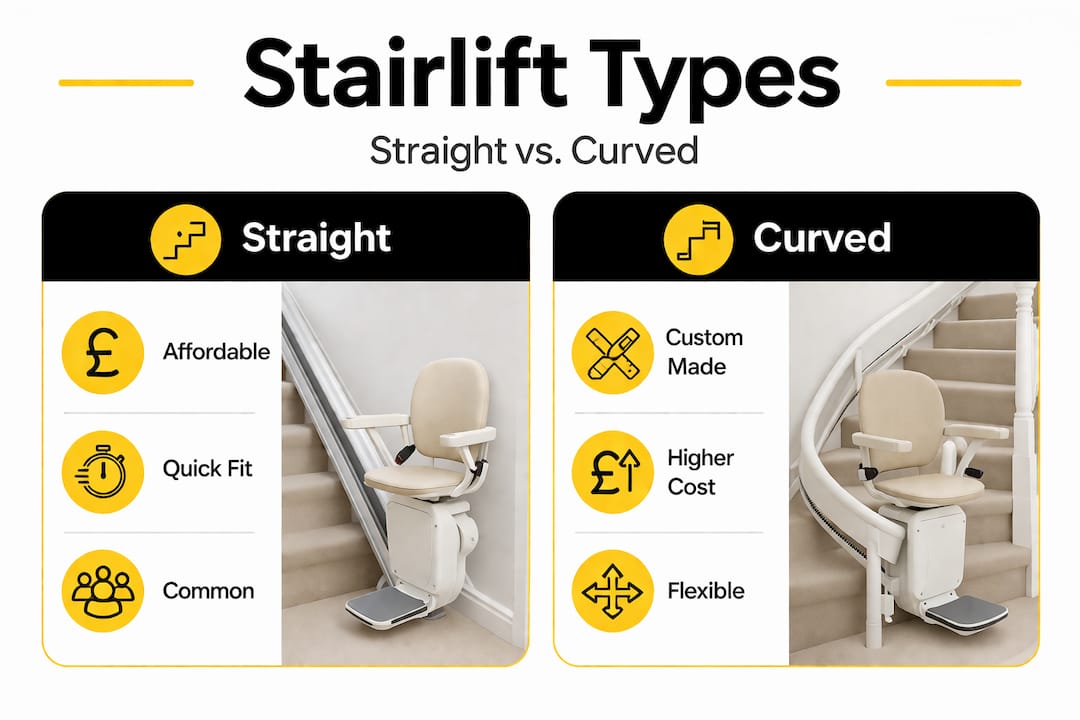
| Type | Best suited to | Average cost (UK) | Key pros | Key cons |
|---|---|---|---|---|
| Straight | Stairs with no bends or landings | £795 to £2,500 | Fast installation, most affordable, wide availability | Only works on straight staircases |
| Curved | Staircases with bends, landings, or unusual shapes | £3,000 to £12,000+ | Bespoke fit for complex stairs | High cost, longer lead time |
| Reconditioned | Straight staircases where cost is a priority | £500 to £1,500 | Significant savings, same safety if certified | May have some cosmetic wear |
| Rental | Short-term need, e.g. post-surgery recovery | From around £25 per week | No long-term commitment, fast setup | Can cost more over longer periods |
As the BHTA guidance confirms, reconditioned straight stairlifts suit the majority of UK homes perfectly well, provided they come from a certified supplier. The savings are real and the safety need not be compromised at all.
For broader guidance on matching a stairlift to your specific home layout, the stairlift guide for UK homes offers a practical overview. If cost is your primary concern, exploring affordable mobility solutions can help you see the full picture of what is available at different price points.
You might genuinely need a curved stairlift if:
- Your staircase has one or more bends or intermediate landings
- The stairs spiral or have an unusually narrow width
- Your staircase has a curved top or bottom section
- A surveyor confirms that a straight rail cannot safely navigate your layout
Otherwise, a straight or reconditioned model is almost certainly the smarter, more affordable choice. Do not let a salesperson upsell you into a curved model if your staircase simply does not require it.
Safety standards, installation, and aftercare
Once you have chosen your stairlift model, its lasting safety and reliability depend on installation and regular upkeep. Buying the right stairlift is only half the job. An excellent product fitted poorly is just as dangerous as a poor product fitted well. The installation process itself is where many problems originate.
Here is what a proper, professional stairlift installation should involve:
- Home survey: A qualified engineer visits your home before any purchase is agreed. They measure your staircase, assess the wall and floor fixings, and confirm which model suits your layout.
- Rail fitting: The rail is fixed securely to the stair treads, not the wall, which means no major structural changes are needed in most homes.
- Drive unit and seat assembly: The motorised carriage and seat are fitted to the rail and tested for smooth operation through several full runs.
- Electrical connection: Most stairlifts run on a standard 240V mains socket. The engineer confirms safe wiring and battery charging connections.
- Safety checks: Obstruction sensors, seat belt function, and limit switches are all tested before handover.
- User training: The engineer walks you or your carer through the controls, remote handsets, and what to do if the lift stops unexpectedly.
- Documentation: You receive a written record of the installation, model details, and warranty terms.
Safe stairlift installation by a certified engineer is not optional if you want long-term peace of mind. As research confirms, certified installation matters as much as the product itself. Skipping a professional fitting to save money is a false economy that can create real safety risks over time.
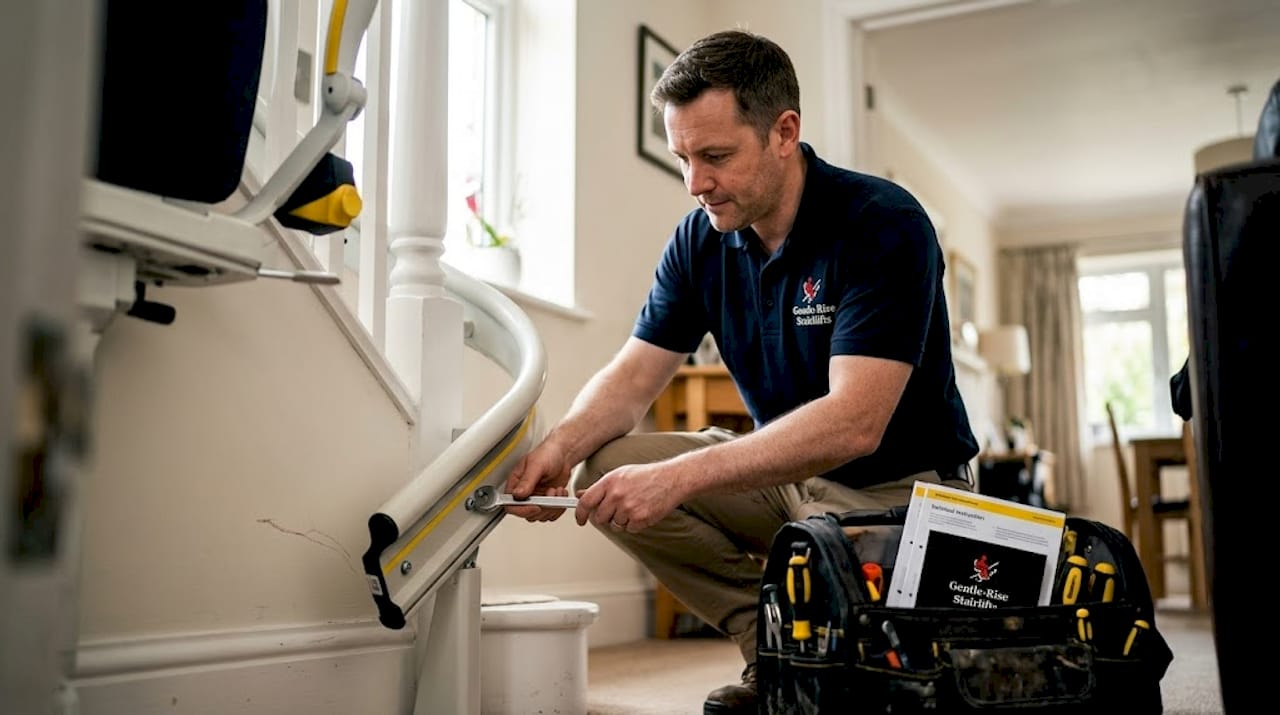
Aftercare is equally important. A well-maintained stairlift should last 10 to 15 years in a typical home. Without servicing, small mechanical issues can quietly grow into serious faults. You can read detailed guidance on stairlift maintenance tips to understand what regular upkeep involves and what to look out for between services.
Pro Tip: Schedule an annual service with a certified engineer even if your stairlift seems to be working perfectly. Preventive maintenance catches wear before it becomes a problem and keeps your warranty valid.
Quality stairlifts on a budget: practical tips
With safety and options covered, let us look at how you can find a quality stairlift that fits your budget and needs. The idea that affordable automatically means unsafe is one of the most stubborn myths in the stairlift market. It keeps many people either overspending on features they do not need or, worse, going without mobility support altogether.
The truth is that affordability and quality are not opposites. They simply require a little more thought when shopping.
| Option | Typical price range | Annual maintenance estimate | Best for |
|---|---|---|---|
| New straight stairlift | £795 to £2,500 | £100 to £200 | Permanent need, standard staircase |
| Reconditioned straight | £500 to £1,500 | £100 to £200 | Budget-conscious permanent users |
| Curved stairlift (new) | £3,000 to £12,000+ | £150 to £300 | Complex staircases |
| Short-term rental | £25 to £60 per week | Included in rental fee | Post-surgery or temporary recovery |
As BHTA-affiliated suppliers demonstrate, reconditioned models from reputable sources carry the same safety credentials as new ones. The cost difference is often substantial, sometimes as much as 40% to 50% less, without any meaningful reduction in safety or performance.
Here are some practical ways to keep costs down without cutting corners on safety:
- Choose a reconditioned model from a BHTA-accredited supplier. Ask for the full service history and certification.
- Check local authority schemes. Some councils and NHS occupational health teams can signpost grant funding or subsidised installations for eligible residents.
- Consider a rental for short-term needs. If you are recovering from a hip replacement or knee surgery, a rental can give you safe mobility during recovery without a long-term financial commitment.
- Compare quotes from at least three suppliers, but do not choose purely on price. Weigh the service package, warranty, and aftercare offered.
- Look for inclusive aftercare plans. Some providers bundle annual servicing into the purchase price, which saves money and removes the worry of remembering to book it.
For a thorough breakdown of what to expect at different price points, the affordable stairlift solutions resource provides clear, UK-specific guidance that can help you plan your budget realistically.
Why homeowners often prioritise the wrong stairlift features
Here is an honest perspective: after working with many UK homeowners navigating this decision, the pattern we see most often is fixation on the wrong things. People spend hours comparing seat fabrics, remote control designs, and fold-away footrest mechanisms. These things matter at the margins, perhaps. But they are not what keeps you safe on the stairs every single day.
Brand reputation is probably the biggest distraction. A well-advertised name feels reassuring, and nobody can blame you for that instinct. But advertising budget is not the same as engineering quality. Some of the most aggressively marketed stairlift brands outsource their manufacturing and rely heavily on name recognition rather than technical superiority. Meanwhile, smaller certified providers often deliver a product that meets every required safety standard at a fraction of the price.
The real test of a stairlift is three things: third-party certification, a properly conducted installation, and reliable ongoing aftercare. Everything else is secondary. A unit with BHTA certification, fitted by a qualified engineer, and maintained annually will almost always outperform an uncertified "premium" model that was installed in a rush by an unverified tradesperson.
We have spoken with homeowners who made the brand-led choice and later discovered their warranty excluded common faults or that the aftercare plan required calling a distant national centre, with engineers booked weeks out. Then there are those who chose a certified local provider, paid less, and had an engineer at their door within 48 hours when a small sensor fault appeared. The difference in lived experience is significant.
As research consistently shows, quality certification matters far more than marketing. The smartest choice is one grounded in verified safety, professional installation, and local aftercare. For a wider perspective on how this thinking extends to your overall home mobility, the adaptive home mobility insights resource is worth a read.
Discover safer, certified stairlifts for your home
You now know what genuinely defines a quality stairlift: certified safety standards, proper installation, and reliable aftercare. The next step is finding a supplier who delivers all three without stretching your budget unnecessarily.
At GentleRise Stairlifts, we specialise in providing straight, curved, and safe reconditioned stairlifts across the UK, with prices starting from just £795 for straight models. Every installation is carried out by certified engineers, and our Protect+ maintenance programme keeps your stairlift in safe, reliable condition year after year. If you are not sure which model suits your home, our most reliable stairlift guidance can help you make a confident, well-informed decision. Book a free home survey today and see exactly what the right stairlift looks like for your staircase and your budget.
Frequently asked questions
What safety certifications should a stairlift have in the UK?
Look for British Healthcare Trades Association membership and CE marking as proof of quality and safety. These certifications confirm the supplier and product meet rigorous UK standards.
Are reconditioned stairlifts as safe as new ones?
Yes, if bought from certified UK suppliers, reputable reconditioned stairlifts can offer the same safety and reliability as new models. BHTA-accredited reconditioned models are inspected, refurbished, and tested before resale.
How can I keep ongoing stairlift costs low?
Regular maintenance, considering reconditioned or rental options, and checking for local support schemes can all help you cut costs considerably. Bundled aftercare plans are often the most cost-effective route for long-term users.
Is professional installation really necessary?
Professional installation ensures your stairlift meets safety standards and minimises the risk of faults or accidents over time. A certified installation also protects your warranty and gives you a documented record of compliance.