
TL;DR:
- Choosing a stairlift often involves urgent decisions triggered by falls or mobility decline, emphasizing the importance of quick, reliable solutions. The right stairlift depends on staircase shape, user needs, urgency, budget, and aftercare, with straight models favored for their affordability and speedy installation. Prioritizing service quality and emergency repair response is crucial to ensuring safety and independence in the home.
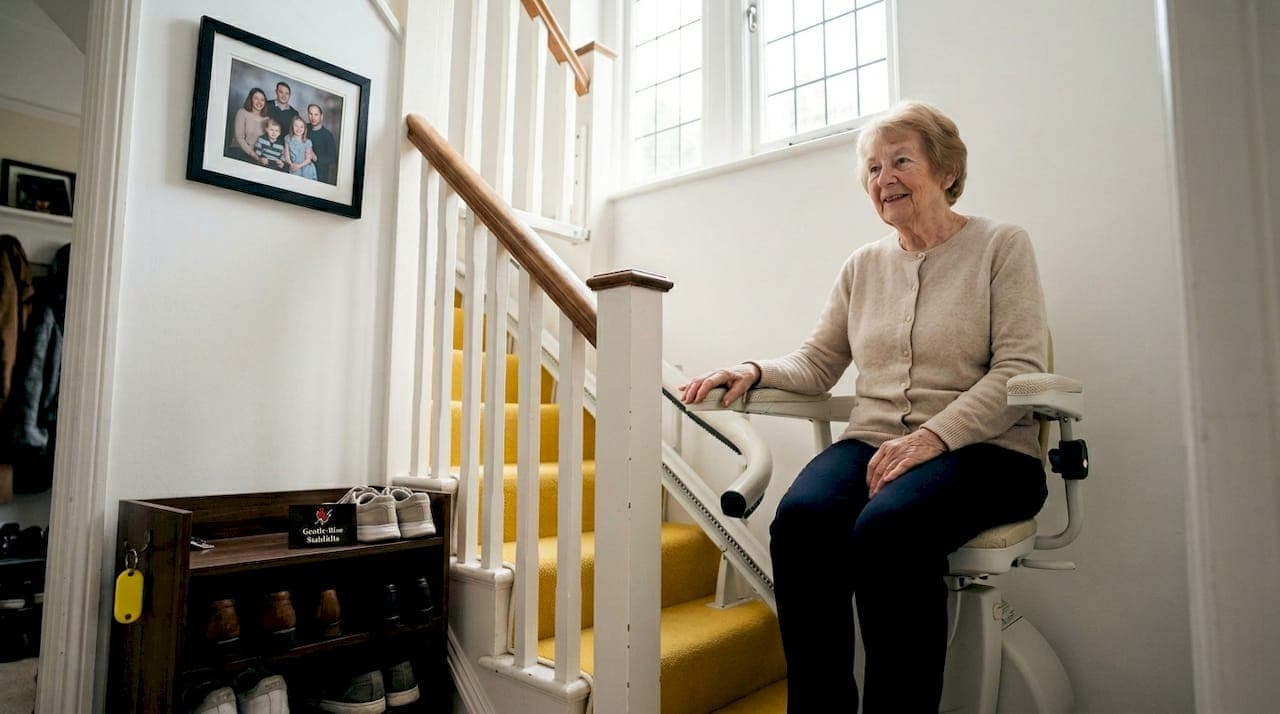
Choosing a stairlift is rarely a calm, unhurried decision. For most UK families, it happens quickly, triggered by a fall, a hospital discharge, or a sudden decline in a loved one's mobility. The pressure to get the right solution, fast, can feel overwhelming when you are also juggling care arrangements and worrying about safety at home. UK survey data from 2026 shows that 14% of buyers need a stairlift installed within a week. This guide walks you through every major type, how they compare, and how to make a confident decision without wasting time or money.
Table of Contents
- How to evaluate stairlift options for your home
- Straight stairlifts: simplicity, speed and affordability
- Curved stairlifts: tailored solutions for complex staircases
- Other stairlift types and advanced features
- Quick reference: comparing stairlift types for UK homes
- What families really need to know about stairlift choice
- Find affordable and reliable stairlift solutions with GentleRise
- Frequently asked questions
Key Takeaways
| Point | Details |
|---|---|
| Straight stairlifts fit most homes | They are fast to install and offer the best value for straight staircases. |
| Curved stairlifts require custom solutions | Homes with turns or landings need bespoke, longer-lead stairlifts. |
| Aftercare matters most | Most UK users prioritise 24-hour repair response over small price differences for peace of mind. |
| Specialist options exist | Outdoor, perch, and standing stairlifts expand access for challenging layouts and mobility needs. |
How to evaluate stairlift options for your home
With urgency and stakes clear, let's simplify what to focus on when evaluating stairlift options for your household.
Before you compare models or request quotes, it pays to know exactly what you need. The right stairlift for one household is entirely wrong for another. Getting this stage right saves you time, money, and a great deal of frustration later.
Here are the key factors to work through in order:
- Staircase shape. Is your staircase straight, or does it have a turn, landing, or spiral section? This single factor determines which category of stairlift you can install.
- Primary user's physical needs. Does the user struggle with balance, grip strength, or sitting for extended periods? Some models suit those with hip or knee problems far better than others.
- Weight capacity. Standard stairlifts typically support up to 120 kg, but heavy-duty models are available for users above that threshold.
- Urgency of installation. Post-surgery discharges and sudden mobility changes often leave families with days, not weeks. Straight stairlifts can sometimes be fitted within 48 hours, making them the go-to for urgent situations.
- Budget and long-term cost. Factor in not just the purchase price but ongoing maintenance, warranty cover, and potential repair costs.
- Aftercare and reliability. This is where many families underestimate the importance. 78% of respondents in a 2026 UK survey expect a stairlift repair to be completed within 24 hours. Choosing a provider without a strong aftercare commitment is a genuine risk.
Safety features should match the primary user's abilities. Look for intuitive controls, smooth start and stop motion, and seat belts as standard. For those with cognitive decline, a straightforward remote handset is often better than a complex control panel. For safe, affordable stairlift planning, it is worth taking time to map out your needs on paper before speaking to any supplier.
Pro Tip: Before you request a single quote, prioritise providers who guarantee emergency repair response within 24 hours. That promise matters more than a £50 price difference when your parent cannot reach the bedroom without the lift working.
Straight stairlifts: simplicity, speed and affordability
Starting with the simplest and most popular choice, let's break down straight stairlifts and why they suit the majority of UK homes.
A straight stairlift runs along a single, uninterrupted staircase with no turns, bends, or landings in between. This is the most common configuration found in UK terraced and semi-detached houses, which is precisely why straight stairlifts account for the majority of all installations.
Key advantages of straight stairlifts:
- Lowest cost available. Prices start from around £795, making them accessible for families on tighter budgets.
- Fastest installation. Straight stairlifts can be installed within 48 hours, which is critical for hospital discharge situations.
- Simple, reliable mechanics. Fewer moving parts means fewer potential points of failure.
- Easy servicing. Parts are widely available and engineers are familiar with these models across the UK.
- Compact designs. Most modern straight stairlifts fold neatly against the wall, leaving room for other household members to use the stairs safely.
"For many families, a straight stairlift is not a compromise. It is exactly the right tool for the job." This sentiment reflects what we hear time and again from homeowners who initially worried they needed something more complex.
When considering straight stairlift options, look for models that include a battery backup system as standard. UK power cuts, whilst infrequent, do happen, and the last thing you want is a loved one stranded mid-staircase. Most quality straight stairlifts run off a small onboard battery that charges automatically when the seat is parked at either end.
For families who want to understand the full process of installing straight stairlifts, the actual fitting is typically completed in two to three hours by a trained engineer. No structural alterations to walls or floors are required because the rail attaches directly to the stair treads.
Pro Tip: Opt for models with battery backup as standard. A quality straight stairlift should continue running for several days on battery power alone, giving you genuine peace of mind during unexpected power outages.
Curved stairlifts: tailored solutions for complex staircases
When staircases are more complicated, a different solution is needed. Here is what curved stairlifts offer and why their lead time is so different.
Not every UK home has a simple, straight staircase. Victorian terraces, larger detached houses, bungalow extensions, and converted properties often feature staircases with 90-degree turns, 180-degree bends, intermediate landings, or even full spirals. For these homes, a curved stairlift is not optional. It is the only viable stairlift solution.
What makes curved stairlifts different:
- Bespoke rail manufacturing. Each rail is custom-built to match the exact measurements and angles of your specific staircase. There are no off-the-shelf curved rails.
- Longer lead times. Because of the custom manufacturing process, curved stairlifts typically take 4 to 6 weeks from survey to installation. This is a significant consideration for families in urgent need.
- Higher cost. Bespoke engineering and more complex installation means curved stairlifts carry a higher price tag than straight models.
- Precise home survey required. A trained surveyor must visit your home to take detailed measurements before manufacturing can begin.
- Exceptional fit and finish. When properly installed, a curved stairlift glides smoothly through every turn, providing a genuinely comfortable ride.
For families considering choosing curved stairlifts, planning ahead is essential. If your loved one has a complex staircase and a mobility challenge that is likely to worsen over time, getting the survey booked sooner rather than later avoids crisis situations later on.
| Feature | Straight stairlift | Curved stairlift |
|---|---|---|
| Installation time | Up to 48 hours | 4 to 6 weeks |
| Cost range | From £795 | From £3,000+ |
| Staircase suitability | Straight only | Turns, bends, spirals |
| Rail manufacturing | Standard stock | Bespoke, made to measure |
| Urgency suitability | Excellent | Poor (for urgent needs) |
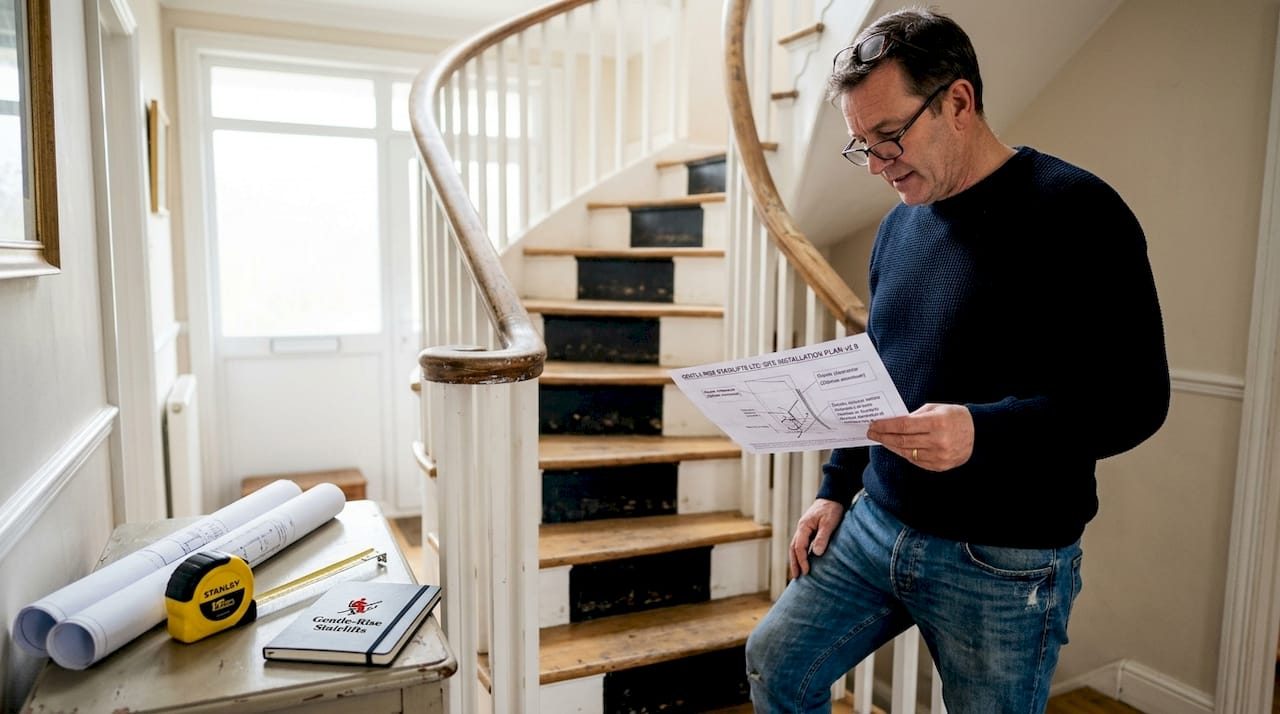
This comparison makes the decision clearer. If your staircase is straight, there is rarely a reason to complicate matters. If it turns or spirals, a curved stairlift is the only proper solution, and early planning is everything.
Other stairlift types and advanced features
Beyond standard straight and curved models, specialised options help even more people stay mobile at home.
Most people associate stairlifts with the seated models you see advertised on television. But the range of available solutions is far broader. Specialist stairlift types exist precisely because no two homes, and no two users, are the same.
Outdoor stairlifts are built specifically for exterior steps, perhaps leading down to a garden, side passage, or sloped driveway approach. They are constructed with weatherproof materials, sealed mechanisms, and UV-resistant upholstery. For those who value garden access and outdoor independence, these models restore that freedom safely. You can find more information on specialist or outdoor stairlifts to understand which situations suit them best.
Perch and standing stairlifts solve a problem that seated models cannot. Some users find it painful or impossible to fully bend at the hip or knee, making a standard seated stairlift uncomfortable or even unusable. A perch stairlift provides a slightly angled saddle seat that allows the user to ride in a semi-standing position, taking pressure off stiff or recovering joints. These are also valuable on very narrow staircases where a full-width seat would restrict passing.
Key features to consider across all types:
- Swivel seats. A powered swivel seat rotates the user to face away from the stairs at the top landing, making dismounting significantly safer and reducing fall risk.
- Safety sensors. Obstruction sensors on the footrest and carriage detect anything on the stairs and stop the lift automatically, preventing accidents caused by pets, bags, or falling objects.
- Remote controls. Allowing a carer or family member to send the stairlift up or down the stairs remotely is enormously practical in multi-user households.
- Foldable rails. At the top or bottom of the stairs, a folding section of rail allows the stairlift to clear a doorway or hallway when not in use.
- Weight-activated sensors. These prevent the lift from moving unless the user is properly seated and belted.
Exploring the full range of mobility stairlift features helps families build a complete picture of what is available. The 78% of users who expect 24-hour repair cover are not just thinking about price. They understand that reliability and features together determine whether a stairlift genuinely delivers independence, or creates new frustrations.
Quick reference: comparing stairlift types for UK homes
Synthesising all options, here is an at-a-glance comparison to speed up your decision.
| Type | Best for | Approx. cost | Install time | Urgency suitability |
|---|---|---|---|---|
| Straight | Simple straight stairs | From £795 | Up to 48 hours | Excellent |
| Curved | Stairs with turns/spirals | From £3,000+ | 4 to 6 weeks | Poor |
| Perch/standing | Narrow stairs, joint pain | Varies | Days to weeks | Moderate |
| Outdoor | Exterior steps, gardens | From £1,500+ | Up to 48 hours | Good |
The table above makes straight and curved installation differences very clear. When urgency is a factor, straight and outdoor models are the realistic options. Curved and perch models require more planning time.
Key questions to ask before choosing:
- Is your staircase entirely straight, or does it change direction at any point?
- Can the primary user comfortably sit for the duration of the ride, or do hip or knee conditions make that difficult?
- Is this a permanent need, or is it for post-surgery recovery over a few months?
- What is the weight requirement, and does the chosen model comfortably exceed it?
- Does the provider offer a rental option for short-term needs rather than outright purchase?
- What aftercare package is included, and what are the response times for callouts?
For wider stairlift mobility guidance, working through these questions in order ensures you do not invest in the wrong type. Renting is often the most sensible choice for post-surgery recovery, as it avoids a long-term financial commitment for what may be a temporary need.
What families really need to know about stairlift choice
Here is an honest perspective that goes beyond product specifications, because after working with UK families across a wide range of circumstances, the most important lessons are not always the obvious ones.
Most buyers focus on type and cost when researching stairlifts. That makes sense. But the families who end up genuinely satisfied are almost always the ones who prioritised service quality and aftercare over shaving a small amount off the purchase price.
Think about what a stairlift breakdown actually means. It is not an inconvenience like a broken washing machine. For an elderly person or someone recovering from a hip replacement, being unable to reach the bedroom or bathroom safely is a genuine health and safety emergency. It is no coincidence that 78% of UK stairlift users expect repairs within 24 hours. That expectation exists because people understand the real stakes.
Yet plenty of buyers are tempted by the cheapest quote, only to discover the provider has no local engineers, no emergency cover, or a 72-hour minimum callout window. The saving of a few hundred pounds upfront can result in real distress down the line.
Our strong advice is to treat the service-level agreement as part of the product itself. Ask every potential supplier directly: what happens if the lift breaks down on a Saturday evening? What is the guaranteed response time? Is emergency repair cover included or an add-on? These questions reveal the true character of a provider far more than any brochure.
Beyond repairs, think about how the stairlift fits into the broader picture of your family member's independence. A well-chosen stairlift, properly maintained, restores confidence. It lets someone who was afraid of their own stairs reclaim their home. That psychological benefit is significant. It reduces family worry, reduces carer pressure, and allows people to live in the homes they love for longer. Choosing a stairlift is not a technical exercise. It is a decision that shapes quality of life, and it deserves to be treated that way.
Find affordable and reliable stairlift solutions with GentleRise
For those ready to take the next step towards safe home mobility, here is how GentleRise can help.
GentleRise Stairlifts offers a full range of straight, curved, reconditioned, and rental stairlifts across the UK, with prices starting from £795. Whether you need an urgent installation following a hospital discharge or a carefully planned curved stairlift for a complex staircase, the team can provide expert guidance from your very first call.
Our free home survey takes the guesswork out of the process entirely. A trained surveyor visits your home, assesses your staircase, and recommends the most suitable and cost-effective solution. You can also explore our stairlift costs guide to understand pricing before you commit to anything. For those who want confidence in their choice, our guide to choosing a reliable stairlift covers exactly what to look for in a trustworthy provider. Contact GentleRise today to book your free survey and take the first step towards restoring independence at home.
Frequently asked questions
How quickly can a stairlift be installed in a UK home?
A straight stairlift can often be installed within 48 hours, making it suitable for urgent post-surgery or hospital discharge situations. Curved stairlifts require bespoke manufacturing and typically take 4 to 6 weeks from survey to fitting.
What type of stairlift is best for a narrow or spiral staircase?
Curved stairlifts are designed specifically for staircases with turns, bends, and spirals, whilst perch or standing models suit very narrow stairs where a full seat cannot fit comfortably. Both options require a professional home survey before manufacture begins.
How important is aftercare and repair response time?
Aftercare is critical, particularly for elderly users or those with limited mobility. 78% of UK stairlift users expect repairs within 24 hours, and choosing a provider with a guaranteed fast-response service directly protects your family member's safety and independence.
Are there stairlifts suitable for outdoor steps?
Yes, outdoor stairlifts are purpose-built with weatherproof frames, sealed mechanisms, and robust upholstery to withstand UK weather conditions. They are an excellent solution for exterior garden steps or sloped approaches to properties where safe access has become difficult.