
TL;DR:
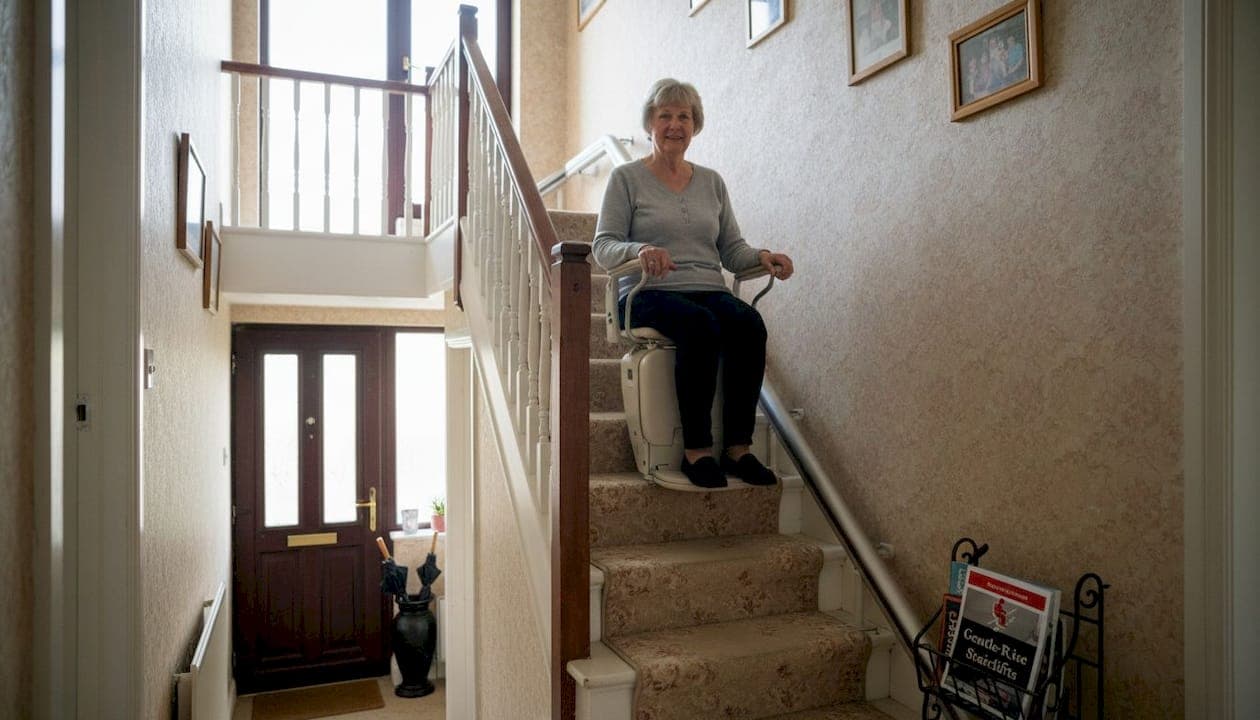
- Choose a stairlift based on staircase type, safety features, and reliable aftercare support.
- Top UK brands include Acorn, Stannah, Handicare, and Halton, each with strong reputations.
- Cost varies from around £1,800 to over £12,000, with reconditioned options offering good value.
Choosing a stairlift is one of the most significant decisions you can make for your safety and independence at home. The UK market offers dozens of models, brands, and price points, and picking the wrong one can leave you with a poorly fitted unit, sky-high servicing bills, or a product that simply does not suit your staircase. This guide cuts through the noise. We cover the practical criteria for evaluating your options, the most trusted UK brands, a clear cost comparison, and a step-by-step decision framework so you can move forward with confidence rather than confusion.
Table of Contents
- How to evaluate home mobility aids for UK staircases
- Top home mobility stairlift brands in the UK
- Cost comparison: Straight vs. curved stairlifts in the UK
- Practical tips for choosing the right stairlift for your UK home
- A fresh perspective: What really matters when improving home access
- Explore reliable stairlift solutions for your UK home
- Frequently asked questions
Key Takeaways
| Point | Details |
|---|---|
| UK's top brands | Acorn, Stannah, Handicare, and Halton are known for reliability and strong aftercare. |
| Cost transparency | Expect straight stairlifts to start from £1,800 and curved models from £3,800, with reconditioned options available. |
| Safety essentials | Seatbelts, sensors, and emergency stop features should be non-negotiable for all models. |
| Choose by needs | Match features and support to your staircase and household requirements for best value. |
How to evaluate home mobility aids for UK staircases
Before you browse catalogues or request quotes, it pays to understand exactly what you need from a stairlift. The two most fundamental questions are: do you have a straight or curved staircase, and will the lift be used indoors or outdoors? Straight staircases are the most common in UK homes and are served by a wide range of standard models. Curved or split-level stairs require a bespoke rail, which increases both complexity and cost. Outdoor stairlifts need weatherproof materials and sealed components, so they are an entirely different category.
Once you have identified your staircase type, focus on safety features. Key safety features include obstruction sensors, seatbelts, swivel seats, emergency stops, overspeed governors, and interlock systems. These are not optional extras. They are the baseline for any unit you should consider.
Here is a checklist of what to look for when evaluating any stairlift:
- Obstruction sensors that stop the carriage if something is on the stairs
- A secure seatbelt rated for your weight and user profile
- A swivel seat that allows safe mounting and dismounting at the top landing
- An emergency stop button within easy reach during the ride
- An overspeed governor to control the carriage if the drive mechanism fails
- Interlock systems that prevent movement if the footrest or armrests are not properly stowed
- A reliable remote control or joystick with an ergonomic grip
- A clear warranty of at least one year on parts and labour
Reliability and aftercare are just as important as the hardware itself. A stairlift that breaks down regularly and takes weeks to repair can leave you stranded in your own home. Always ask the supplier what their average call-out response time is, whether they offer a service plan, and how quickly parts are stocked.
For those looking at affordable mobility solutions, balancing a solid feature set with ongoing running costs is the smartest long-term approach. A cheap unit with no aftercare can cost more in the end than a mid-range model backed by a responsive local engineer.
Pro Tip: Always request a home survey before purchasing. A qualified surveyor can identify hidden complications in your staircase, such as tight bends, low headroom, or narrow widths, that a standard online quote would miss entirely.
Top home mobility stairlift brands in the UK
Not all stairlift brands are equal in terms of quality, reputation, or local support. Acorn, Stannah, Handicare, and Halton are among the best-established UK stairlift companies, each with their own strengths.
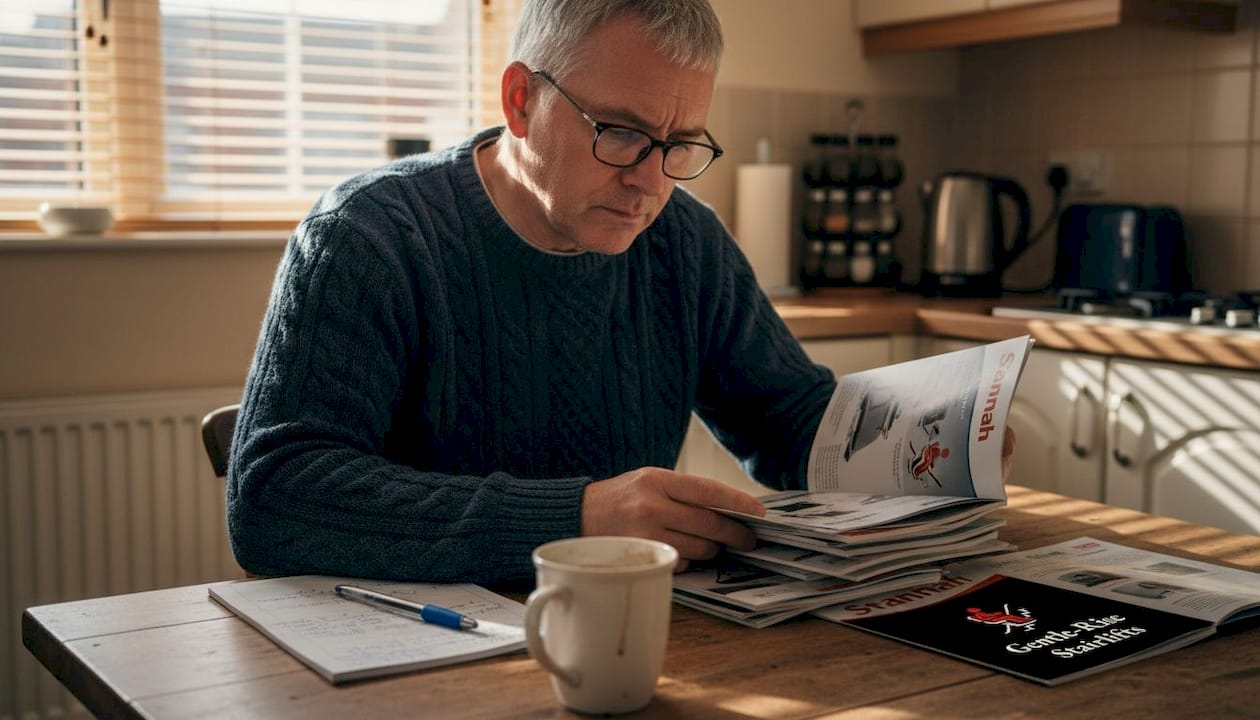
Here is a quick breakdown of what each brand offers and who they suit best:
Acorn Stairlifts
- Trustpilot rating of 4.7 out of 5 based on over 10,000 reviews
- Manufactures its own rails and carriages in the UK
- Offers straight and curved models with a strong aftercare network
- Best for: users who want a well-known brand with strong customer feedback
Stannah Stairlifts
- Over 150 years in the mobility industry
- Recommended by Which? and a member of the British Healthcare Trades Association (BHTA)
- Known for robust build quality and extensive UK engineer coverage
- Best for: those who prioritise heritage, impartial endorsements, and nationwide service
Handicare
- More than 130 years of experience in mobility aids
- Offers a wide range of straight, curved, and standing models
- Strong in the reconditioned and rental market
- Best for: users with specific physical requirements or unusual staircase layouts
Halton Stairlifts
- A five-star Trustpilot rating and BHTA membership
- Known for transparent pricing and fast installation turnaround
- Best for: customers who want a smaller, more personal service with quick response times
"The most important thing about a stairlift is not the headline specification. It is whether your engineer picks up the phone on a cold Monday morning when the unit stops working."
If you want to research how these providers compare to newer market entrants, reading about major stairlift brands can help you weigh the trade-offs between established heritage and more agile independent suppliers.
One thing all four of these brands share is a commitment to BHTA membership, which requires adherence to a strict code of practice. This is a useful baseline filter when you are comparing providers you have not used before.
Cost comparison: Straight vs. curved stairlifts in the UK
Cost is often the deciding factor for families and caregivers working within a fixed budget. Understanding the real price breakdown prevents unpleasant surprises.
Straight stairlifts cost £1,800 to £3,500 new with an average of £2,300, while reconditioned models run from £1,000 to £2,500. Curved stairlifts range from £3,800 to £12,000 or more, averaging around £5,500, and annual servicing typically costs between £100 and £300.
| Stairlift type | New model cost | Reconditioned cost | Avg. annual servicing |
|---|---|---|---|
| Straight stairlift | £1,800 to £3,500 | £1,000 to £2,500 | £100 to £300 |
| Curved stairlift | £3,800 to £12,000+ | £2,500 to £7,000 | £150 to £300 |
| Outdoor stairlift | £2,500 to £5,000 | Less commonly available | £150 to £300 |
Most reputable suppliers include installation within the quoted price. Always confirm this before signing any agreement. Key inclusions to clarify are:
- Full installation by a qualified engineer
- A test run with you or the user present before the engineer leaves
- A user manual and hands-on training
- A warranty period covering parts and labour (typically one to two years)
- Contact details for aftercare or emergency call-outs
For a broader overview of what you can expect to pay locally, UK stairlift pricing explained covers regional variations worth knowing about. You can also review the full UK stairlift cost guide for a detailed breakdown by model type and supplier.
Pro Tip: Reconditioned stairlifts offer the best value when the unit has been refurbished to manufacturer standards, comes with a warranty, and is installed by the same company offering aftercare. Avoid private sales with no documentation.
Practical tips for choosing the right stairlift for your UK home
With brand knowledge and cost figures in hand, here is a clear step-by-step process to guide your final decision.
- Assess your staircase and user needs. Measure the staircase length, note any bends or tight turns, and consider the user's weight, physical condition, and likely usage frequency. A straight staircase simplifies everything.
- Request at least three quotes. Never accept the first price offered. Each quote should include a home survey, not just an online estimate. This protects you from being sold a unit that does not fit properly.
- Verify safety certification. Confirm that any unit meets British Standards, specifically BS EN 81-40 for stairlifts. Check that essential safety features such as sensors and governors are included as standard.
- Ask about financial assistance. Some local councils in England and Wales offer Disabled Facilities Grants (DFGs) towards the cost of stairlifts. Your occupational therapist or social worker can advise on eligibility. Charitable grants also exist through organisations such as Turn2us.
- Confirm aftercare and servicing terms. Before you sign, ask specifically: how long is the warranty, what does the service plan cover, and how quickly can an engineer attend in an emergency?
- Plan the installation day. Most straight stairlifts can be fitted within a few hours. Clear the staircase beforehand and ensure the user is comfortable with the controls before the engineer departs.
For balanced, impartial guidance throughout this process, reliable stairlift advice can help you ask the right questions before committing.
Pro Tip: If a salesperson discourages you from shopping around or pressures you to sign on the day of the survey, that is a clear warning sign. Reputable companies will always give you time to consider your options.
A fresh perspective: What really matters when improving home access
The stairlift industry tends to lead with features: the smoothest ride, the quietest motor, the slimmest rail profile. These things matter, but in our experience working with UK households, they rarely determine whether a stairlift genuinely improves someone's daily life.
What actually makes the difference is the quality of the relationship with your supplier after installation. A premium-branded unit supported by slow, unresponsive aftercare is a liability. A mid-range model backed by a local engineer who responds within 24 hours is an asset.
We have also seen families overlook the importance of custom fit. A stairlift that has not been correctly sized for the rail length, user weight, or landing space creates frustration and, in the worst cases, a safety risk. The fitting matters as much as the product.
Finally, do not underestimate the psychological dimension. Regaining the ability to move freely through your own home, without asking for help, has a measurable impact on confidence and wellbeing. The right affordable home mobility insights are not just about hardware. They are about restoring a sense of control. Choose the supplier who understands that, not just the one with the glossiest brochure.
Explore reliable stairlift solutions for your UK home
Finding a stairlift that fits your home, your budget, and your life should not be complicated. At GentleRise Stairlifts, we offer straight, curved, and reconditioned stairlift options across the UK, with transparent pricing and professional installation.
Whether you want to explore stairlift costs before speaking to anyone, or you are ready to find a quality reconditioned stairlift deal that keeps costs manageable, we are here to help. Book a free home survey with no obligation and let our team guide you to the right solution for your staircase and your needs.
Frequently asked questions
What is the average cost of installing a stairlift in the UK?
The average straight stairlift costs around £2,300 new or approximately £1,500 reconditioned, while curved models average roughly £5,500 depending on the staircase configuration.
Which UK stairlift brands are best for reliability?
Acorn, Stannah, Handicare, and Halton are consistently rated highly for reliability and aftercare quality across the UK, each holding BHTA membership and strong independent review scores.
What safety features should I require in a stairlift?
Essential stairlift safety features include obstruction sensors, seatbelts, swivel seats, emergency stop buttons, overspeed governors, and interlock systems that prevent unintended movement.
Is ongoing servicing required for home stairlifts?
Annual servicing is strongly advised and typically costs between £100 and £300 per year, keeping the unit safe, reliable, and operating smoothly throughout its lifespan.