
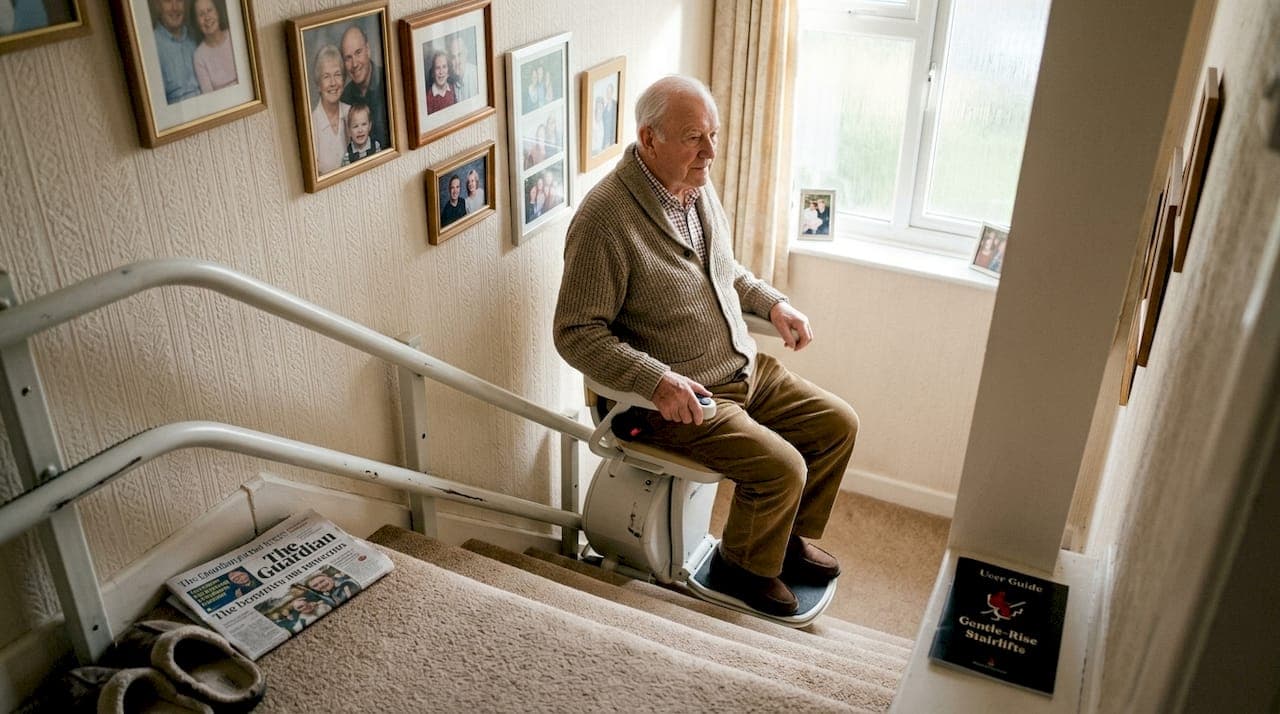
Many people assume that any stairlift will safely carry any user, but that simply is not the case. Stairlifts in the UK come with strict, tested weight limits that vary significantly between models, and misreading those limits can put users at serious risk. Standard residential stairlifts in the UK support between 120kg and 127kg, covering roughly 85 to 90% of users, but that still leaves a meaningful portion of people who need something different. This guide walks you through what weight limits actually mean, how standard and heavy-duty models compare, what regulations apply, and how to make a confident, safe choice for yourself or someone you care for.
Table of Contents
- Understanding stairlift weight limits
- Standard and heavy-duty stairlift limits: a comparison
- The role of safety margins and regulations
- Edge cases: curved stairlifts, ageing equipment, and special considerations
- Choosing the right stairlift: practical steps for safety and comfort
- Get expert help with your stairlift selection
- Frequently asked questions
Key Takeaways
| Point | Details |
|---|---|
| Capacity varies by model | Most domestic stairlifts support 120-127kg but heavy-duty options reach up to 200kg. |
| Buffer is essential | Choose a stairlift with 20-30kg more than your maximum total weight. |
| Maintenance affects safety | Capacity can decrease over time, so regular servicing is vital. |
| Curved lifts have lower limits | Curved stairlifts often support less weight due to design stresses. |
| Certified installers ensure compliance | Only use certified fitters to meet UK safety standards and protect your investment. |
Understanding stairlift weight limits
A stairlift weight limit is not simply the maximum body weight of the person sitting in the chair. It is the total allowable load the equipment is designed and tested to carry safely. That distinction matters more than most people realise, and getting it wrong can have serious consequences.
The weight capacity includes the user's body weight, their clothing, and any mobility aids they carry, such as a walking frame or a bag of medical supplies. If you weigh 120kg and carry a walking aid, you may already be at or beyond the rated limit of a standard model.
Exceeding the stated limit puts stress on the motor, the rail, and the braking system. It can void the warranty, trigger safety cut-outs, or in the worst case, cause mechanical failure mid-journey. Understanding the stairlift benefits of choosing the right model from the start is far better than discovering a mismatch after installation.
Here is what the weight limit actually covers:
- User body weight at the heaviest expected point
- Clothing and footwear, which can add 2 to 4kg
- Mobility aids such as walking sticks, frames, or small wheelchairs
- Bags or carried items the user takes on every journey
- Any future weight changes the user may experience
A 127kg rated stairlift does not mean a 127kg user is safely within limits once clothing and carried items are factored in. Always build in a buffer.
For carers, this is especially important. You are responsible for ensuring the person you support uses the equipment within its safe operating range every single time.
Standard and heavy-duty stairlift limits: a comparison
With the basics clear, it helps to see how different models actually compare. The UK market broadly divides into standard and heavy-duty stairlifts, with a small number of specialist bariatric models at the upper end.
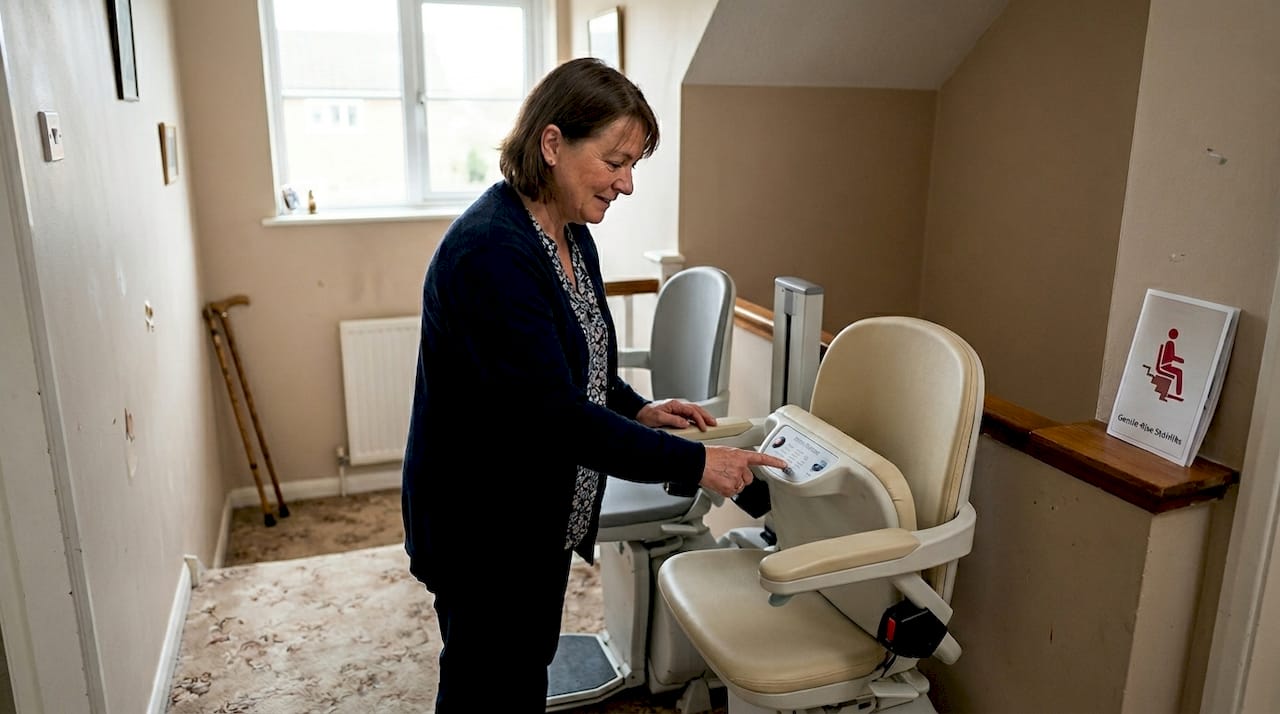
Standard residential stairlifts support between 120kg and 127kg, while heavy-duty models extend that range to 160kg or even 200kg. Rare bariatric models can reach 227kg for users with exceptional requirements.
| Model type | Typical weight limit | Example brands |
|---|---|---|
| Standard | 120 to 127kg | Acorn, Stannah, Brooks |
| Heavy-duty | 160 to 200kg | Handicare 1000, Platinum Ultimate 2 |
| Bariatric | Up to 227kg | Specialist providers |
To put this in perspective, popular brands such as Acorn and Brooks support up to 159 to 160kg, while the Handicare 1000 reaches 200kg, making it one of the most capable mainstream options available in the UK.
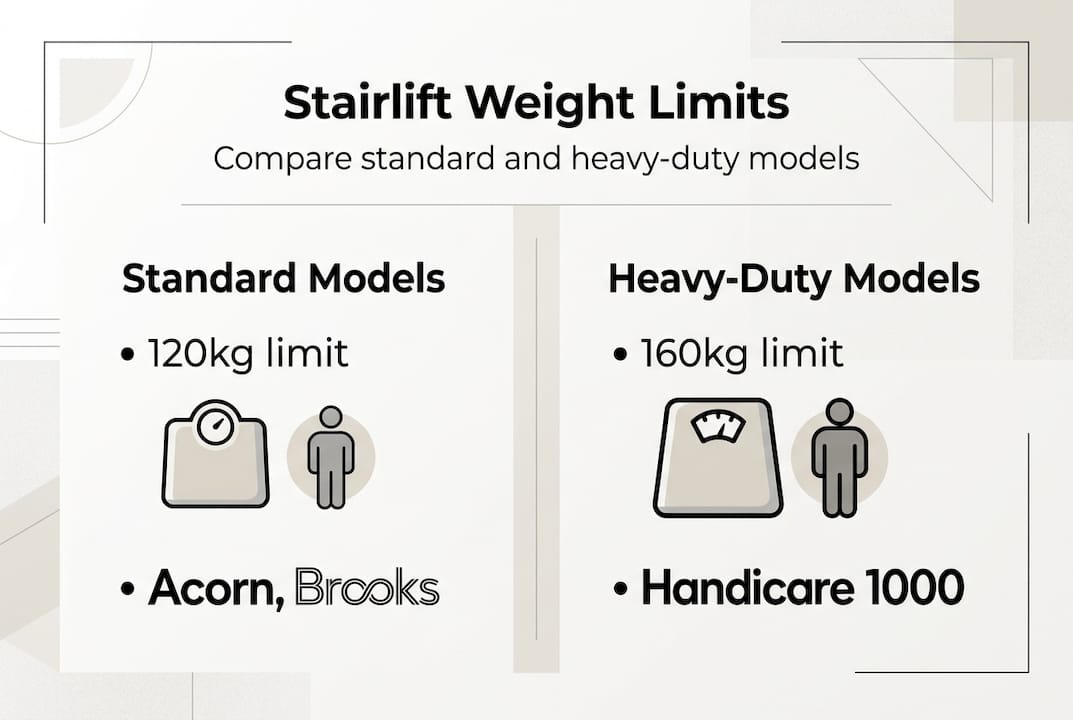
Key statistic: Heavy-duty stairlifts cover users up to 200kg, yet the majority of UK providers lead with standard models that cap at 127kg. If you are close to that threshold, a heavy-duty model is worth serious consideration.
Checking the stairlift cost guide before you commit will help you understand the price difference between these categories and plan your budget accordingly.
The role of safety margins and regulations
Model limits are just one piece of the picture. The safety margins built into those limits, and the regulations that govern them, are equally important for anyone making a stairlift decision.
All reputable UK stairlifts must comply with BS EN 81-40:2020, the British and European standard for inclined stairlifts. Under this standard, models are tested to up to 200% of their rated capacity, and safety margins of 10 to 15% are built into the design. That means a stairlift rated at 127kg has been tested to carry significantly more during certification, but that does not mean you should push it to its limits in daily use.
| Safety feature | What it does |
|---|---|
| Overload sensor | Stops the lift if weight exceeds the rated limit |
| Speed governor | Controls descent speed if power fails |
| Obstruction sensor | Halts movement if something blocks the rail |
| Annual service check | Confirms all safety systems remain within tolerance |
Pro Tip: Never assume the safety margin is there for you to use. It exists to protect against unexpected loads, not to extend the usable weight range for everyday operation.
Certified installation by a qualified engineer is not optional. It is the only way to ensure your stairlift is compliant, correctly calibrated, and covered under warranty.
Choosing a reliable stairlift from a certified installer means you get a unit that has been set up to the correct specification for your staircase and your weight requirements, with all safety systems properly activated.
Edge cases: curved stairlifts, ageing equipment, and special considerations
Beyond mainstream straight stairlift models, several situations call for extra care and specific advice.
Curved stairlifts are built to navigate bends and landings, but that added mechanical complexity comes at a cost. The track joints and motor work harder on curves, which means curved models may carry lower maximum weights than their straight equivalents. Always confirm the specific limit for a curved model rather than assuming it matches the brand's straight stairlift rating.
Ageing equipment is another concern many owners overlook. A stairlift that was installed ten years ago and has not been regularly serviced may no longer perform to its original specification. Capacity can degrade over time, and a well-maintained unit may retain around 90% of its original capacity, while a neglected one could fall further. Routine servicing is not just about safety sensors; it directly affects how much weight the equipment can reliably carry.
Here are the key considerations for edge cases:
- Curved stairlifts often have lower limits than straight models from the same brand
- Older units should be assessed by a qualified engineer before use by heavier users
- Future weight changes due to medication, surgery, or health conditions should be factored in at the point of purchase
- Mobility aids that change over time, such as moving from a walking stick to a frame, add to the total load
- Carers assisting with transfers should not add their own weight to the chair during operation
Pro Tip: If you are buying for someone whose weight or mobility needs may change in the next few years, choose a model with a higher capacity now. Upgrading later is far more disruptive and costly than getting it right from the start.
Exploring the full range of GentleRise stairlift options can help you identify which models suit both current and anticipated needs. For further weight limit advice, independent resources can also provide useful context.
Choosing the right stairlift: practical steps for safety and comfort
With all the facts in hand, here is a clear, step-by-step process for making the right stairlift choice.
- Assess the user's current weight including clothing and any regularly carried items.
- Add a buffer of at least 20kg above the maximum expected total load. Selecting a model with this buffer built in is the single most important safety step you can take.
- Consider the staircase shape. Straight staircases offer the widest choice of models and the highest weight limits. Curved staircases narrow your options and may reduce the available capacity.
- Book a professional home survey. A qualified engineer will assess your staircase dimensions, identify any structural considerations, and recommend compliant models.
- Compare costs between standard and heavy-duty models. Heavy-duty stairlifts typically start at around £2,950 compared to £1,900 or more for standard models, reflecting the reinforced components and more powerful motors involved.
- Confirm the installer is certified and that the model meets BS EN 81-40:2020.
- Ask your provider these questions: What is the total weight limit including carried items? Does the model have an overload sensor? What does the service plan cover and how often is it required?
For those working with a tighter budget, affordable stairlift options do exist within the heavy-duty category, particularly through reconditioned models or rental arrangements that reduce the upfront cost significantly.
Get expert help with your stairlift selection
Understanding weight limits is one thing. Finding the right model, at the right price, installed correctly, is another matter entirely. At Gentle Rise Stairlifts Ltd, we offer free home surveys across the UK, giving you personalised advice based on your staircase, your weight requirements, and your budget. We are not tied to a single brand, which means our recommendations are based on what genuinely suits you.

Whether you need a standard straight model, a heavy-duty solution, or a curved stairlift with specific capacity requirements, we can help you find a compliant, safe, and comfortable option. Our reliable stairlift guide is a great starting point, and our team is always available to walk you through UK stairlift costs so there are no surprises. Get in touch today and let us help you make a safe, confident decision.
Frequently asked questions
Can stairlift weight limits be increased after installation?
No. The weight limit is determined by the design and tested safety margin of the unit; it cannot be altered after installation. If your needs change, a replacement model is the only safe option.
Does weight limit include items I carry or just my body weight?
The limit covers everything on the chair, including your body, clothing, and any carried mobility aids or bags. Never calculate your eligibility on body weight alone.
How do I know if I need a heavy-duty stairlift?
If your total load including clothing and carried items approaches or exceeds 120kg, a heavy-duty model is advisable. Standard stairlifts cap at 127kg, so the buffer on a standard model can be very small for users near that threshold.
Do curved stairlifts have lower weight limits?
Yes. Curved stairlift models often support less weight than straight versions from the same manufacturer due to the additional mechanical stress placed on the track and motor through bends.
How often should stairlift weight and safety features be checked?
Annual servicing is required under BS EN 81-40:2020 to ensure all safety systems, including overload sensors and braking mechanisms, remain within the manufacturer's specification.