
TL;DR:
- Temporary mobility aids support short-term needs like recovery or falls, but NHS grants mainly fund permanent changes.
- Straight rental stairlifts are most suitable for temporary use, costing £50-£120 per month.
- Professional assessment and proper installation are essential for safe, effective temporary mobility solutions.
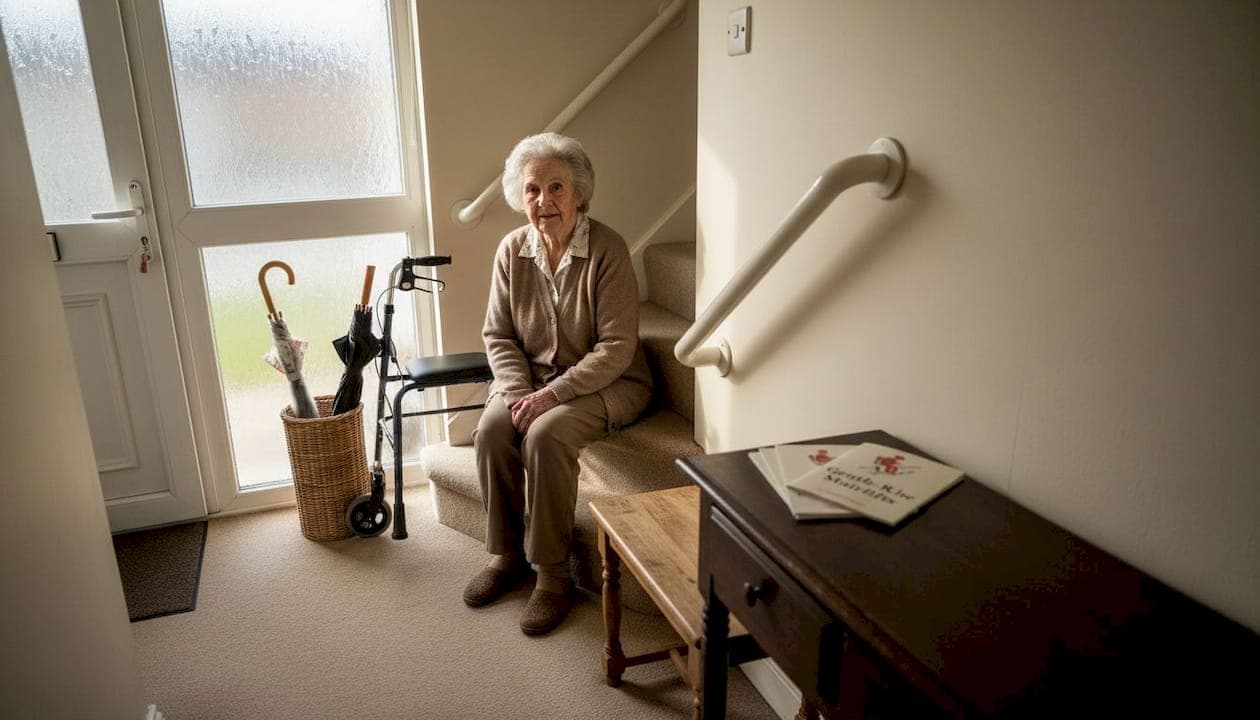
Many people assume that if they or a loved one suddenly struggles with the stairs after surgery or a fall, the NHS will step in and sort a stairlift quickly. The reality is quite different. NHS grants and council funding are almost entirely focused on permanent adaptations, leaving those with short-term mobility needs to navigate a confusing mix of rental, reconditioned, and alternative solutions on their own. This guide cuts through that confusion. We will explain what temporary mobility aids are, which stairlift options genuinely suit short-term needs, what everything costs, and how to choose and install aids safely so you can get back to moving freely around your home.
Table of Contents
- What are temporary mobility aids and when are they needed?
- Types of stairlifts and mobility solutions for temporary needs
- Costs, funding, and affordability of temporary stairlift solutions
- Choosing and installing temporary mobility aids safely
- Real expert wisdom: what most guides miss about temporary mobility aids
- Connect with affordable, expert stairlift solutions
- Frequently asked questions
Key Takeaways
| Point | Details |
|---|---|
| Temporary aids explained | Short-term mobility solutions, including stairlifts, are essential for post-surgery, injury, or sudden needs but require different planning than permanent adaptations. |
| Rental versus purchase | Renting is cost-effective for brief needs, while buying or reconditioned models benefit those unsure of duration or with borderline long-term requirements. |
| Funding limitations | NHS and council grants focus on permanent needs and rarely support short-term mobility, so planning for affordability is key. |
| Expert advice matters | Multiple home surveys and fixed-price quotes, especially for complex stairs, ensure safety and best value for temporary installations. |
| Reconditioned stairlifts value | Reconditioned stairlifts offer reliable and affordable solutions with warranty, perfect for temporary or uncertain mobility needs. |
What are temporary mobility aids and when are they needed?
Temporary mobility aids are devices or adaptations designed to support movement and independence for a limited period, typically weeks to several months. They are not meant to be permanent fixtures. Think of them as a bridge between a period of reduced mobility and a full return to normal function.
The most common situations where these aids become essential include:
- Recovery from hip or knee replacement surgery
- Rehabilitation following a stroke or serious fall
- Elderly individuals experiencing a sudden but potentially reversible decline in mobility
- Post-fracture recovery where stairs become a daily obstacle
- Short-term care arrangements where a relative moves in temporarily
Examples of temporary aids range from walking frames and crutches to portable ramps, grab rails, and rental stairlifts. The stairlift option often surprises people because they associate stairlifts with permanent installation, but rental models exist precisely for situations like these.
One critical point that catches many families off guard: NHS grants for adaptations do not directly fund most temporary stairlifts or rentals, as grants are reserved for permanent adaptations. This means the responsibility for sourcing and funding a temporary solution almost always falls to the individual or family.
Before committing to any aid, it is worth assessing mobility needs properly. What works brilliantly for a six-week post-surgery recovery may be entirely wrong for someone whose mobility challenges are gradually becoming permanent. Similarly, exploring stairlift alternatives such as ramps or portable lifts can sometimes solve the problem at a lower cost.
Pro Tip: Always request a professional home assessment before purchasing or renting any mobility aid. A trained assessor can identify hazards and recommend the most appropriate solution for your specific staircase and home layout, saving you money and potential safety risks.
Types of stairlifts and mobility solutions for temporary needs
Not all stairlifts are equal, and understanding the differences matters enormously when your need is temporary.
Straight stairlifts are the most practical option for short-term use. They fit staircases that run in a single, uninterrupted line, which covers the majority of UK homes. Because they are standardised in design, they are quicker to install, easier to remove, and far more widely available for rental. Rental costs for straight models typically run between £50 and £120 per month, and stairlift experts note that the break-even point between renting and buying sits at roughly 18 to 36 months, with reconditioned models costing 40 to 50% less than new.
Curved stairlifts are custom-built to follow the exact shape of a staircase with bends or landings. Because they are bespoke, rental options are far less common and significantly more expensive. For a genuinely short-term need on a curved staircase, alternatives are often more practical.
Reconditioned stairlifts sit in an interesting middle ground. These are professionally refurbished units, typically straight models, that offer reliable performance at a fraction of the new price. For someone unsure whether their mobility need is truly temporary or might extend into the longer term, a reconditioned stairlift can be an excellent choice.
Other solutions worth considering for temporary needs include:
- Portable threshold ramps for doorways
- Freestanding grab rails for bathrooms and hallways
- Short-term home adaptation kits
- Perch stools for resting mid-stair (for very mild cases)
For a broader overview of what is available, our guide to mobility alternatives covers options that do not involve a stairlift at all.
| Solution | Best for | Approx. monthly cost | Rental available? |
|---|---|---|---|
| Straight stairlift rental | Short-term, straight stairs | £50 to £120 | Yes |
| Reconditioned straight stairlift | Borderline temporary/long-term | One-off from £795 | Rarely |
| Curved stairlift | Permanent, complex stairs | £4,700+ | Very rarely |
| Portable ramp | Doorways, small steps | £30 to £80 | Sometimes |
Pro Tip: Always get at least three quotes and request a home survey before deciding. Prices and suitability vary significantly between providers, and a reputable company will never pressure you to commit on the spot. You can explore professional stairlift packages to understand what a quality installation should include.
Costs, funding, and affordability of temporary stairlift solutions
Cost is usually the first and most pressing question for anyone facing a sudden mobility challenge. Here is a clear picture of what to expect.
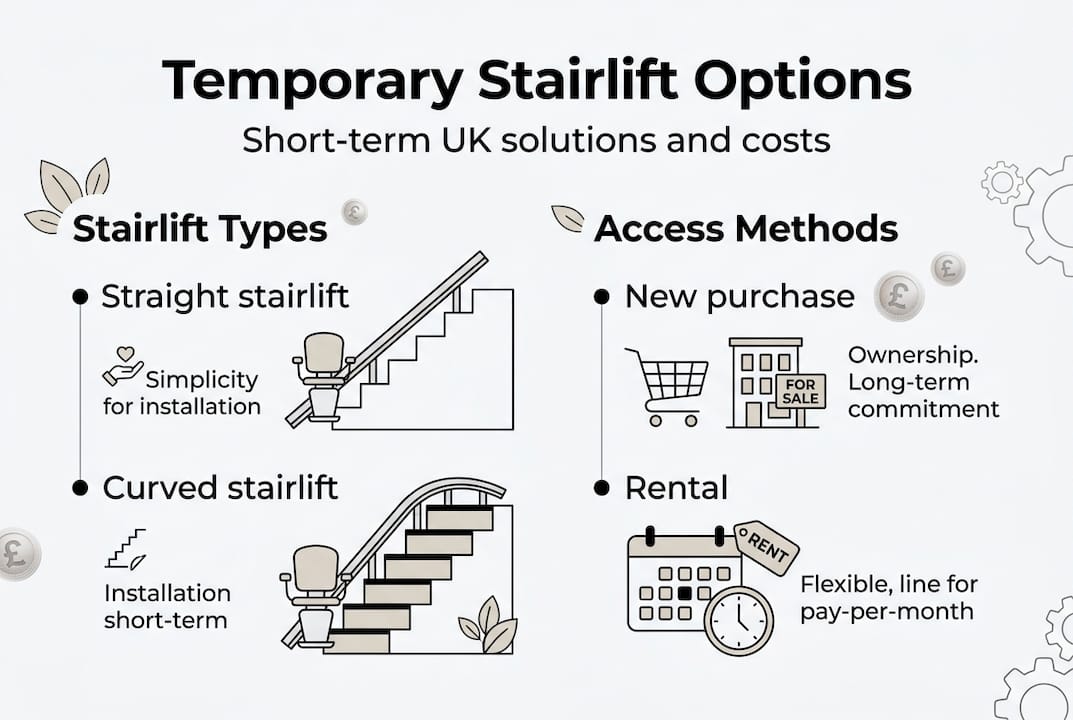
For straight stairlifts, rental typically costs £50 to £120 per month, while buying new averages around £3,300. Curved stairlifts average £4,700 new. Reconditioned models cost 40 to 50% less than their new equivalents, making them a genuinely compelling option for many households.
| Type | New purchase | Reconditioned | Monthly rental |
|---|---|---|---|
| Straight stairlift | ~£3,300 | From £795 | £50 to £120 |
| Curved stairlift | ~£4,700 | Less common | Rarely available |
The break-even calculation is straightforward. If you rent a straight stairlift at £85 per month and the purchase price is £3,300, you reach break-even at roughly 39 months. For a recovery period of three to six months, rental is clearly the more sensible financial choice. For anything approaching a year or more, buying or opting for a reconditioned unit starts to make better economic sense.
Now for the funding reality. The Disabled Facilities Grant (DFG) is the main government route for home adaptation funding in the UK. However, DFG applications prioritise permanent adaptations and the process takes between three and eighteen months to complete. That timeline makes it entirely impractical for anyone needing a stairlift within days or weeks of a hospital discharge.
"Grants for home adaptations are means-tested and designed for long-term needs. For temporary situations, most people will need to self-fund or explore rental options directly with providers."
Other funding avenues worth exploring include:
- Local council short-term equipment loan schemes (availability varies widely)
- Charitable grants from organisations such as Turn2Us or the Family Fund
- VAT exemption on stairlift purchases for those with a qualifying disability
For a fuller breakdown of what stairlifts cost across the UK, our guide to UK stairlift costs covers regional pricing and what is included in a typical installation. You can also read more about affordability of stairlifts for practical tips on keeping costs manageable.
Choosing and installing temporary mobility aids safely
Choosing the right aid is one thing. Installing it safely is another matter entirely, and this is where many people make costly mistakes.
Here is a step-by-step approach to getting it right:
- Book a professional home survey. A trained assessor will examine your staircase dimensions, layout, and any unusual features before recommending a solution. This is non-negotiable for curved stairs.
- Request fixed-price quotes in writing. Verbal estimates are not enough. A fixed-price quote protects you from unexpected charges after installation begins.
- Check warranty terms on reconditioned units. A reputable supplier will offer at least a 12-month warranty on any refurbished stairlift. If they will not, walk away.
- Confirm removal terms before signing. For temporary use, you need clarity on how and when the unit will be removed, and whether there is a removal fee.
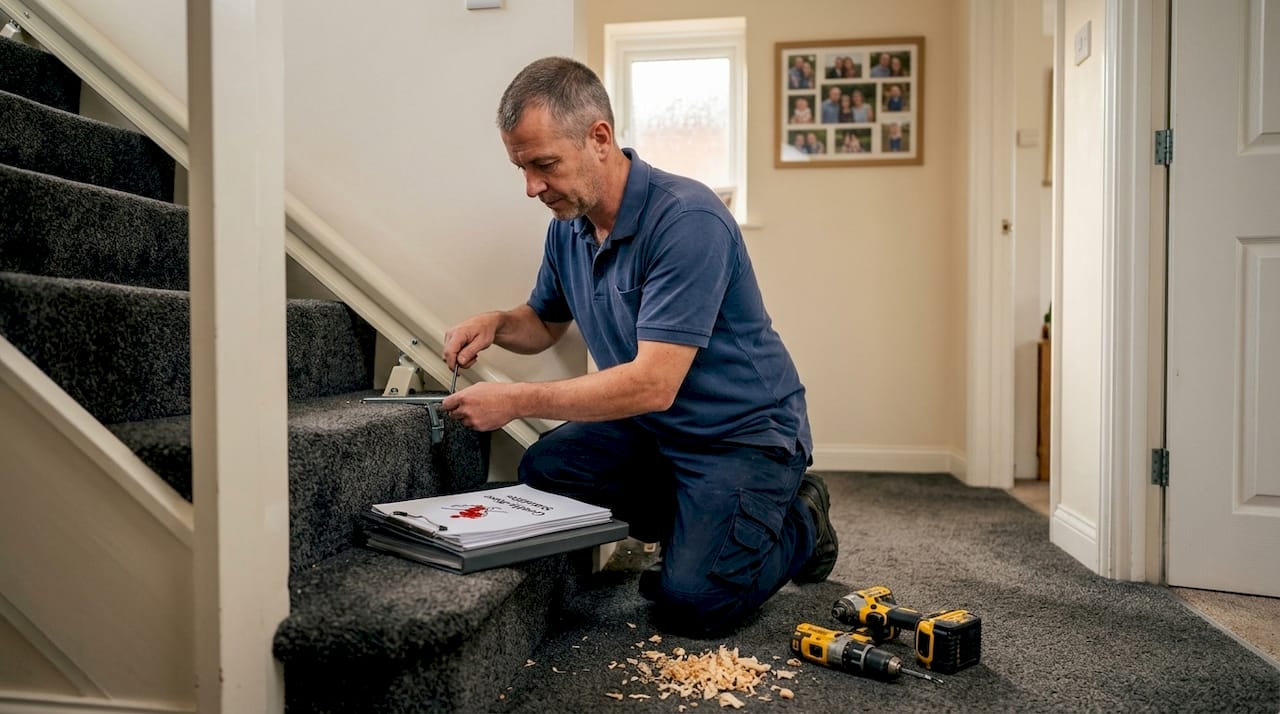
- Never attempt DIY installation. Stairlifts must be fixed securely to the staircase structure. Incorrect fitting creates serious fall risks, particularly for elderly users.
Expert guidance consistently advises getting multiple fixed-price quotes and home surveys, and specifically warns against attempting curved stair installations without a custom assessment. The risk of an ill-fitting unit on a curved staircase is not just financial. It is a genuine safety hazard.
For homes with hardwood staircases, the fitting process requires additional care to avoid damaging the surface during installation and removal. Specialist staircase adaptation tips can help you understand what to discuss with your installer beforehand.
Our own safe stairlift installation guide covers the key questions to ask any installer, and our GentleRise safety guidance explains the standards we apply to every job.
Pro Tip: Ask your installer specifically about the fixing method used on your staircase type. Some methods leave minimal marks on removal, which matters if you are renting your home or plan to sell in the near future.
Real expert wisdom: what most guides miss about temporary mobility aids
Most articles on this subject treat temporary and permanent mobility needs as two entirely separate categories. In practice, the line is blurry and that is where people get into trouble.
Consider someone recovering from a hip replacement at 74. Their surgeon says recovery takes three months, but their pre-existing arthritis means stairs were already becoming difficult. Is this a temporary need? Possibly not. Committing to a short rental when a reconditioned stairlift would serve them for years is a false economy.
Expert advice consistently highlights that reconditioned stairlifts offer the best affordability for borderline cases, and that multiple fixed-price quotes with home surveys are essential before any decision. Yet most guides skip this nuance entirely.
The other overlooked pitfall is curved stairs. Families sometimes try to source a cheap curved stairlift rental because the need feels temporary, only to discover that bespoke curved units rarely appear in the rental market. Accepting an unsuitable straight unit on a curved staircase is dangerous. The honest answer for curved stairs with a temporary need is often a combination of alternative aids and a realistic conversation about whether the need is truly short-term.
At GentleRise, we see these borderline cases regularly. Our advice is always to start with a free home survey before making any assumptions about which category your situation falls into.
Connect with affordable, expert stairlift solutions
Navigating temporary mobility needs is stressful enough without having to decode confusing pricing structures or chase unreliable suppliers. That is where GentleRise Stairlifts comes in.
We offer straight, curved, and reconditioned stairlift options with warranties, professional installation, and transparent fixed-price quotes. Our free home surveys take the guesswork out of choosing the right solution for your staircase and your timeline. Whether your need is short-term or you are unsure how long support will be required, we will give you honest guidance without pressure. Our stairlift aftercare plans, including our Protect+ programme, ensure your stairlift continues to perform safely long after installation.
Frequently asked questions
Can I get a stairlift funded by the NHS for temporary mobility needs?
NHS grants, including Disabled Facilities Grants, prioritise permanent adaptations and rarely cover temporary stairlift installations or rentals. Most short-term needs will need to be self-funded or sourced through a rental provider directly.
What is the typical monthly cost to rent a stairlift for short-term use?
Straight stairlift rentals cost between £50 and £120 per month on average. Curved stairlift rentals are far less common and considerably more expensive when available.
Are reconditioned stairlifts reliable for temporary or borderline needs?
Yes. Reconditioned stairlifts are professionally refurbished and typically cost 40 to 50% less than new models, making them an excellent choice for anyone unsure whether their mobility need is short-term or longer-lasting.
How long does it take to get funding or grants for accessibility aids?
Disabled Facilities Grants take three to eighteen months to process, which makes them entirely impractical for urgent or temporary mobility needs. Self-funding or rental is almost always the faster route.