
TL;DR:
- Proper mobility aids help reduce fall risk and support healing at home.
- Home assessment from professionals ensures tailored, safe mobility solutions for recovery.
- Renting aids like stairlifts or wheelchairs is often cost-effective for short-term recovery needs.
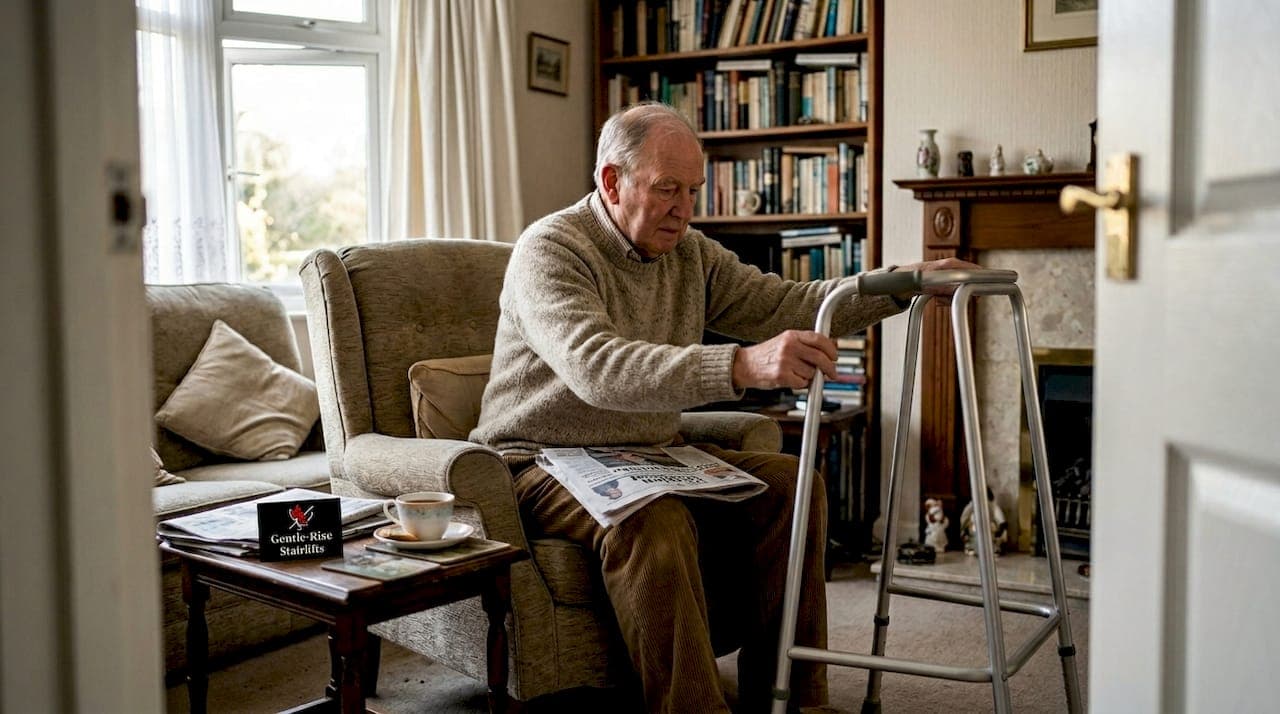
Many people assume that a walking frame or a pair of crutches is all they need to manage at home after surgery. In reality, most homes are not set up for post-surgical recovery, and the gap between hospital discharge and genuine independence can be surprisingly large. The right temporary mobility solutions do far more than help you get around. They reduce your fall risk, protect your healing joints, and give you back a sense of control during an unsettling time. This guide walks you through what actually works, how to choose wisely, and why getting the right support in place before you come home matters more than most people realise.
Table of Contents
- Why temporary mobility solutions matter after surgery
- Top mobility aids for home recovery
- Choosing and arranging the right mobility support
- Tips for a safer, smoother recovery at home
- The overlooked power of tailored mobility plans
- Next steps: find support and solutions with GentleRise
- Frequently asked questions
Key Takeaways
| Point | Details |
|---|---|
| Prioritise safety | Choosing the right temporary mobility aids helps prevent falls and promotes healing. |
| Tailor your plan | Different surgeries need different aids—consult with professionals for personalised support. |
| Home adaptations matter | Simple adjustments to your home set-up can greatly improve comfort and independence. |
| Professional help available | Trusted providers like GentleRise offer expert advice and flexible aid solutions for recovery. |
Why temporary mobility solutions matter after surgery
The weeks immediately after surgery are when the risk of setbacks is highest. Whether you have had a hip replacement, knee reconstruction, or a lower limb procedure, your body is under strain and your balance is often compromised. A non-weight bearing lower limb recovery period carries a high fall risk in the first weeks, and a fall at this stage can undo weeks of surgical work in seconds.
Beyond the physical danger, limited mobility creates a ripple effect that touches nearly every part of your life. Isolation sets in when you cannot move freely between rooms. Sleep suffers when getting to the bathroom becomes an ordeal. Confidence drops when every step feels precarious. These are not minor inconveniences. They actively slow healing and increase the likelihood of complications.
Many people focus entirely on the hospital stay and forget that home is where the real recovery happens. Yet most homes have stairs, narrow hallways, low seating, and bathrooms that simply are not built for someone with restricted movement. Temporary solutions close this gap without the need for costly permanent renovations.
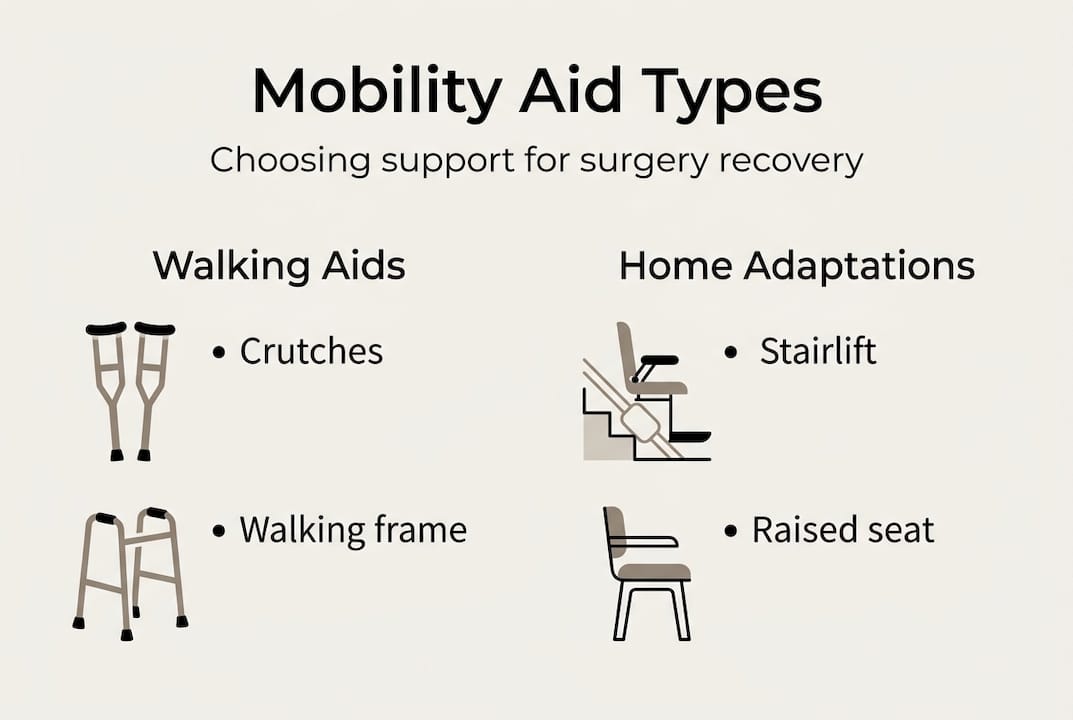
The most common aids used during home recovery include:
- Stairlifts for safe access between floors
- Wheelchairs for moving around when walking is not possible
- Walking frames and crutches for short-distance support
- Raised toilet seats and chair raisers for getting on and off furniture safely
- Long-handled grabbers for picking up objects without bending
- Bed rails for safer getting in and out of bed
"The goal of temporary mobility support is not just to help you move. It is to remove the conditions that cause setbacks in the first place."
Understanding the range of mobility aid types available means you can match the right tool to the specific challenge your home presents.
Pro Tip: Before your discharge date, walk through your home mentally and identify every point where you will need to sit, stand, climb, or reach. Each one of those points is a potential hazard worth planning for.
Top mobility aids for home recovery
Not all mobility aids are created equal, and the best option for you depends largely on your surgery type and your home layout. Wheelchairs and stairlifts are primary aids when weight-bearing is restricted, but the supporting cast of smaller aids matters just as much.
Here is a quick overview of the main options:
| Aid | Best for | Limitation |
|---|---|---|
| Stairlift | Multi-floor homes, hip or knee surgery | Requires professional installation |
| Wheelchair | Full non-weight bearing periods | Needs space to manoeuvre |
| Walking frame | Partial weight-bearing, short distances | Not suitable for stairs |
| Raised toilet seat | All lower limb surgeries | Fixed to one room |
| Long-handled grabber | Avoiding bending or stretching | Limited to small objects |
| Bed rail | Getting in and out of bed safely | Depends on bed type |
Choosing what you need starts with understanding your surgical restrictions. Lower limb surgeries almost always require some form of stair solution if your home has more than one floor. Upper limb surgeries may need adapted gripping tools and raised seating but allow more walking independence.
A sensible sequence for setting up your home before discharge:
- Identify your floor access needs first. If you cannot safely climb stairs, a stairlift or ground-floor sleeping arrangement must be sorted before anything else.
- Address bathroom safety with a raised seat, grab rails, and a non-slip mat.
- Sort your main living area with a firm-seated chair at the right height for easy standing.
- Clear pathways throughout the home so you never have to step around obstacles.
- Arrange your essentials within arm's reach to avoid unnecessary stretching or bending.
For those unsure whether a stairlift is the right fit, it is worth exploring stair lift alternatives to understand all the options before committing. If your need is short-term, a temporary mobility aid hire arrangement can be far more cost-effective than purchasing outright.
Pro Tip: Ask your hospital physiotherapist for a written list of your movement restrictions before you leave. This becomes your reference document when speaking to any mobility aid provider or installer.
Choosing and arranging the right mobility support
Knowing which aids exist is one thing. Knowing how to get the right ones in place quickly and safely is another. Professional assessment ensures safety and suitability, which means a qualified occupational therapist or physiotherapist should ideally be involved before you finalise any equipment choices.
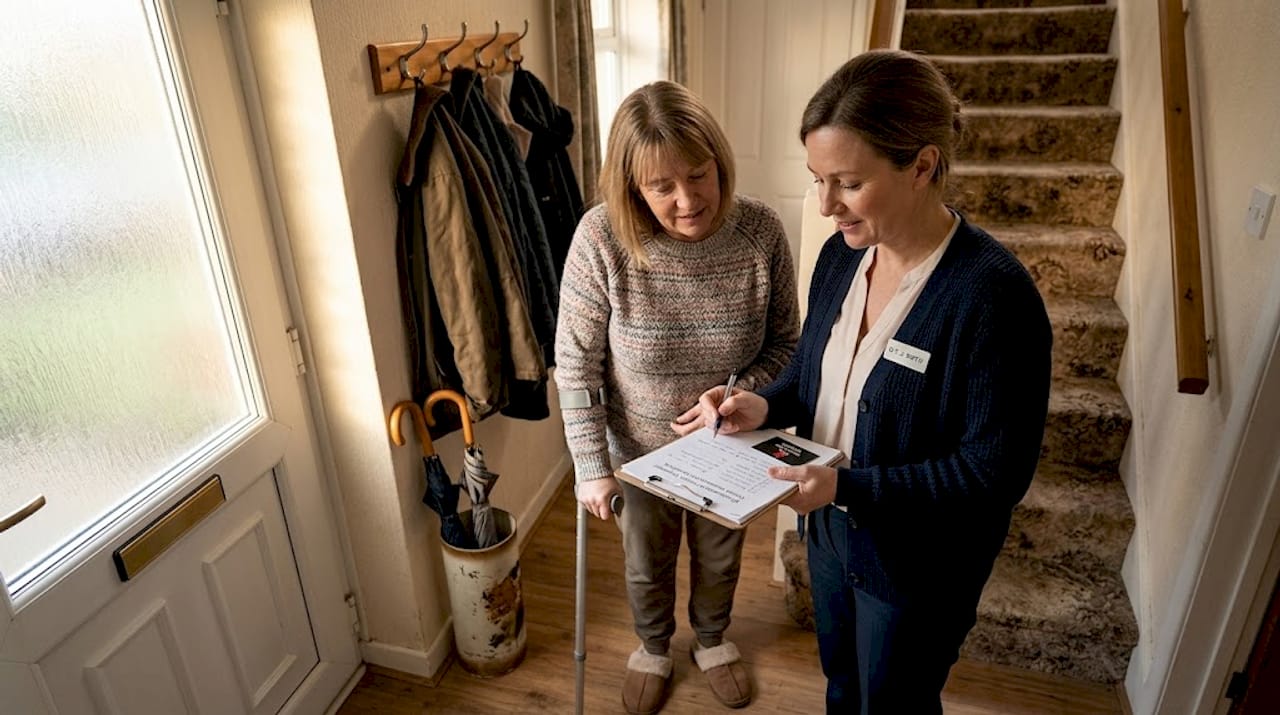
A home assessment can be arranged through your local council's adult social care team, your hospital discharge team, or privately. It is often available at no cost through NHS channels. The assessor will check doorway widths, stair configuration, bathroom layout, and furniture height to recommend exactly what your home needs.
When it comes to the key decision of hire versus buy, this table helps clarify the trade-offs:
| Factor | Hire | Buy |
|---|---|---|
| Upfront cost | Low | Higher |
| Flexibility | High, return when done | Fixed once purchased |
| Maintenance | Usually included | Your responsibility |
| Speed of setup | Often same-day | Depends on supplier |
| Best for | Short recovery periods | Long-term or recurring need |
Before choosing any aid, ask yourself these questions:
- How long is my expected recovery period?
- Do I have stairs at home, and is my bedroom on a different floor?
- Will I need this aid again in future, or is this a one-off situation?
- Is there someone at home to assist me, or do I need fully independent solutions?
For stairlift installation specifically, speed matters. With GentleRise's safe stairlift setup process, units can often be fitted within hours of being ordered. Understanding the full spectrum of different mobility aids also helps you avoid buying equipment that duplicates function or does not suit your home layout.
Tips for a safer, smoother recovery at home
Fall prevention is critical in the early weeks after certain surgeries, and the habits you build in this period set the tone for your entire recovery.
Here are the most effective steps for keeping your home safe:
- Remove all loose rugs and floor-level obstacles from your main movement paths
- Ensure every room you use has adequate lighting, including a nightlight in the hallway and bathroom
- Keep your mobility aids within easy reach when you wake up, not across the room
- Wear supportive, non-slip footwear at all times indoors
- Install grab rails near the toilet, bath, and bed if not already in place
Daily habits also play a significant role. Moving gently and regularly throughout the day, even within the limits of your restrictions, keeps circulation healthy and prevents stiffness from setting in. Sitting in one position for too long is one of the most common mistakes made during home recovery.
"Think of your home as a recovery environment, not just a place to rest. The layout of your space directly influences how fast you heal."
Knowing who to call when something is not right is just as important as the physical setup. If your equipment feels unstable, if you notice new pain, or if you feel unsteady in ways that are getting worse rather than better, contact your physiotherapist, occupational therapist, or the team that supplied your aids straight away. Do not wait.
For broader strategies, exploring safer home mobility solutions can give you additional ideas for adapting your living space without significant expense.
Pro Tip: Take a photo of your home's staircase and main living areas before discharge and share it with your mobility aid provider. It allows them to assess your space remotely and recommend the right equipment before your first appointment.
The overlooked power of tailored mobility plans
Most recovery guides offer the same broad checklist: get a walking frame, raise your toilet seat, clear the floor. That advice is not wrong, but it is incomplete. What we see repeatedly is that patients who follow generic lists still struggle at home, while those who take the time to match each aid precisely to their home and their specific surgical restrictions recover faster and with more confidence.
The psychological dimension of this is real. When someone can move around their home independently, even if slowly, their mental state improves. That improvement feeds directly into physical recovery. Conversely, feeling trapped or dependent erodes morale and delays healing in ways that are genuinely measurable.
The one-size-fits-all approach also ignores the enormous variation in UK homes. A Victorian terrace with steep, narrow stairs needs a completely different solution from a modern bungalow. Personalised planning accounts for this. GentleRise's approach to tailored solutions is built on exactly this understanding: that the right outcome starts with listening to your specific situation, not fitting you into a standard package.
Next steps: find support and solutions with GentleRise
Recovering from surgery is hard enough without having to figure out home mobility on your own. At GentleRise Stairlifts, we specialise in helping people in exactly your situation get the right support in place quickly, affordably, and safely.

Whether you need a rental stairlift for a short recovery period or a permanent installation with full aftercare, we can assess your home and recommend the best fit. Our straight stairlifts start from £795, and we offer reconditioned stairlift options for those who want a budget-conscious solution. You can also review our full stairlift cost guide to understand what to expect before making any commitment. Get in touch today to arrange a free home survey.
Frequently asked questions
Can I hire mobility aids just for my recovery period?
Yes, many services offer temporary hire of wheelchairs, stairlifts, and other aids for as long as you need them. Mobility aid hire is specifically recommended for non-weight bearing recovery periods to avoid the cost of purchasing equipment you may only use once.
How do I know which mobility aid is safest for me?
Seek advice from your hospital physiotherapist or request a home assessment to match aids to your specific needs. Professional assessment ensures that both your movement restrictions and your home layout are properly accounted for.
What should I do if I feel unsteady with my current equipment?
Contact your occupational therapist or home support service immediately so your mobility plan can be adjusted. Ongoing adjustments to your equipment and habits improve safety throughout recovery and should be treated as a normal part of the process.
Are stairlifts suitable for temporary recovery or only permanent disability?
Stairlifts are widely used for both temporary and permanent mobility needs, including short recovery periods after surgery. Short and long-term support is well established, and rental options make them a practical and cost-effective choice for anyone recovering at home.