
TL;DR:
- Navigating home adaptations for wheelchair users requires assessments, tailored solutions, and proper funding. The process begins with a care needs assessment and a detailed OT report to secure grants like the DFG for essential modifications. Implementing staged, priority improvements—such as wider doors, ramps, and level-access showers—can significantly enhance independence and safety within budget.
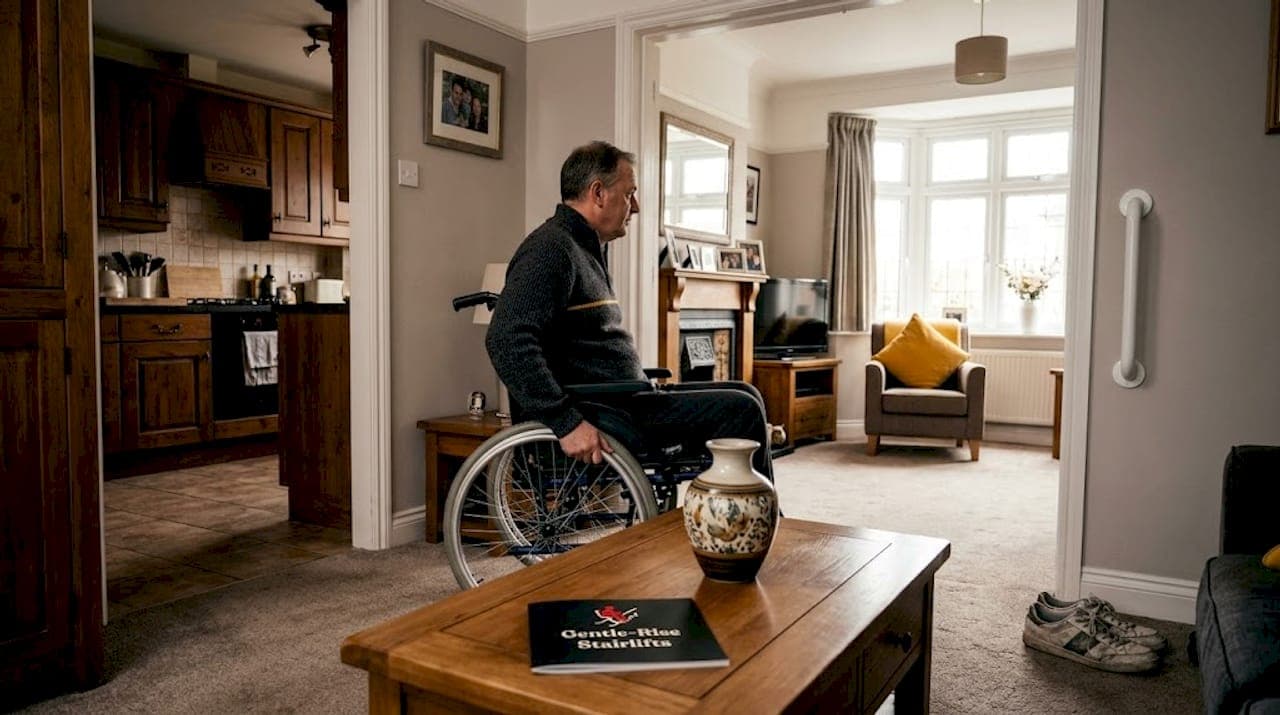
Navigating a typical UK home in a wheelchair is harder than most people realise. Narrow doorways, steep steps, and cramped bathrooms can turn everyday routines into genuine hazards. If you or someone you care for is facing these challenges, you are far from alone, and the good news is that practical, affordable solutions exist for almost every home type and budget. This guide walks you through the assessment process, the most effective adaptations, how to compare your options, and, crucially, how to fund them without draining your savings.
Table of Contents
- Understanding your needs: start with an assessment
- Top affordable wheelchair-friendly improvements
- Comparing adaptations: which options suit your home?
- Funding wheelchair-friendly improvements: grants and financial help
- What most guides miss: improve accessibility without a full renovation
- Find the right support for your home adaptation journey
- Frequently asked questions
Key Takeaways
| Point | Details |
|---|---|
| Start with assessment | An occupational therapist evaluation is the first step to ensuring the right improvements for your needs. |
| Minor changes matter | Affordable small adaptations like grab rails or ramps often make the biggest day-to-day difference. |
| Many grants available | Most people can get help with funding, including Disabled Facilities Grants and VAT relief. |
| Compare options carefully | Different homes need different solutions—use comparison charts to match changes to your space and budget. |
| Incremental improvements work | You don't need a full renovation—layered, affordable upgrades boost safety and accessibility over time. |
Understanding your needs: start with an assessment
Before spending a single penny, the single most valuable thing you can do is arrange a care needs assessment through your local council. This is not a bureaucratic formality. It is the foundation that everything else is built on, because it determines what adaptations you genuinely need, in what order, and which funding streams you can access.
The assessment leads to a referral to an occupational therapist (OT), a specialist trained to evaluate how your home layout affects your daily safety and independence. OTs look at everything, from the gradient of your front path to the height of your kitchen worktops. Their written recommendations carry real weight when you apply for funding, and skipping this step often means spending money on adaptations that do not fully match your needs.
Here is the typical sequence you should follow:
- Contact your local council and request a care needs assessment.
- Attend the OT assessment, either at home or at a council office.
- Receive the OT's written recommendations for adaptations.
- Use those recommendations to apply for a Disabled Facilities Grant (DFG) or minor adaptation funding.
- Obtain quotes from approved contractors and proceed with works.
The DFG is a mandatory grant, meaning the council must provide it if you meet the eligibility criteria. It is means-tested, however, and delays are unfortunately common due to funding pressures in many areas. Starting the process as early as possible gives you the best chance of timely support. The DFG covers essential adaptations like ramps, widened doors, level-access showers, stairlifts, and grab rails, following an OT assessment.
In England, the DFG provides up to £30,000 for essential wheelchair-friendly adaptations. Amounts vary in Scotland, Wales, and Northern Ireland, so check with your local authority for the precise figures in your area.
Pro Tip: Bring a trusted family member or carer to your OT assessment. They can raise practical concerns you might overlook in the moment, and a second perspective often results in a more thorough list of recommendations. For a broader picture of safe independence at home, it is worth reading up on age-friendly modifications alongside your OT's advice.
Top affordable wheelchair-friendly improvements
Once you have an OT assessment, you can choose the most impactful improvements for your home. The range of options is wider than most people expect, and costs vary considerably depending on the complexity of the work and the materials involved.
According to detailed UK home adaptation costs for 2026, here is what the most common adaptations typically cost:
| Adaptation | Typical cost range | Who benefits most |
|---|---|---|
| Widening doors to 900mm | £400 to £900 per door | Powered and manual wheelchair users |
| External access ramp | £1,000 to £5,000 | Anyone with limited step access |
| Level-access shower | £6,000 to £15,000 | Full-time wheelchair users, older adults |
| Stairlift (straight) | £2,000 to £7,000 | Those with upper-floor bedrooms |
| Grab rails | £50 to £300 per rail | Anyone at risk of falls |
Widening doors is often the first and most impactful change. Standard UK door openings measure around 750mm, which is too narrow for many wheelchairs. Widening to 900mm, as recommended by building regulations, typically requires removing and replacing the door frame and sometimes adjusting the plasterwork. It sounds significant, but a skilled carpenter can often complete the work in a single day.
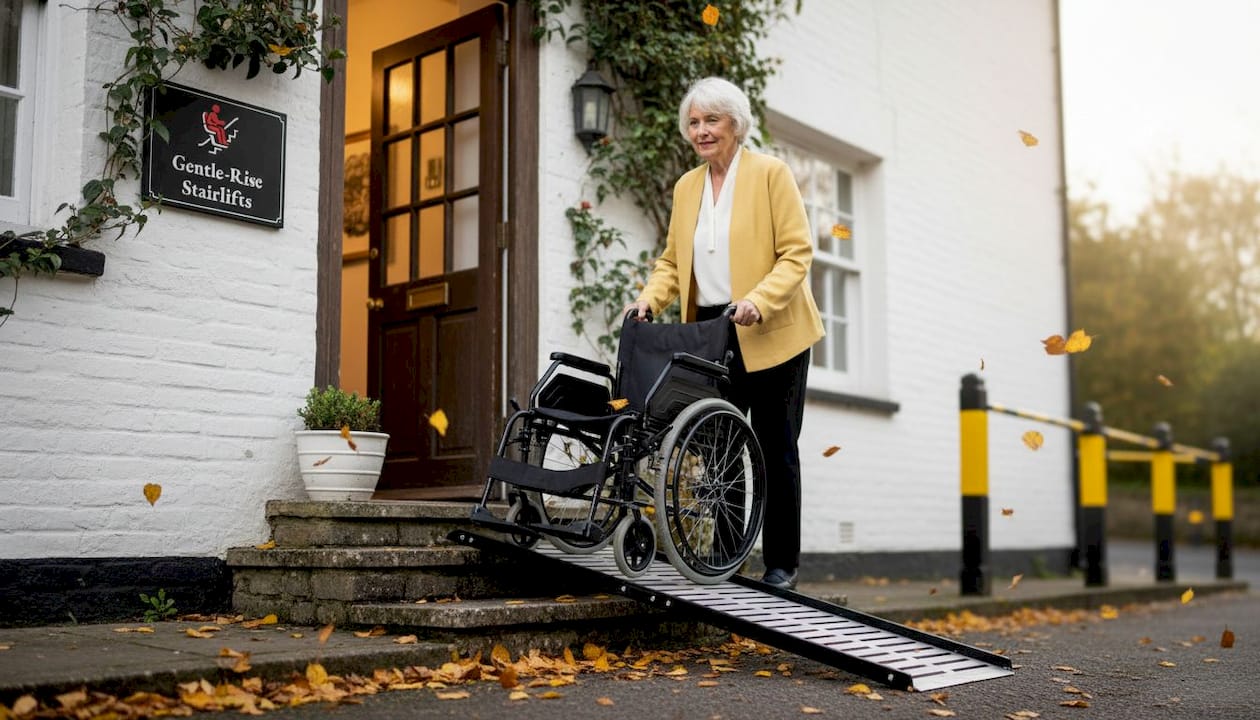
External ramps replace steps at the entrance of a home and make the biggest immediate difference for getting in and out safely. The cost depends heavily on the height difference being bridged and the materials used. Timber ramps are cheaper and quicker to install. Concrete or modular aluminium ramps cost more but last longer and require less maintenance.
Level-access showers are perhaps the most life-changing bathroom adaptation. Traditional bath-over-shower setups are simply not workable for many wheelchair users. A level-access (or wet room) shower eliminates the step-over lip entirely, and a fold-down shower seat adds further independence. Costs are higher than other adaptations, but the DFG is specifically designed to cover works like these.
Minor adaptations under £1,000 such as grab rails, lever taps, and small ramps are often provided free by local councils without means testing. This is one of the most underused forms of support available. Many families assume they need to fund small changes themselves, when in fact the council will supply and fit grab rails at no cost if an OT has recommended them.
Pro Tip: Lever taps, raised toilet seats, and non-slip flooring are all classified as minor adaptations. Request all of them in your OT assessment, even if they seem small. They add up to a meaningfully safer home at zero cost to you. For more on affordable mobility solutions that combine safety and budget, our blog covers these in greater depth. If a stairlift is on your list, our detailed stairlift installation tips will help you understand what the process involves.
Comparing adaptations: which options suit your home?
You have explored your options. Now, let's see how these solutions compare for different home situations, because the same adaptation can be straightforward in one property and practically impossible in another.
Building regulations set minimum standards for wheelchair accessibility in new builds and significant renovations. Part M requirements for wheelchair users (Category 3) include clear door openings of at least 850mm, corridors at least 1,200mm wide, turning circles of 1,500mm, and ramps with a maximum gradient of 1:20 with 1,500mm flat landings at each end. When planning adaptations in an older home, these standards give you a useful benchmark, even if you are not legally required to meet every single one.
| Adaptation | Suitable for flats? | Planning permission needed? | Structural check required? | Complexity |
|---|---|---|---|---|
| Grab rails | Yes | No | No | Low |
| Widened doors | Usually yes | No | Rarely | Low to medium |
| External ramp | Sometimes | Often yes | Yes | Medium |
| Level-access shower | Sometimes | No | Sometimes | High |
| Through-floor lift | Rarely | No | Yes | High |
| Stairlift | Yes (houses) | No | No | Low to medium |
Edge cases are where many homeowners get caught out. Flats present particular challenges: structural limits may prevent bathroom pods or ceiling hoists, and through-floor lifts need a detailed space assessment to confirm the floor can accommodate the mechanism. For external ramps and extensions, planning permission is frequently required, and listed building status adds another layer of complexity.
New builds are considerably cheaper to adapt than older properties. Incorporating Category 2 (accessible and adaptable) features during construction adds roughly £1,500 to the build cost. Retrofitting equivalent features into an older Victorian terrace can cost between £15,000 and £50,000. If you are in the process of buying a new home and have a wheelchair user in the family, raising accessibility requirements before construction begins is far more cost-effective than modifying after the fact.
For detailed guidance on planning your adaptations in sequence, our mobility planning guide breaks down the process step by step.
Funding wheelchair-friendly improvements: grants and financial help
When you are ready to adapt your home, understanding the financial support available will help you make the most of your budget. The funding landscape is more generous than many people realise, but navigating it requires knowing where to look and how to apply in the right order.
The Disabled Facilities Grant is the cornerstone of home adaptation funding in the UK. According to parliamentary research, the DFG has an 82% approval rate, which is encouraging. The average grant awarded over a five-year period is approximately £7,536, while the mean cost of a major adaptation sits at around £16,647. This means most applicants need to contribute something beyond the grant, but the means test determines how much.
Here is what the means test considers:
- Your income, including benefits, pensions, and employment earnings
- Your savings and investments above a certain threshold
- Your partner's financial situation if you share the property
- The value of the property is generally not considered
Children's adaptations are a separate category worth highlighting. They are typically 25% more expensive than adult adaptations, with high-value grants for children's cases averaging around £58,000 compared to £46,000 for adults. Local authorities often have specific pathways for children's DFG applications, so it is worth asking your council for the relevant team's contact details directly.
VAT relief is another form of support that frequently goes unclaimed. Most wheelchair-accessible features, including ramps and widened doors, are zero-rated for VAT when installed by a professional contractor for a disabled person. This effectively reduces the cost of major works by 20%, which is a significant saving. Ask your contractor to confirm VAT-exempt status before signing any quote.
Pro Tip: If the DFG wait time in your area is long, ask your council about Rapid Response or Home Improvement Agency schemes. Some councils operate these to fund urgent, smaller adaptations quickly while a full DFG application is being processed. Age UK and Foundations (the national body for Home Improvement Agencies) can help you identify what is available locally.
What most guides miss: improve accessibility without a full renovation
Here is something we have learnt from working with hundreds of homeowners across the UK: the biggest mistake people make is assuming that real accessibility requires a full, expensive renovation. It does not.
There is a persistent myth that unless you gut the bathroom, widen every door, and install a lift, a home is not genuinely wheelchair accessible. This thinking actually stops people from making any changes at all, because the full-renovation option feels financially impossible. The truth is that layered, staged improvements often produce better results than a single large overhaul, and they are far less disruptive to live through.
Think about it this way. A grab rail by the toilet costs under £100 fitted. A riser-recliner chair can transform sitting and standing safety in the living room. A threshold ramp at the back door means the garden is no longer off-limits. None of these require planning permission, an OT referral, or more than a day's work. Together, they can meaningfully reduce fall risk and increase independence within a week.
The smarter approach is to use your OT assessment to build a priority list, then tackle it in stages. Start with the changes that address the highest-risk situations, often the bathroom and the main entrance. Apply for DFG funding for the larger items while using minor adaptation schemes for the smaller ones. Revisit the list annually, because needs change over time.
We have also seen homeowners use rental stairlifts creatively, for instance, renting during a post-surgery recovery period before deciding whether a permanent installation is warranted. This kind of flexibility is underused and can save thousands. Our article on top accessibility upgrades covers several of these staged approaches in practical detail.
The goal is not a perfect, fully accessible home achieved in one expensive leap. The goal is a safer, more independent life, built incrementally, funded intelligently, and tailored specifically to your situation.
Find the right support for your home adaptation journey
Making your home wheelchair-friendly is one of the most meaningful investments you can make in your long-term comfort and independence. But knowing where to turn for specialist help makes all the difference between a project that goes smoothly and one that causes unnecessary stress.
At Gentle Rise Stairlifts Ltd, we specialise in helping homeowners across the UK find practical, affordable stairlift solutions that genuinely fit their homes and budgets. Whether you need a straight stairlift from £795, a curved model, or a reconditioned option to keep costs down, our team is here to guide you at every step. We also offer short-term rentals for post-surgery recovery and our Protect+ aftercare plan for ongoing peace of mind. Learn more about enhancing accessibility for independence or get a clear breakdown of stairlift costs in the UK before committing to anything. Book a free home survey today and take the first step with confidence.
Frequently asked questions
Who qualifies for a Disabled Facilities Grant in the UK?
Anyone with a permanent disability can apply, provided the adaptations are essential to their safety and independence. The grant is means-tested and requires a care needs assessment followed by an OT recommendation, as outlined in the DFG application process.
How quickly can minor adaptations be installed?
Minor changes like grab rails or small ramps are often installed within a few weeks by your local council's housing team and do not require means testing, making them one of the fastest routes to a safer home.
Do all homes require planning permission for ramps or extensions?
Not always. Small internal changes rarely require permission, but external ramps and larger works often do, particularly for flats or listed buildings, so always check with your local planning authority first.
Is there VAT relief on disabled adaptations in the UK?
Yes. Most wheelchair-accessible features such as ramps and widened doors are zero-rated for VAT when professionally installed for a disabled person, effectively cutting your costs by 20%.
Are grants available for making a child's home wheelchair-friendly?
Yes, and funding tends to be more substantial. Children's adaptations are on average 25% more costly than adult cases, so higher-value grants are typically available to reflect the specialist requirements involved.