
TL;DR:
- A stairlift mobility hub is an integrated package offering stairlift equipment, assessment, and ongoing support, not just a physical location. It includes essential components like rails, seats, controls, safety features, and tailored solutions based on staircase shape and user ability. Proper assessment of the user's capabilities and staircase specifics is crucial to ensure safe, effective, and independent mobility.
If you have heard the phrase "stairlift mobility hub" and found yourself uncertain what it actually means, you are not alone. The term is used in different ways by different providers, and that inconsistency creates real confusion for those who need clear answers most. This guide explains what a stairlift mobility hub is, what it typically includes, how to match the right stairlift mobility solutions to your specific home and needs, and what practical steps to take next. Whether you are living with a mobility challenge or supporting someone who is, this guide gives you the knowledge to make confident decisions.
Table of Contents
- Key takeaways
- What a stairlift mobility hub really means
- Matching solutions to your staircase and abilities
- Pitfalls to avoid when choosing a stairlift
- Practical steps for getting the right solution
- What experience has taught me about stairlift mobility hubs
- How Gentlerisestairlift can help you move forward
- FAQ
Key takeaways
| Point | Details |
|---|---|
| Definition varies by provider | A stairlift mobility hub is often a package of equipment, guidance, and support rather than a single product. |
| Staircase shape determines lift type | Straight rails suit standard stairs; curved rails or platform lifts are needed for complex or wheelchair users. |
| Functional checks matter most | Assessing transfer ability and control operation is as important as measuring the staircase itself. |
| Safety features are non-negotiable | Modern stairlifts include swivel seats, obstacle sensors, and battery backup to protect users daily. |
| Maintenance protects your investment | A regular service plan prevents faults and extends the working life of any stairlift system. |
What a stairlift mobility hub really means
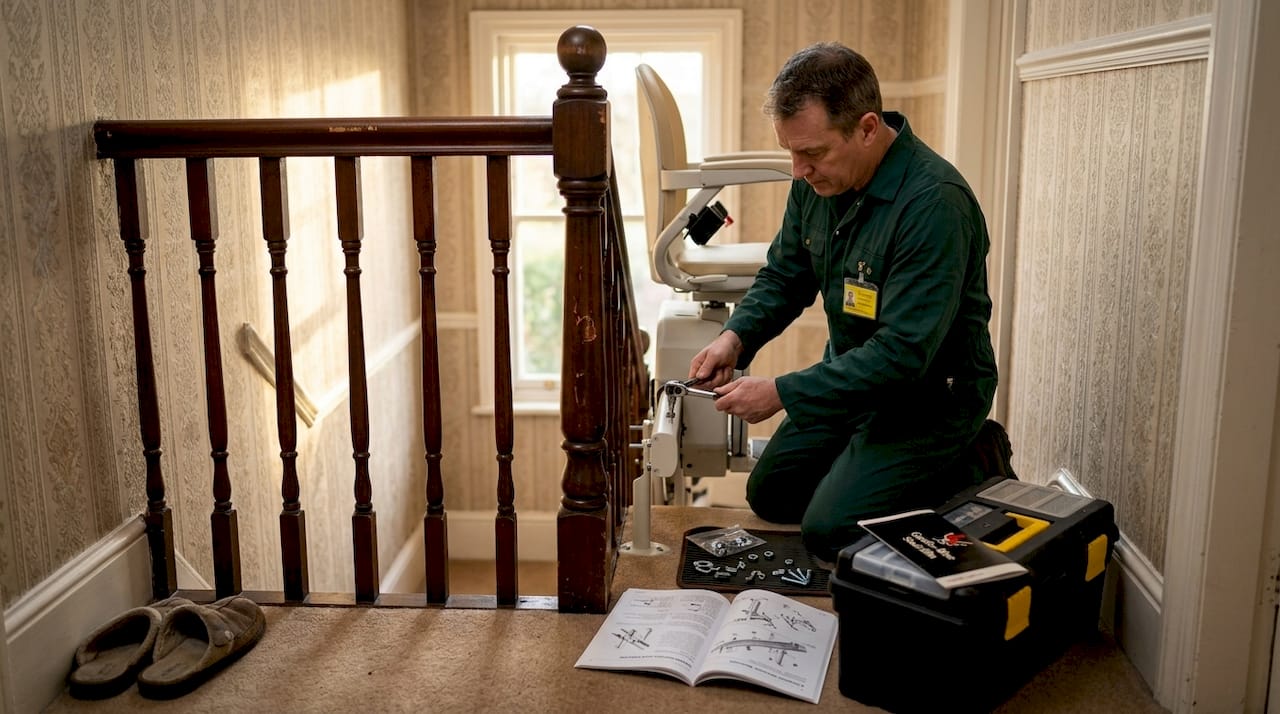
The phrase sounds technical, but the concept is straightforward once you break it down. At its core, a stairlift is a powered device that carries a person along a rail fitted to a staircase, using a chair or platform attached to a motorised carriage. The user either sits in the chair or, in the case of a platform lift, remains in their wheelchair whilst travelling between floors. Controls are typically positioned on the armrest, making independent operation possible for most users.
The word "hub" is where the confusion begins. In transport planning, a mobility hub describes a physical location offering multiple travel options in one place. In home accessibility, providers have borrowed the term to describe something similar in spirit: an integrated package of stairlift equipment, professional advice, installation, and ongoing support, all delivered as a joined-up service rather than a collection of separate purchases.

So when a company uses the phrase "stairlift mobility hub," they usually mean one of two things. Either they operate a physical showroom or demonstration space where you can try mobility aids for stairs before committing to a purchase, or they offer a bundled service model covering everything from initial assessment through to aftercare. Understanding which definition applies to the provider you are speaking with will save you considerable time.
The main components you can expect within any stairlift mobility hub include:
- The rail: Fitted directly to the staircase tread, not the wall, so it does not require major structural work.
- The carriage: The motorised unit that travels along the rail.
- The seat or platform: The part the user occupies, available as a padded chair with armrests or as a flat platform for wheelchair users.
- Controls: Typically a joystick or paddle on the armrest, plus remote controls for calling the lift from another floor.
- Safety systems: Covered in more detail below, but including sensors, seatbelts, and battery backup.
Pro Tip: When contacting any provider who mentions a "mobility hub," ask directly whether they mean a showroom where you can try equipment, a bundled service package, or both. The answer changes how you approach your next steps.
Matching solutions to your staircase and abilities
Not every stairlift works in every home, and not every user needs the same type of equipment. Getting this match right is the single most consequential decision in the whole process.
The shape of your staircase determines the type of rail required. Straight staircases use straight rails, which are simpler to manufacture and faster to install. Curved staircases, including those with bends, intermediate landings, or spiral sections, require a curved rail custom-built to the exact dimensions of your stair. This is not a minor difference in cost or complexity.
The user's physical ability is equally important. A chair stairlift requires the user to transfer from their wheelchair, walking frame, or standing position onto the stairlift seat, ride to the other floor, then transfer again. For someone with reasonable upper body strength and balance, this is manageable. For someone who cannot safely transfer, a vertical platform lift or inclined platform lift is the appropriate choice, as it supports wheelchair users without any transfer being required.
| Feature | Chair stairlift | Platform lift |
|---|---|---|
| Transfer required | Yes | No |
| Suitable for wheelchair users | No | Yes |
| Staircase type | Straight or curved | Straight or curved |
| Footprint on stair | Small | Larger |
| Typical cost | Lower | Higher |
| Best for | Users who can sit independently | Wheelchair or scooter users |
Pro Tip: Do not assume a platform lift is always the more complex option. On a straight staircase with limited turning space, a platform lift can sometimes be easier to fit than a curved rail chair stairlift.
The goal of any stairlift mobility solution is to restore genuine independence, not simply to move someone between floors. That distinction matters because it affects which features you prioritise. A person living alone needs controls they can operate confidently without assistance. A user recovering from surgery may need a temporary rental rather than a permanent fixture. Matching the solution to the real circumstances, not just the staircase measurements, is what separates a useful installation from a frustrating one.
Pitfalls to avoid when choosing a stairlift
A significant number of stairlift installations fall short not because the equipment is wrong, but because important checks were skipped during the selection process.
The most overlooked factor is whether the user can actually operate the controls comfortably. A thorough assessment must confirm that the user can reach the controls, apply sufficient pressure, and understand the operating sequence without assistance. This sounds obvious, but it is frequently treated as an afterthought behind cost comparisons and appearance preferences.
Transfer ability is the second commonly skipped check. For a chair stairlift to be safe, the user must be able to sit down onto the seat, secure the seatbelt, and stand again at the top and bottom of the stairs without falling. Caregivers sometimes choose a chair stairlift because it is cheaper, without confirming that the person can transfer safely. The result is either non-use or risk of injury.
Other critical considerations include:
- Swivel seats: A seat that rotates at the top and bottom of the stairs allows the user to dismount facing forward, rather than turning on the step. This significantly reduces fall risk.
- Obstacle sensors: Modern stairlifts include sensors on the footrest and carriage that halt the lift automatically if an obstruction is detected on the rail.
- Battery backup: A stairlift fitted with rechargeable batteries continues to operate during a power cut, which is a safety-critical feature for users who cannot manage the stairs unaided.
- Installation impact: A rail fitted to the staircase tread leaves the centre of the stair clear for other household members to use. Discuss this with your installer if the staircase is shared.
- Budget and support: The purchase price is only part of the cost. Factor in the service plan, call-out charges, and whether the provider offers a warranty. Stairlift costs in the UK vary considerably depending on type and supplier.
Research consistently shows that successful installations depend on assessing user capability alongside home specifics, not on choosing the device with the most features or the lowest price.
Practical steps for getting the right solution
Approaching a stairlift decision without a plan leads to either overspending or choosing the wrong equipment. These steps give you a clear process to follow.
-
Assess the staircase. Measure the length and note whether it is straight, has a bend, or has a landing. Take photographs from the top and bottom. This information is needed by any provider before they can quote accurately.
-
Assess the user's functional ability. Can they transfer independently? Can they operate a joystick or paddle? Do they use a wheelchair full time or intermittently? Honest answers here determine whether a chair lift or platform lift is appropriate.
-
Book a home survey. Reputable providers will send a trained assessor to your home at no charge. This is not simply a sales visit. A proper survey identifies rail fitting points, measures the staircase precisely, and allows the assessor to observe how the user moves.
-
Ask about trial opportunities. Some providers operate showrooms where you can sit in demonstration models and operate the controls before deciding. The ability to trial equipment beforehand is valuable, particularly for users who are anxious about the experience.
-
Request information on short-term rental. If the mobility challenge is temporary, following an operation or recovery period for example, a rental stairlift offers the same functionality without the long-term financial commitment. Always ask whether this option is available.
-
Confirm the service and maintenance plan. Regular servicing prevents malfunctions and extends the working lifespan of the equipment. Ask what is included, how quickly an engineer can respond to a fault, and whether parts are covered.
-
Review the solution as needs change. Mobility challenges often evolve over time. A stairlift that suits someone in the early stages of a condition may need reconfiguring or replacing as their needs change. Choose a provider who offers ongoing support rather than a one-time transaction.
Pro Tip: If you are a caregiver assessing options on behalf of someone else, involve that person in the home survey wherever possible. Seeing the assessor work in the actual space, and being asked directly about their own comfort and confidence, produces far better outcomes than a proxy assessment.
Consulting a home maintenance checklist for seniors alongside your stairlift assessment can also highlight other adaptations worth addressing at the same time, such as grab rails, threshold ramps, or bathroom modifications.
What experience has taught me about stairlift mobility hubs
I have seen the term "stairlift mobility hub" cause genuine distress for caregivers who interpret it as a physical location they must travel to, only to discover the provider means a service package. That mismatch between expectation and reality wastes time that some families simply do not have.
What I have also observed, repeatedly, is that the most expensive stairlift is not automatically the best one for a given situation. I have seen beautifully specified curved rail installations that the user never felt confident on, because nobody checked during the assessment whether she could reliably operate the controls with arthritic hands. And I have seen basic straight rail models deliver years of daily, confident, independent use because the fit was exactly right for the person and the staircase.
My honest view is that the functional assessment matters more than any other single factor. Not the colour of the upholstery. Not the weight limit specification printed in a brochure. Whether the person can sit, secure themselves, travel, and stand again safely. That is the question every assessment should start and end with.
The good news is that modern stairlift ergonomics have improved substantially. Tactile controls, lighter seat mechanisms, and better swivel designs mean that more people with limited hand strength or reduced balance can use a stairlift independently than was possible even ten years ago. The barrier is rarely the technology. It is finding the right match between the technology and the person.
— lee
How Gentlerisestairlift can help you move forward
If you are weighing up your options or simply want to understand what is available for your specific home and circumstances, Gentlerisestairlift offers a practical starting point.
Gentlerisestairlift specialises in the installation, rental, and refurbishment of stairlifts across the UK, covering straight rails, curved rails, and reconditioned models. Straight stairlifts start from £795, and the team can typically complete an installation within hours once a survey has confirmed the requirements. The Protect+ maintenance programme covers ongoing servicing and call-out support, so the relationship does not end at installation. To understand your options and get accurate pricing for your home, visit Gentlerisestairlift and book a free home survey. There is no obligation, and the survey gives you clear, factual information to work with.
FAQ
What is a stairlift mobility hub?
A stairlift mobility hub is typically an integrated service or resource that combines stairlift equipment, professional assessment, installation, and aftercare support. Some providers also use the term to describe a showroom where users can trial mobility aids for stairs before purchasing.
What types of stairlift are available for home use?
The main types are straight rail chair stairlifts, curved rail chair stairlifts, and platform lifts. Staircase shape and user mobility determine which type is appropriate for a given situation.
Do I need a platform lift or a chair stairlift?
A chair stairlift requires the user to transfer from their wheelchair or mobility aid onto the seat. A platform lift suits wheelchair users who cannot or should not transfer, as they remain in their chair throughout the journey.
What safety features should a stairlift have?
Look for a swivel seat, obstacle sensors on the footrest and carriage, a seatbelt, and battery backup. These features protect the user during daily use and continue to operate during power cuts.
Can I rent a stairlift instead of buying one?
Yes. Short-term rental stairlifts are widely available and are a practical option for people recovering from surgery or managing a temporary mobility challenge. Ask your provider whether rental options are available alongside permanent installation.