
TL;DR:
- A home trial stairlift is a short-term rental that allows users to evaluate safety, comfort, and fit in their own homes before purchasing. It typically lasts one to three months, with costs ranging from £50 to £200 monthly, covering installation, servicing, and removal. These trials mainly involve straight stairlifts and help build confidence and real-world assessment beyond showroom demonstrations.
A home trial stairlift is a temporary installation that lets you use a stairlift in your own property before committing to a purchase, giving you a real-world experience of safety, comfort, and fit that no showroom visit can replicate. In the stairlift industry, this arrangement is more formally described as a short-term rental or trial rental, and it is increasingly the preferred starting point for homeowners and caregivers who are uncertain about their long-term needs. Whether you are recovering from surgery, supporting an elderly relative, or simply unsure which model suits your staircase, a home trial removes the guesswork from one of the most significant accessibility decisions you will make.
What is a home trial stairlift and how does it work?
A home trial stairlift works through a short-term rental arrangement, typically structured around an upfront deposit and a monthly fee that covers installation, servicing, and removal when the trial ends. Providers such as Gentlerise Stairlifts supply a reconditioned straight model for the trial period, which keeps costs manageable while delivering a genuine usage experience. Rental stairlifts cost approximately £50 to £200 per month, making them accessible for short-term needs without a large upfront commitment. That monthly figure covers far more than the equipment itself. It includes the professional fitting, any mid-trial adjustments, and the collection of the unit once your trial concludes.
Most rental contracts carry a minimum term of one to three months, followed by rolling monthly arrangements. This structure matters because it protects you from being locked in indefinitely while still giving the provider enough time to make the installation worthwhile. Rental contracts typically include a minimum term before you can exit without penalty, so read the small print before signing.
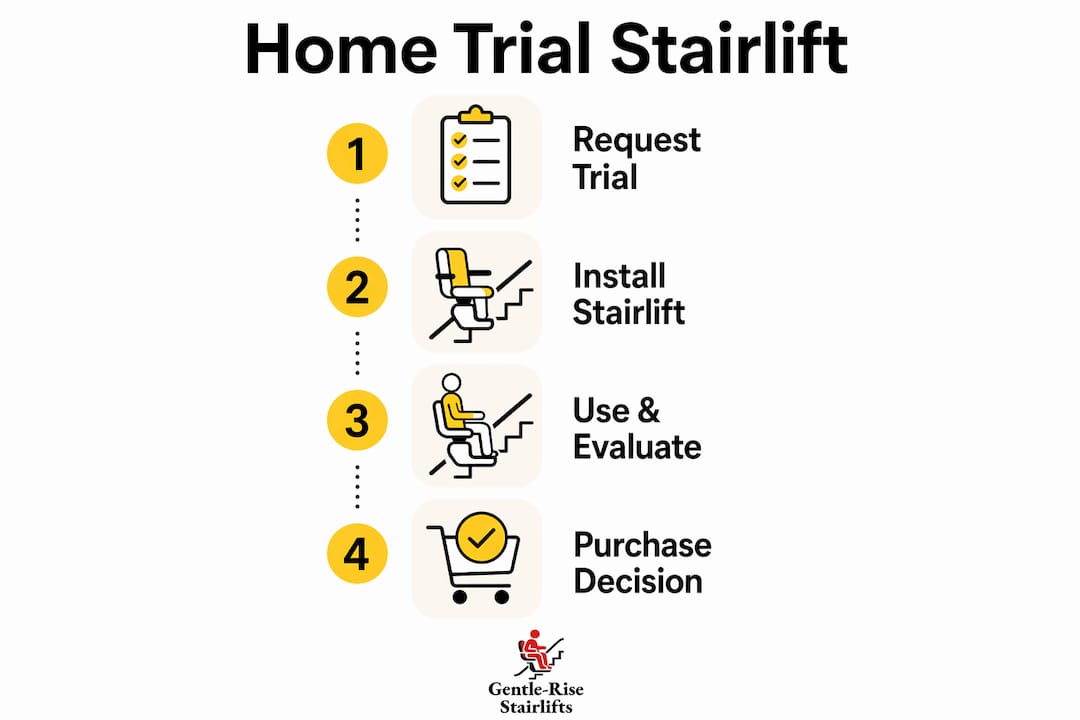
Here is what to expect from a typical home trial process:
- Initial assessment. A surveyor visits your home to measure the staircase, assess the user's mobility needs, and confirm which stairlift type is appropriate.
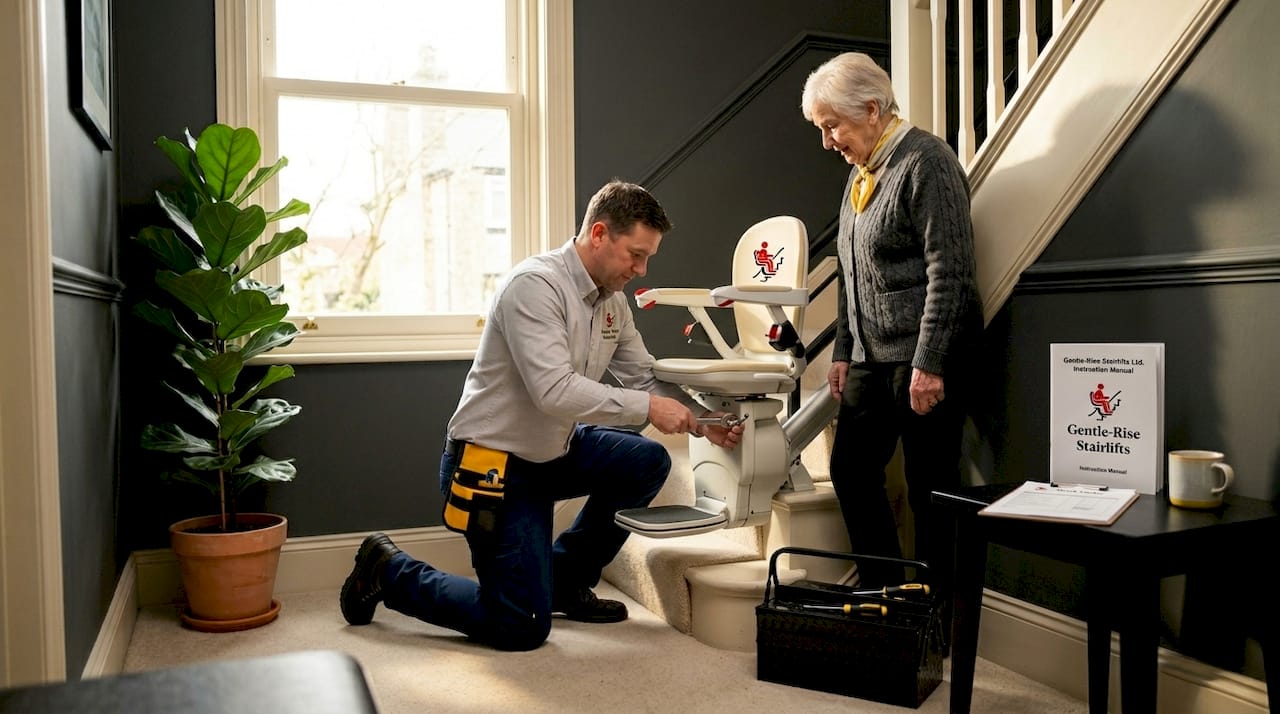
- Installation. A straight stairlift can usually be fitted in a few hours on the same day as the survey or shortly after.
- User familiarisation. The engineer walks the user and any caregivers through the controls, safety features, and correct seating position.
- Trial period. You use the stairlift daily across the agreed rental term, noting comfort, ease of use, and any concerns.
- Review and decision. At the end of the trial, you choose to purchase, upgrade to a permanent model, extend the rental, or have the unit removed.
Pro Tip: Ask your provider upfront whether any deposit paid during the trial can be offset against a purchase price if you decide to buy. Many providers, including Gentlerise Stairlifts, structure their rental arrangements to make this transition straightforward.
It is worth understanding how rentals differ from purchasing a reconditioned unit outright. Reconditioned stairlifts are refurbished previously installed models that you buy and own, usually with a warranty, but without the flexibility to return them if your needs change. A trial rental sits between that and a brand-new purchase, giving you ownership of the experience without ownership of the equipment.
Straight vs curved stairlifts: which is right for a trial?
The type of staircase in your home determines which stairlift is suitable for a trial, and getting this wrong carries real consequences. Straight stairlifts are designed for staircases that run in a single uninterrupted line without bends, turns, or intermediate landings. Curved stairlifts, by contrast, are custom-manufactured to match the precise geometry of staircases with turns or split levels.
| Feature | Straight stairlift | Curved stairlift |
|---|---|---|
| Staircase type | Single straight run | Bends, turns, or landings |
| Trial availability | Widely available as rental | Rarely available for trial |
| Installation time | A few hours | Several weeks for manufacture |
| Cost | Lower | Significantly higher |
| Reconditioned option | Common | Very limited |
Home trials almost always involve straight stairlifts. The reason is straightforward: straight models are standardised, widely stocked as reconditioned units, and can be installed within hours, making them practical for short-term arrangements. Curved stairlifts are built to order for a specific staircase, which means a trial rental is rarely feasible or cost-effective for providers to offer.
Choosing the wrong stairlift type creates genuine safety risks and adds unnecessary cost. Attempting to fit a straight rail on a curved staircase is not simply impractical. It is dangerous. A professional staircase assessment before any trial begins is the single most important step you can take. Gentlerise Stairlifts conducts free home surveys precisely to prevent this kind of mismatch, ensuring the trial unit matches your staircase before any equipment is ordered.
If your staircase is curved and you still want to evaluate a stairlift before committing, ask your provider about a virtual showroom demonstration or a detailed in-home consultation. These alternatives cannot replicate the physical experience of a trial, but they do allow you to assess controls, seating, and dimensions before a custom unit is manufactured.
What are the benefits of trying a stairlift at home?
Trying a stairlift in your own home before purchasing delivers benefits that extend well beyond simple product evaluation. The National Council on Ageing notes that home trials remain the gold standard for stairlift evaluation because they expose real conditions of safety, comfort, and ease that a showroom environment cannot reproduce. Your staircase width, carpet type, lighting, and the user's specific mobility pattern all influence how a stairlift performs in practice.
The financial case for a trial is equally strong. Stairlifts represent a significant investment, and purchasing the wrong model or discovering that a stairlift does not suit the user's needs after installation is an expensive mistake. A trial rental absorbs that risk at a fraction of the cost.
Key benefits of a home stairlift trial include:
- Safety confidence. Users and caregivers can verify that the safety sensors, seatbelt, and footrest function correctly in real conditions before any long-term commitment.
- Comfort assessment. Seat height, armrest position, and swivel function vary between models. Daily use during a trial reveals fit issues that a single showroom demonstration never would.
- Psychological reassurance. Many users, particularly those recovering from surgery or managing progressive conditions, feel anxious about stairlifts initially. A trial period builds genuine confidence and independence at home.
- Financial protection. Rental avoids large upfront costs and allows you to exit the arrangement if circumstances change, such as a hospital readmission or a move to a care facility.
- Caregiver involvement. Trials give family members and professional carers the opportunity to observe the user operating the stairlift independently, which informs longer-term care planning.
"Accessible trial experiences at home empower users and carers to make safer, more confident stairlift decisions tailored to individual needs." — National Council on Ageing
The psychological dimension is frequently underestimated. For an elderly person who has avoided the upper floor of their home for months, successfully using a stairlift during a trial period can be genuinely transformative. That lived experience, repeated daily across a trial term, is what converts hesitation into a confident purchase decision.
Practical tips for arranging a home stairlift trial
Preparation before the trial begins makes the difference between a useful evaluation and a frustrating one. The following steps apply whether you are arranging a trial for yourself or for a relative you care for.
- Clear the staircase. Remove any loose rugs, stored items, or obstacles from the stairs and landing before the surveyor arrives. A clear staircase gives the engineer an accurate view of the installation environment.
- Communicate mobility needs clearly. Tell the provider about the user's specific limitations, including whether they can stand unaided, their weight, and any conditions affecting grip or balance. This information determines seat type, rail length, and safety features.
- Read the contract carefully. Confirm the minimum rental term, the monthly fee, what is included in the service cover, and the notice period required to end the arrangement without penalty.
- Plan for the installation timeline. Straight stairlift installation typically completes within a few hours, but curved stairlifts require several weeks of manufacturing lead time. If urgency is a factor, a straight stairlift trial is almost always the faster route.
- Ask about reconditioned versus new rental stock. Reconditioned models are perfectly safe and often carry a warranty, but confirm the age and service history of any unit before it is installed in your home.
Pro Tip: If you are evaluating a trial with a view to purchasing, ask the provider to show you the types of stairlifts available for permanent installation at the same time. Comparing the trial unit against the full product range during the survey visit saves a second appointment and helps you plan your budget more accurately.
One consideration that catches many families off guard is the question of landing and hallway space at the top and bottom of the stairs. Stairlift rails extend slightly beyond the last step, and the swivel seat needs clearance to turn safely. Reviewing your landing and hallway layout before installation avoids last-minute surprises on the day.
Key takeaways
A home trial stairlift is the most reliable way to evaluate whether a stairlift suits a specific user, staircase, and home environment before committing to purchase.
| Point | Details |
|---|---|
| Definition of a home trial | A short-term rental arrangement allowing real-world stairlift use before purchase commitment. |
| Typical trial cost | Monthly rental fees cover installation, servicing, and removal with no large upfront purchase cost. |
| Straight stairs only | Home trials almost always use straight stairlift models due to availability and installation speed. |
| Core benefit | Daily home use reveals comfort, safety, and fit issues that showroom visits cannot replicate. |
| Preparation matters | Clear the staircase, communicate mobility needs, and read contract terms before the trial begins. |
Why I think the trial is the most underused tool in stairlift decisions
In my experience working alongside people navigating stairlift decisions, the trial option is consistently the last thing families consider rather than the first. Most people arrive at a provider having already decided between buying new or buying reconditioned, without realising that a short-term rental trial exists at all. That gap in awareness costs people money and, more importantly, confidence.
The families who use trials well treat them as a structured evaluation, not a passive loan. They involve the user daily, note specific discomforts, and ask the engineer pointed questions during the familiarisation visit. The families who waste trials treat the stairlift as furniture and forget to assess it until the rental term is nearly over.
One thing I have observed consistently: users who complete a trial almost always proceed to purchase. The hesitation that precedes a trial rarely survives two weeks of daily use. That tells you something important about what the trial actually does. It is not primarily a product test. It is a confidence-building exercise, and it works.
The availability of straight stairlift rentals has improved considerably in recent years, making trials more accessible than they were even five years ago. If your staircase is straight and you are on the fence, there is very little reason not to start with a trial rather than a purchase. The monthly cost is modest, the commitment is short, and the information you gain is genuinely irreplaceable.
— lee
Try a stairlift at home with Gentlerise Stairlifts
Gentlerise Stairlifts offers free home surveys across the UK, giving you a no-obligation starting point for any trial arrangement. Whether you need a short-term rental for post-surgery recovery or want to evaluate a stairlift before committing to a permanent installation, the Gentlerise team provides tailored advice, fast installation, and clear contract terms from the outset.
Straight stairlifts are available from £795, with rental options structured to suit temporary and trial needs. The Protect+ maintenance programme covers servicing throughout your rental period, so you are never left without support. Contact Gentlerise Stairlifts today to arrange your free home survey and take the first step towards a confident accessibility decision.
FAQ
What is a home trial stairlift?
A home trial stairlift is a short-term rental arrangement where a stairlift is temporarily installed in your home so you can evaluate its comfort, safety, and suitability before deciding to purchase. It is the most reliable way to assess whether a stairlift meets a specific user's needs in their actual home environment.
How long does a stairlift home trial last?
Most trial rental contracts run for a minimum of one to three months, after which the arrangement continues on a rolling monthly basis until you choose to purchase or have the unit removed.
Can I trial a curved stairlift at home?
Home trials almost always involve straight stairlift models because curved stairlifts are custom-manufactured for individual staircases, making short-term rental arrangements impractical and costly. If your staircase is curved, a detailed in-home consultation or virtual demonstration is the most realistic alternative.
What does a home stairlift trial cost?
Rental stairlifts typically cost between £50 and £200 per month, covering installation, servicing, and removal. An upfront deposit is usually required, and some providers allow this to be offset against a purchase price if you decide to buy.
Is a home trial better than a showroom visit?
A home trial is the gold standard for stairlift evaluation because it replicates real conditions of use, including your specific staircase, the user's daily routine, and actual safety performance. A showroom visit provides useful product information but cannot replicate the experience of daily use in your own home.