
TL;DR:
- Home mobility surveys identify hidden hazards and fall risks before physical decline is evident.
- Professionals assess room safety, mobility, and cognition to recommend personalized solutions like stairlifts.
- Early assessments promote independence, reduce fall risk, and can be accessed free through local services.
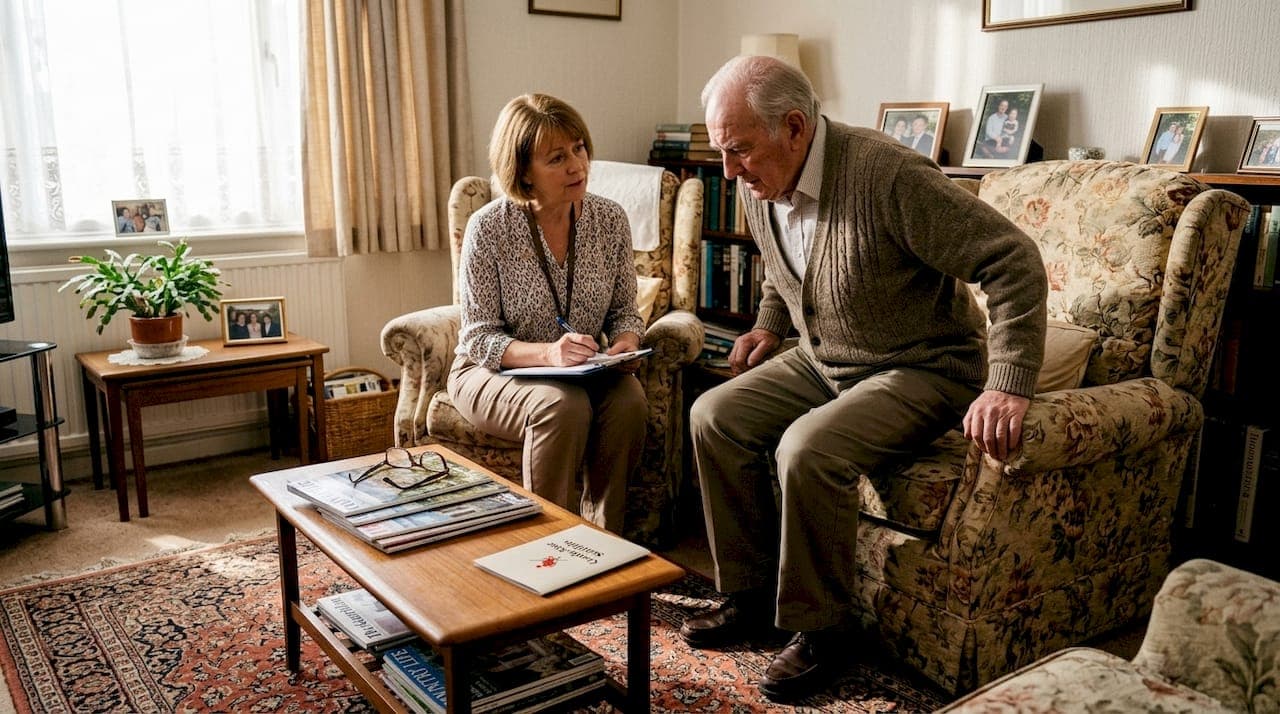
Many people assume a stairlift becomes necessary only when someone physically cannot climb the stairs at all. In reality, a home accessibility assessment often uncovers hidden hazards and mobility risks long before things reach that point. A home mobility survey is a structured review of how safely and independently you move around your home, and for elderly individuals or those recovering from surgery, it can be genuinely life-changing. This guide will walk you through exactly what these surveys involve, who should carry them out, what the warning signs look like, and what to do once you have your results.
Table of Contents
- What is a home mobility survey?
- Core elements and the survey checklist
- Who should perform your survey: DIY vs professional approaches
- Key signs you may need a stairlift: what the survey looks for
- What happens after your mobility survey?
- The reality of home mobility surveys: what most guides miss
- Take the next step with expert advice
- Frequently asked questions
Key Takeaways
| Point | Details |
|---|---|
| Structured home safety check | A home mobility survey helps identify risks and barriers at home, especially for stair use. |
| OTs offer thorough assessment | Professional occupational therapists use detailed checklists and are often available free. |
| DIY surveys are a first step | A self-assessment can help, but expert follow-up is strongly advised for stairlift decisions. |
| Falls and stairs are high risk | Prompt surveys and modifications greatly reduce injury risks for elderly or recovering individuals. |
What is a home mobility survey?
A home mobility survey is, in simple terms, a structured evaluation of how a person moves throughout their home, identifying barriers to safety and independence. It is not a medical test. It is not a performance check on your equipment. It is a focused, practical review of your living environment and how your physical abilities interact with it.
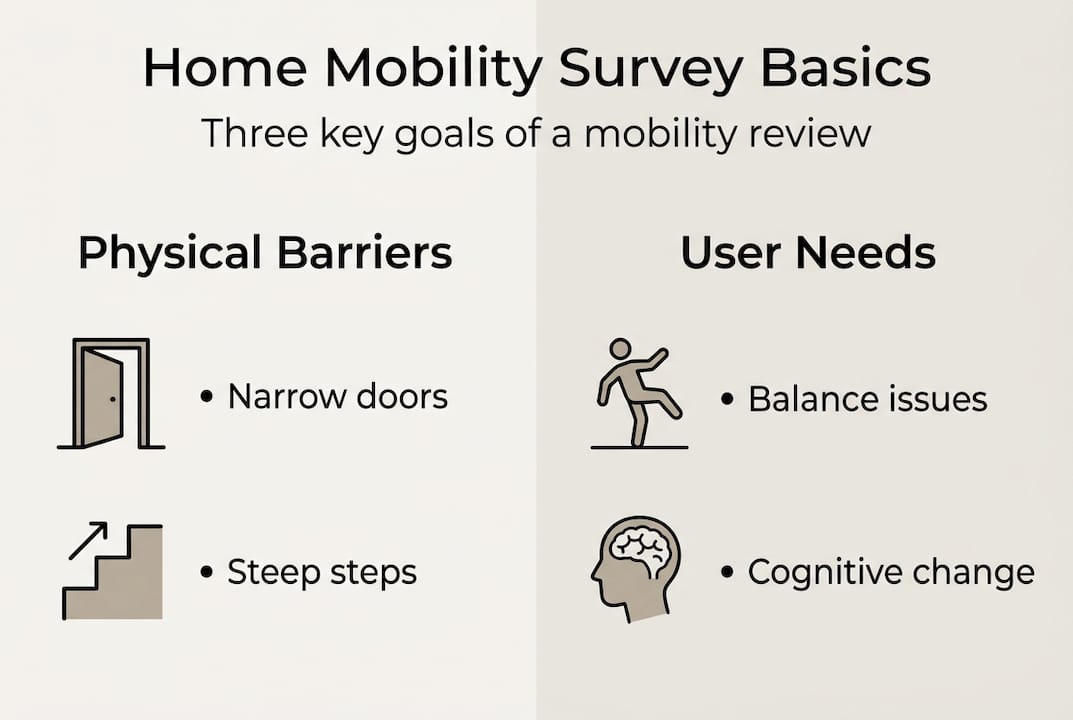
The core aim of a survey is threefold. First, it detects physical barriers, things like narrow doorways, steep steps, or poor lighting, that make moving around the home harder or more dangerous. Second, it reduces fall risk. This matters greatly because falls are the leading cause of injury and death in the over-65 age group, and stairs are the highest-risk area. Third, it promotes independence by identifying solutions that allow someone to stay safely in their own home for longer.
It helps to understand what a home mobility survey is not. It is not the same as a GP appointment or an occupational therapy (OT) session focused on rehabilitation exercises. Nor is it a sales visit from a stairlift company. The survey is an objective look at your environment, carried out before any decisions are made.
A mobility needs assessment is recommended in several situations:
- After a fall or near-fall at home
- Following surgery, such as a hip or knee replacement
- When a GP, physiotherapist, or OT suggests one
- When a family member notices someone struggling with stairs or movement
- When someone begins to avoid certain areas of the home
The survey gives you an honest, structured picture of where risk exists and what can be done about it. That is its entire purpose.
"A home mobility survey is not about confirming what you already know. It is about revealing what you do not yet see."
With the basics set, it is important to understand what actually happens during these surveys.
Core elements and the survey checklist
A home mobility survey follows a room-by-room approach. Assessments typically involve reviewing handrails, lighting, stair width, gait, and grip on stairs, alongside hazards in bathrooms, kitchens, and living areas.
Here is an overview of what a typical survey checklist covers:
| Area | What is assessed |
|---|---|
| Stairs | Width, handrail height, condition, lighting |
| Bathroom | Grab rails, bath access, floor surfaces |
| Bedroom | Bed height, pathway width, floor hazards |
| Living areas | Trip hazards, furniture layout, lighting |
| Hallways | Width, steps, threshold strips |
Beyond the physical environment, assessors also observe how the individual actually moves. They watch gait (the pattern of how you walk), grip strength, balance, and reaction to uneven surfaces. Cognitive factors, such as whether someone can process surroundings safely, are also noted.
A professional survey typically follows these steps:
- Initial conversation about daily routines and any difficulties
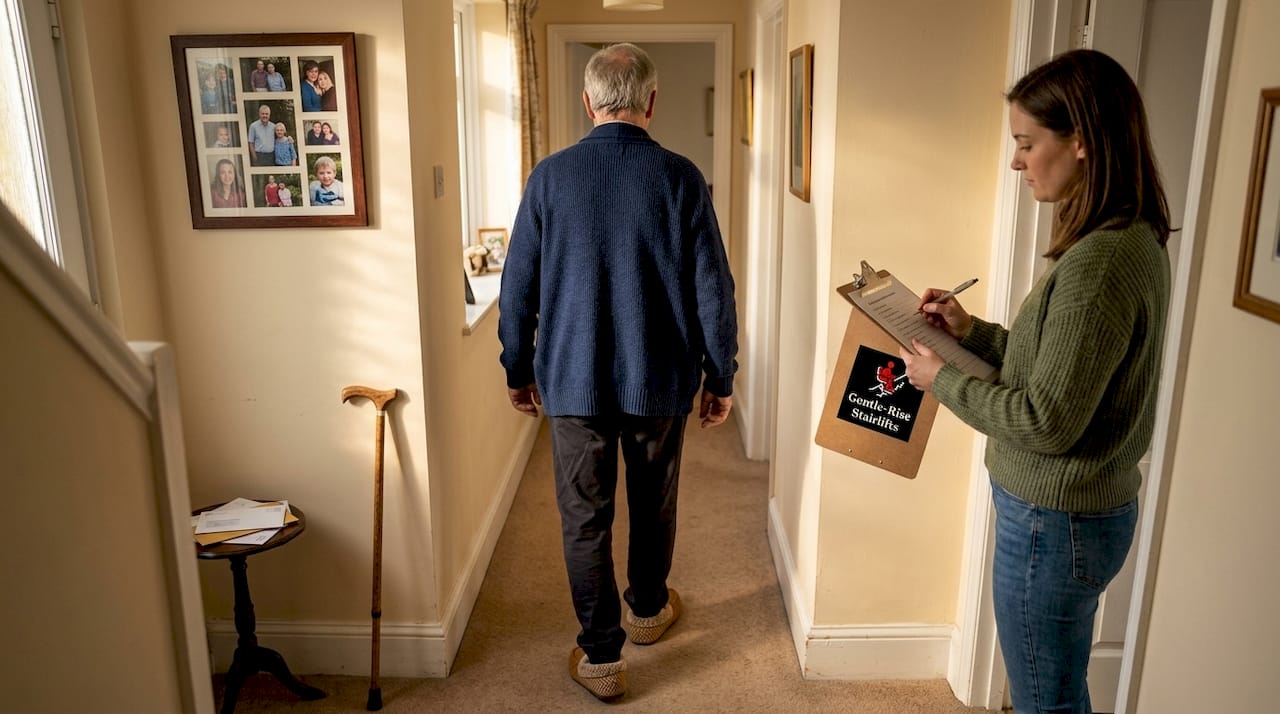
- Walk-through of each room with observations and measurements
- Specific focus on stairs, including width, lighting, and rail presence
- Assessment of the individual's mobility and dexterity in real conditions
- Notes on any cognitive or sensory considerations
- Recommendation report shared after the visit
Most surveys take between 30 and 90 minutes. You should expect to answer questions, walk through your home naturally, and be observed on the stairs. It can feel slightly unfamiliar, but it is straightforward.
For families managing multiple generations under one roof, reviewing family mobility tips alongside a survey can help you think more broadly about the home environment.
Pro Tip: Before a professional visits, use a self assessment checklist to note areas you already feel uncertain about. This helps assessors focus on the most pressing concerns quickly.
Understanding what the survey includes, we next explore who should perform this review and why expertise matters.
Who should perform your survey: DIY vs professional approaches
Home mobility surveys can be performed by occupational therapists using standardised checklists, or carried out as a DIY exercise for a basic assessment. Both have their place, but knowing the difference matters.
| Feature | DIY survey | Professional OT-led survey |
|---|---|---|
| Cost | Free | Often free via NHS/social services |
| Depth of assessment | Basic | Thorough, holistic |
| Cognitive factors checked | No | Yes |
| Formal report produced | No | Yes |
| Useful for stairlift decisions | Partially | Strongly recommended |
A DIY survey works well as a starting point. You can check obvious hazards, note problem areas, and start a conversation with family or a GP. The limitation is that it misses subtler risks. Environmental factors like the angle of light at dusk, the way a carpet edge lifts slightly, or how someone instinctively compensates for a weak side when climbing stairs are things only a trained eye will catch.
Professional surveys, typically led by an occupational therapist, offer a far more rounded picture. They assess the person alongside the property, considering physical ability, cognitive safety awareness, and the suitability of potential solutions. Importantly, many people do not realise that a free professional stairlift assessment is available through local councils and social services, without any obligation to purchase.
Who should prioritise a professional survey?
- Anyone who has had a fall in the past 12 months
- Individuals recovering from surgery or managing a progressive condition
- Older adults living alone
- Families unsure whether a stairlift is genuinely needed
Pro Tip: If you are already researching options, reading a detailed stairlift guide before your professional survey means you can ask better, more informed questions during the visit.
Once you have decided who will perform the survey, it is key to know which signs suggest you or a loved one may actually need a stairlift.
Key signs you may need a stairlift: what the survey looks for
Not everyone who has a home mobility survey ends up needing a stairlift, but assessors are specifically trained to spot certain patterns. Common surveyed signs include avoiding stairs, near-falls, breathlessness, and stair hesitation. These might seem minor individually, but together they form a clear picture.
Here are the signs professionals look for during a survey:
- Stair avoidance: Sleeping downstairs to avoid climbing, or skipping visits to upper floors
- Physical hesitation: Pausing at the bottom or top of stairs, gripping rails tightly, or taking stairs one step at a time
- Breathlessness: Becoming short of breath on just a few steps
- Near-falls or stumbles: Any incident where a fall nearly happened on the stairs
- Pain or stiffness: Noticeable discomfort during or after stair use
- Slow stair speed: Taking significantly longer than expected to navigate steps
The physical environment is equally important. Stair width below 760mm can make some stairlift models unsuitable. Missing or damaged handrails, poor lighting on stair landings, and uneven step heights all amplify risk significantly.
The case for acting early is compelling. Home modifications and OT-led assessments reduce fall rates in older adults when paired with appropriate exercise, and a large proportion of those falls happen on stairs. Waiting until a serious fall has occurred means both the physical and psychological recovery are far harder.
For those ready to act, learning about installing stair lifts safely is a natural next step after identifying these warning signs.
Having identified the core warning signs, it is useful to understand what happens after the survey and how decisions are made.
What happens after your mobility survey?
Once the assessment is complete, the process moves into its most practical phase. OTs and professionals review findings to match solutions, whether stairlifts, home modifications, or targeted exercises, with each individual's specific needs.
Here is a clear picture of what typically follows:
- Findings review: The assessor compiles observations into a written report, noting areas of concern and recommended actions
- Solution matching: Recommendations might include a stairlift, grab rails, improved lighting, or a referral for further OT support
- Grant and funding guidance: The report can support applications for Disabled Facilities Grants or council-funded adaptations
- Follow-up appointments: Some individuals benefit from a second visit once initial changes are made
- Family involvement: Assessors often share findings with family members or carers to coordinate support
The report itself carries real weight. It can be used when speaking to stairlift providers, when requesting GP referrals, or when applying for financial assistance. Understanding stairlift costs early in the process means you approach these conversations with a clear budget in mind.
Even if a stairlift is not immediately recommended, the survey results still guide important home improvements that reduce risk considerably. The evidence from fall prevention research consistently shows that structured, expert-led home assessments paired with timely action lead to meaningfully better outcomes.
With full clarity on surveys and next steps, it is important to bring an honest perspective to what really works in home mobility improvement.
The reality of home mobility surveys: what most guides miss
Most articles about home mobility surveys focus on checklists and room measurements. That is useful, but it misses something important: the emotional and cognitive dimension of these visits.
In our experience, many families wait too long. Pride plays a part. A parent who has lived independently for decades often resists the idea that the stairs have become a problem. A survey can feel like an admission of decline. But that framing is wrong. Catching risks early means more options, not fewer. Acting sooner often means a simpler solution is all that is needed.
We also see standard surveys underestimate environmental complexity. The interaction between fading eyesight, an unfamiliar carpet pattern, and a dark landing at 2am is not something a daytime checklist fully captures. The best assessors account for these layered, real-life conditions.
Our honest recommendation: combine the survey with minor home modifications and a simple exercise plan wherever possible. A stairlift is a brilliant solution, but it works best as part of a broader approach to staying safe and confident at home.
Take the next step with expert advice
If reading this has prompted you to think seriously about your own home or a loved one's safety, the most valuable thing you can do next is speak to someone who can assess the situation properly.

At GentleRise Stairlifts, we offer free home surveys carried out by experienced professionals who understand both the practical and personal sides of this decision. Whether you are exploring enhancing accessibility at home or simply want to understand your options, we are here to help without pressure. Review our stairlift cost guide to get a clear sense of pricing before you get in touch.
Frequently asked questions
Can I do a home mobility survey myself?
Yes, you can carry out a basic survey using a checklist, but DIY checklists may miss vital issues that a trained professional would identify. Expert assessments are more thorough and are often available free through local services.
How long does a home mobility survey take?
Survey duration ranges from 30 to 90 minutes, depending on the size of the home and the complexity of the individual's needs.
What is checked in a home mobility survey?
Room-by-room checklists focus on stairs, handrails, lighting, and mobility risk throughout the home, as well as the individual's gait and physical ability.
Do I need a doctor's referral for a professional survey?
Many OT-led assessments are available via social services or a GP without a formal doctor's referral, making them straightforward to access for most people.