
TL;DR:
- Losing mobility at home severely impacts independence and wellbeing but can often be restored affordably through a step-by-step workflow. Proper assessments, available funding, and careful device selection help ensure cost-effective solutions, especially when prepared in advance. Maintaining safety and routine servicing safeguards your investment and long-term mobility.
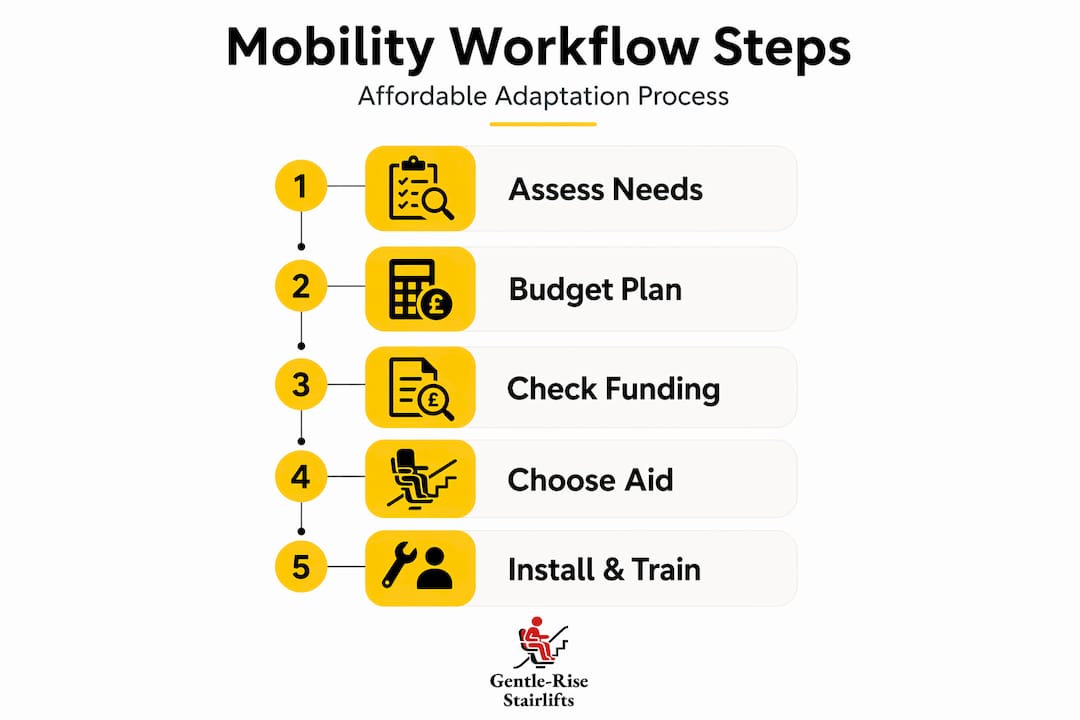
Losing the ability to move freely around your own home is one of the most quietly devastating experiences a person can face. Whether it's a flight of stairs that's become a daily obstacle or a bathroom that feels increasingly out of reach, the impact on your independence and wellbeing is immediate and real. The good news is that an affordable home mobility workflow, planned step by step, can restore that freedom without draining your savings. This guide walks you through everything: assessing your needs, finding funding, choosing the right aid, and keeping it running reliably for years to come.
Table of Contents
- Key takeaways
- Assessing your home mobility needs first
- Navigating funding and grants to cut costs
- Choosing the right mobility aid for your budget
- Installation, training, and keeping costs down long term
- My honest take on getting this right
- How Gentlerise Stairlifts can help you take the next step
- FAQ
Key takeaways
| Point | Details |
|---|---|
| Start with a proper assessment | An occupational therapist's evaluation justifies your needs and significantly improves funding approval odds. |
| Explore funding before you spend | Grants, Medicaid waivers, and VA programmes can dramatically cut your out-of-pocket costs. |
| Weigh renting versus buying | Renting suits short-term needs; buying is more cost-effective if you need a stairlift for longer than 18 months. |
| Get multiple quotes | Comparing at least three dealer quotes is the single most effective way to control purchase costs. |
| Maintain your aid properly | Routine servicing extends product life and avoids expensive emergency repairs down the line. |
Assessing your home mobility needs first
Before you spend a single pound on equipment, you need an honest picture of what you actually require. Skipping this step is where most people waste money, either buying the wrong device or missing out on funding they were entitled to all along.
Start by thinking practically about which areas of your home cause genuine difficulty. Is it the staircase? The bathroom? Getting between floors? Write it down. Then consider whether your needs are likely to be temporary, such as recovery from surgery, or longer-term due to a progressive condition.
A professional occupational therapy assessment is worth scheduling early in this process. These assessments typically last 60 to 90 minutes and a private session costs between £150 and £400. That upfront cost often pays for itself many times over, because the resulting clinical report is exactly what funding bodies want to see. The functional impairment language in a thorough OT report is frequently the deciding factor in whether a funding application succeeds or fails.
When you are assessing your staircase specifically, the layout matters enormously:
- Straight staircases are the most affordable to fit and have the widest range of solutions available.
- Curved or L-shaped staircases require custom-manufactured rails and carry higher costs.
- Outdoor access needs such as steps up to a front door, require weather-rated equipment and are a separate consideration entirely.
- Narrow staircases under 75 cm may require a slimline model, so measure carefully.
Pro Tip: Ask your local council whether they offer a free OT home visit before paying for a private assessment. Many UK councils still provide this at no charge, and the resulting report carries the same weight with funding bodies as a private one.
Budget planning belongs in this stage too. Work out what you can realistically spend and where gaps might exist. That sets the foundation for the next step: finding money you did not know was available.
Navigating funding and grants to cut costs
This is the part of the workflow for home mobility that most people rush past, and it costs them dearly. There is a surprising amount of financial support available once you know where to look.
The first thing to understand is what general health insurance will and will not cover. Original Medicare does not cover stairlifts because they are classified as home modifications rather than durable medical equipment. Some Medicare Advantage plans may offer limited coverage based on medical necessity, so it is worth checking your specific plan before assuming you are on your own.
For those eligible, the following sources are worth exploring:
- Medicaid Home and Community-Based Services (HCBS) waivers: These state-level Medicaid programmes fund home modifications under the Environmental Accessibility Adaptations category. Eligibility and coverage levels vary by state, so contact your state Medicaid office directly.
- Veterans Affairs (VA) grants: The VA offers three key programmes. The Specially Adapted Housing (SAH) grant provides up to £109,986 for veterans with service-connected conditions. The Special Housing Adaptation (SHA) grant offers up to £22,036, and the Home Improvements and Structural Alterations (HISA) grant covers up to £6,800 for qualifying home mobility work.
- UK Disabled Facilities Grant (DFG): For UK residents, this means-tested grant from your local council can contribute significantly to the cost of installing a stairlift or other home adaptations.
- Charitable and nonprofit grants: Several UK charities, including Foundations and local housing trusts, offer supplementary funding for older or disabled people needing home adaptations.
| Funding source | Who it covers | Typical maximum |
|---|---|---|
| VA SAH grant | US veterans, service-connected disability | Up to £109,986 |
| Medicaid HCBS waiver | Low-income individuals, varies by state | Varies |
| UK Disabled Facilities Grant | UK homeowners and tenants | Up to £30,000 |
| HISA grant | Veterans with service or non-service conditions | Up to £6,800 |
One important caution: VA grants can be combined with Medicaid or state programmes, but you cannot use two funding sources to pay for the exact same cost item. Keep meticulous records from the start to avoid this problem.
Pro Tip: Screen for funding eligibility before you agree to any installation date. Applying after you have already paid removes your leverage and may disqualify you from certain grant programmes altogether.
Choosing the right mobility aid for your budget
Once you know what you need and what help is available, you can make a genuinely informed purchasing decision. The range of budget-friendly mobility options is wider than most people realise.
Here is a straightforward process for selecting and acquiring your aid:
- Define your use case clearly. Is this a long-term need or temporary recovery support? The answer determines whether renting or buying makes more financial sense.
- Understand the cost range for your staircase type. Straight stairlifts are the most affordable, with quality models available from around £795. Curved stairlifts require bespoke rails and typically cost significantly more.
- Consider a reconditioned model. Reputable dealers sell fully serviced, reconditioned stairlifts that offer substantial savings over new units without compromising on safety.
- Weigh renting against buying. Renting from a few hundred pounds upfront with a monthly fee works well for short-term needs, but if you are likely to need the equipment for more than 18 to 24 months, purchasing will almost always be cheaper overall.
- Get at least three quotes. Requesting multiple quotes from different dealers is the most reliable way to identify fair pricing and give yourself negotiating room.
- Prioritise the features that matter most. A powered swivel seat, intuitive controls, and reliable safety sensors are worth paying for. Cosmetic extras generally are not.
| Stairlift type | Approximate cost (new) | Typical lead time |
|---|---|---|
| Straight stairlift | £795 to £2,500 | Same day to 2 days |
| Curved stairlift | £3,000 to £8,000+ | 4 to 8 weeks |
| Reconditioned straight | £600 to £1,500 | 2 to 5 days |
| Rental (straight) | From £300 upfront plus monthly fee | 1 to 3 days |
If a stairlift genuinely does not suit your home layout or budget, the best stair lift alternatives include through-floor lifts, perch stools for short rises, and grab rail systems that can dramatically improve safety at minimal cost.
Pro Tip: If you need a curved stairlift, start the process immediately. Custom rail manufacturing takes four to eight weeks. A short-term rental can keep you mobile while you wait, rather than managing unsafe stair use during that gap.
Installation, training, and keeping costs down long term
Getting the right aid fitted safely and then keeping it in good working order is the final stage of your affordable home mobility workflow. Done properly, it protects both your safety and your investment.
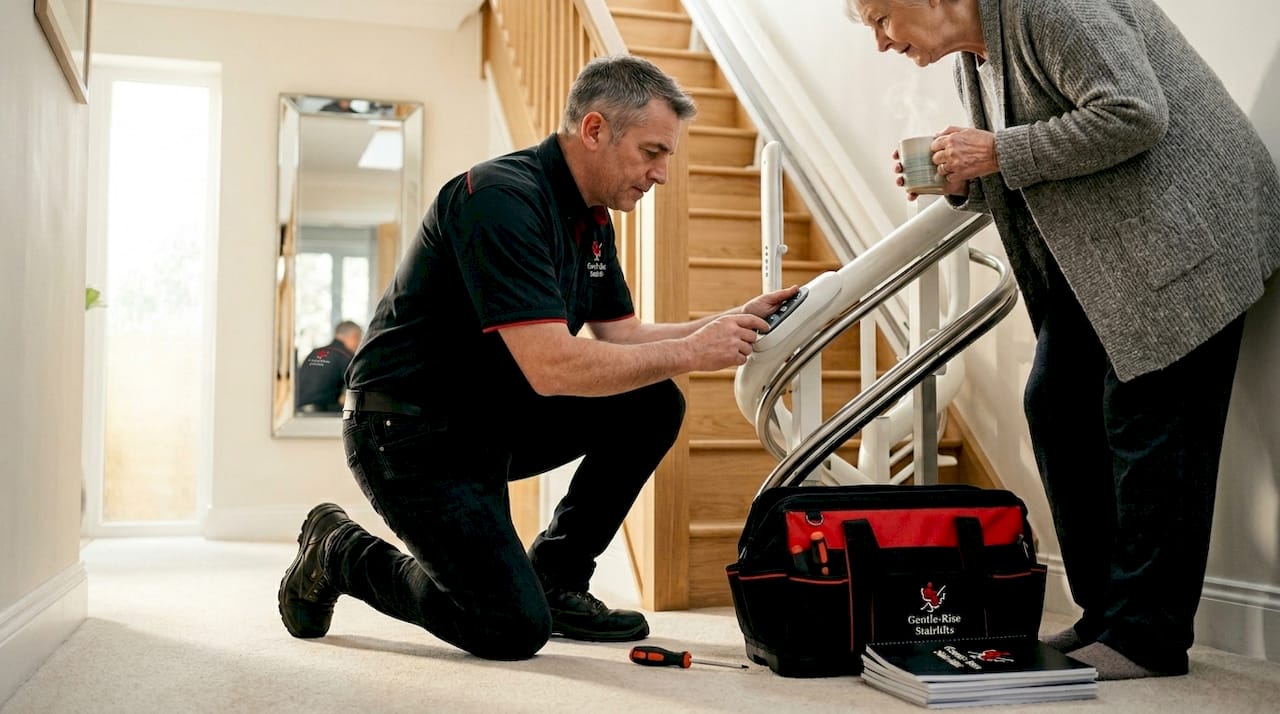
A straight stairlift installation is typically completed within a few hours by a qualified engineer. Curved installations take longer due to the bespoke nature of the rail, but the process is just as straightforward from your perspective. For detailed guidance on what to expect, the stairlift installation process is well documented and worth reviewing before your appointment.
Key things to know about the installation and ongoing care:
- Always use a qualified, accredited installer. DIY installation voids the warranty and introduces genuine safety risk.
- Request a full operational walkthrough from the engineer before they leave. You should feel confident using every function, including the manual override.
- Keep the rail free from obstruction. Objects left on the stairs are one of the most common causes of avoidable breakdowns.
- Wipe down the rail monthly with a dry cloth. Dust and grime on the rail and drive mechanism accelerate wear.
- Book an annual service with a recognised engineer. Many providers, including Gentlerise Stairlifts through their Protect+ maintenance programme, offer cost-effective service plans that keep your equipment under a professional eye without a large annual bill.
If you notice unusual sounds, slower movement, or the seat not swivelling cleanly, address it immediately rather than waiting. Minor issues caught early are cheap to fix. Ignored, they become expensive repairs or, worse, a safety incident.
Pro Tip: Check whether your home insurance policy can be updated to include your stairlift under home contents or fixtures cover. In many cases this is possible for a modest premium increase and provides valuable protection against accidental damage.
My honest take on getting this right
In my experience, the people who get the most value out of an affordable home mobility workflow are the ones who slow down at the beginning rather than rushing straight to the purchase. I have seen many cases where someone bought a device quickly, under pressure from a difficult situation, only to discover three months later that they qualified for a grant that would have covered most of the cost.
The OT assessment feels like an unnecessary step when you already know you struggle on the stairs. But it is not just a formality. It gives you clinical documentation that opens financial doors, and it occasionally surfaces a solution you had not considered. One I remember clearly involved someone convinced they needed a curved stairlift for a modest bend in their staircase. A proper assessment revealed a straight rail could be fitted with a small landing adaptation at a fraction of the cost.
The uncomfortable truth is that affordability in home mobility comes from preparation, not luck. The funding is often there. The cost-effective options exist. What most people lack is a clear order of operations. Start with the assessment, pursue funding in parallel, then make your device choice from a position of actual knowledge. That sequence makes the difference.
— lee
How Gentlerise Stairlifts can help you take the next step
If you are ready to move forward with a practical, budget-conscious plan for your home mobility, Gentlerise Stairlifts is a good place to start the conversation. With straight stairlifts from £795, a range of reconditioned models, and flexible rental arrangements for those with short-term needs, the options are designed around real budgets rather than ideal ones.
Gentlerise Stairlifts covers installation across the UK, often completing straight stairlift fittings within hours of survey. Their stairlift costs guide breaks down pricing clearly so there are no surprises. For ongoing peace of mind, the Protect+ aftercare plan keeps your equipment maintained without unexpected bills. You can book a free home survey at a time that suits you, with no obligation to proceed. Getting informed costs nothing, and it is usually the step that brings real clarity.
FAQ
Does Medicare cover stairlifts in the UK or US?
Original Medicare does not cover stairlifts as they are classified as home modifications, not medical equipment. Some Medicare Advantage plans may offer limited coverage, so checking your individual plan is worthwhile.
How long does a stairlift installation take?
A straight stairlift installation is typically completed within a few hours by a qualified engineer. Curved stairlifts take longer due to custom rail manufacturing, which carries a lead time of four to eight weeks.
Is it cheaper to rent or buy a stairlift?
Renting is cost-effective for short-term needs, but buying makes more financial sense if you expect to use the stairlift for more than 18 to 24 months.
What grants are available for home mobility aids in the UK?
UK residents can apply for the Disabled Facilities Grant through their local council, which provides up to £30,000 towards the cost of home adaptations including stairlifts. Veterans may also qualify for VA programmes depending on their circumstances.
Why is an occupational therapy assessment worth doing first?
A professional OT assessment produces the clinical documentation that funding bodies require. The quality of the OT report is frequently what separates successful funding applications from unsuccessful ones.