
TL;DR:
- A zero deposit stairlift rental allows you to access mobility equipment without paying a large upfront sum, with a modest installation fee and fixed monthly payments. The installation fee covers fitting labor and is typically non-refundable, while rental costs include maintenance and removal, making short-term needs ideal for this option. For long-term use beyond two years, buying with VAT exemption generally offers better value and cost savings.
A zero deposit stairlift is a rental arrangement that gives you access to a stairlift without paying a large upfront sum, making home mobility more affordable from day one. The term is widely used in UK marketing, but the recognised industry description is a "no upfront deposit rental." Understanding the distinction matters because installation fees are often required even on so-called zero deposit agreements, and confusing the two can lead to unexpected costs. This guide covers how these rental models work, how they compare to purchasing with financing, what VAT exemption means for your total bill, and how to choose the right path for your circumstances.
What is a zero deposit stairlift and how does rental work?
A zero deposit stairlift rental means you pay no traditional security deposit to access the equipment. Instead, you pay a modest installation fee upfront, then a fixed monthly rental charge for as long as you need the lift. Monthly rental fees typically range from £50 to £150, with most households paying between £70 and £120 per month. That monthly figure usually covers servicing, maintenance, and removal when the rental ends.
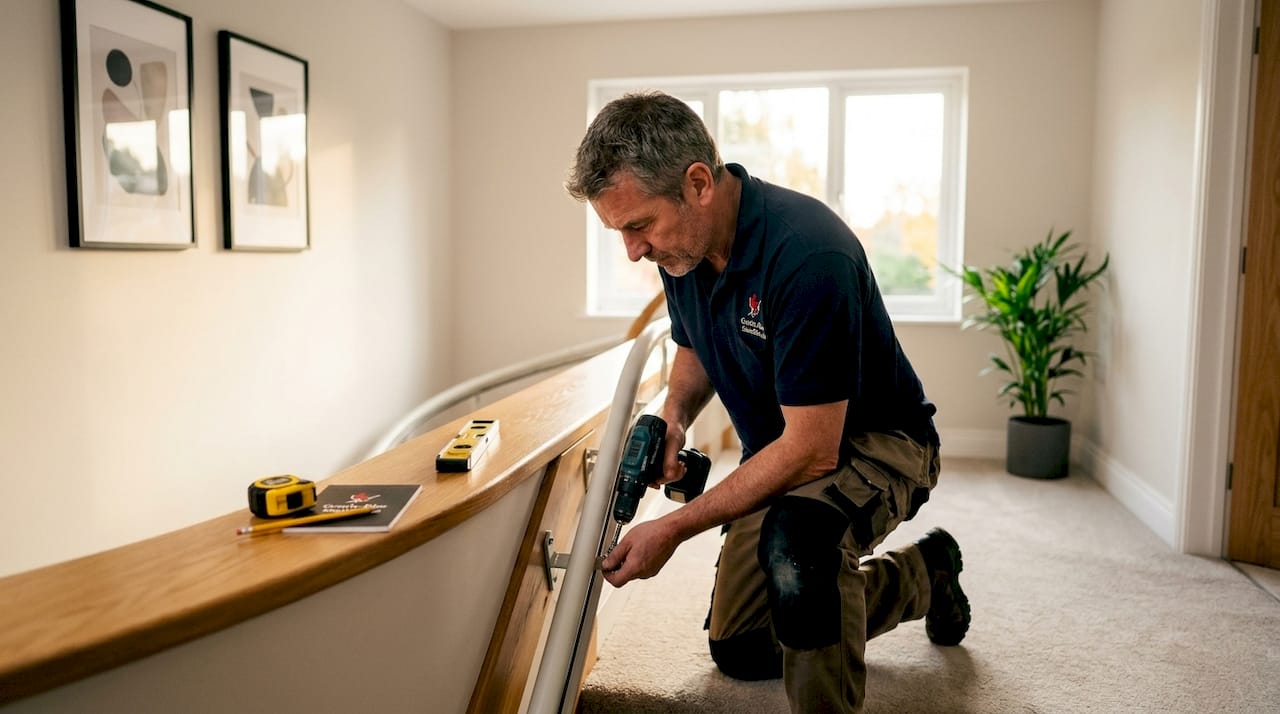
The installation fee is the part most people misunderstand. It covers the labour required to fit and later remove the stairlift, not a refundable security deposit. This fee is commonly non-refundable and typically runs to a few hundred pounds. Some providers describe it loosely as a "deposit," which creates confusion. Before signing anything, ask your provider directly whether any upfront payment is refundable and under what conditions.
Rental agreements suit specific situations well. Post-surgery recovery, short-term mobility loss, or a period of waiting for a council grant are all cases where committing to a purchase makes little sense. Rentals are highly recommended for temporary mobility needs precisely because they keep your obligations low and your options open.
Key features typically included in a rental agreement:
- Monthly fee covers servicing, routine maintenance, and breakdown callouts
- Removal is included at the end of the rental period, with no extra charge
- No long-term ownership responsibility for repairs beyond normal use
- Flexible exit terms on many agreements, though minimum periods vary by provider
- Installation fee covers fitting labour and is usually non-refundable
Pro Tip: Ask your provider for a written breakdown of every charge before signing. Confirm whether the installation fee is refundable, partially refundable, or non-refundable outright. This single question can save you hundreds of pounds in surprises.
Buying vs renting: financing options and VAT relief explained
Purchasing a stairlift outright is a different financial commitment entirely. True zero deposit purchase options are rare in the UK market. What providers more commonly offer is 0% APR financing over 6–24 months, which spreads the cost without adding interest, provided you meet the repayment terms precisely.
The critical distinction is between genuine 0% interest and deferred interest. With deferred interest, the interest accrues throughout the promotional period but is only charged if you fail to clear the balance in time. Financial professionals advise confirming these terms in writing before you commit, because the difference between the two can add hundreds of pounds to your total cost if you miss the deadline.
VAT exemption is the most underused cost-saving tool available to stairlift buyers in the UK. UK residents with a qualifying chronic illness or disability can claim 0% VAT on the purchase, installation, and maintenance of a stairlift. On a £3,000 stairlift, that saves £500 immediately. No doctor's note is required. You simply sign a self-declaration form at the point of purchase. VAT exemption is a legal entitlement mandated by HMRC, not a discretionary discount a supplier can choose to withhold.
Before financing anything, explore local grants and VAT relief first. Many households are unaware that non-repayable grants exist through local councils and disability charities, and these can cover costs entirely without any repayment obligation. You can find guidance on council funding for stairlifts to understand what may be available in your area.
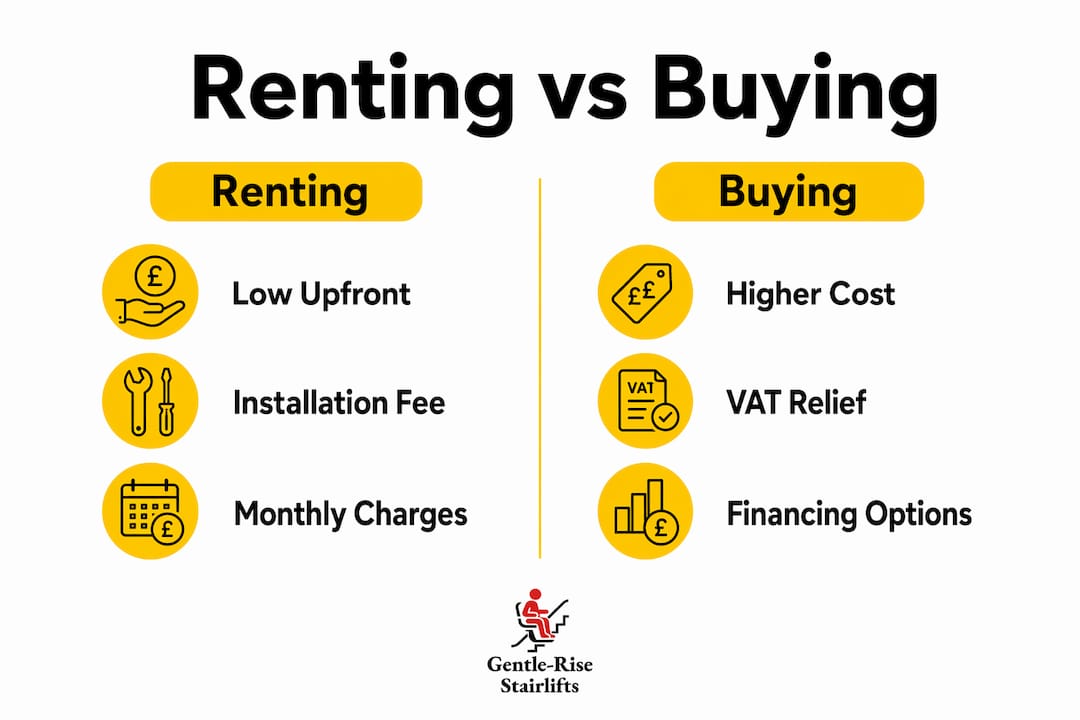
| Factor | Renting | Buying |
|---|---|---|
| Upfront cost | Low (installation fee only) | Higher (deposit or full payment) |
| Monthly cost | £70–£120 ongoing | None after purchase |
| Maintenance | Included in rental fee | Your responsibility (or service plan) |
| VAT exemption | Not typically applicable | Yes, saves 20% on qualifying purchases |
| Customisation | Limited to standard models | Full range of options available |
| Best suited for | Short-term or uncertain needs | Long-term use over 2–3 years or more |
What are the pros and cons of renting versus buying?
The right choice depends almost entirely on how long you expect to need the stairlift. Renting suits short-term or uncertain needs under 12 months, while buying delivers better value when use extends beyond two to three years. The maths is straightforward: at £100 per month, a rental costs £1,200 per year. A straight stairlift purchase from Gentlerise Stairlifts starts at £795, meaning ownership pays for itself within the first year for long-term users.
Advantages of renting:
- No large upfront payment required
- Maintenance and servicing are included, removing unexpected repair costs
- Removal is handled by the provider, saving time and effort
- Flexibility suits temporary conditions such as post-operative recovery
- Lower financial risk if your mobility needs change
Advantages of buying:
- Lower total cost over two or more years of use
- Full ownership means no recurring monthly fees
- Greater choice of models, including curved and reconditioned options
- VAT exemption reduces the purchase price by 20% for qualifying buyers
- Ability to resell or pass on the equipment
The drawbacks of renting are worth acknowledging honestly. Over several years, rental fees accumulate well beyond the purchase price of the same equipment. Customisation is also limited. Most rental models are standard straight stairlifts, which may not suit all staircases or user preferences. Buying, by contrast, requires you to manage your own maintenance unless you purchase a service plan separately. For guidance on maintaining your stairlift safely, a dedicated aftercare plan is worth factoring into your total cost of ownership.
Pro Tip: Before deciding, estimate how long you genuinely expect to need the stairlift. If the answer is "at least two years," the purchase route almost always costs less overall, especially once VAT exemption is applied.
How does a stairlift work and what should you expect from installation?
A stairlift is a motorised chair that travels along a rail fixed to your staircase, carrying you between floors safely and smoothly. The chair runs on sealed rechargeable batteries rather than mains electricity, which means it continues to operate during a power cut. Batteries typically support 15–30 trips before recharging, and the lift charges automatically when parked at either end of the rail.
The installation process for a straight stairlift is straightforward and fast. Here is what to expect:
- Free home survey: A surveyor visits to measure your staircase and assess the best rail configuration.
- Order and manufacture: Straight stairlift rails are often cut to size from stock, reducing lead times significantly.
- Installation day: A qualified engineer fits the rail to the stair treads (not the wall), installs the chair, and tests the full system. Most straight stairlift installations complete within a few hours.
- Demonstration: The engineer walks you through all controls, safety features, and charging procedures before leaving.
- Aftercare setup: Service plan or rental terms are confirmed, and contact details for support are provided.
Safety features are built into every modern stairlift. Obstruction sensors stop the chair if anything blocks the rail. Seatbelts, swivel seats, and footrest sensors all reduce the risk of falls during transit. The battery backup means a power failure never leaves you stranded mid-staircase.
The installation fee in a rental agreement covers steps one through four above. It pays for the engineer's time, not a refundable deposit on the equipment itself. This is the most common source of confusion in zero deposit stairlift agreements, and clarifying it upfront protects you from disappointment later.
Key takeaways
A zero deposit stairlift rental reduces upfront costs but requires careful scrutiny of installation fees, monthly charges, and contract terms before you commit.
| Point | Details |
|---|---|
| Zero deposit means no security deposit | An installation fee is still required and is usually non-refundable, covering fitting labour. |
| Monthly rental costs £70–£120 | This typically includes maintenance, servicing, and removal at the end of the agreement. |
| Buying beats renting beyond two years | Purchase prices start at £795; long-term rental costs accumulate well above this figure. |
| VAT exemption saves 20% on purchases | Qualifying buyers self-certify with a declaration form; no medical evidence is needed. |
| Check financing terms in writing | Confirm whether 0% APR is genuine zero interest or deferred interest to avoid unexpected charges. |
The question nobody asks before signing
Most people focus on the monthly figure when comparing stairlift options. That is understandable. But the question that actually determines whether you make the right financial decision is simpler: how long do I genuinely need this?
I have seen families rent a stairlift for three years because the monthly cost felt manageable, only to realise they paid nearly four times the purchase price of the same model. The rental felt low-risk at the start. Over time, it became the most expensive option available to them.
The VAT exemption point is equally overlooked. Many people assume claiming it involves paperwork, a GP letter, or some formal process. It does not. You sign a self-declaration at the point of sale. That is it. On a mid-range stairlift, that single action saves £500 or more. Treating it as optional or complicated is a costly mistake.
My honest advice is this: if your need is genuinely short-term, a rental with no upfront deposit is a sensible, low-risk choice. If you expect to use the stairlift for two years or longer, buy it, claim your VAT exemption, and put a service plan in place. The numbers are not close. And if you are unsure about choosing the right stairlift type for your home, get a free survey before committing to either route.
— lee
How gentlerise stairlifts can help you get moving
Gentlerise Stairlifts offers both rental and purchase options across the UK, with straight stairlifts starting from £795 and flexible rental plans available with no large upfront deposit. Their Protect+ maintenance programme covers servicing and callouts for buyers who want the security of a rental without the ongoing monthly cost. The team also guides customers through VAT exemption eligibility at the point of sale, so you never miss a saving you are entitled to.
Whether you need a short-term solution after surgery or a permanent installation for long-term independence, Gentlerise Stairlifts provides a free home survey to match you with the right option. Explore the full range of stairlift rental and purchase plans or get detailed stairlift cost information to plan your budget with confidence.
FAQ
What does zero deposit mean for a stairlift rental?
Zero deposit means no traditional security deposit is charged upfront. You will still pay an installation fee covering the engineer's labour, which is usually non-refundable.
Are zero deposit stairlifts available to buy, not just rent?
True zero deposit purchase options are uncommon. Most providers offer 0% APR financing over 6–24 months instead, which spreads the cost without a large upfront payment.
Who qualifies for VAT exemption on a stairlift in the UK?
Anyone with a qualifying chronic illness or disability qualifies. You self-certify with a simple declaration form at purchase; no doctor's note or formal registration is required.
Is renting or buying a stairlift cheaper in the long run?
Buying is cheaper for use beyond two years. At £100 per month, rental costs £2,400 over two years, which exceeds the purchase price of most straight stairlift models.
What happens to a rented stairlift when i no longer need it?
The provider removes the stairlift at the end of your rental agreement, typically at no extra charge. Removal is included as part of the standard rental terms with most UK providers.