

TL;DR:
- Professional mobility assessments evaluate specific movement abilities to inform personalized care and prevent falls. They analyze balance, gait, transfer skills, range of motion, and functional ability, guiding equipment choices like stairlifts. Conducted mainly by physiotherapists and occupational therapists, assessments should be repeated after health changes and during routine reviews.
Professional mobility assessments are structured evaluations of how a person moves, balances, and manages everyday physical tasks. They are not simply a clinical formality. They are the foundation on which safe, personalised support plans are built, and they directly inform decisions about equipment, care, and independence.
A well-conducted assessment examines five core elements:
- Balance (postural stability during standing and movement)
- Gait (the pattern and quality of walking)
- Transfer skills (moving between positions, such as sitting to standing)
- Range of motion (joint flexibility and reach)
- Overall functional ability (capacity to manage daily activities safely)
Together, these elements give clinicians a complete picture of where risks lie and what support is genuinely needed. Assessments align with NICE guidance on mobility and are conducted within UK multidisciplinary frameworks involving physiotherapists, occupational therapists, and nursing staff. The outcomes range from targeted exercise programmes to equipment recommendations, including stairlifts, walking aids, and home adaptations.
Why professional mobility assessments are the cornerstone of safe care
A mobility assessment does far more than measure whether someone can walk across a room. It identifies the specific points at which movement becomes unsafe, and it does so before an incident occurs. That predictive quality is what separates a professional evaluation from a casual observation.
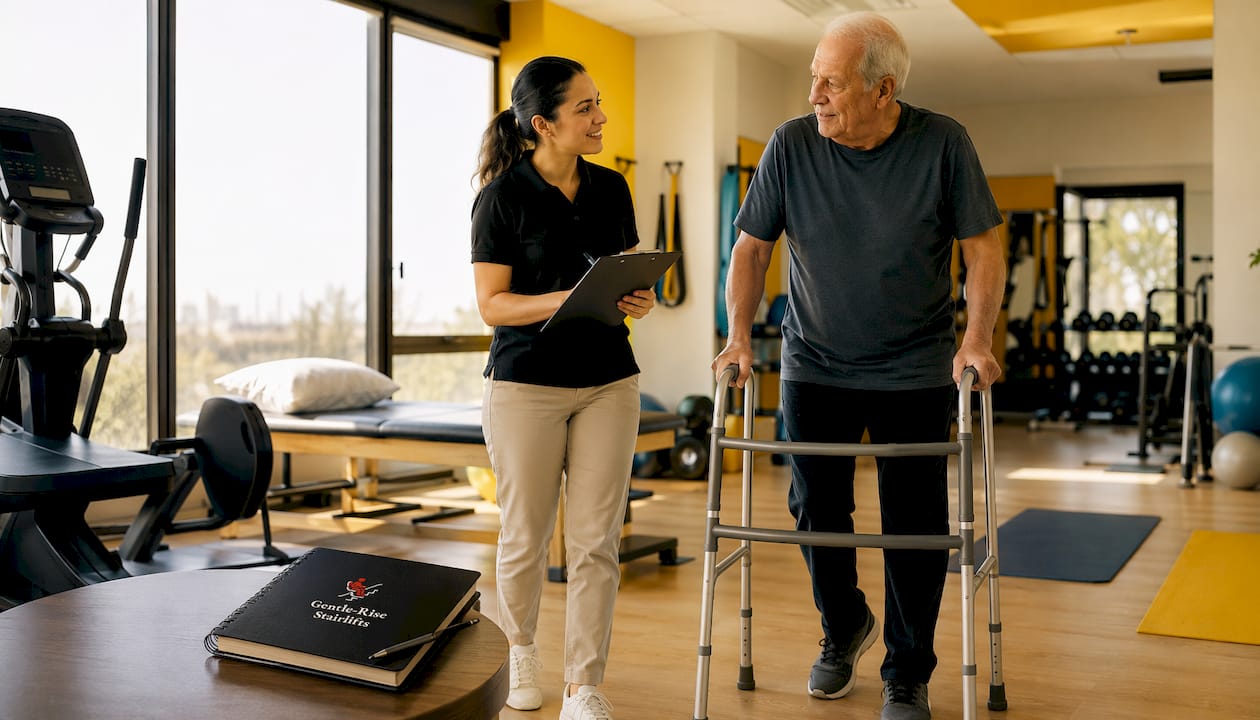
Falls are a leading cause of injury in care settings, and a thorough assessment identifies multiple contributing hazards simultaneously: medication side effects, environmental obstacles, and behavioural patterns that increase risk. Catching these factors early means intervention can happen before a fall, not after one. That shift from reactive to proactive care is one of the most clinically significant benefits of professional evaluations.
The assessment also produces a documented baseline. When a person's condition changes, clinicians can compare current performance against that baseline to judge whether care needs have shifted. Without it, changes in mobility tend to go unnoticed until they become crises.
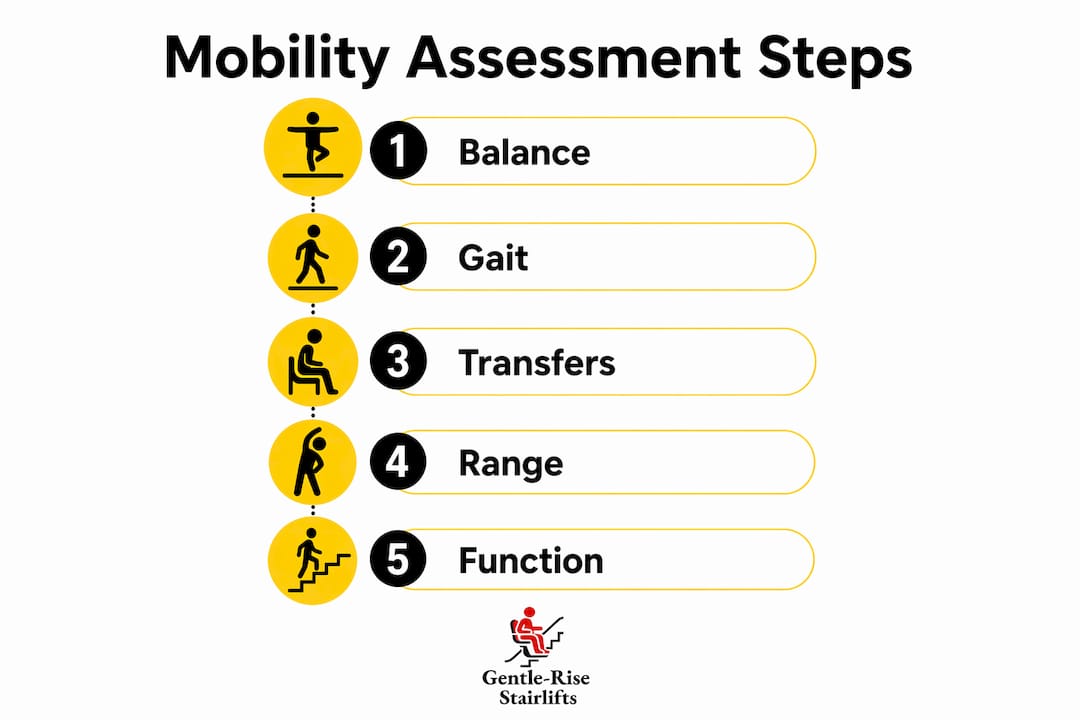
What the five key elements of a mobility assessment actually reveal
Each of the five core components tells a different part of the story, and none of them can be skipped without leaving a gap in the overall picture.
- Balance is assessed by observing postural stability during standing, turning, and reaching. Poor balance is one of the strongest predictors of fall risk, particularly in older adults.
- Gait analysis goes beyond simply watching someone walk. Clinicians look at stride length, cadence, foot clearance, and whether the person hesitates or compensates for weakness. These subtle patterns often reveal neurological or musculoskeletal issues before they become obvious.
- Transfer skills cover the mechanics of moving between positions: bed to chair, chair to standing, in and out of a vehicle. Difficulty here frequently signals the need for specific aids or adapted techniques.
- Range of motion determines how freely joints move. Restricted movement in the hips or knees, for example, affects both gait and transfer ability, and may indicate conditions requiring medical review.
- Functional ability ties everything together by asking whether the person can manage the tasks their daily life actually demands, from climbing stairs to reaching overhead cupboards.
Clinicians also classify the level of assistance required, ranging from fully independent to needing full physical support. This classification directly shapes care planning and determines which aids, if any, are appropriate. The NICE NG249 framework underpins how these elements are measured and interpreted across UK clinical settings.
Which standardised tools do UK clinicians use?
Validated instruments give assessments consistency and allow findings to be communicated clearly across multidisciplinary teams. Three tools are particularly well established in UK practice.
- BMAT (Bedside Mobility Assessment Tool): Designed for use in hospital settings, the BMAT guides clinicians through a step-by-step process to determine whether a patient can safely get out of bed, stand, and walk. It asks structured questions about pre-admission mobility, including stair use and walking distance, before moving to direct observation. The tool is especially useful for identifying the minimum level of supervision a patient needs before mobilisation.
- IMA (Immediate Mobility Assessment): Used to capture a person's mobility status quickly, often at the point of admission or following an acute event. It provides a rapid snapshot that informs immediate care decisions without requiring a lengthy assessment process.
- TUG (Timed Up and Go) test: The person stands from a chair, walks three metres, turns, walks back, and sits down again. The time taken is recorded. The TUG is widely used because it is simple, requires no specialist equipment, and correlates reliably with fall risk and functional independence.
| Tool | Primary setting | What it measures | Typical use |
|---|---|---|---|
| BMAT | Hospital bedside | Safe mobilisation readiness | Post-admission, pre-discharge |
| IMA | Acute or community | Immediate mobility status | Admission, post-incident |
| TUG | Community or clinic | Functional mobility and fall risk | Routine review, post-fall |
These standardised UK tools facilitate communication across teams and help ensure that risk classifications are consistent, regardless of which professional conducts the assessment.
Who carries out assessments, and when should they happen?
Mobility assessments are conducted by a range of qualified professionals, depending on the setting and the person's needs.
- Physiotherapists lead most formal mobility assessments, particularly those involving gait analysis, exercise prescription, and rehabilitation planning.
- Occupational therapists focus on how mobility limitations affect daily activities and home safety, often recommending adaptations and equipment.
- Nurses conduct assessments in care home and hospital settings, particularly for ongoing monitoring and post-incident reviews.
- GPs may initiate referrals and contribute to assessments where medication or underlying health conditions are relevant factors.
Timing matters as much as who conducts the assessment. According to e-Care Hub's mobility assessment policy, assessments should be conducted before care commences, after incidents such as falls or medication changes, and periodically for individuals whose condition is stable. Reassessment is not optional when circumstances shift. A change in medication, a new diagnosis, or a period of illness can all alter mobility significantly, and the care plan must reflect that.
The UK's regulatory framework reinforces this. The Care Quality Commission expects providers to hold current, accurate mobility records for everyone in their care. Failing to reassess after a trigger event is not just a clinical oversight; it is a compliance risk.
What UK clinical practice tells us about the real value of assessments
The most experienced clinicians will tell you that formal tests capture only part of the picture. Observational assessment of natural movement, particularly during transitions and everyday tasks, often reveals fall-risk indicators that standardised tests miss entirely. Watching how someone rises from a chair without being asked to perform a test, for instance, can show compensatory strategies that signal underlying weakness or pain.
This person-centred philosophy, described by South Tees NHS physiotherapy, reflects a broader principle: the goal is always to preserve as much independence as possible, not to default to aids or support when they are not genuinely needed.
Pro Tip: If you or someone you care for is preparing for a mobility assessment, report how movement feels on a typical difficult day, not on a good one. Safety planning depends on realistic information, not peak performance.
Assessments are also not one-off events. Mobility status is dynamic, and a plan built on last year's data may no longer reflect what someone actually needs today. The most effective approach treats assessment as an ongoing process, revisited whenever health, environment, or daily demands change.
How stairlifts and mobility aids fit into assessment outcomes
When a professional assessment identifies that stairs present a genuine safety risk, the next step is finding a solution that restores confidence without removing independence. That is precisely where Gentlerise Stairlifts comes in.
Gentlerise Stairlifts works with individuals whose mobility needs assessment has flagged stair navigation as a risk, providing tailored stairlift solutions that align with the specific findings of that assessment. The range covers straight, curved, and reconditioned models, with prices starting at £795 for straight stairlifts and installation often completed within hours.
Key benefits of integrating a stairlift into a professionally informed mobility plan include:
- Personalised fit: Assessment findings guide the choice of model, seat height, and controls to match the individual's specific physical capabilities.
- Immediate safety improvement: Stair-related falls are among the most serious in the home environment. A correctly specified stairlift removes that risk at its source.
- Maintained independence: People can continue living in their own homes rather than moving to adapted accommodation or residential care.
- Ongoing support: Gentlerise Stairlifts offers the Protect+ maintenance programme, providing regular servicing and peace of mind long after installation.
A free home survey from Gentlerise Stairlifts ensures that any recommendation is grounded in the actual layout and the individual's assessed needs, not a generic specification. You can also explore home mobility planning guidance to understand how assessments and equipment choices work together as part of a broader plan.
What is the purpose of a mobility assessment?
A mobility assessment evaluates a person's physical ability to move safely and independently in their daily environment. The core purpose is twofold: to identify risks before they cause harm, and to inform a support plan that is genuinely matched to the individual's capabilities and circumstances.
Unlike a general health check, a mobility assessment is task-specific. It looks at the actual movements a person needs to perform, whether that is walking to the kitchen, climbing stairs, or getting in and out of bed, and measures how safely and independently those tasks can be completed. The findings then feed directly into decisions about care, rehabilitation, equipment, and home adaptation.
Assessments also serve a legal and administrative function. In UK care settings, documented mobility assessments are required to demonstrate that providers have taken reasonable steps to manage risk and protect the people in their care.
What are the limitations and challenges of mobility assessments?
Even well-conducted assessments have genuine limitations, and understanding them helps set realistic expectations.
Performance on the day of assessment does not always reflect typical daily function. Someone experiencing a good day may perform better than usual, while anxiety about being observed can cause others to perform worse. Honest reporting of typical capabilities, including worst-day experiences, is therefore critical to the accuracy of any assessment.
Standardised tests like the TUG are reliable within their scope, but they cannot capture everything. A person may complete a three-metre walk safely in a clinic but struggle with the uneven surfaces, poor lighting, and cluttered layout of their own home. This is why naturalistic observation and home-based assessments add significant value that clinic-based tests alone cannot provide.
Assessments are also resource-intensive. In NHS and community care settings, waiting times for physiotherapy or occupational therapy can mean that a person's condition changes before a formal assessment takes place. Regular reassessment after key health events is the clinical standard, but capacity constraints sometimes make this difficult to achieve in practice.
Finally, assessments depend on the skill and experience of the clinician conducting them. Observational techniques, in particular, require trained judgement that develops over time. Standardised tools reduce this variability, but they do not eliminate it entirely.
How assessments change real outcomes: examples from practice
The impact of a professional mobility evaluation becomes clearest when you look at what changes as a result.
Consider an older adult who has had two falls at home in the past six months. A GP referral triggers a physiotherapy assessment, which identifies reduced hip flexor strength and a compensatory gait pattern that increases trip risk. The physiotherapist prescribes a targeted strengthening programme and recommends a single walking stick for outdoor use. Six months later, the person reports no further falls and has returned to walking to the local shops independently.
In a different scenario, an occupational therapist conducting a home visit for someone recently discharged from hospital identifies that the staircase presents the primary risk. The person can walk on flat ground but cannot safely manage the stairs without support. The assessment outcome leads directly to a stairlift referral, and the individual is able to remain in their own home rather than moving to ground-floor accommodation.
A third example involves a care home resident whose mobility has declined following a urinary tract infection. A nursing assessment identifies that the resident now requires two-person assistance for transfers, where previously one person sufficed. The care plan is updated immediately, preventing a handling injury to both the resident and staff.
These examples illustrate a consistent pattern: professional assessments catch specific, actionable risks that general observation misses, and the interventions they generate are proportionate and targeted. For anyone concerned about home safety and independence, a professional assessment is the logical first step before any adaptation or equipment decision is made.

Gentlerise Stairlifts offers free home surveys across the UK, giving you a clear picture of what your home needs before any commitment is made. Whether a professional assessment has already flagged stair safety as a concern or you are planning ahead, the team can match the right solution to your specific situation. Explore stairlift options or book your free survey today.
Key takeaways
Professional mobility assessments are the most reliable way to identify movement risks before they cause harm and to build support plans that genuinely match an individual's capabilities.
| Point | Details |
|---|---|
| Five core elements | Balance, gait, transfer skills, range of motion, and functional ability form the basis of every assessment. |
| Validated tools in UK practice | BMAT, IMA, and TUG tests standardise findings and support clear communication across multidisciplinary teams. |
| Timing of assessments | Assessments should occur before care starts, after falls or medication changes, and at regular intervals for stable individuals. |
| Limitations to recognise | Clinic performance may not reflect home conditions; naturalistic observation and home visits add accuracy that formal tests alone cannot provide. |
| Assessment outcomes drive equipment choices | When stair safety is identified as a risk, findings directly inform decisions about stairlifts and other home adaptations. |
FAQ
What are the five elements of a mobility assessment?
The five core elements are balance, gait, transfer skills, range of motion, and overall functional ability. Together, they determine the level of assistance a person requires, from fully independent to needing full physical support.
When should a mobility assessment be conducted?
Assessments should take place before care commences, after any fall or significant medication change, following hospital discharge, and at regular intervals for individuals with stable conditions. Reassessment is also needed whenever health or circumstances change noticeably.
What activities are involved in a mobility assessment?
A clinician observes the person performing relevant tasks such as walking, standing from a chair, turning, and climbing stairs where applicable. Standardised tests like the TUG may be used alongside naturalistic observation of everyday movements.
Who can carry out a mobility assessment?
Physiotherapists, occupational therapists, and nurses all conduct mobility assessments, depending on the setting and the person's needs. GPs may initiate referrals and contribute clinical context, particularly where medication or underlying conditions are relevant.