
TL;DR:
- Adaptive equipment is recognized as essential health infrastructure that promotes independence and reduces hospital stays. Proper assessment and early intervention, supported by funding from local authorities or grants, ensure effective long-term safety and mobility solutions. Delaying equipment use increases risks, costs, and diminishes quality of life, highlighting the importance of proactive planning.
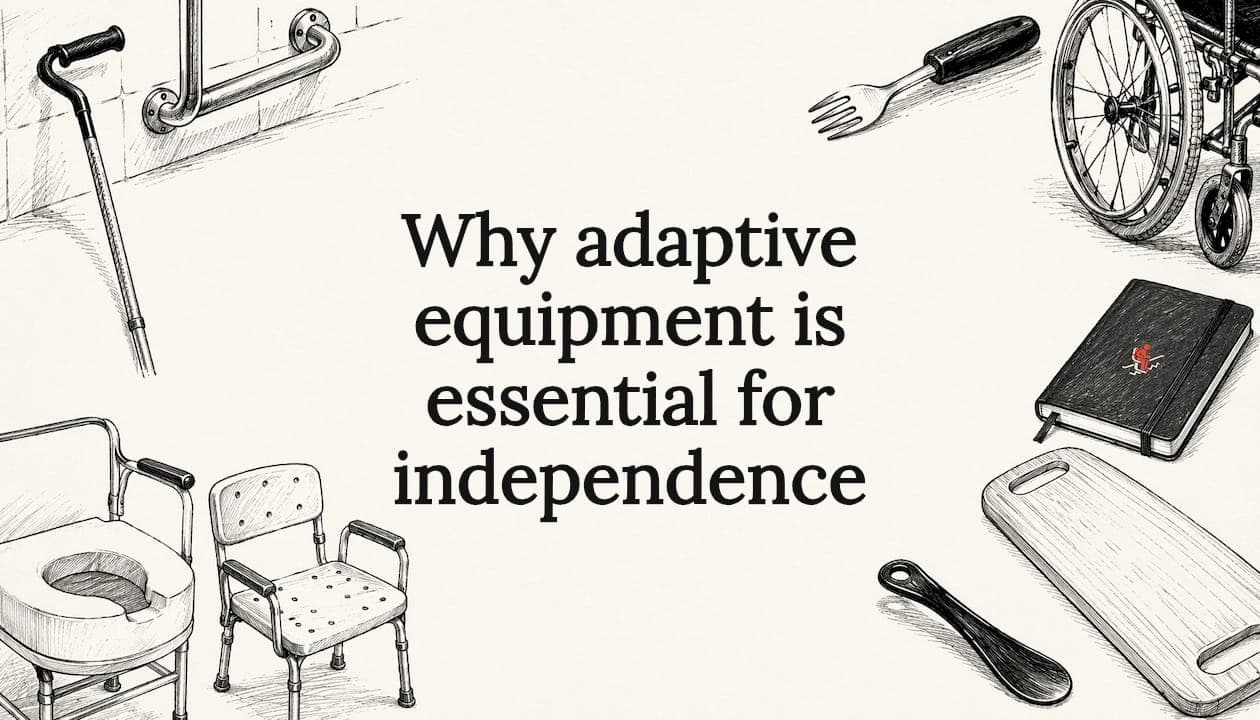
Adaptive equipment is defined as any specialised device or tool that helps a person with a physical limitation carry out daily tasks safely and independently. Understanding why adaptive equipment is essential goes beyond individual comfort. The NHS, the Association of Directors of Adult Social Services (ADASS), and occupational therapy practice all recognise these devices as clinical interventions, not optional accessories. From powered wheelchairs to grab rails and stairlifts, adaptive tools for disabilities reduce caregiver strain, prevent hospital admissions, and allow people to remain in their own homes far longer than they otherwise could.
Why adaptive equipment is essential for mobility and independence
Adaptive equipment directly removes the physical barriers that stop people from moving freely, managing personal care, and participating in daily life. The difference between having the right device and not having it is often the difference between living at home and moving into residential care.
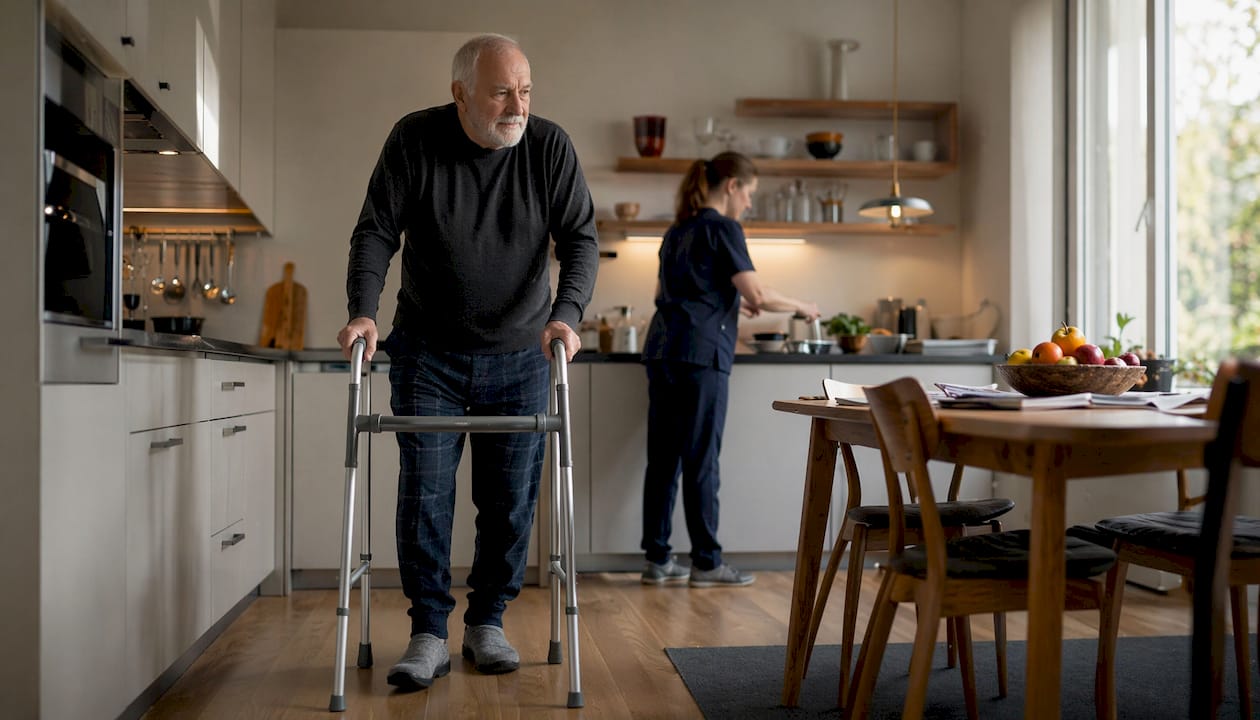
Powered mobility aids like wheelchairs and scooters reduce physical exhaustion, allowing people to conserve energy for activities that matter most to them. That energy saving is not trivial. For someone with a progressive condition, the difference between walking to the kitchen unaided and using a mobility scooter to reach the shops represents an entirely different quality of life.
The benefits of adaptive devices extend well beyond physical function:
- Grab rails and handrails reduce fall risk in bathrooms and on stairs, where most domestic accidents occur.
- Powered wheelchairs and scooters enable participation in social activities, employment, and community life.
- Personal grooming aids restore dignity and reduce dependence on carers for intimate tasks.
- Stairlifts allow people to access all floors of their home safely, removing the need to sleep downstairs or move to a ground-floor property.
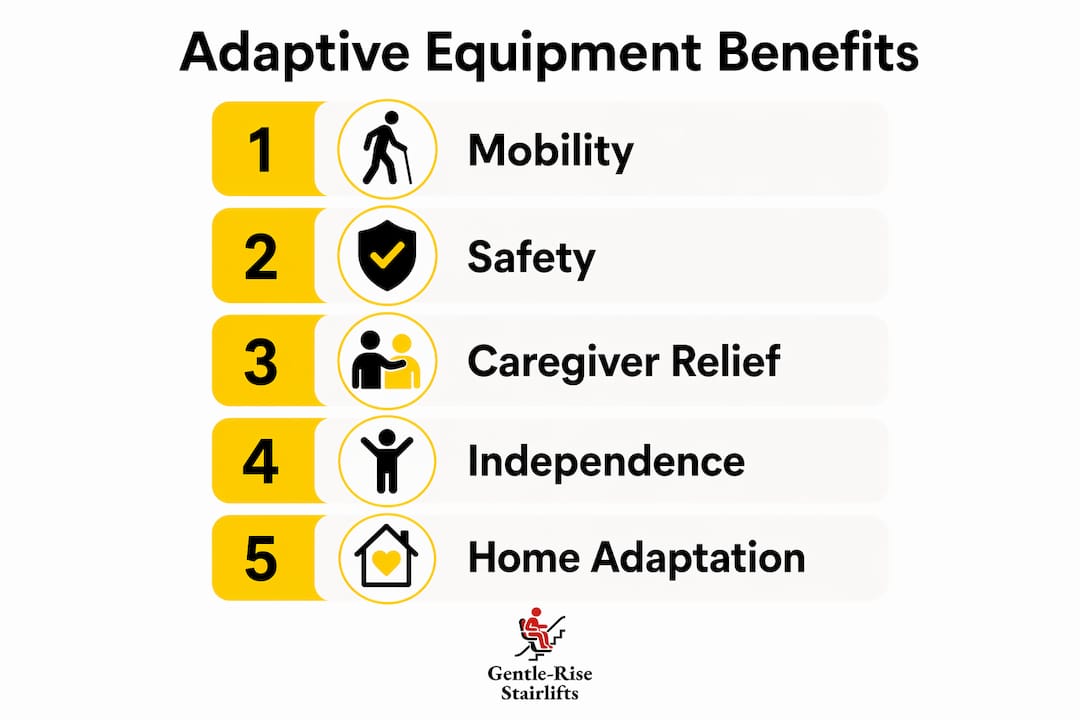
Adaptive devices improve safety and simplify daily tasks, which directly reduces caregiver strain and builds user confidence. That confidence matters clinically. People who feel safe in their homes are less likely to restrict their movement, and restricted movement accelerates physical decline.
Pro Tip: Ask your occupational therapist to assess your home room by room, not just the area of immediate concern. A grab rail in the bathroom is useful, but a full environmental assessment often uncovers risks you have not yet noticed.
Is adaptive equipment a clinical tool or just a consumer purchase?
The most important shift in thinking about adaptive equipment is recognising it as health infrastructure, not a retail transaction. ADASS is explicit on this point.
"Community equipment must be seen as clinical infrastructure essential to reducing hospital stays and care escalation. Properly provided adaptive equipment prevents demand and enables independence."
Source: ADASS, How community equipment services can support independence
That framing changes everything about how equipment requests should be made and how local authorities should fund them. When a stairlift or a level-access shower prevents a fall, it also prevents an ambulance call, an A&E admission, and potentially a weeks-long hospital stay. The unit cost of the device is negligible compared to the system cost it avoids.
Aligning equipment services with clinical decision-making improves consistency and timely provision for people who need support. Local authorities that treat equipment as a clinical pathway rather than a procurement exercise deliver better outcomes and spend less overall. Shifting focus to system outcomes rather than unit costs is the single most effective change a commissioning team can make.
The role of adaptive tools in preventing residential care placements is substantial. Every person who remains safely at home with appropriate equipment represents a significant saving to the social care budget, as well as a better outcome for the individual.
How does funding work for adaptive equipment in the UK?
Funding for adaptive equipment in the UK follows a tiered structure that most people are unaware of until they need it urgently.
| Funding route | Typical scope | Key condition |
|---|---|---|
| Local authority direct provision | Adaptations costing less than £1,000 | Requires an Occupational Therapist assessment |
| Disabled Facilities Grant (DFG) | Larger adaptations up to £30,000 | Subject to means testing |
| NHS community equipment services | Clinical aids and daily living equipment | Prescribed by a healthcare professional |
| Self-funding | Any adaptation | No eligibility criteria required |
Local authorities fund adaptations costing less than £1,000 following an Occupational Therapist assessment. For higher costs, the Disabled Facilities Grant is the primary route, but it is subject to means testing, which means the amount awarded depends on household income and savings.
The DFG has a statutory limit of £30,000. That figure sounds substantial, but essential adaptations have risen sharply in cost in recent years. A level-access shower, for example, can now cost considerably more than it did five years ago, and a full package of adaptations for a person with complex needs can easily exceed the grant ceiling. Planning for a funding gap is not pessimism. It is practical preparation.
For people exploring affordable home adaptation options, understanding the full funding picture before beginning any assessment is the most time-efficient approach.
Pro Tip: When requesting a local authority assessment, frame your needs around system risk, not personal preference. Describing how your current situation risks a fall, a hospital admission, or increased care hours aligns your request with the metrics local authority commissioners actually measure.
The means test for the DFG considers the applicant's income, capital, and savings. Disabled children and some other groups are exempt from means testing entirely. A housing adaptation specialist or welfare rights adviser can help you calculate your likely award before you apply, saving significant time.
How to choose and integrate adaptive equipment for long-term independence
Selecting the right adaptive equipment is not a one-time decision. Needs change, homes change, and the equipment that works well today may need reviewing in two or three years.
- Start with an occupational therapist assessment. An OT assessment is the foundation of any good equipment plan. It identifies current risks, anticipates future needs, and recommends equipment matched to your specific home layout and physical condition.
- Think preventatively, not reactively. Inaccessible or unsafe homes significantly impact health and wellbeing. Early conversations about housing adaptations produce better outcomes than waiting for a crisis.
- Match equipment to the home environment. A powered wheelchair that works well outdoors may not suit a narrow hallway. A stairlift designed for a straight staircase cannot be fitted to a curved one without a bespoke solution.
- Plan for training and adjustment. New equipment requires practice. Most people underestimate the time needed to use a powered device confidently and safely.
- Review regularly. Occupational therapists can deliver preventative interventions that maintain independence over time, not just respond to immediate crises. Annual reviews keep equipment matched to current needs.
For caregivers, the equipment selection process is also an opportunity to reduce physical strain. Hoists, transfer boards, and adjustable beds protect the carer's back as much as they support the person being cared for. A good home accessibility guide can help caregivers understand which adaptations address both sides of the care relationship.
When planning a broader home adaptation, considering accessible bathroom design alongside mobility equipment produces a more coherent result than addressing each element separately. A wet room, grab rails, and a stairlift planned together create an accessible home. Planned in isolation, each one solves only part of the problem.
Key takeaways
Adaptive equipment is clinical infrastructure that prevents hospital admissions, reduces care escalation, and enables people with physical challenges to live independently at home.
| Point | Details |
|---|---|
| Equipment is clinical, not optional | ADASS classifies community equipment as health infrastructure that reduces hospital stays and care demand. |
| Funding follows a tiered structure | Local authorities cover adaptations under £1,000; the DFG covers larger costs up to £30,000, subject to means testing. |
| OT assessments are the starting point | An occupational therapist assessment identifies risks, recommends equipment, and unlocks statutory funding routes. |
| Early intervention produces better outcomes | Preventative housing adaptations reduce health decline and are more cost-effective than crisis responses. |
| Equipment selection must match the home | Devices must suit the specific layout, the user's condition, and anticipated future needs, not just current limitations. |
What I have learned from watching people wait too long
The most consistent pattern I observe in this field is delay. People wait until a fall, a hospital discharge, or a crisis before they ask for an assessment. By that point, the options are narrower, the urgency is higher, and the emotional cost is greater for everyone involved.
The misconception that adaptive equipment is a last resort is genuinely harmful. A grab rail fitted before a fall prevents the fall. A stairlift installed before someone stops using the upper floor of their home preserves their quality of life. Waiting until the situation is critical means the equipment arrives after the damage is done.
Funding advocacy is also underused. Many families accept the first answer they receive from a local authority without understanding that framing a request around system risk, rather than personal need, often produces a different outcome. The system responds to clinical language and measurable risk. Learning to use that language is not gaming the system. It is understanding how the system works.
My strongest recommendation is this: contact an occupational therapist before you think you need one. The age-friendly home modifications that make the biggest difference are almost always the ones planned in advance, not the ones fitted in a hurry after something goes wrong.
— lee
Gentlerise Stairlifts: supporting safe mobility at home
For many people, the staircase is the single biggest barrier to remaining in their own home. Gentlerise Stairlifts specialises in making that barrier disappear.
Gentlerise Stairlifts provides straight, curved, and reconditioned stairlift models across the UK, with prices starting at £795 and installation often completed within hours. The Protect+ maintenance programme keeps equipment running reliably long after installation. Whether you need a permanent solution or a short-term rental while recovering from surgery, Gentlerise Stairlifts offers a free home survey to match the right solution to your staircase and your needs. For a closer look at the options available, the stairlift solutions guide covers the full range in plain language.
FAQ
What is adaptive equipment in occupational therapy?
Adaptive equipment in occupational therapy refers to specialised devices that help people with physical limitations carry out daily tasks safely and independently. Examples include grab rails, powered wheelchairs, hoists, and stairlifts, all prescribed or recommended following a formal OT assessment.
Who pays for adaptive equipment in the UK?
Local authorities fund adaptations costing less than £1,000 after an OT assessment. Larger adaptations are funded through the Disabled Facilities Grant, which has a statutory ceiling of £30,000 and is subject to means testing.
How do I get an occupational therapist assessment?
You can request an OT assessment through your local authority's adult social care team, your GP, or a hospital discharge team. Self-referral to a private occupational therapist is also an option if waiting times are a concern.
Does adaptive equipment reduce the need for residential care?
Yes. ADASS identifies community equipment as clinical infrastructure that prevents care escalation and residential care placements. Equipment provided at the right time keeps people safely at home and reduces demand on the wider care system.
What is the Disabled Facilities Grant means test?
The DFG means test assesses the applicant's income, capital, and savings to determine the grant amount awarded. Disabled children and certain other groups are exempt from means testing entirely.