
TL;DR:
- Powered swivel seats automatically rotate to help people with mobility issues transfer safely and comfortably. They reduce fall risk, restore independence, and ease physical strain for carers, especially during vehicle entry and stairlift use. Proper professional fitting and safety certification are essential for effective and safe installation.
A powered swivel seat is an adaptive seating solution that automatically rotates, enabling people with mobility difficulties to enter, exit, or transfer more safely and comfortably. The term covers two main applications: vehicle seats that swing outward to face the door, and stairlift seats that turn towards the landing at the top or bottom of a staircase. Both types address the same core problem. Twisting, bending, and awkward weight shifts are the most common causes of falls and injury during transfers. A powered swivel seat removes those movements entirely. Gentlerise Stairlifts fits powered swivel seats as part of its stairlift range across the UK.
What is a powered swivel seat and how does it work?
A powered swivel seat uses a motorised base to rotate the seat automatically, controlled by a joystick, rocker switch, or remote handset. The motor drives the rotation through a geared mechanism, requiring no physical effort from the person seated. That is the key difference from a manual swivel seat, which relies on the user or a carer pushing the seat around by hand.
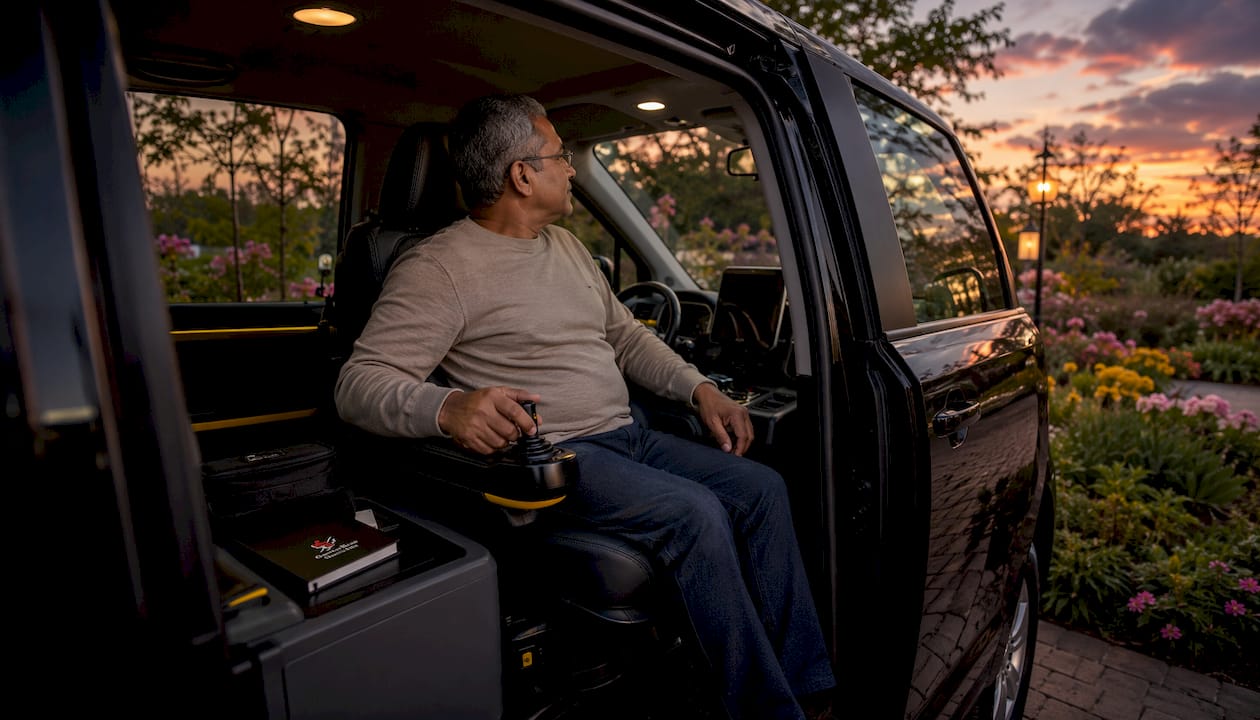
In a vehicle, the seat rotates outward 90–97 degrees to face the car door, allowing the person to slide in or out without twisting their hips or spine. Some vehicle models extend to 97–100 degrees to clear the door frame fully. That extra rotation matters for people with hip replacements or spinal conditions, where even a small twist causes pain or risk.
In a stairlift, the powered swivel works differently. The seat activates automatically upon reaching the top or bottom landing, rotating towards the floor so the person can stand up facing away from the stairs. This removes the need to stand and then turn, which is the most dangerous moment of any stairlift journey. The rotation is triggered by the stairlift reaching its end position, so no button press is needed.
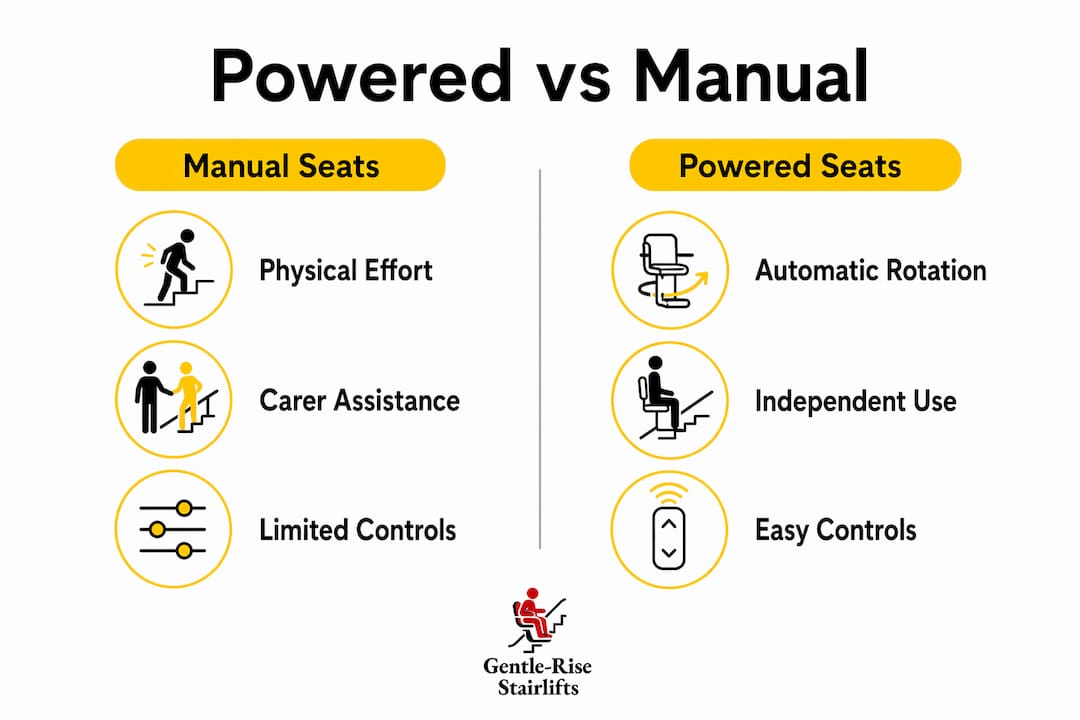
- Manual swivel seats require the user or carer to physically push the seat to face the correct direction.
- Powered swivel seats rotate automatically or at the press of a button, with no physical effort required.
- Vehicle powered swivels typically rotate 90–97 degrees outward to face the door opening.
- Stairlift powered swivels rotate towards the landing and lock in place before the person stands.
- Energy source: most powered swivel seats run from the vehicle's 12V electrics or the stairlift's onboard battery system.
Pro Tip: If the person using the seat has reduced hand strength, ask specifically about foot pedal or automatic activation options. Not all powered swivel seats require hand controls.
What are the benefits of powered swivel seats for people with mobility issues?
The primary benefit of a powered swivel seat is a significant reduction in fall risk during transfers. Twisting the body while shifting weight is the point at which most transfer injuries occur. A powered swivel eliminates that movement entirely.
Beyond safety, powered swivel seats restore dignity and independence by removing the need for a carer to physically assist with seating and transfers. That shift matters enormously to people who value managing daily tasks without help. Carers also benefit directly. Repeated manual lifting and repositioning causes musculoskeletal strain over time, and a powered seat removes that physical demand from the equation.
People recovering from surgery, living with arthritis, or managing balance conditions all face different challenges during transfers. A powered swivel seat addresses each of these because the rotation removes the need for hip flexion, spinal rotation, and lateral weight shifts simultaneously. The seat does the work, not the body.
| Feature | Manual swivel seat | Powered swivel seat |
|---|---|---|
| Effort required | User or carer must push seat | Motor rotates seat automatically |
| Suitable for severe mobility limits | Limited | Yes |
| Fall risk reduction | Moderate | High |
| Carer assistance needed | Often yes | Rarely |
| Post-surgery suitability | Limited | Well suited |
Pro Tip: For people with arthritis in the hands or wrists, look for powered swivel seats with large-button or touch-pad controls rather than small joysticks. The control interface matters as much as the rotation mechanism.
What features and types of powered swivel seats are available?
Powered swivel seats divide into two main categories: vehicle adaptations and stairlift seat attachments. Each category has its own feature set, though both share the core motorised rotation function.
Vehicle powered swivel seats
Vehicle swivel seats fit to the existing seat base and connect to the car's electrical system. Modern swivel seat systems are compatible with powered seat controls, meaning the same handset can adjust height, tilt, and rotation. Some models, such as those combining powered lifting with swivel rotation, support transfers from wheelchairs by raising the seat to a standing height before rotating outward. This combined lift-and-swivel function is particularly useful for people who cannot bear weight through their legs during a transfer.
Compatibility is not universal. Vehicle swivel bases must fit the cabin space and door design of the specific car model. A seat that fits a large SUV will not necessarily fit a compact hatchback. Professional fitting is the only reliable way to confirm compatibility before purchase.
Stairlift powered swivel seats
Stairlift swivel seats are either built into the stairlift model or added as an option. Key features to look for include:
- Automatic activation: the seat rotates without any button press when the stairlift reaches the landing.
- Powered up/down movement: the seat height adjusts to make standing easier, separate from the swivel function.
- Upholstery options: fabric, vinyl, and padded variants are available to suit comfort and hygiene needs.
- Retractable seat belt: a standard safety feature on certified stairlift models.
- Safety edges: sensors around moving parts that stop the stairlift if an obstruction is detected.
You can read more about how these mechanisms compare in this stairlift swivel safety guide from Gentlerise Stairlifts. For a broader look at how powered swivel seats fit into home accessibility, the adaptive home mobility guide covers complementary solutions worth considering alongside a stairlift.
For bathroom accessibility, a folding shower seat from Simco Direct is one example of how accessible seating extends beyond stairlifts and vehicles into everyday home use.
How to choose and install a powered swivel seat safely
Choosing the right powered swivel seat starts with a professional site survey. No online specification sheet replaces a trained assessor measuring the actual space, whether that is a car interior or a staircase.
-
Assess the user's mobility level. The degree of rotation needed, the type of controls required, and whether a combined lift-and-swivel is necessary all depend on the individual's specific limitations. A person with post-surgical hip restrictions has different needs from someone managing a progressive balance condition.
-
Match the seat to the environment. Stairlift swivels must align with the rail system and staircase geometry. Vehicle swivels must fit the door frame and cabin dimensions. Improper fitment creates safety risks and usability problems that no amount of adjustment will fix after installation.
-
Check safety certifications. For stairlifts, look for compliance with BS EN 81:40 and the Machinery Directive 2006/42/EC. The Ergo Ultimate stairlift carries both certifications and includes over-speed governors, retractable seat belts, and safety edges as standard. These features are the minimum you should expect from any certified stairlift with a powered swivel seat.
-
Plan for maintenance. Powered mechanisms have more components than manual ones. Ask the installer about service intervals, what the maintenance plan covers, and how quickly a fault can be addressed. Gentlerise Stairlifts offers the Protect+ maintenance programme specifically for this purpose.
-
Involve the user in the decision. The person who will use the seat every day should test the controls, confirm the seat height is comfortable, and feel confident operating it independently before installation is signed off.
Pro Tip: Request a home demonstration before committing to a purchase. Sitting in the seat and operating the controls in your own home reveals fit and comfort issues that a showroom visit never will.
Gentlerise Stairlifts provides free home surveys across the UK, which is the right starting point for anyone considering a swivel seat stairlift for their home.
Key takeaways
A powered swivel seat is the most effective seating adaptation for reducing fall risk and restoring independence during transfers for people with mobility limitations.
| Point | Details |
|---|---|
| Core function | A motorised base rotates the seat automatically, removing the need for twisting or bending during transfers. |
| Vehicle vs stairlift | Vehicle seats rotate 90–97 degrees outward; stairlift seats turn towards the landing automatically at journey end. |
| Safety and dignity | Powered swivel seats reduce fall risk and remove the need for carer physical assistance during transfers. |
| Professional fitting is essential | Compatibility with vehicle interiors and stairlift rail geometry must be confirmed by a trained assessor before purchase. |
| Certification matters | Look for BS EN 81:40 compliance and features such as over-speed governors and retractable seat belts on any stairlift model. |
Why powered swivel seats matter more than most people realise
The conversation around powered swivel seats tends to focus on the mechanics. Rotation angles, motor specs, control types. Those details matter, but they miss the bigger point.
What I have seen, working with people across the UK who are navigating mobility changes, is that the moment someone can get in and out of a car or stand up from a stairlift without asking for help is genuinely significant. Not just practically. Emotionally. The loss of that independence is one of the things people grieve most when mobility declines. A powered swivel seat gives some of it back.
The misconception I hear most often is that these seats are only for people with severe disabilities. That is wrong. They are equally valuable for someone three weeks post-hip replacement who simply cannot twist safely yet, or for an older person whose balance has become unreliable. The threshold for benefit is much lower than most people assume.
My honest recommendation: do not wait until a fall or a near-miss before looking into this. The age-friendly home modifications guide from Gentlerise Stairlifts makes the case well. Proactive adaptation is always safer and less costly than reactive recovery.
— lee
Gentlerise Stairlifts' powered swivel seat options
Gentlerise Stairlifts fits powered swivel seats as part of its full stairlift range, covering straight, curved, and reconditioned models across the UK. Every installation begins with a free home survey, so the seat, rail, and controls are matched to the specific staircase and the individual using it.
Powered swivel seats are available as standard or optional features depending on the model, and Gentlerise Stairlifts' Protect+ maintenance programme covers ongoing servicing after installation. Prices for straight stairlifts start at £795. For anyone considering a powered swivel seat stairlift, the Gentlerise Stairlifts website is the right place to book a free consultation and find out which solution fits your home and your needs.
FAQ
What is a powered swivel seat?
A powered swivel seat is a motorised adaptive seat that rotates automatically to help people with mobility difficulties enter, exit, or transfer safely. It is used in both vehicles and stairlifts to eliminate the need for twisting or bending during transfers.
How does a powered swivel seat differ from a manual one?
A manual swivel seat requires the user or carer to push the seat around by hand, while a powered version rotates automatically via a motor controlled by a button, joystick, or automatic trigger. Powered models are recommended for people with significant mobility limitations or reduced hand strength.
Is a powered swivel seat safe for post-surgery recovery?
Yes. Powered swivel seats are well suited to post-surgery recovery because they remove the hip flexion and spinal rotation that surgical guidelines typically restrict. Professional fitting and compliance with standards such as BS EN 81:40 are the key safety requirements to confirm before use.
Do I need a professional to install a powered swivel seat?
Professional installation is essential. Improper fitment risks both safety and usability, as vehicle and stairlift swivel seats must be matched precisely to the specific environment. A trained assessor should carry out a site survey before any purchase is confirmed.
Can a powered swivel seat reduce the need for carer assistance?
Yes. Powered swivel seats are specifically designed to restore independent transfers, reducing or eliminating the need for a carer to physically assist with seating. This benefits both the user's dignity and the carer's physical wellbeing over time.