
TL;DR:
- Structured aftercare improves post-surgery recovery by promoting early movement and preventing complications. Home assessments identify real-life barriers, while therapist-guided exercises speed up walking independence and reduce hospital stays. Addressing psychological barriers like fear of movement enhances overall mobility and long-term independence.
Aftercare is the professional support and rehabilitation process that helps individuals regain mobility and independence following surgery or injury. Without it, even a technically successful operation can leave you struggling with stairs, stiffness, or fear of movement for months longer than necessary. The role of aftercare in mobility is not supplementary. It is the mechanism through which surgery translates into real-life function. Clinical evidence, NHS physiotherapy standards, and Occupational Therapy frameworks all confirm that structured aftercare, begun early and sustained consistently, is the single greatest determinant of how well and how quickly you recover.
What are the clinical benefits of structured aftercare for mobility?
Early mobilisation is the foundation of effective post-operative recovery. Bed rest beyond 3 days increases pneumonia risk by 2.7 times and extends hospital stays by up to 34%. That figure reflects a simple biological reality: the body deteriorates faster at rest than most people expect.
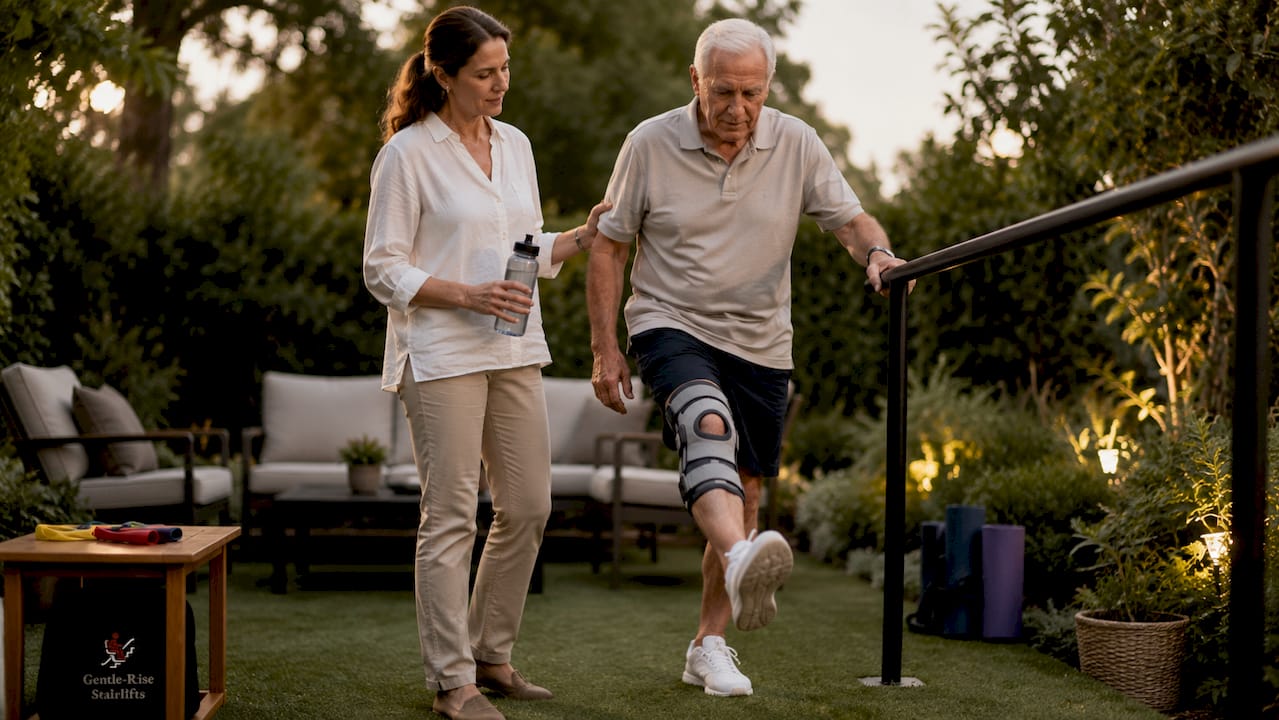
Physiotherapy begun within the first 24–72 hours after surgery directly counters this. Professional physiotherapy in the first week can reduce total recovery time by 35%. That is not a marginal gain. For someone recovering from a hip replacement or knee surgery, it can mean the difference between six weeks and nine weeks of restricted movement.
The risks of prolonged immobility go beyond breathing complications. Inactivity causes muscle wasting, increases fall risk, and allows blood clots to form in the deep veins of the legs. Early aftercare services for mobility address all three simultaneously through graded movement, strength exercises, and monitored progress.
The type of exercise matters as much as the timing. Structured, therapist-guided exercises help patients regain walking independence up to a week faster than unsupervised routines. Active participation drives recovery. Passive treatments such as massage alone do not rebuild the neuromuscular pathways that walking requires.
Key clinical benefits of structured aftercare include:
- Reduced pneumonia and respiratory complications through early movement
- Faster return to independent walking through therapist-guided exercise programmes
- Prevention of deep vein thrombosis through graduated mobilisation
- Reduced muscle wasting and strength loss during the recovery window
- Shorter overall hospital stays and lower readmission rates
How does aftercare address the psychological challenges of mobility recovery?
Physical recovery and psychological recovery are inseparable. Fear of movement, clinically termed kinesiophobia, frequently causes people to guard an injured limb long after the tissue has healed. The result is a persistent limp, compensatory stiffness in surrounding joints, and a cycle of avoidance that delays full recovery.
Recovery is rarely linear. A good day followed by a painful one does not mean regression. It means the body is adapting. Programmes adjusted session by session improve adherence and outcomes precisely because they account for this variability. A fixed exercise sheet handed out at discharge cannot do that.
Therapist contact provides more than physical correction. Regular sessions give you a benchmark, a witness to your progress, and someone to recalibrate your expectations when anxiety distorts your perception of how you are doing. Psychological support within aftercare in rehabilitation prevents premature abandonment of exercise routines, which is one of the most common reasons recoveries stall.
Pro Tip: If you find yourself avoiding a movement because it feels unsafe rather than because it causes genuine pain, raise this with your physiotherapist at the next session. Kinesiophobia is treatable, but only if it is named.
The impact of aftercare on mobility extends well beyond the physical. Addressing fear and frustration as clinical concerns, not personal failings, is what separates a good aftercare programme from a generic one.
Why are home assessments critical to effective aftercare?
The hospital environment tells a physiotherapist very little about your actual life. Home visits reveal barriers like furniture height, narrow doorways, and stair configurations that no clinic assessment can detect. A patient who walks confidently along a hospital corridor may be entirely unable to manage the three steps into their own front door.
Occupational Therapy assessments address this gap directly. OT assessments last 60–90 minutes and are available free through the NHS or social services. They examine practical daily tasks including stair negotiation, bed transfers, and kitchen mobility, and they generate a formal report that carries clinical weight.
That report is not just documentation. An OT report is the strongest document when applying for a Disabled Facilities Grant or council funding for home adaptations. Without it, applications frequently fail or are significantly delayed. Many people are unaware that this route exists, or that an OT assessment is the key that unlocks it.
Occupational Therapists are independent specialists. They are not affiliated with equipment sellers, which means their recommendations reflect your actual needs rather than a commercial interest. That independence makes their assessments the most trustworthy starting point for planning home modifications.
The table below summarises the most common home barriers assessed during an OT visit and the typical adaptations recommended:
| Home barrier | Common adaptation |
|---|---|
| Stairs to upper floor | Stairlift installation or ground floor bedroom |
| High bed or low chair | Bed raisers, chair raisers, or profiling bed |
| Narrow doorways | Doorway widening or offset hinges |
| Wet room access | Level access shower or grab rail installation |
| Front door steps | External ramp or handrail fitting |
Learning how to prepare your home before discharge significantly reduces the risk of a setback in the first critical weeks of recovery.
What practical steps support effective mobility aftercare at home?
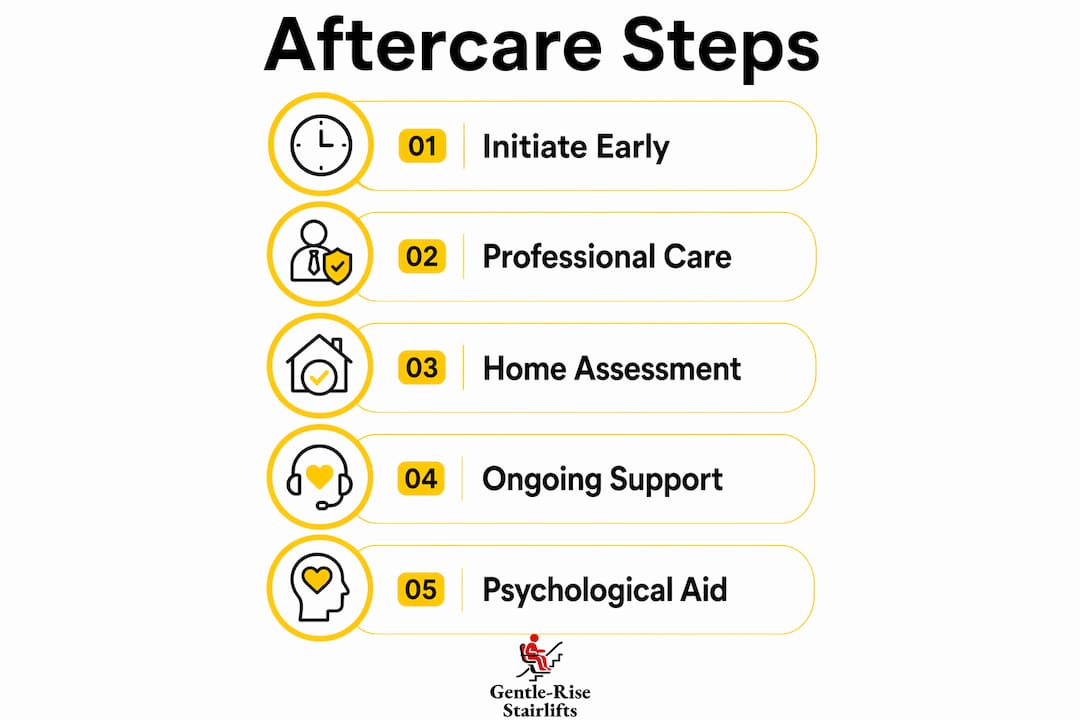
Active engagement with aftercare services for mobility is the single most controllable factor in your recovery. The following steps give you the clearest path to regaining independence:
- Attend every physiotherapy session. Consistency matters more than intensity. Missing sessions breaks the progressive loading that builds strength and confidence.
- Follow the exercise programme between appointments. Home exercises are not optional extras. They are the majority of the work. Clinic sessions guide and correct; home sessions build the function.
- Communicate changes to your therapist. If an exercise causes sharp pain, swelling, or unusual fatigue, say so at the next session. Adjustments are normal and expected.
- Modify your home before you need to. Waiting until a fall or a near miss to address stair access or bathroom safety is a common and avoidable mistake. Mobility solutions for surgery recovery are most effective when installed before discharge, not after an incident.
- Use NHS and council support services. Your GP can refer you to community physiotherapy. Your local council can arrange an OT assessment. Both are free and both are underused.
Pro Tip: Ask your physiotherapist to write down the three most important exercises for your current stage of recovery. Having a short, specific list is far more effective than a generic booklet of twenty movements.
Surgery corrects structure; rehabilitation restores function. That distinction matters. The operation is the beginning, not the end. Mobility recovery strategies that combine professional guidance, home adaptation, and consistent personal effort produce the fastest and most durable results.
Key takeaways
Structured aftercare, begun within 72 hours of surgery and sustained through home-based physiotherapy and OT assessment, is the most effective pathway to regaining safe, independent mobility.
| Point | Details |
|---|---|
| Start aftercare early | Mobilisation within 24–72 hours reduces complications and shortens hospital stays by up to 34%. |
| Use therapist-guided exercise | Structured programmes restore walking independence up to a week faster than unsupervised routines. |
| Address psychological barriers | Kinesiophobia is a clinical condition; name it with your physiotherapist and treat it directly. |
| Request an OT home assessment | A free NHS OT visit identifies real-life barriers and produces the report needed for grant funding. |
| Modify the home proactively | Adapting stairs, bathrooms, and furniture before a setback occurs prevents the most common recovery delays. |
What I have learned about aftercare that most guides miss
The standard advice around aftercare tends to focus on the physical: do your exercises, attend your appointments, rest when needed. That advice is correct, but it is incomplete. What I have observed, time and again, is that the home environment is where recoveries either consolidate or collapse.
A person can perform perfectly in a physiotherapy clinic and then return to a house where the bathroom is upstairs, the only toilet requires climbing fourteen steps, and the kitchen worktop is the wrong height for someone using a walking frame. The mismatch between clinical progress and domestic reality is the most underestimated obstacle in mobility recovery. Professionals see it constantly. Patients rarely anticipate it.
Generic exercise sheets are another problem. They are better than nothing, but they are not aftercare. Real aftercare is a conversation. It adjusts. It responds to how you slept, how your joint feels after yesterday's walk, and whether the swelling has changed. A plan that does not adapt is not a plan. It is a starting point.
The psychological dimension deserves more attention than it typically receives. Fear of movement is not weakness. It is a protective response that has outlasted its usefulness. Treating it as a clinical issue, with the same seriousness as a wound or a range-of-motion deficit, changes outcomes. The people who recover fastest are not the most stoic. They are the most communicative.
My honest recommendation: engage with every specialist available to you, including your physiotherapist, your GP, and an Occupational Therapist. Do not wait to be referred. Ask. The system responds to people who ask.
— lee
How Gentlerise Stairlifts supports your recovery at home
Recovering at home is where aftercare either succeeds or stalls, and the physical setup of your home makes a significant difference.

Gentlerise Stairlifts works with people recovering from surgery and injury across the UK, providing straight, curved, and reconditioned stairlift options that restore safe stair access from the first day back home. With stairlift solutions starting from £795 and installation often completed within hours, the barrier to getting the right equipment in place is lower than most people expect. Gentlerise Stairlifts also offers short-term rental options for those who need temporary support during recovery, alongside the Protect+ maintenance programme for ongoing peace of mind. A free home survey is available to assess your staircase and recommend the right fit for your needs.
FAQ
What is aftercare in the context of mobility recovery?
Aftercare is the structured programme of physiotherapy, Occupational Therapy, and home adaptation that follows surgery or injury to restore safe, independent movement. It begins within the first 24–72 hours post-surgery and continues until functional mobility is regained.
How does aftercare aid mobility after surgery?
Physiotherapy begun in the first post-operative week can reduce total recovery time by 35% and helps prevent complications including muscle wasting, blood clots, and breathing difficulties. Active, therapist-guided exercise is consistently more effective than passive rest.
What does an Occupational Therapist do in mobility aftercare?
An OT conducts a 60–90 minute home assessment, free through the NHS or social services, to identify practical barriers to daily tasks such as stair use and bed transfers. The resulting report is the key document for applying for Disabled Facilities Grants and council-funded home adaptations.
Can fear of movement slow down mobility recovery?
Kinesiophobia, the clinical term for fear of movement, causes people to avoid using a limb long after healing, leading to persistent stiffness and compensatory movement patterns. Addressing it directly with a physiotherapist, as a clinical concern rather than a personal failing, is a recognised part of effective aftercare in rehabilitation.
Is home-based aftercare as effective as clinic-based physiotherapy?
Home-based therapy is often more effective because it tailors exercises to your actual living environment, revealing barriers that clinic assessments cannot detect. The combination of clinic sessions for guidance and home sessions for consistent practice produces the best outcomes.