
If you need funding for a vehicle or vehicle adaptation, start with the Motability Foundation. If you need funding for home adaptations like a stairlift, ramp, or level-access shower, start with your local council's Disabled Facilities Grant (DFG). Those are the two main doors, and picking the right one first saves weeks.
Here is what to do in the next 48 hours:
- Gather your benefit letters (DLA/PIP or equivalent) and check which route matches your need.
- If your need involves the home rather than a vehicle, ask your GP or social services for an occupational therapist (OT) assessment.
- Call the relevant helpline (Motability Foundation or your council's housing team) to confirm eligibility before you do anything else.
One firm rule applies to both routes: never order a vehicle, book adaptation work, or sign a supplier contract before you have formal written approval. Doing so can invalidate your claim entirely.
Key Takeaways
Successful mobility grant applications depend on choosing the correct route early, submitting complete documentary evidence, and never ordering goods or work before formal written approval.
| Point | Details |
|---|---|
| Pick the right route first | Vehicles go through the Motability Foundation; home adaptations go through your council's DFG. |
| Get an OT report early | A clear, functional OT assessment is the strongest evidence in a DFG application. |
| Know your timeline | Councils must decide on a DFG within six months; Motability Foundation timing varies by case manager. |
| Never order before approval | Booking a vehicle or installation before written approval can invalidate your claim. |
| Use Gentlerise Stairlifts for speed | Once a stairlift grant or top-up is confirmed, Gentlerise Stairlifts can survey, quote, and install often within hours. |
Table of Contents
- Which grants cover vehicles and which cover home adaptations?
- How do you apply for a Motability Foundation grant step by step?
- How do you apply for a Disabled Facilities Grant step by step?
- What documents do you need before you apply?
- How long does a mobility grant decision take?
- What happens if your grant application is declined?
- What actually improves your chances of approval?
- Need a stairlift while you wait on funding?
- Sources
- FAQ
Which grants cover vehicles and which cover home adaptations?
The Motability Foundation funds vehicle-related needs for people who are already Motability Scheme customers or who receive a qualifying mobility benefit. This includes grants such as the Driving Lessons Grant and Transitional Support for people losing their mobility allowance.
The Disabled Facilities Grant works through your local council and pays for essential home adaptations, not vehicles.
Two charity resources sit alongside both routes. Foundations is the government-funded organisation that helps people navigate DFG applications, and Turn2Us is a free search tool for grants and charitable funds beyond the statutory schemes.
What each route typically funds:
- Motability Foundation: driving lessons, vehicle adaptations, wheelchair-accessible vehicle (WAV) support, transitional grants.
- Disabled Facilities Grant: stairlifts, level-access showers, ramps, widened doorways, stairway adaptations.
- Turn2Us and local charities: gap funding when a grant falls short of the full cost.
How do you apply for a Motability Foundation grant step by step?
Motability Foundation grants are aimed at Scheme customers or applicants who can demonstrate a genuine mobility need tied to a qualifying benefit. Contact the Foundation directly, by phone or online, before assuming you qualify. This is the standard sequence:
- Check eligibility. Confirm your Scheme customer status and have your benefit reference numbers ready.
- Call or apply online. The Foundation's advisers can tell you within one conversation whether your situation fits an existing grant category.
- Complete the application. Provide personal details, benefit evidence, and a clear description of the essential need, not a preference.
- Assessment by a case manager. Case managers look for demonstrable essential need rather than what would simply be nice to have.
- Decision and award. You'll be told in writing whether the grant is approved, partially awarded, or declined, with reasons given.
- Ordering. Only place an order for a vehicle or adaptation once you have that written approval in hand.
Partial awards are common where the case manager judges a cheaper, equally functional option exists.
How do you apply for a Disabled Facilities Grant step by step?
DFGs run through your local council, and the process is more document-heavy than the Motability route because it involves a formal assessment and a means test. Here's the order that works:
- Contact your council's housing or adaptations team to register your interest and ask about the referral process.
- Arrange an OT assessment. The council usually carries out or requests an occupational therapist assessment to confirm what adaptation is genuinely needed.
- Gather evidence and quotes from suppliers for the recommended work.
- Submit the formal application, including the OT report, income evidence if means-tested, and supplier quotes.
- Wait for the council's decision. Councils must respond within six months by law.
Means-testing applies to most adult applicants, but there's a notable exception: income assessments for disabled children under 18 typically ignore parental income, which changes affordability for many families. Some landlords also face separate rules if the property is rented. Once approved, payment usually goes direct to the contractor after work is completed and signed off, not to you upfront.
What documents do you need before you apply?
Whichever route you take, incomplete paperwork is the single biggest cause of delay. Build this checklist before you submit anything:
- Benefit award letters (DLA, PIP, or equivalent)
- National Insurance number
- Medical letters confirming the underlying condition
- OT assessment report (for DFG applications)
- Proof of residence and, if renting, landlord permission
- Supplier or builder quotes for the proposed work
- Bank statements or income evidence if the grant is means-tested
Pro Tip: Request your OT report as early as possible and keep a copy for yourself. Ask the OT to describe exactly what you cannot do now and what changes after the adaptation, in specific, measurable terms rather than general impressions.
Council application forms can usually be completed on paper, by phone, or in person if online forms aren't accessible to you, so ask your council's adaptations team about alternatives if the digital form is a barrier.
How long does a mobility grant decision take?
Timelines differ sharply between the two routes, and knowing this in advance stops a lot of frustration.
Councils must give you a decision on a DFG application within six months, as set out in the statutory framework covering DFG delivery. Motability Foundation decisions tend to move faster once your case manager has everything they need, though there's no fixed statutory deadline.
What's covered versus what isn't:
- Covered: essential adaptations such as stairlifts, level-access showers, and widened doors; vehicle-related grants tied to demonstrable need.
- Usually excluded: cosmetic improvements, upgrades chosen for preference rather than necessity, and vehicle changes not linked to a mobility requirement.
Means-testing thresholds vary by council and nation, and DFG maximums differ too, with typical country-specific upper limits in England, Wales, and Northern Ireland. Some councils will fund minor adaptations costing £1,000 or less without any means test at all, which is worth asking about if your need is small and urgent.
What happens if your grant application is declined?
A refusal isn't the end of the road. Work through these steps in order:
- Ask for written reasons. Every council and the Motability Foundation should tell you specifically why an application was refused or reduced.
- Request an internal review or appeal. Most councils have a formal review process; use it before escalating further.
- Contact the Local Government Ombudsman if you believe the council has handled your case unfairly or unreasonably, and internal review hasn't resolved it.
Alongside formal appeals, look at supplementary funding. Local charitable trusts, housing association discretionary funds, and searchable databases like Turn2Us can help bridge a shortfall between what a grant covers and the actual cost, particularly for stairlift installations where funding falls short. If you need to delay work while you sort out funding, ask for a re-assessment, get further supporting evidence from your GP or OT, and request phased quotes from suppliers so you can act as soon as money is confirmed.
What actually improves your chances of approval?
Success with either grant route comes down to how well you demonstrate functional need, not how much you want the outcome. Advice charities consistently point to the OT report as the single most influential document in a DFG application, and case managers at the Motability Foundation work the same way for vehicle grants.
Pro Tip: Ask your OT or clinician to write in concrete terms: "cannot climb the stairs unaided due to X" rather than "would benefit from a stairlift." Specific, functional language is far more persuasive than general preference.
Common mistakes worth avoiding entirely:
- Submitting an application with missing benefit references or an outdated medical letter.
- Ordering a vehicle or booking installation before approval lands.
- Framing the request around comfort or convenience rather than an essential barrier.
- Getting only one supplier quote when councils and case managers usually expect two or three.
A written quotation and a proper home survey from your supplier gives the council or Foundation something concrete to assess against, which is exactly why suppliers who offer accessible, detailed quotes tend to see smoother approvals for their clients.
A brief word on what the process actually feels like
Assessments can feel intrusive if you're not prepared for them, but a thorough OT visit is what gets your application taken seriously. Bring documented, specific examples of what's become difficult, not vague descriptions. And don't go it alone: Foundations and local charities exist precisely to help with this paperwork, and a good supplier will give you clear, accessible quotes and realistic timelines without pressure.
Need a stairlift while you wait on funding?
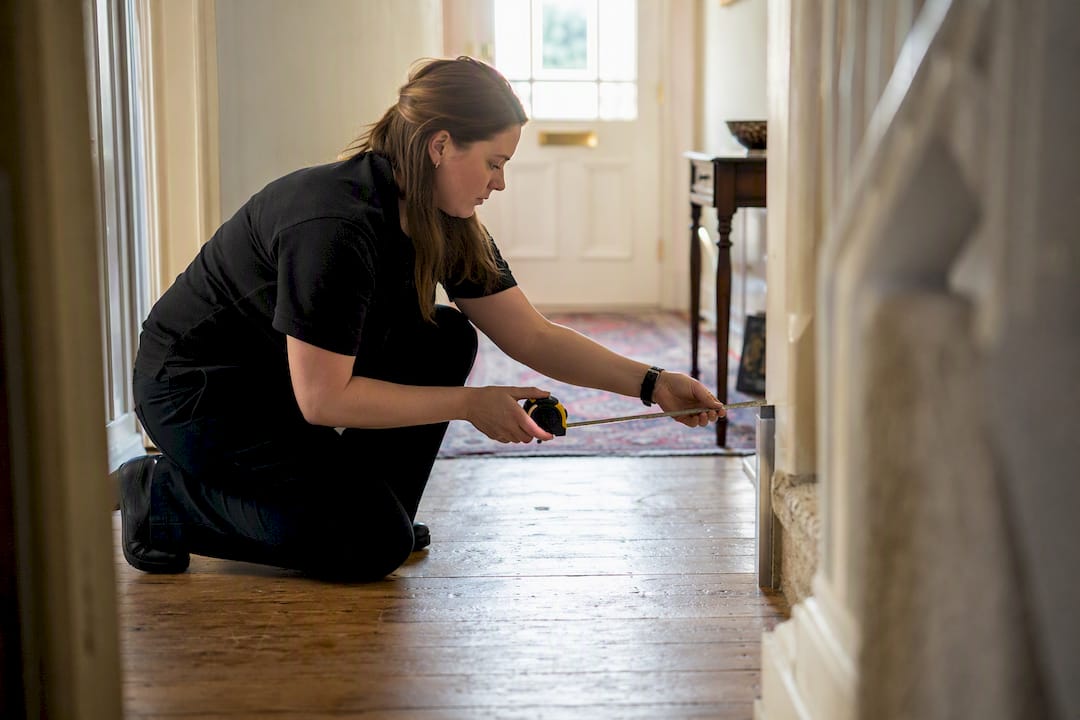
If a Disabled Facilities Grant or charitable top-up is going to fund your stairlift, Gentlerise Stairlifts can move the moment your paperwork does. Unlike waiting on a single council-approved contractor with no flexibility on price, Gentlerise Stairlifts offers straight, curved, and reconditioned models starting from £795, with installation often completed within hours of survey approval, so there's no lengthy gap between grant decision and a working stairlift on your stairs.
The process runs the way suppliers should support a grant application: a free home survey, a clear written quote your council or case manager can assess, professional installation, and ongoing support through the Protect+ maintenance plan once your stairlift is fitted. If your application involves a stairlift specifically, our guide on stairlift grants across the UK covers how councils typically assess these requests alongside this one.
Book a free home survey with Gentlerise Stairlifts today and get an accessible, written quote ready to support your grant application.
Sources
This article is general information, not a substitute for advice from a qualified financial advisor. Consult a qualified financial professional about your own circumstances before acting on anything here.
FAQ
How do I apply for a mobility grant?
Choose the right route first: contact the Motability Foundation for vehicle-related needs, or your local council for a Disabled Facilities Grant covering home adaptations, then gather your benefit evidence and, for DFG, request an OT assessment.

How long does it take to get a Motability grant?
There's no fixed statutory deadline, but decisions usually depend on how quickly a case manager can confirm essential need once your application and evidence are complete.
What is the first step in applying for a grant?
Confirm which route matches your need and gather your benefit paperwork (DLA or PIP references) before contacting the Motability Foundation or your council.
Who qualifies for a Motability grant?
Applicants who are already Motability Scheme customers, or who receive a qualifying mobility benefit and can show an essential, demonstrable need, are typically considered.
How long does a council take to decide a Disabled Facilities Grant?
Councils are legally required to give a decision within six months of receiving a complete application.