
TL;DR:
- Stairlift response time is critical for safety, as delays increase fall risk among users. Most users expect repairs within 24 hours, with 24/7 emergency support influencing provider choice. Asking providers about their response times and policies before purchase helps ensure safety and reliable aftercare.
Stairlift response time is defined as the period between a fault being reported and an engineer arriving to resolve it. For people with mobility challenges, this interval is not a minor inconvenience. It is a direct safety risk. 78% of stairlift users expect repairs within 24 hours, and 83% say 24/7 emergency support influences which provider they choose. When a stairlift stops working, the staircase does not become neutral territory. It becomes a hazard. Understanding stairlift response time importance is the first step towards choosing a provider who genuinely protects your independence.
1. What is stairlift response time and why does it matter?
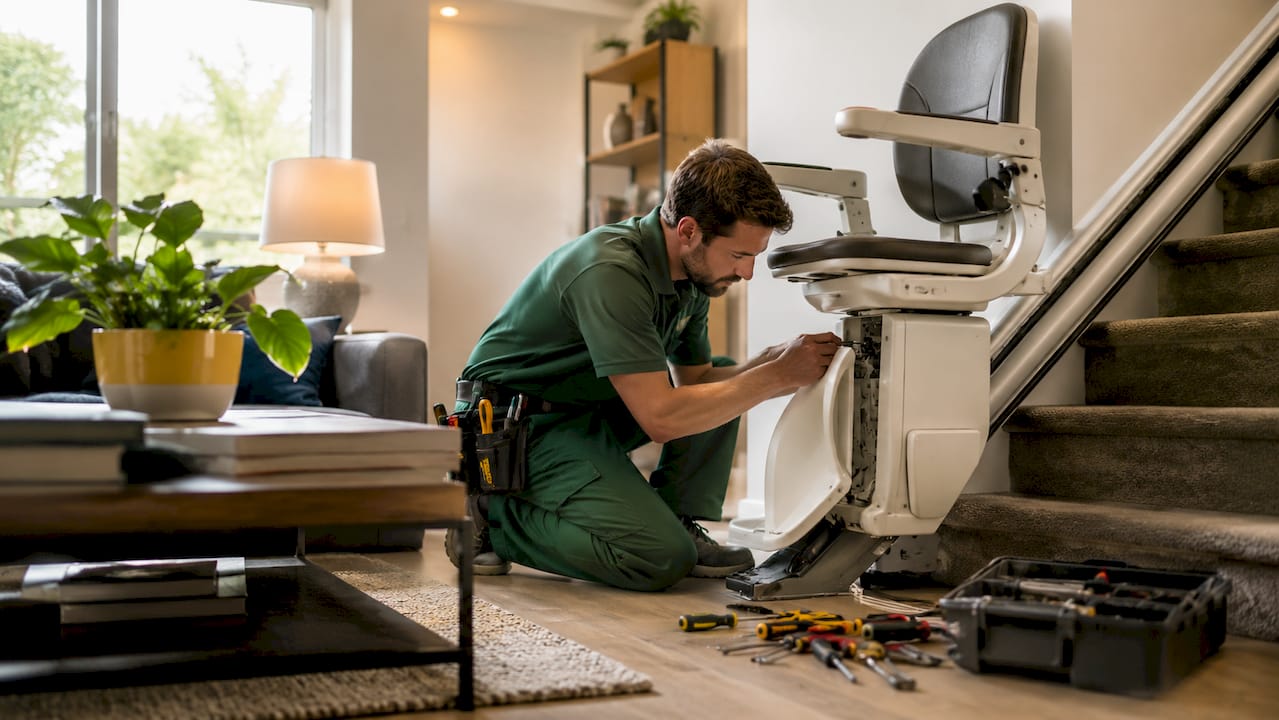
Stairlift response time refers to how quickly a provider sends an engineer after a breakdown or fault is reported. In the context of aftercare and maintenance, it covers both emergency call-outs and routine repair visits. The industry benchmark most users expect is a resolution within 24 hours, though the gold standard is same-day or next-morning attendance.
The consequences of a delayed response go beyond inconvenience. When a stairlift is out of service, many people attempt to navigate the stairs unaided. For older adults or those recovering from surgery, that decision carries serious physical risk. Response time efficiency is therefore not a customer service metric. It is a safety determinant.
- 24-hour expectation: 78% of users expect repairs within 24 hours, making this the minimum acceptable standard.
- Emergency support: 83% of buyers say 24/7 emergency support is a deciding factor when choosing a provider.
- Hospital discharge urgency: 14% of users require a new stairlift within a week due to urgent discharge from hospital, making fast activation critical from day one.
Pro Tip: Ask any provider, before you sign a contract, what their average call-out time is on a Saturday or bank holiday. That answer tells you more about their aftercare than any brochure.
2. How delayed repairs increase fall risk for elderly people
The safety consequences of slow stairlift response are measurable and serious. Falls on stairs cause over 850 deaths annually among UK residents aged 65 and over. Half of those aged 80 and over fall at least once per year. These figures exist in a context where a working stairlift is often the only safe route between floors.
When a stairlift is out of service, the person it was installed for faces a stark choice: stay on one floor or attempt the stairs without support. Most will attempt the stairs. That decision, made out of necessity rather than confidence, is where accidents happen. Stairlift downtime directly increases the likelihood of dangerous stair use.
| Scenario | Risk level | Consequence |
|---|---|---|
| Stairlift working, user mobile | Low | Normal daily routine maintained |
| Stairlift faulty, repair within 4 hours | Moderate | Short disruption, minimal unsafe stair use |
| Stairlift faulty, repair after 48+ hours | High | Prolonged unsafe stair navigation, elevated fall risk |
| Stairlift faulty, no repair timeline given | Critical | User isolation, high probability of accident |
"Stairlift downtime is not a technical inconvenience. For someone aged 80 with limited balance, a broken stairlift and a flight of stairs is a medical emergency waiting to happen. Response time is the single variable that determines whether that emergency occurs."
The impact of delay in stairlifts is not theoretical. It compounds with age, physical condition, and home layout. A person with no alternative route between floors, no carer present, and a stairlift that has been broken for two days is in genuine danger.
3. Questions to ask providers about response times before you buy
Buying a stairlift without asking about aftercare is like buying a car without asking about breakdown cover. The purchase price matters, but the support structure around it determines whether the product actually works for you when you need it most.
Buyers should verify the provider's after-sales policy, including weekend and bank holiday response times, before committing. Knowing this prevents being left housebound due to poor policies. The questions below will give you a clear picture of any provider's real-world reliability.
- What is your average call-out time for a breakdown? Ask for a specific figure, not a vague promise. "As soon as possible" is not an answer.
- Do you offer 24/7 emergency phone support? Confirm whether this is included in the standard package or costs extra.
- Are weekend and bank holiday call-outs covered? Many breakdowns happen at the worst possible times. A provider that only operates Monday to Friday is a risk.
- What does your maintenance contract include? A contract that covers regular servicing reduces breakdown frequency and speeds up repair turnaround.
- How long is the warranty, and does it cover parts and labour? Warranty terms directly affect how quickly a repair can proceed without cost disputes.
- What happens if a part needs to be ordered? For curved stairlifts with bespoke components, parts delays can extend downtime significantly.
Pro Tip: Ask the provider to show you their emergency support policy in writing. A confident provider will have no hesitation. A vague response is a warning sign.
4. Response time levels: what is acceptable, good, and best practice?
Not all response times are equal, and the difference between them has real consequences for stairlift user safety. Understanding the three broad categories helps you evaluate any provider's offering with clarity.
Over 48 hours. This is below acceptable for anyone with significant mobility challenges. A wait of two days or more forces unsafe behaviour and causes genuine distress. Providers operating at this level typically lack dedicated engineering teams or rely on third-party contractors with no guaranteed availability.
Within 24 hours. This meets the minimum expectation of 78% of users and represents the industry standard for reputable providers. It is adequate for most situations but still leaves a window of risk, particularly overnight or across a weekend.
Same-day or within hours. This is best practice and the standard that genuinely protects independence. Providers with fast call-out policies, including out-of-hours attendance, achieve the highest levels of user confidence. This tier requires dedicated engineers, strong parts availability, and clear internal protocols.
- During any repair wait, consider interim solutions such as a temporary stair guard or a ground-floor sleeping arrangement.
- Maintenance contracts that include regular servicing reduce unexpected breakdowns and improve parts availability, which directly shortens repair times.
- A typical stairlift service takes 45–75 minutes and results in a detailed engineer's report. Regular servicing keeps the engineer familiar with your specific unit, which speeds up any future repair.
The link between response time efficiency and provider reputation is direct. Aftercare responsiveness correlates with higher customer trust and satisfaction. Providers who communicate clearly about their call-out policies before purchase tend to deliver on those promises after it.
5. When is fast stairlift activation especially critical?
Certain situations make a rapid stairlift safety response not just preferable but urgent. Recognising these scenarios helps caregivers and users plan ahead and choose providers accordingly.
- Hospital discharge. 14% of users need a stairlift installed within a week of leaving hospital. Most straight stairlifts can be installed within 48 hours, but curved stairlifts require 4–6 weeks. If a curved stairlift is needed urgently, interim solutions must be arranged immediately.
- High fall risk users. People with conditions such as Parkinson's disease, severe arthritis, or post-surgical weakness face disproportionate danger from even a brief period of unsupported stair use. For these individuals, a 48-hour repair window is not acceptable.
- Single-occupancy homes. A person living alone with no carer or family member nearby has no safety net during a breakdown. Fast response is the only protection available.
- Homes with no alternative route. Some properties have no ground-floor bathroom or bedroom. A broken stairlift in these homes creates immediate, unavoidable risk.
- Overnight and weekend faults. Breakdowns do not follow business hours. A stairlift that fails on a Friday evening and is not repaired until Monday morning leaves a vulnerable person without safe access for three days.
The stairlift emergency protocol a provider operates determines outcomes in all of these situations. Providers who have clear, documented, and fast emergency procedures protect their users. Those who do not put them at risk.
For caregivers managing a loved one's home environment, affordable home mobility solutions that include strong aftercare are worth prioritising over lower upfront costs. The cost of a fall far exceeds the cost of a better maintenance contract. When selecting a provider, also consider whether they can recommend fast home repair services for related home adaptations that support stair safety during any downtime period.
Key takeaways
Stairlift response time importance is the most overlooked factor in stairlift purchasing, yet it directly determines whether a user remains safe and independent when a fault occurs.
| Point | Details |
|---|---|
| 24-hour response is the minimum | 78% of users expect repairs within 24 hours; anything longer increases fall risk. |
| 24/7 support is a purchase priority | 83% of buyers say round-the-clock emergency support influences their provider choice. |
| Ask before you buy | Verify weekend and bank holiday call-out policies in writing before signing any contract. |
| Maintenance reduces downtime | Regular servicing improves parts availability and shortens repair times when faults occur. |
| Interim solutions matter | For curved stairlifts or delayed repairs, temporary stair guards or floor-level arrangements reduce risk. |
Why response time is the factor most buyers get wrong
People spend weeks comparing stairlift prices and finishes. They rarely spend ten minutes asking about what happens when the lift breaks down at 9pm on a Sunday. I have seen this pattern repeatedly, and the consequences are predictable.
The focus on upfront cost is understandable. A stairlift is a significant purchase, and price is visible. Response time is invisible until you need it. Many buyers overlook aftercare response times, focusing on price and aesthetics, yet response time dictates actual independence during a failure. That sentence should be printed on every stairlift brochure in the UK.
What I find most telling is that the providers with the best response times are usually the ones who are most transparent about their policies before purchase. They publish their call-out commitments. They explain what is included in their maintenance contracts. They do not hide behind vague promises. That transparency is itself a signal of quality.
If I were advising a caregiver choosing a stairlift for a parent, I would tell them this: get the response time commitment in writing, confirm it covers weekends and bank holidays, and ask what happens if a part needs ordering. The answers to those three questions will tell you whether the provider is genuinely committed to your loved one's safety or simply selling a product.
— lee
Gentlerise Stairlifts: fast response, reliable aftercare
Choosing a stairlift provider means choosing who you trust when something goes wrong. Gentlerise Stairlifts builds its service around that responsibility.

Gentlerise Stairlifts offers stairlift solutions across the UK, with straight stairlifts available from £795 and installation often completed within hours. The Protect+ maintenance programme is designed to reduce breakdown risk and keep response times short when repairs are needed. Whether you need a straight, curved, or reconditioned model, or a short-term rental while recovering from surgery, Gentlerise Stairlifts provides the aftercare structure that protects your independence. Book a free home survey and ask about emergency support options before you commit to any provider.
FAQ
How quickly should a stairlift be repaired after a breakdown?
The industry standard is within 24 hours. 78% of stairlift users expect this, and best-practice providers aim for same-day or next-morning attendance.
What questions should I ask about response times before buying?
Ask for the average call-out time, confirm whether 24/7 support is included or costs extra, and verify that weekend and bank holiday cover is part of the standard package. Get the answers in writing.
Why is response time more important than price when choosing a stairlift?
A lower price means nothing if the stairlift is out of service for days without a repair. Response time dictates actual independence during a fault, making aftercare the most consequential factor in long-term satisfaction.
What should I do if my stairlift breaks down and repair is delayed?
Arrange a temporary ground-floor sleeping and bathroom arrangement if possible. For curved stairlifts with bespoke parts, interim solutions such as stair guards may be necessary while components are sourced.
Does regular servicing improve stairlift response times?
Regular servicing reduces unexpected breakdowns and means engineers are already familiar with your unit. Maintenance contracts improve parts availability and shorten repair times when faults do occur.