
Yes. For most people with hip, knee or back arthritis, a stairlift removes the weight-bearing strain that makes stair climbing painful, since you travel seated rather than pushing through inflamed joints on every step. Arthritis UK's guidance on stairlifts supports this, and it recommends a proper trial before buying.
- Works for many, but not everyone: your staircase shape, transfer ability and grip strength all matter
- Get an occupational therapist assessment or a free home survey before deciding
- A short trial at a Disabled Living Centre or with a supplier tells you more than any brochure
TL;DR:
- Testing the stairlift controls with your actual equipment, such as splints or gloves, is essential to avoid costly mismatches.
- An occupational therapist assessment combined with a free home survey ensures the stairlift suits your physical and staircase limitations.
- Cost varies from around £2,000 to £6,000 depending on track shape, with maintenance fees often between £100 and £200 annually and options for rental or reconditioned units.
- Safety features like obstruction sensors, powered swivel, and lock keys are vital for secure operation, especially when multiple users are involved.
- Alternatives such as through-floor lifts or moving key rooms downstairs may be necessary if the staircase shape or your mobility does not support a stairlift.
Table of Contents
- How stairlifts reduce joint strain
- Is a stairlift right for you? A suitability checklist
- Key features to prioritise when arthritis affects your hands, hips or knees
- Trying a stairlift: what to test before you buy
- Costs and funding: what a stairlift for arthritis realistically costs
- Safety, installation and maintenance you should expect
- Alternatives when a stairlift isn't the right fit
- How Gentlerise Stairlifts supports people living with arthritis
- Editorial take: what most guidance gets wrong about stairlifts and arthritis
- Get a free home survey from Gentlerise Stairlifts
- Sources
- FAQ
How stairlifts reduce joint strain
Climbing a staircase loads your hips, knees and spine dozens of times a day, and arthritic joints don't tolerate that repetition well. A stairlift takes weight-bearing out of the equation entirely: you sit, the mechanism moves you, and your joints do none of the work that stairs usually demand.
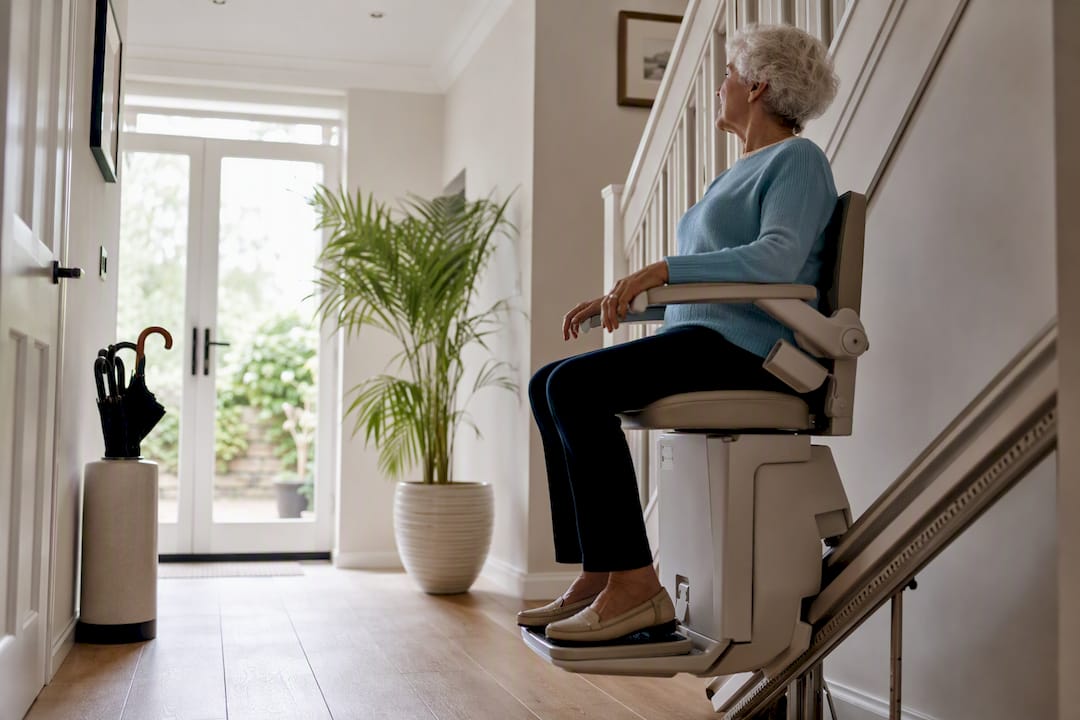
That mechanical shift matters more than it sounds. Reduced joint load through the day tends to mean less swelling by evening and less of the fatigue that builds when every trip upstairs costs you pain.
Stairlifts also lower fall risk. Arthritis UK notes that eliminating the weight-bearing climb cuts the chance of a stumble on stairs, which is one of the more common injury routes for people with reduced grip or knee stability.
- Seated travel offloads hips, knees and lower back on every trip
- Fewer painful stair climbs mean less cumulative fatigue across the day
- Lower fall risk compared with negotiating steps on painful or unstable joints
- NHS guidance on home adaptations points people towards an assessment before choosing equipment
Is a stairlift right for you? A suitability checklist
Not every arthritis diagnosis calls for the same solution, and a stairlift only works well when your body and your staircase both cooperate with it. Before you commit, work through the practical checks that determine whether a lift will genuinely help.
- Transfer ability. Can you move from standing to seated and back again with support, even if it's slow and careful?
- Seated balance. Do you feel stable sitting upright for the length of your staircase without needing to grip constantly?
- Hand strength and grip. Rheumatoid arthritis in particular can make gripping controls or armrests harder than osteoarthritis in the knee alone.
- Cognition and awareness. Can you reliably operate a control and respond to a stop or obstruction?
- Staircase type. Straight, curved, narrow, or interrupted by doors and landings, each shape changes what's fitted.
- Landing space. Is there room for the seat to park and swivel without blocking a door or hallway?
Pro Tip: Ask for both an occupational therapy assessment and a free home survey from a reputable supplier. The OT looks at your body; the surveyor looks at your stairs. You need both answers before choosing anything.
Key features to prioritise when arthritis affects your hands, hips or knees
The right stairlift for arthritis isn't necessarily the cheapest or the most powerful. It's the one whose seat, controls and swivel action match your specific joints and grip.
- Seat height and depth: a seat that's too low forces a harder push to stand; too shallow strains hips on longer journeys
- Swivel mechanism: a powered swivel at the top landing spares you twisting a stiff hip or knee manually
- Armrests: sturdy, well-positioned armrests give you a stable push point during transfers, which matters most for hip and knee arthritis
- Controls: joystick or large rocker switches suit limited dexterity far better than small toggle buttons, an important distinction for people with hand osteoarthritis or rheumatoid arthritis in the fingers
- Perch seats: useful for people who find deep knee bends painful, since perching needs less flexion than a full seated position
- Folding footrests and safety sensors: footrests that fold automatically reduce fumbling, while obstruction sensors stop the seat before it meets anything in its path
- Lock keys: let you control who can operate the lift, useful in shared or multi-generational households
Pro Tip: If you wear a splint, brace or assistive glove day-to-day, bring it to any trial. A control that feels fine bare-handed can feel completely different through a splint, and testing with your actual equipment avoids an expensive mistake.
Trying a stairlift: what to test before you buy
A brochure tells you what a stairlift has. A trial tells you whether it actually works for your joints. Disabled Living Centres and suppliers both offer sessions where you can sit in a unit and put it through its paces, rather than guessing from a photo.
- Book a session at a Disabled Living Centre, a supplier's showroom, or arrange a home trial with the installer.
- Test the sit-to-stand motion several times, not once, since fatigue changes how a transfer feels by the fifth attempt.
- Operate the control using whichever hand or grip you'd use daily, ideally with any splint or glove you normally wear.
- Try the swivel exit at the top landing and check knee clearance against any newel post or wall.
- Check folding and clearance for the footrest and seat when parked, especially if your hallway is narrow.
- Bring a carer or family member, and an occupational therapist if one is available, since a second pair of eyes catches things you might miss under focus.
Costs and funding: what a stairlift for arthritis realistically costs
Straight stairlifts typically cost less than curved ones, since curved rails are custom-built for your staircase's exact bends. Prices for many installations fall roughly between £2,000 and £6,000, with straight tracks at the lower end and complex curved staircases pushing towards the top. Annual maintenance tends to run from around £100 to £200, a cost worth budgeting for from day one rather than treating as optional later.
Funding routes are worth exploring before you pay in full. Local councils assess residents for home adaptations and may contribute through a Disabled Facilities Grant, and the independent Living Made Easy resource explains how councils apply thresholds. Our own guide to stair lift grants walks through the application steps in more detail.
- Straight tracks generally cost less and resell more easily than curved units
- Reconditioned stairlifts can cut costs further, provided they come with a current safety inspection and service history
- Renting suits short-term needs such as recovery from surgery, while buying suits long-term arthritis management
- A service contract protects you from unpredictable emergency call-out fees down the line
Safety, installation and maintenance you should expect
Installation for a straight stairlift is usually straightforward and can often be completed within hours, with minimal structural work beyond securing the rail to your stair treads. Curved installations take longer, since the track is measured and built to your staircase's specific bends.
Servicing matters more than most buyers expect going in. Emergency call-out fees without a service plan can reach £275, a cost that a modest annual maintenance contract usually avoids entirely by covering routine checks and priority call-outs.
- Obstruction sensors that stop the seat automatically if anything blocks the rail
- A working seatbelt, checked at every service visit
- Powered swivel at the top landing to reduce manual twisting
- A lock key so the lift can't be operated by anyone who shouldn't use it
Pro Tip: Ask your installer exactly what's included in their service plan before signing anything. Some cover parts and labour; others cover call-outs only. That difference decides whether an unexpected fault costs you nothing or costs you hundreds.
Alternatives when a stairlift isn't the right fit
A stairlift isn't always the answer, and knowing the alternatives matters as much as knowing the benefits. If your staircase is too narrow, too steep, or your joints can't manage a seated transfer safely, other options exist.
- Through-floor (homelift) units suit wheelchair users or anyone unable to transfer to a stairlift seat at all, though they need more space and structural work
- Short-rise lifts handle small level changes, such as a single step into a garden or porch, without the cost of a full staircase installation
- Moving key rooms downstairs, turning a ground-floor room into a bedroom, for example, avoids the stairs question entirely
- Grab rails and non-slip treads offer a lower-cost interim step while you weigh up bigger decisions
- Therapeutic exercise remains important alongside any equipment, since a stairlift assists mobility rather than replacing the muscle strength that keeps joints supported
How Gentlerise Stairlifts supports people living with arthritis
Gentlerise Stairlifts works from a simple starting point: your joints, your staircase and your budget all need to line up before we recommend anything. Every enquiry begins with a free home survey, so we can assess your stairs and talk through seat height, control type and swivel needs against what your arthritis actually restricts.
We offer new, rental and reconditioned stairlifts, which gives you flexibility whether you need a short-term solution during recovery or a long-term fit for daily use. Installation on straight staircases is often completed within hours, and our Protect+ aftercare plan covers routine servicing and call-outs, which matters given how expensive an unplanned emergency visit can be without a plan in place.
- Free home survey with no obligation to buy
- Straight, curved and reconditioned stairlift options
- Rental available for short-term or recovery needs
- Protect+ maintenance plan to limit emergency costs
| Point | Details |
|---|---|
| Trial before buying | Test the actual control and seat with any splint or glove you wear day to day. |
| Assessment comes first | Request an OT assessment or free home survey before choosing a model. |
| Service plans limit risk | Emergency call-outs without a plan can reach £275, making Protect+ style cover worthwhile. |
| Gentlerise offers flexible routes | Free surveys, rental, reconditioned units and Protect+ aftercare suit varying arthritis needs. |
Editorial take: what most guidance gets wrong about stairlifts and arthritis
Most advice on this topic treats a stairlift as either a luxury or a last resort, and both framings miss the point. The clinical rationale is straightforward: seated stair travel removes repeated joint loading, and for many people with hip or knee arthritis, that alone changes how much of the day is spent in pain.

Where the conventional advice falls short is on control detail. Guides talk endlessly about track shape and price, and barely mention that a joystick which feels fine to a showroom demonstrator can be unusable for someone with swollen finger joints. That's a fitting problem, not a device problem, and it only gets caught in a proper trial.
Prioritise the assessment, not the sales conversation. An occupational therapist or a Disabled Living Centre trial will tell you more about suitability in twenty minutes than any specification sheet. A stairlift is an assistive device, not a replacement for the exercise and pacing that keep your joints functioning day to day, and treating it as one part of a wider management plan, rather than a single fix, is where the real benefit lies.
— lee
Get a free home survey from Gentlerise Stairlifts
Gentlerise Stairlifts gives you a direct route to a properly fitted, arthritis-suited stairlift without the guesswork of comparing brochures alone. Where a generic retailer sells you a model, we start with a free home survey and match seat height, control type and swivel action to what your joints can actually manage, then install straight-track units often within hours.
If a full purchase isn't right for you yet, rental and reconditioned options give you a lower-cost way to test whether a stairlift suits your daily routine, and our Protect+ maintenance plan keeps servicing and emergency call-outs covered rather than leaving you exposed to an unplanned bill. Book a free home survey with Gentlerise Stairlifts and get a proper assessment of your staircase and your options before you decide anything.
This article is general information, not a substitute for advice from a qualified doctor. Consult a qualified healthcare professional about your own circumstances before acting on anything here.
Sources
- Stairlifts | How they help and buying advice
- Home adaptations and grants (NHS)
- Things you need to know about buying a stairlift (Which?)
FAQ
What is the best pain relief for chronic arthritis?
Pain relief for arthritis usually combines medication prescribed by a GP, physiotherapy and pacing strategies, alongside home adaptations such as a stairlift that reduce the joint strain causing the pain in the first place.
Who should not use a stairlift?
A stairlift may not suit someone who cannot safely transfer from standing to seated, has significant balance problems while seated, or has cognitive difficulties that make operating controls unsafe, which is why an occupational therapy assessment matters before buying.
Can I climb stairs if I have osteoarthritis?
Many people with osteoarthritis can still climb stairs, though it often causes pain, swelling and fatigue that build up over the day, which is exactly the repeated joint loading a stairlift for arthritis is designed to remove.
What can seniors do instead of a stairlift?
Alternatives include through-floor lifts for those who cannot transfer to a stairlift seat, short-rise lifts for small level changes, moving key rooms to the ground floor, and grab rails paired with ongoing therapeutic exercise to maintain strength.