

TL;DR:
- A Disabled Facilities Grant provides funding for home adaptations like stairlifts, contingent on occupational therapist recommendations. Applicants must contact their local council before proceeding, as starting work early can disqualify the application. The grant covers necessary installation costs, but eligibility depends on medical need, property feasibility, and means-testing, with most decisions made within six months of complete applications.
If you need a stairlift and cannot afford one outright, a Disabled Facilities Grant (DFG) is often the most direct route to funding. Councils across England, Wales, and Northern Ireland are legally required to consider valid applications, and a stairlift can qualify when an occupational therapist (OT) confirms it is the most appropriate solution for your home and mobility needs.
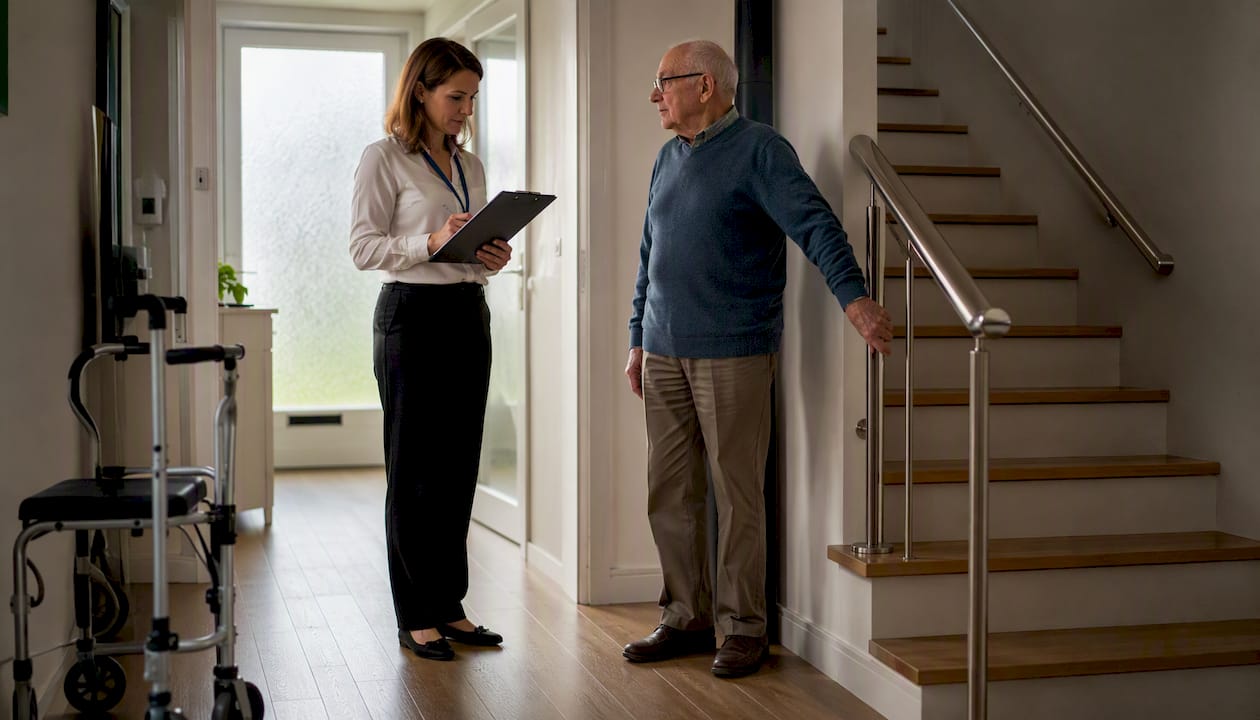
The single most important thing to do right now is contact your local council before you buy or install anything. Starting work before written approval almost always disqualifies your application.
Here is what to do immediately:
- Contact your local council's housing or social services department and ask for a DFG assessment or an OT referral.
- Do not purchase or install a stairlift until you have written approval from the council.
- Check GOV.UK's DFG guidance for England and Wales at gov.uk/disabled-facilities-grants.
- Book a free home survey with a qualified installer such as Gentlerise Stairlifts, who can provide the property evidence and quotes councils typically require.
Pro Tip: Ask your GP or consultant to write a supporting letter describing your mobility limitations before you contact the council. It speeds up the OT referral considerably.
Table of Contents
- What is a Disabled Facilities Grant and how does it work across the UK?
- Who can apply and what will the council check?
- What does a stairlift grant usually cover?
- How to apply for a stairlift grant through your local council
- How means-testing works and what you might contribute
- How long does the DFG process take?
- What to do if you're not eligible for a grant
- How to prepare for your OT assessment
- Key takeaways
- What installers and OTs actually see on the ground
- Gentlerise Stairlifts makes the grant process easier from day one
- Useful sources and who to contact
- FAQ
What is a Disabled Facilities Grant and how does it work across the UK?
A Disabled Facilities Grant is a capital grant from your local council that helps pay for home adaptations needed to support independent living. It is not a loan, so you do not repay it. DFGs cover adaptations including stairlifts, ramps, widened doorways, level-access showers, and specially adapted rooms, provided an OT assessment confirms the adaptation is necessary and appropriate.
The grant is available in England, Wales, and Northern Ireland, but Scotland operates differently.
| Nation | Scheme | Typical grant cap | Administered by |
|---|---|---|---|
| England | Disabled Facilities Grant | Up to £30,000 | Local council (housing authority) |
| Wales | Disabled Facilities Grant | Up to £36,000 | Local council (housing authority) |
| Northern Ireland | DFG equivalent | Varies by Housing Executive | Northern Ireland Housing Executive |
| Scotland | Local adaptations programme | Varies by local authority | Local council / Care and Repair Scotland |
A few points worth knowing about scope:
- DFGs are intended for larger adaptations, generally those costing above a threshold where simpler aids would not suffice.
- The grant pays the contractor directly in most cases; you do not usually handle the money yourself.
- Scotland's councils fund adaptations through their own programmes rather than a nationally capped DFG, so Scottish residents should contact their local authority or Care and Repair Scotland directly.
Who can apply and what will the council check?
Any disabled person of any age can apply for a DFG, regardless of whether they own their home, rent privately, or live in a council or housing association property. There is no age minimum. Children's applications are not means-tested; adult applications are.
Basic eligibility checklist:
- You or someone in your household is disabled (physical, sensory, cognitive, or mental health condition that substantially affects daily living).
- The property is your main or only home.
- You intend to live in the property for at least five years after the adaptation (or the council may seek repayment if you sell sooner).
- The adaptation is confirmed as necessary and appropriate by an OT.
- The works are reasonable and practicable given the property's structure.
The council will also check:
- Functional need: can you safely use the stairs without a stairlift? The OT's report must show the risk.
- Medical evidence: GP letters, consultant reports, or care plans that document the condition.
- Property feasibility: stair geometry, power supply access, structural constraints, and whether a stairlift is the most proportionate solution.
- Financial position (adults only): income, savings, and benefits, assessed against the total cost of works.
Council tenants should ask their housing officer whether adaptations can be funded directly through the landlord's Housing Revenue Account (HRA), as this route can sometimes be faster than a DFG application.
Pro Tip: Understanding the OT's role in detail before your assessment can make a real difference. The role of home mobility consultants explains what assessors look for and how their reports feed into council decisions.
What does a stairlift grant usually cover?
A DFG will typically pay for the supply and professional installation of the stairlift itself, along with any reasonable associated works needed to make the installation safe and usable. That can include minor electrical work to provide a dedicated power socket, small structural adjustments to the staircase, and removal of any obstruction that prevents safe fitting. The maximum grant cap is £30,000 in England and £36,000 in Wales.
The 'reasonable and practicable' standard is the key test. Councils and housing officers are required to assess whether a stairlift is the most appropriate, feasible, and proportionate solution for the specific property and the specific mobility need. If a less costly adaptation would meet the same need, the council may fund that instead. If the staircase geometry makes a stairlift technically impractical, the council may refuse a stairlift even where need is proven and look at alternatives such as a through-floor lift or re-housing.
What is typically excluded:
- Decorative or cosmetic works (repainting, new flooring beyond what the installation requires).
- Non-essential upgrades or premium finishes above the standard specification.
- Ongoing running costs, servicing, or maintenance after installation.
- Any costs incurred if work starts before written council approval.
The grant does not cover the cost of a stairlift you have already bought privately. The council pays for works it has approved in advance.
How to apply for a stairlift grant through your local council
The process follows a clear sequence. Skipping a step or getting the order wrong is the most common reason applications stall.
- Contact your local council. Phone the housing adaptations team or social services and say: "I need to apply for a Disabled Facilities Grant for a stairlift." They will either arrange an OT assessment themselves or refer you to the community OT service.
- Attend the OT assessment. The OT visits your home, observes how you manage the stairs, reviews your medical history, and writes a formal recommendation. The report must show that a stairlift is the most appropriate adaptation for your specific need and property, not simply that you struggle with stairs.
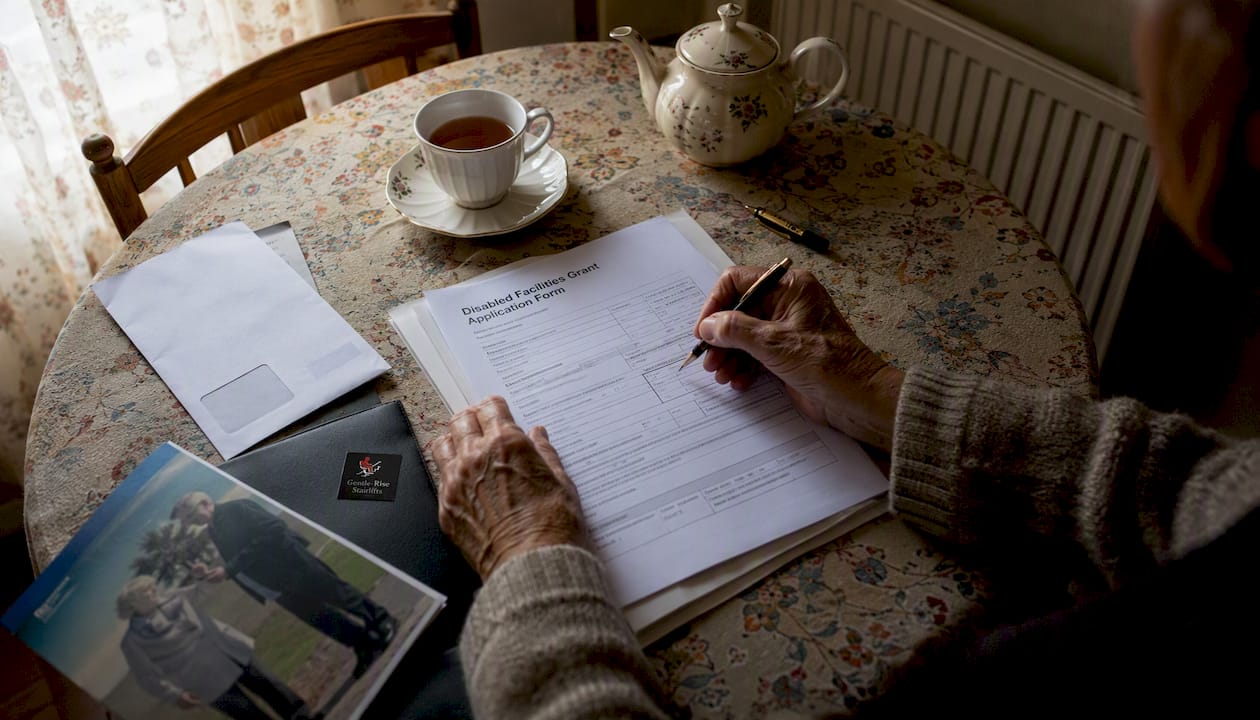
- Submit the DFG application. Once the OT report is ready, you complete the council's application form and attach supporting documents. Typical requirements include:
- Proof of identity and proof of residence.
- The OT's written recommendation.
- At least two contractor quotes (some councils require three).
- Medical letters or care plans.
- Evidence of benefits or income for the means test.
- Council financial assessment. For adult applicants, the council calculates whether you must contribute to the cost. You will receive a written decision once the assessment is complete.
- Approval letter and instruction to proceed. Only after receiving written approval should you instruct an installer. Starting work before this point typically voids the application entirely.
Statutory timeline:
| Stage | Legal or typical timeframe |
|---|---|
| OT assessment arranged | Varies; often several weeks depending on local waiting lists |
| Complete application submitted | Clock starts here |
| Council decision on DFG | Must be made within six months of a complete application |
| Installation (after approval) | Days to a few weeks depending on installer availability |
The six-month decision window is a legal requirement, but it only begins once the council holds a complete application. Incomplete paperwork pauses the clock.
How means-testing works and what you might contribute
A DFG is mandatory for eligible applicants, but the amount the council pays is not always the full cost. For adult applicants, the council runs a financial assessment that looks at income, savings, and any means-tested benefits you already receive.
Key points about the means test:
- Children's applications are not means-tested. If the grant is for a disabled child, the council must fund the full eligible cost up to the cap.
- Adults on certain means-tested benefits (such as Universal Credit, Housing Benefit, or Pension Credit) often receive the full grant with no required contribution.
- Adults with savings or higher income may be asked to contribute a proportion of the total cost.
- The council cannot demand a contribution that exceeds what the financial assessment formula produces; the calculation is set by regulation, not council discretion.
If you are asked to contribute and cannot afford it, there are practical options:
- Charitable top-ups: organisations such as Turn2Us or local community foundations sometimes fund the gap between a DFG award and total cost.
- Reconditioned stairlifts: a quality reconditioned model can cost significantly less than a new one, reducing the total project cost and therefore any required contribution. Gentlerise Stairlifts offers reconditioned and rental options alongside new installations.
- VAT relief: stairlifts supplied to disabled people are zero-rated for VAT, so you should not be charged 20% VAT on a qualifying purchase.
- Rental: a short-term rental stairlift can bridge the gap while a DFG application progresses, or serve as a permanent solution if a grant is refused.
Pro Tip: Ask the council for a breakdown of how your contribution was calculated. Errors in the means-test formula do occur, and you have the right to request a review.
How long does the DFG process take?
Realistically, from first contact with the council to a stairlift being installed, the process often takes several months. The decision window for councils is legally set to a maximum timeframe, but actual processing times often vary depending on paperwork completeness and local workloads.
Common causes of delay:
- Incomplete application forms or missing supporting documents.
- Waiting for the OT report, which can take weeks if community OT services are stretched.
- Missing or insufficient contractor quotes.
- Property feasibility issues that require a second survey or structural report.
- The financial assessment requiring additional income evidence.
Actions that speed things up:
- Submit every required document in one go; a single missing item resets the clock.
- Chase the OT team politely but regularly; ask for a written update every two weeks if you have not heard.
- Ask your council for a named case officer and their direct contact details.
- Have your installer provide a detailed written quote that includes a property survey report, not just a price.
The six-month period starts only when the council confirms it holds a complete application. If you are unsure whether yours qualifies as complete, ask the council in writing.
What to do if you're not eligible for a grant
A refused or reduced DFG is not the end of the road. Several practical alternatives exist, and the right one depends on your circumstances.
- Charitable funding: organisations including the Foundations Home Improvement Agency network and Age UK can signpost local hardship funds and charitable grants for mobility aids. Turn2Us's grant search tool is a useful starting point.
- Care and Repair / Home Improvement Agencies: these organisations help older and disabled people navigate applications, find trusted tradespeople, and sometimes access small local grants that sit outside the DFG system.
- Reconditioned stairlifts: a professionally refurbished stairlift from a reputable supplier costs a fraction of a new model and carries the same safety standards. Prices for straight models can start well below the cost of a new unit.
- Short-term rental: if your need is temporary (post-surgery recovery, for example), renting a stairlift avoids a large upfront cost entirely.
- Council tenant route: if you rent from a council or housing association, ask whether your landlord can fund the adaptation via the Housing Revenue Account rather than a DFG. This route sometimes moves faster.
- Stairlift alternatives: in some properties, a stairlift alternative such as a through-floor lift or a ground-floor bedroom conversion may be more practical and eligible for different funding.
How to prepare for your OT assessment
The OT visit is the most consequential step in the whole process. A strong assessment produces a clear, specific recommendation that councils find easy to approve. A vague one causes delays.
Have ready before the OT arrives:
- Clear access to the staircase and all rooms the OT will need to see.
- A written list of daily activities you struggle with because of the stairs (getting to the bathroom at night, carrying laundry, reaching a bedroom).
- Medical letters, care plans, or discharge summaries that document your condition.
- A note of any existing aids or adaptations already in place (grab rails, walking frame, stair gate).
- Photographs of the staircase, including any narrow turns, window positions, or structural features that might affect installation.
Questions to ask the OT during the visit:
- "Will your report specifically recommend a stairlift, or will it leave the adaptation type open?"
- "What evidence do you need from my GP or consultant to support the recommendation?"
- "How long will it take to receive the written report, and who does it go to?"
The DFG guidance for local authorities is clear that the OT's report must demonstrate the stairlift is the most appropriate adaptation for the specific mobility problem and the particular property. A report that simply states "patient has difficulty on stairs" is rarely sufficient on its own.
Pro Tip: Keep a dated mobility diary for two to four weeks before the assessment. Brief daily notes ("unable to reach bedroom without assistance, 14 March") give the OT concrete, time-stamped evidence that strengthens the recommendation considerably.
Key takeaways
The fastest route to stairlift funding in the UK is a Disabled Facilities Grant, but the six-month decision clock only starts once the council holds a complete application with all required documents and quotes.
| Point | Details |
|---|---|
| Contact the council first | Phone housing or social services before buying anything; an OT referral is the first step. |
| Never start work early | Beginning installation before written approval typically voids the DFG application entirely. |
| Means-testing applies to adults | Children's applications are grant-funded in full; adult awards depend on income and savings. |
| Six-month decision window | Councils must decide within six months of receiving a complete application. |
| Gentlerise Stairlifts can help | Gentlerise Stairlifts provides free home surveys, detailed quotes, and reconditioned or rental options to support your application and budget. |
What installers and OTs actually see on the ground
Most delays in DFG applications come down to one of two things: an OT report that does not specifically name a stairlift as the recommended solution, or a contractor quote that lacks the property detail councils need to assess feasibility. Both are avoidable.
From an installer's perspective, the survey visit is about more than measuring the staircase. A thorough survey documents stair geometry, the location of the nearest power socket, bannister type and fixings, any mid-flight turns or landings, and whether the top and bottom landing spaces meet safety clearance requirements. Photographs taken at this stage feed directly into the council's feasibility check. An installer who provides a detailed written survey report alongside a price quote gives the council everything it needs in one document, rather than requiring a follow-up visit.
From the OT's side, the most useful applications arrive with clear medical evidence and a specific description of functional limitation. "Cannot safely manage stairs unassisted" is far stronger than "has mobility problems." When the OT can point to a specific risk (falls history, night-time bathroom access, post-surgical weight-bearing restriction), the recommendation for a stairlift becomes much harder for a housing officer to question.
One nuance that catches applicants out: an OT may recommend an alternative to a stairlift if the property geometry makes installation impractical or if a simpler adaptation would meet the same need at lower cost. That is not a refusal of funding; it is the OT doing their job correctly. If you disagree with the recommendation, you can request a review or seek a second opinion through your GP.
Gentlerise Stairlifts makes the grant process easier from day one
Applying for a DFG involves paperwork, surveys, and quotes, and getting those elements right first time is what separates a smooth application from a months-long wait. Gentlerise Stairlifts offers a free home survey that produces the detailed property report and accurate quote your council needs, with straight stairlifts starting from £795 for those who need to move quickly or contribute towards costs.

Whether you are mid-application and need a quote for your DFG pack, considering a reconditioned or rental stairlift while your grant progresses, or simply want expert advice on what councils look for, Gentlerise Stairlifts can help at every stage. The Protect+ maintenance plan covers ongoing servicing once you are installed, so there are no unexpected costs down the line.
Book your free survey today and get the property report and quote your council needs.
Useful sources and who to contact
- Disabled Facilities Grants overview: GOV.UK — the primary guidance page for England and Wales, including how to apply and eligibility rules.
- Apply for a Disabled Facilities Grant: GOV.UK — direct application guidance with links to local council finders.
- DFG Guidance for local authorities (PDF) — the detailed statutory guidance that councils and OTs follow when assessing applications.
- Disability Rights UK: Disabled Facilities Grants — plain-language explanation of entitlement, means-testing, and your rights.
- Foundations: DFG Frequently Asked Questions — practical answers on grant caps, eligible works, and the Home Improvement Agency network.
- Age UK: Disabled Facilities Grants — guidance on Care and Repair services and local support for older applicants.
- Scope: Disabled Facilities Grant advice — accessible overview of the DFG process and timescales.
- Gentlerise Stairlifts: free home survey and installation — surveys, quotes, new and reconditioned stairlifts, rental, and Protect+ aftercare across the UK.
FAQ
Can I get a government grant for a stairlift?
Yes. The Disabled Facilities Grant (DFG), administered by local councils in England, Wales, and Northern Ireland, can fund a stairlift where an occupational therapist confirms it is the most appropriate adaptation for your home and mobility needs.
Is there a grant available for a stair lift in Scotland?
Scotland does not use the DFG system. Scottish residents should contact their local council or Care and Repair Scotland, as adaptations are funded through local authority programmes with varying eligibility and amounts.
How do I qualify for a stairlift grant?
You need to be disabled (of any age), live in the property as your main home, and have an occupational therapist confirm that a stairlift is necessary and appropriate. Adult applications are also subject to a financial means test, which may require a household contribution.
Can you get a free stairlift on the NHS?
The NHS does not fund stairlift installations directly. Funding comes through the local council via a Disabled Facilities Grant, not through NHS budgets, though your GP or NHS OT service may initiate the referral.
What happens if my DFG application is refused?
You can request a review of the decision. If the refusal stands, alternatives include charitable grants, reconditioned or rental stairlifts, and for council tenants, adaptations funded through the landlord's Housing Revenue Account.
This article provides general information about stairlift funding in the UK. It is not legal or financial advice. Eligibility rules, grant caps, and council policies can change, so confirm current details with your local council or a qualified adviser before making decisions.