
Yes, in many cases a stairlift can be fitted to a spiral staircase, but it requires a fully custom curved rail and a specialist survey, not an off-the-shelf unit. The biggest constraint is clear width: your stairs need to retain enough passage space once the rail is in place. Expect bespoke measurement, a longer lead time than a straight stairlift, and a noticeably higher price.
TL;DR:
- Fitting a spiral stairlift requires a highly custom curved rail, precise digital surveying, and factory verification to prevent binding and ensure proper tracking.
- Minimum clear width of 26–28 inches is critical, with tight headroom or landing space potentially ruling out installation, especially on true spiral or narrow stairs.
- Lead times for spiral lifts range from six to ten weeks due to bespoke rail fabrication, with costs significantly higher than straight lifts, starting around several thousand pounds.
- During installation, most work is done in a day or two with pre-checked rails, and safety features like auto-swivel seats and obstruction sensors are essential, especially on curved paths.
- Choosing a reliable installer involves ensuring they use digital surveys, factory-tested rails, clear timelines, and offer comprehensive aftercare plans like warranty and maintenance.
Table of Contents
- When is a spiral staircase suitable for a stairlift?
- Why custom curved rails are the real engineering challenge
- What technicians measure during your home survey
- What does a spiral stairlift cost, and how long does it take?
- What happens on installation day for a spiral stairlift?
- Safety features and maintenance for spiral stairlifts
- How to choose a reliable installer for a spiral stairlift
- Why Gentlerise Stairlifts is worth calling before you rule anything out
- Book your free spiral staircase survey
- Sources
- FAQ
When is a spiral staircase suitable for a stairlift?
Feasibility comes down to space, geometry, and headroom, so it pays to check the basics before booking a survey.
- Minimum clear width matters most. A working figure across the industry is 26–28 inches, because the rail itself takes up 10–12 inches, leaving 14–18 inches for anyone still walking the stairs.
- Headroom and landing space are common deal breakers. Tight upper landings or low ceilings on the inner curve can rule out a fitting even when the width looks fine.
- True spiral, helical, and winder stairs behave differently. A tight, continuously turning spiral is far harder to fit than a broad helical staircase or a straight run with a winder section, so the exact stair type changes what's possible.
Why custom curved rails are the real engineering challenge
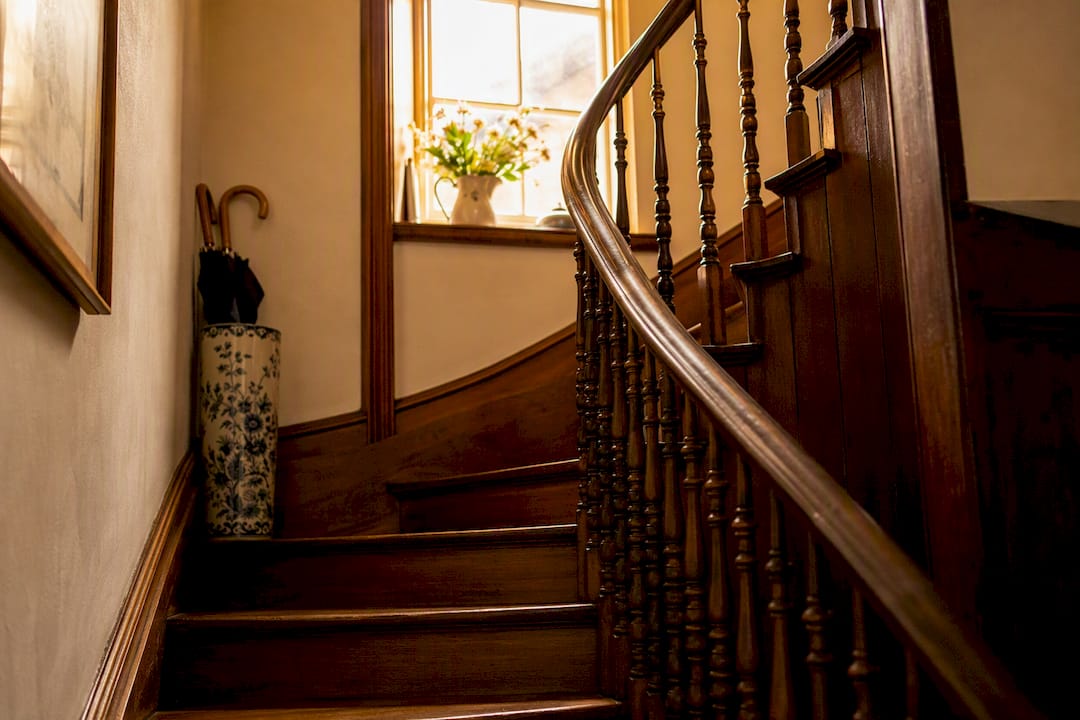
A spiral staircase forces the rail through a compound curve, twisting and bending at the same time, and that geometry is precisely why generic curved rails fail on true spirals. A rail built for a gentler helical stair simply won't track a tight spiral turn without binding.
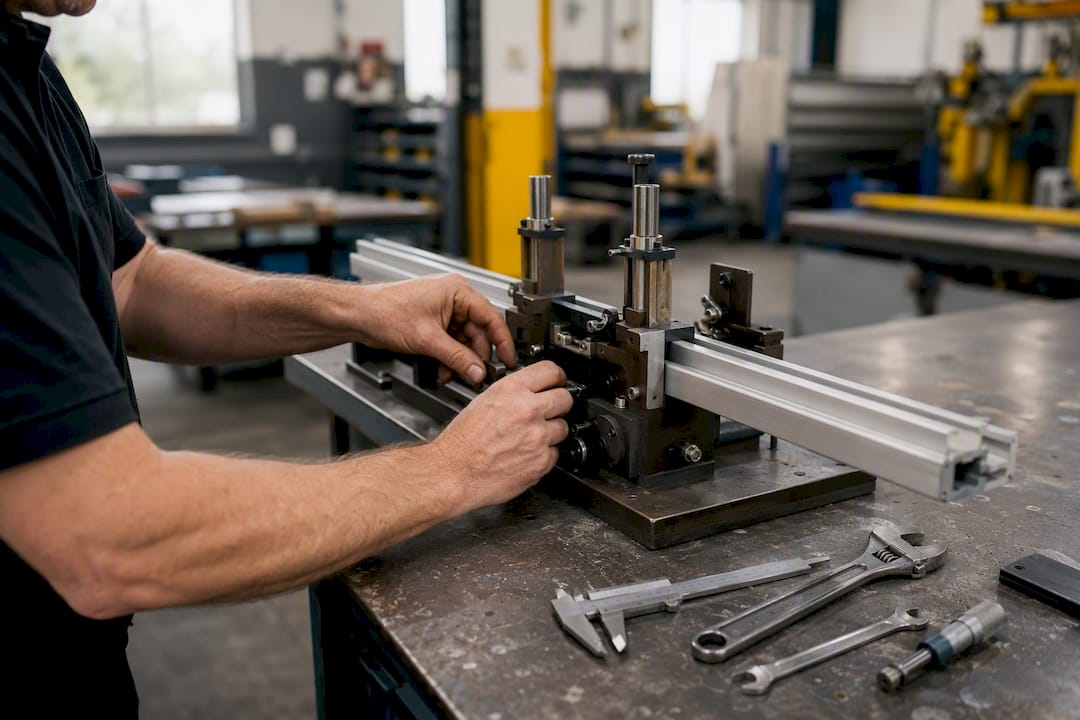
Reputable installers get round this with 3D digital surveying, then CNC bending and factory test jigs that check the rail's fit before it ever leaves the workshop. That factory verification matters more here than on almost any other stairlift job, because a millimetre of error in the helix can cause the carriage to bind partway up.
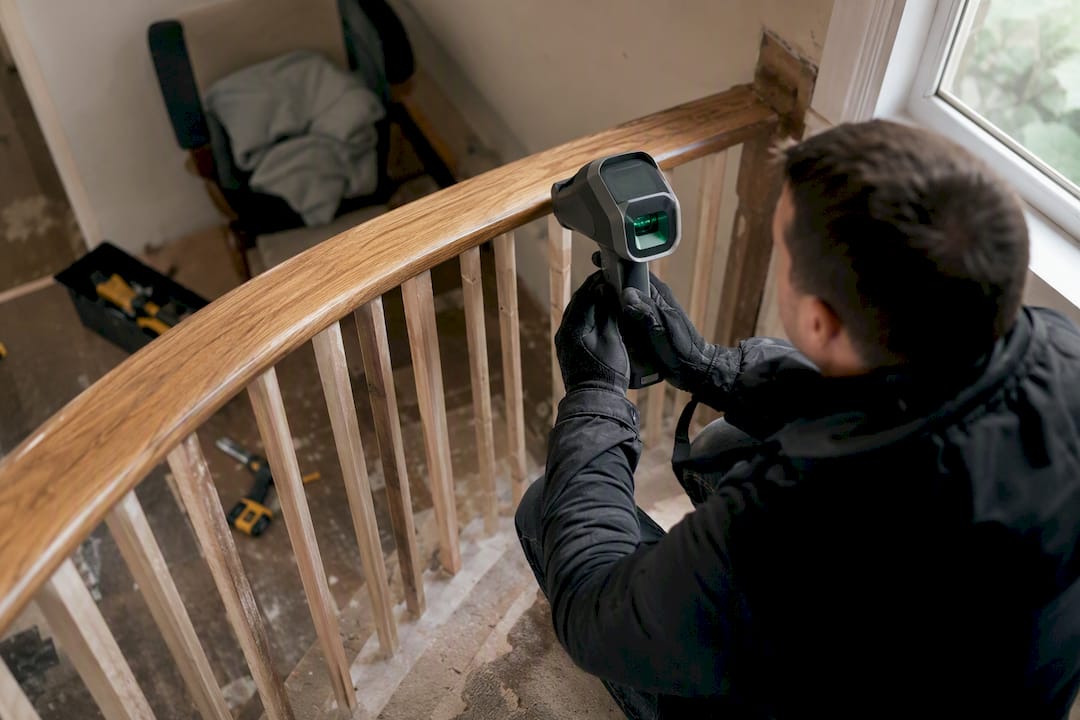
Before ordering a rail, a competent installer will confirm the radius, the total rotation angle, and how the rise per step changes as the stair curves. Skip that step and the rail simply won't sit right.
Pro Tip: Ask your installer whether they use full-scale test jigs at the factory. If a section doesn't fit, it should be reworked in the workshop, never bent or forced on site.
What technicians measure during your home survey
A proper spiral-stair survey is far more detailed than a straight-stair visit, because every measurement feeds directly into a rail that's built for your staircase alone.
- Clear width at multiple points around the spiral, checking what remains once a rail roughly 10–12 inches wide is fitted.
- Radius and total rotation angle, since a tighter turn demands a more complex rail curve.
- Rise per step and tread depth, which can vary noticeably on a spiral compared with a straight flight.
- Headroom at the tightest point of the turn, usually the inner edge.
- Mounting points and nearby obstructions, including newel posts, radiators, and door swings.
This checklist typically takes one to two hours to complete, and digital mapping during that visit is what keeps the eventual rail order accurate. Our guide to minimum stairlift widths covers the width figures in more depth.
What does a spiral stairlift cost, and how long does it take?
Spiral installations sit in a higher price band than straight stairlifts, and the gap is almost entirely down to what happens before the lift ever reaches your home.
- Custom rail fabrication drives most of the cost, since each rail is manufactured to a unique staircase geometry rather than cut from a standard template.
- Precision surveying and specialist labour add further cost compared with a same-day straight-lift fitting.
- Lead time is the trade-off for that precision. Expect roughly six to ten weeks from survey to first use: one to two hours for the survey itself, four to eight weeks for rail manufacture, one to two weeks for delivery, and one to two days for the on-site install.
Cost reality check: Straight stairlifts can start from £795 and often go in within hours, but spiral projects are inherently more complex, so budget for a materially higher price and a wait measured in weeks, not days. If rental fits your timeline better, our subscription options are worth a look.
What happens on installation day for a spiral stairlift?
By the time an installer arrives on site, most of the risk has already been engineered out at the factory.
- Pre-install checks confirm the delivered rail matches the factory test jig result and the original survey data.
- Rail anchoring follows, fixed to the treads or stringer at the exact points recorded during the survey.
- Seat fitment and electrical connection come next, including the swivel mechanism and any auto-levelling components.
- Safety testing runs through obstruction sensors, speed governors, and emergency stops before anyone rides the lift.
- Commissioning and a short demonstration finish the job, so you or your family member knows exactly how to operate it.
Most spiral installs are completed in a day or two on site, though the household should expect some noise and a temporarily blocked staircase while fixings go in.
Safety features and maintenance for spiral stairlifts
Spiral geometry puts extra demand on a handful of specific safety systems, so it's worth knowing what to check for.
- Auto-swivel seats rotate the passenger safely at the top or bottom landing, where space is often tightest.
- Obstruction sensors stop the carriage if anything blocks the rail, which matters more on a curve with restricted sightlines.
- Auto-levelling systems keep the seat level as the pitch changes through the turn, and compact seat and footrest designs help maintain clearance on the tight inner radius.
- Secure rail mounting at every fixing point, checked during routine servicing rather than assumed to be permanent.
Day-to-day, keep the rail clear of clutter, park the lift at its charging point after use, and glance at the battery indicator regularly. Beyond that, book annual servicing and consider an aftercare plan such as Protect+ so battery replacement and safety checks are handled on schedule rather than left to chance. Our swivel seat guide goes into more detail on why that mechanism matters so much on tight turns.
How to choose a reliable installer for a spiral stairlift
Not every stairlift company has genuine spiral-stair experience, so it's worth pressing on specifics rather than accepting reassurance alone.
- Ask how they measure. A confident answer should mention 3D digital surveying or photogrammetry, not a tape measure and guesswork.
- Ask who fabricates the rail and how it's tested. Factory test-jig verification before shipping is the mark of a serious operation.
- Ask about lead time and what's included. A vague "a few weeks" answer is a weaker sign than a clear breakdown of survey, manufacture, delivery, and install.
- Ask about warranty and aftercare. A plan covering servicing and battery replacement tells you the relationship doesn't end at installation.
Pro Tip: Treat a company willing to quote a firm price before an in-home survey as a warning sign. Spiral geometry varies too much for an honest quote without measured data.
Why Gentlerise Stairlifts is worth calling before you rule anything out
Gentlerise Stairlifts fits curved and reconditioned models alongside straight lifts, backed by free home surveys and Protect+ aftercare, so the judgment on your spiral staircase comes from a proper measurement, not a guess. Rental and short-term options help if your need is temporary rather than permanent. Book a survey before assuming a fitting is impossible.
— lee
Book your free spiral staircase survey
Gentlerise Stairlifts gives you a straight answer on feasibility from a specialist, not a call-centre script, because every spiral quote here starts with a genuine in-home measurement, not a price list guess.
Booking a free home survey takes a few minutes, and the technician who visits will measure clear width, radius, rotation, headroom, and mounting points using digital tools rather than a tape measure alone. Before the visit, it helps to have a few photos of your staircase, any previous stairlift quotes, and a note of who'll be using the lift day to day. Once the survey's done, you'll get a personalised quote covering the rail fabrication timeline and, if you want it, a Protect+ aftercare plan for ongoing servicing. If a spiral lift genuinely isn't viable, the same visit will cover what a fair stairlift costs for whichever alternative suits your home. Get in touch to arrange your survey and find out exactly where you stand.
Sources
- Stairlifts for spiral staircases | StairliftResource
- Can you fit a stairlift on a spiral or winder staircase? | StairliftCosts
- Stairlifts for spiral and helical staircases | Stairlift Guru
FAQ
Can you put a stairlift on a spiral staircase?
Often, yes, provided the stairs meet the minimum clear width (commonly 26–28 inches) and there's enough headroom, but it always requires a custom curved rail fitted after a specialist survey.
What are the disadvantages of a spiral staircase?
Beyond stairlift feasibility, spiral staircases are often harder to fit with a rail than straight or helical stairs, involve longer lead times and higher costs when a lift is possible, and may need an alternative like a platform lift when they're not.
Does a stairlift devalue a house?
There's no consistent evidence that a stairlift reduces a property's value, and for many buyers, especially older ones or those with mobility needs, an existing, well-maintained stairlift can be a practical selling point rather than a drawback.
Are spiral staircases legal in the UK?
Spiral staircases are permitted in UK homes and are commonly used where space is limited, though building regulations set specific requirements for tread dimensions and handrails that a qualified surveyor or building control officer should confirm for your property.
How much does a spiral stairlift cost compared with a straight one?
Spiral installations cost noticeably more than straight stairlifts because each rail is custom fabricated to the staircase's exact geometry, while straight lifts use standard rail sections and can start from £795.