
TL;DR:
- Reconditioned straight stairlifts usually offer the best value for long-term needs, while curved stairs typically require a new bespoke unit. Short-term rentals are suitable only for temporary recovery or short periods, with costs varying based on type and features. Local, reputable suppliers like Gentlerise Stairlifts provide free surveys, transparent quotes, and ongoing support across the UK.
For a straight staircase, a reconditioned seated stairlift usually offers the best value. For a curved flight, you almost certainly need a new, bespoke-railed unit. Rental makes sense when the need is genuinely temporary, such as short-term recovery periods. Here is what to expect on price:
- New straight stairlift: typically within a mid-range installed price
- Reconditioned straight stairlift: generally priced lower than new units with some variability
- New curved stairlift: more expensive due to bespoke rail manufacture and complexity
- Short-term rental: typically charged weekly or monthly, suited to needs under six months
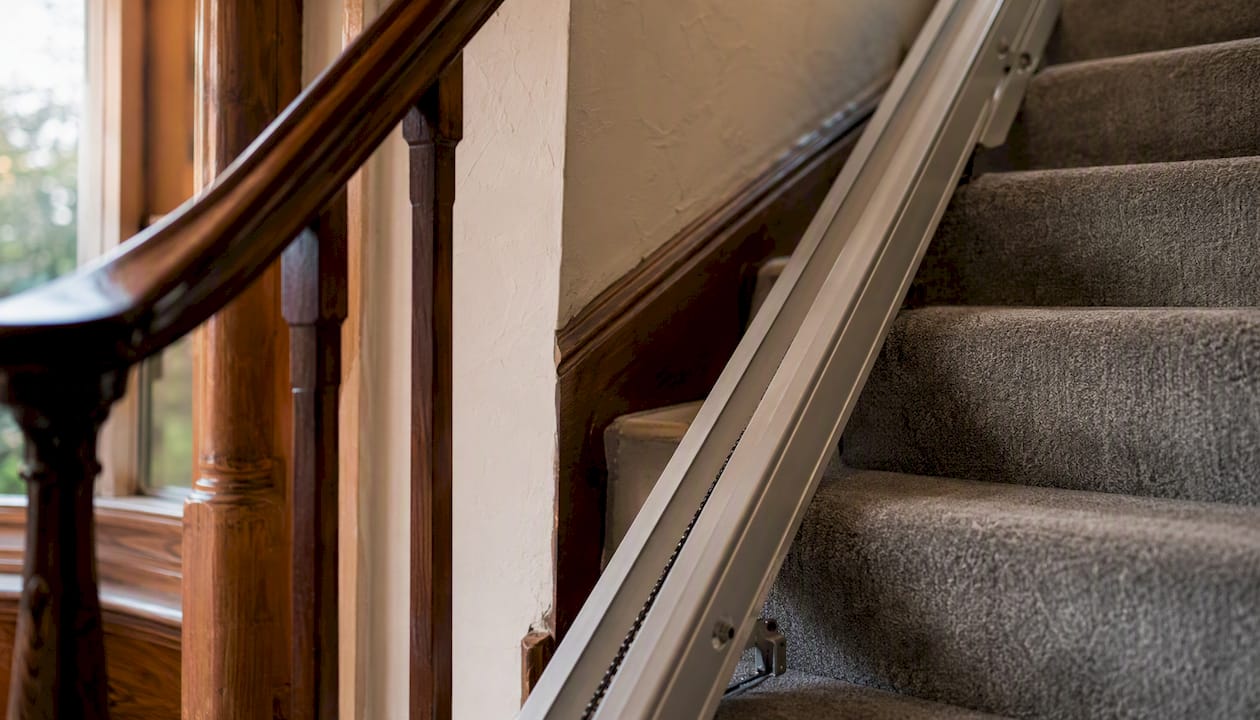
The industry term for what many people search for as a "small step lift" is a seated stairlift, a powered chair that travels along a rail fixed to the stair treads. The immediate next step for most households is a free home survey, which locks in accurate measurements before any quote is finalised. Gentlerise Stairlifts offers exactly that across the UK.
Table of Contents
- What types of seated stairlift suit your staircase?
- Should you buy new, buy reconditioned, or rent?
- What does a seated stairlift actually cost in the UK?
- What happens at a home survey and how long does installation take?
- UK safety standards and regulations you need to know
- What to check before buying a reconditioned stairlift
- What to prepare before your home survey
- Key takeaways
- Why local aftercare matters more than the purchase price
- Gentlerise Stairlifts: free survey, clear quote, local support
- Useful sources
- FAQ
What types of seated stairlift suit your staircase?
Choosing the right type before you survey saves time and avoids costly surprises. The main categories are:
- Straight stairlifts: fit a single, uninterrupted flight. Fastest to install, widest choice of reconditioned units, and the most affordable entry point. Standard models fit stairs from roughly 660–750mm wide; slimline versions work from about 610mm.
- Curved stairlifts: — required for flights with bends, intermediate landings or spiral sections. Rails are bespoke-engineered to the exact geometry of your staircase, which drives both cost and lead time upward.
- Heavy-duty stairlifts: carry higher weight limits, typically above the standard 120–130kg capacity. Reinforced rails and seats are standard; check the weight limit specifications before ordering.
On narrow flights, folding seats, arms and footrests are not optional extras — they are a practical necessity. Installers must confirm the staircase remains passable on foot with the lift parked, and folding furniture is what makes that possible. For a deeper look at model categories, the types of stairlifts guide covers seating variants in detail.
Pro Tip: If your staircase has a half-landing between two straight flights, two straight stairlifts can cost several thousand pounds less than a single curved solution. The user must be able to transfer between chairs at the landing, so this only works if mobility allows.
Should you buy new, buy reconditioned, or rent?
Work through these steps in order:
- Is the staircase straight? If yes, reconditioned is worth exploring. If curved, budget for a new bespoke rail — reconditioned curved units are rare because rails cut for one house rarely fit another.
For short-term post-surgery recovery, rental removes the resale hassle entirely. Curved rentals are uncommon, so if the staircase bends, buying new is usually the only realistic route. The UK stairlift statistics page notes that two straight lifts across a half-landing can be a practical and cheaper alternative when the user can manage the transfer.
What does a seated stairlift actually cost in the UK?
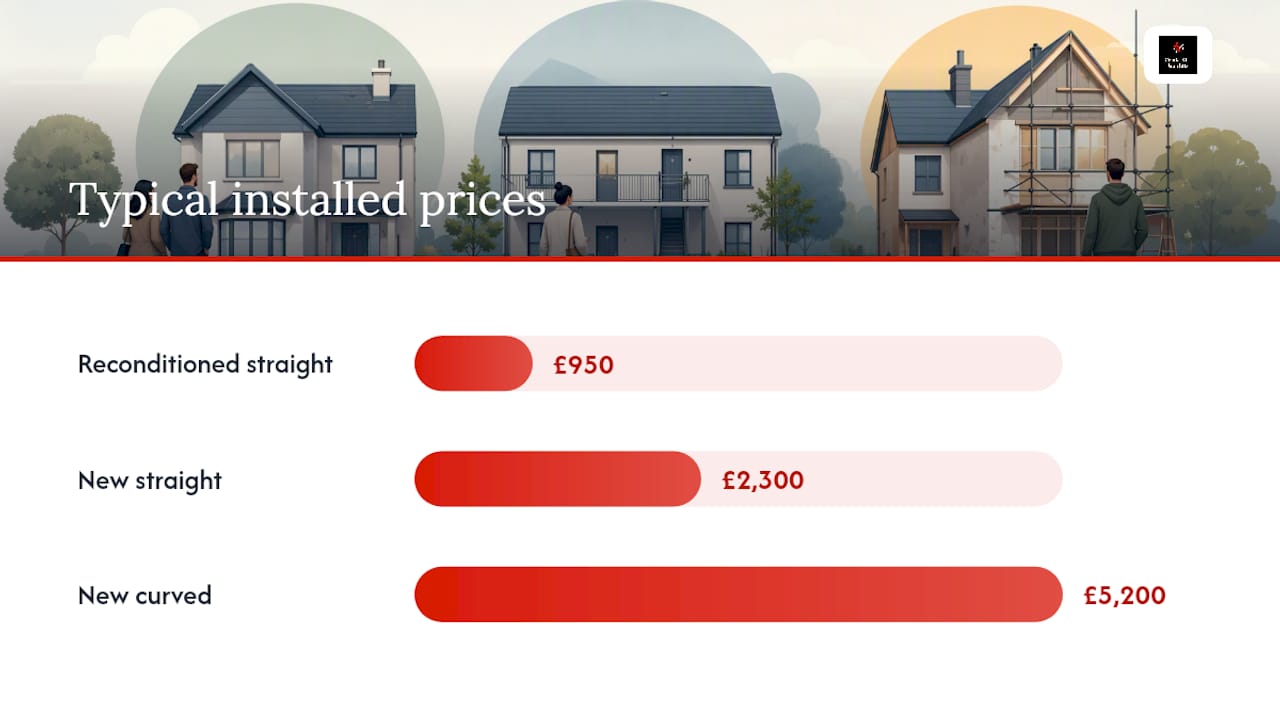
The UK stairlift price index puts average installed costs at roughly £2,300 for a new straight model and £5,200 for a new curved unit, with reconditioned straight units averaging around £950.
| Type | Typical installed price | Key cost drivers |
|---|---|---|
| New straight | mid-range pricing typical | Track length, powered features, seat upgrades |
| Reconditioned straight | generally lower cost than new units | Refurbishment quality, warranty length |
| New curved | typically significantly higher cost due to bespoke rails | Number of bends, bespoke rail manufacture |
| Outdoor | typically higher priced due to weatherproofing | Weatherproofing, corrosion-resistant finish |
| Heavy-duty | often costs more due to reinforced components | Reinforced rail, higher-capacity motor |
Beyond the purchase price, factor in annual servicing (typically £80–£150 per visit), battery replacement every few years, and potential call-out charges if no maintenance plan is in place. Entry-level models typically include manual swivels; premium models offer powered swivels, footrests, hinged rails, and enhanced service options, which increase cost but enhance usability.
What happens at a home survey and how long does installation take?
A professional survey is the foundation of an accurate quote. Here is the typical sequence:
- For curved staircases: a detailed template or laser measurement is taken. The bespoke rail then goes into manufacture, adding 2–6 weeks to the lead time.
Pro Tip: Ask the engineer to demonstrate the obstruction sensors and the manual descent procedure during handover. These are the two features most users forget to practise and most need in an emergency.
For a full walkthrough of the process, the stairlift installation guide covers regulatory notes and step-by-step fitting detail.
UK safety standards and regulations you need to know
BS EN 81-40 is the governing standard for stairlifts and inclined lifting platforms, covering braking systems, obstruction sensors, seat restraints and safe operating speeds. Any new unit placed on the GB market must carry UKCA marking (or CE marking for units placed before the transition deadline) and be accompanied by a Declaration of Conformity, which is the installer's responsibility to provide under the Lifts Regulations 2016.
Key regulatory points for homeowners:
- Domestic installs: most private home stairlifts do not require building regulations approval or planning permission under Parts K and M of the Building Regulations, as confirmed by Review Mobility's building regulations guidance.
- Workplace equipment: when a stairlift is provided for use by employees or workers, it can fall under LOLER and PUWER, requiring periodic thorough examination by a competent person. Domestic lifts used solely by residents generally fall outside these regulations, though suppliers still carry safety responsibilities.
What to check before buying a reconditioned stairlift
Reconditioned straight stairlifts offer genuine value when the paperwork is in order. The right conditions are a straight staircase, a long-term need, and a supplier with verifiable refurbishment records.
Red flags to walk away from:
- No refurbishment certificate or test log
- Rails cut to fit a different property (incompatible geometry)
- Missing or discontinued replacement parts
- Outdoor components with corrosion or saturated upholstery
- Warranty shorter than six months with no extension option
Always insist on a written refurbishment report, evidence of safety checks against BS EN 81-40, and a clear warranty covering at least parts and labour. For curved staircases, the curved stairlift tracks guide explains why bespoke rails make reconditioning impractical in almost every case.
What to prepare before your home survey
Getting these details ready speeds up the survey and sharpens the quote.
- Measure the narrowest point of the staircase width (in millimetres).
- Count the number of steps and note any intermediate landings or bends.
- Identify obstructions: newel posts, radiators, windows or low ceilings near the top.
- Locate the nearest mains socket to the top and bottom of the stairs.
- Note the user's weight and any relevant mobility details (balance, cognitive issues, ability to transfer).
Photos to take before the engineer arrives:
- Full staircase from top and bottom
- Close-ups of any bends, landings or obstructions
- The top and bottom landing areas, showing available turning space
Key takeaways
A reconditioned straight stairlift is usually the best-value long-term option for a straight flight; curved stairs almost always require a new, bespoke-railed unit with a correspondingly higher price and lead time.
| Point | Details |
|---|---|
| Straight stairs, long-term need | A reconditioned unit at £800–£1,500 installed is usually the most cost-effective choice. |
| Curved stairs | Expect a new bespoke rail at £3,500–£8,000+; reconditioned curved units are rarely viable. |
| Temporary needs | Rent for needs under six months; buying becomes cheaper beyond roughly a year. |
| Safety compliance | Confirm BS EN 81-40 compliance, UKCA/CE marking and a Declaration of Conformity before accepting any unit. |
| Gentlerise Stairlifts | Offers free home surveys, new and reconditioned sales, rentals, and Protect+ aftercare plans across the UK. |
Why local aftercare matters more than the purchase price
The stairlift market tends to focus buyers on the upfront cost, and that framing misses the point. A lift that breaks down on a Sunday evening and sits idle for a week is not a bargain at any price. The real measure of value is how quickly a qualified engineer arrives when something goes wrong, and whether the parts to fix it are actually available.
Reconditioned units from reputable suppliers with strong local networks can be excellent. The risk is not the age of the unit; it is the absence of documentation and the distance to the nearest engineer. A Protect+ style plan that commits to a response window is worth more than a vague "we'll be in touch" from a supplier three counties away.
Gentlerise Stairlifts: free survey, clear quote, local support
For UK homeowners who want a straight answer and a prompt visit, Gentlerise Stairlifts covers new sales, reconditioned lifts, short-term rentals and Protect+ maintenance plans under one roof. Prices for straight stairlifts start at £800, with typical installed costs for reconditioned models averaging around £950 and ranging up to £1,500. The free home survey locks in accurate measurements before any commitment is made.
What you get from the first call: a survey booked within days, a transparent quote covering installation and aftercare, and a clear explanation of warranty terms and BS EN 81-40 compliance. No pressure, no vague estimates. Book your free home survey with Gentlerise Stairlifts today, or visit the Gentlerise Stairlifts homepage to explore the full range of options.
Useful sources
- UK stairlift price index | Stairlift Guru
- Which stairlift do I need? UK buyer's guide 2026
- Passenger lifts and workplace lifting equipment | HSE
- Lifts Regulations 2016 (Great Britain) guidance
- Building regulations for stairlifts | Review Mobility
- UK stairlift statistics and advice | Stairlift Guru
- Stairlift installation guide UK
- Straight stairlifts | Stairlift Costs
FAQ
What is the difference between a small step lift and a stairlift?
"Small step lift" is a common informal search term; the correct industry name is a seated stairlift, a powered chair that travels along a rail fixed to the stair treads. The two phrases refer to the same product.
Do I need planning permission to install a stairlift at home?
Most domestic stairlift installations do not require planning permission or building regulations approval. Exceptions apply to listed buildings, communal staircases and external installs, where freeholder consent or a fire risk assessment may be needed.
How long does a stairlift installation take?
A straight stairlift is typically fitted within a few hours on the day. Curved installations require bespoke rail manufacture first, which adds multiple weeks to the lead time.
Is a reconditioned stairlift safe?
Yes, provided it comes with a written refurbishment report, test logs, evidence of BS EN 81-40 compliance and a warranty covering at least parts and labour. Without that documentation, the risk is not worth taking.
Can Gentlerise Stairlifts help with both buying and renting?
Yes. Gentlerise Stairlifts offers new sales, reconditioned units, short-term rentals and Protect+ aftercare plans, with a free home survey as the starting point for any enquiry.