
TL;DR:
- Noise reduction in stairlifts depends on motor technology, drive design, and maintenance practices that keep sound levels below disturbance thresholds. Modern models typically operate between 40 and 55 decibels, making them suitable for night-time use and shared homes. Proper upkeep, quality installation, and choosing the right drive system help maintain low noise and ensure user comfort and privacy.
Noise reduction in stairlifts is defined as the combination of motor technology, drive system design, and maintenance practices that keep operational sound below levels that disturb household members. Modern stairlifts typically operate between 40–55 dB, comparable to a quiet library or a refrigerator hum. That range matters enormously if you share your home with light sleepers, live in a flat, or simply want to move between floors without announcing yourself. The role of noise reduction in stairlifts goes well beyond technical specification. It directly shapes your confidence, privacy, and day-to-day independence.
How do stairlifts achieve noise reduction through design and technology?
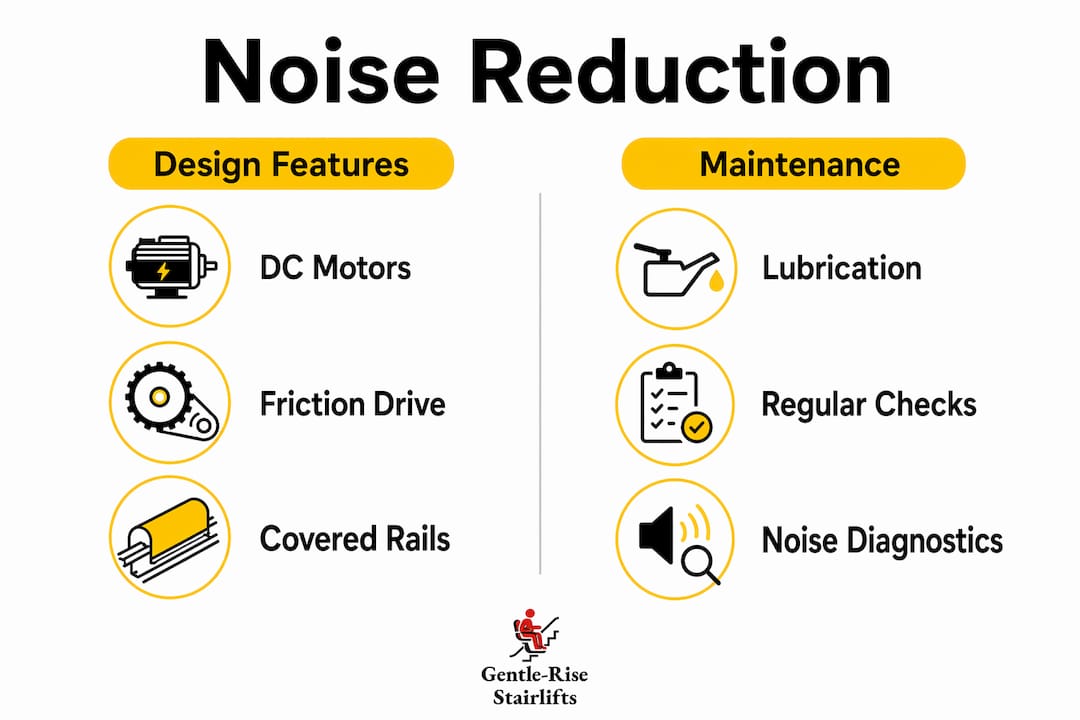
Quiet operation in stairlifts starts with the motor. Switching from AC mains-powered motors to low-voltage DC battery systems substantially reduces noise by eliminating the mains-frequency hum and vibration that older models produce. Most modern stairlifts now run on DC battery power, which also means they continue working during a power cut.
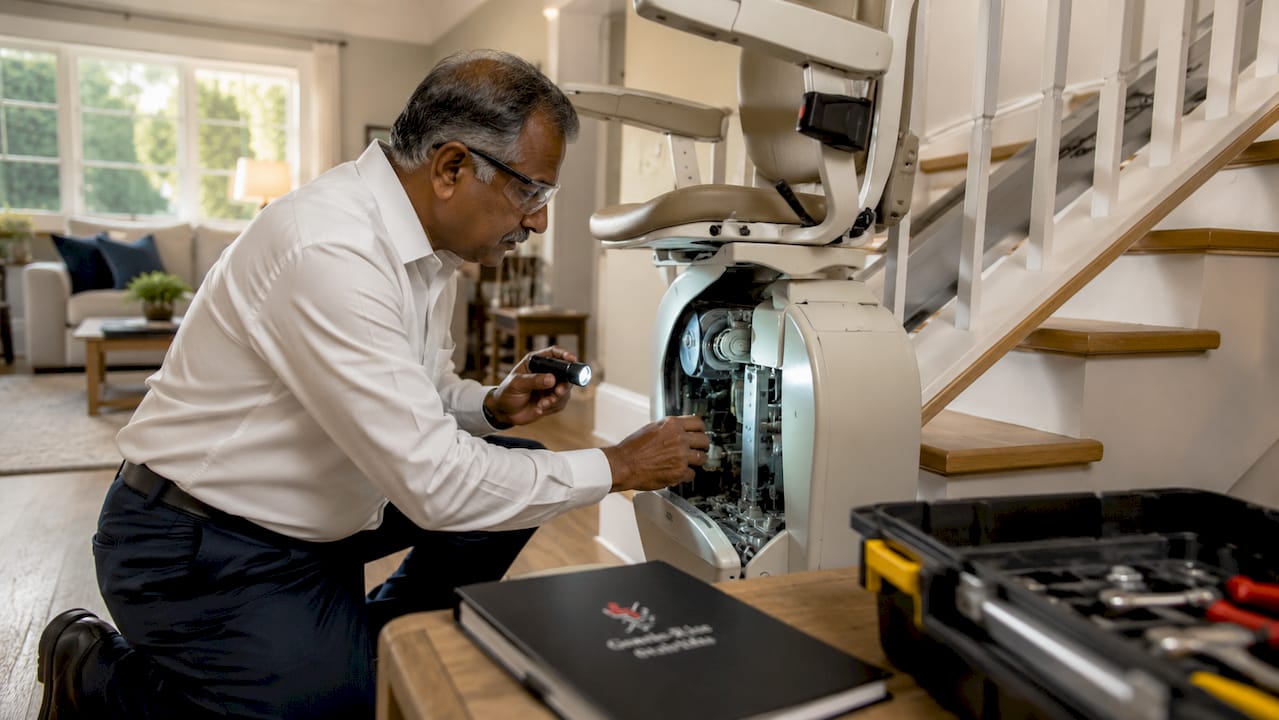
The drive system is the second major factor. Friction drive systems are the quietest available, operating at 40–48 dB, because the carriage grips the rail directly without exposed gears. Standard rack-and-pinion systems run at 50–55 dB. Worm gear and cable drive systems sit somewhere between the two, depending on build quality and installation precision.
Drive system noise comparison
| Drive system | Typical noise level | Best suited for |
|---|---|---|
| Friction drive | 40–48 dB | Straight staircases, light sleepers |
| Rack-and-pinion (covered) | 48–52 dB | Straight and curved, general use |
| Rack-and-pinion (open) | 50–55 dB | Budget straight stairlifts |
| Worm gear | 48–53 dB | Curved and complex staircases |
| Cable drive | 45–50 dB | Straight staircases, moderate budgets |
Rail and casing design also play a significant part. Premium models like Bruno use covered gear racks to achieve whisper-level noise below 50 dB by enclosing the drive mechanism and shielding you from gear meshing sounds. Soft-start motors ramp up speed gradually rather than lurching into motion, which reduces both mechanical stress and the clunk you hear at departure. Rail materials that absorb vibration rather than transmit it through the wall brackets complete the picture.
Pro Tip: When comparing models, ask the supplier to demonstrate the stairlift at its full operating speed in a quiet room. A showroom demo at low speed will not reflect the sound level you will live with at home.
What maintenance practices keep a stairlift quiet?
A stairlift that leaves the factory at 45 dB will not stay there without care. Neglecting servicing leads to increased sound from worn parts, while proper upkeep can keep an older stairlift as quiet as a new one. The good news is that most noise problems are preventable with straightforward routine care.
Follow these four maintenance steps to preserve low stairlift sound levels:
-
Wipe the rail monthly. Monthly wiping of the stairlift rail with a dry cloth prevents dust accumulation, which is the leading cause of friction-induced noise rather than mechanical failure. A few minutes each month saves a service call.
-
Use the right lubricant. Silicone-based sprays are recommended for rail lubrication; oil or WD-40 attract dust and worsen noise over time. Apply a thin coat to the rail every three to six months, or whenever you notice a dry scraping sound.
-
Book annual professional servicing. A qualified engineer will lubricate internal components, inspect the motor brushes, check the drive system, and tighten any loose parts. This is the single most effective way to maintain quiet operation year after year.
-
Tighten loose mounting brackets. Loose mounting brackets cause vibration and amplified noise. A technician can secure the rail brackets quickly during a routine visit, and the difference in sound is often immediate.
Knowing what different noises mean also helps you act before a small issue becomes a costly repair. Squealing or screeching sounds indicate a dry track needing silicone-based lubricant, while grinding points to more serious wear such as worn bearings that require professional attention. Persistent beeping usually indicates triggered safety fault codes related to the battery or sensors, not normal operational noise, and should be diagnosed promptly.
Pro Tip: Keep a small bottle of silicone spray and a dry cloth near the stairlift charging point. A quick wipe and spray during your weekly routine takes under two minutes and prevents the majority of noise complaints.
How does noise reduction impact user comfort and privacy?
Noise control restores autonomy and privacy, particularly in shared living environments where drawing attention to a mobility aid can feel uncomfortable. This is one of the most underappreciated quiet stairlifts benefits, and it shapes how freely people actually use the equipment they have paid for.
Consider what quiet operation means in practice:
- Night-time independence. Noise levels under 50 dB are considered ideal for night-time use to avoid disturbing light sleepers. Dr Ashok Rajgopal highlights this threshold as critical for reducing user anxiety during night stairlift use. Being able to move between floors at 2am without waking a partner or grandchild changes the quality of life significantly.
- Reduced self-consciousness. Many users report that a loud stairlift makes them feel conspicuous in front of visitors or family members. A quiet model removes that friction entirely, making the stairlift feel like a natural part of the home rather than a medical intrusion.
- Lower anxiety during use. Mechanical noise can be unsettling, particularly for users who are already nervous about their mobility. A smooth, near-silent ride builds confidence and encourages regular use rather than avoidance.
- Suitability for multi-generational homes. In households where children nap, elderly relatives sleep lightly, or adults work from home, stairlift sound levels become a genuine household concern. A model running at 42 dB is simply not audible through a closed door.
The importance of noise reduction extends to communal settings too. In purpose-built flats or converted houses with shared walls, a noisy stairlift can disturb neighbours. Choosing a model with enclosed gear racks and soft-start motors addresses this concern before installation rather than after.
How do stairlift types and home layouts affect noise levels?
The type of staircase you have directly influences the noise level you can expect. Curved stairlifts typically produce slightly more noise at 50–56 dB than straight stairlifts, which usually run under 50 dB, because curved tracks require rail joints and more complex engineering. Each joint is a potential source of vibration as the carriage passes over it.
Noise levels by stairlift type
| Stairlift type | Typical noise range | Key noise factor |
|---|---|---|
| Straight (friction drive) | 40–48 dB | Minimal; smooth continuous rail |
| Straight (rack-and-pinion) | 48–55 dB | Gear mesh at speed |
| Curved (custom rail) | 50–56 dB | Rail joints and bends |
| Reconditioned straight | 44–52 dB | Dependent on service history |
Straight stairlifts are the quietest option for most homes. The rail is a single continuous piece with no joints, and friction drive systems can bring noise down to the level of a whispered conversation. If your staircase is straight, you have the widest choice of quiet models at the most accessible price points.
Curved staircases require a custom-bent rail, and the additional complexity does add some noise. However, top manufacturers minimise this with precision-engineered joints and vibration-dampening rail materials. The difference between a well-made curved stairlift and a poorly fitted straight one is often negligible in practice. Proper installation matters as much as the model itself. A rail fitted with even slight misalignment will produce noise that no amount of lubrication will fix. This is why choosing an installer who takes time over the fitting, rather than rushing through in the minimum possible time, directly affects how quiet your stairlift sounds for years to come. You can explore stairlift types and home fit in more detail to match your staircase to the right drive system.
Key takeaways
Quiet stairlift operation depends on motor type, drive system design, correct installation, and regular maintenance working together.
| Point | Details |
|---|---|
| DC motors reduce noise at source | Battery-powered DC motors eliminate mains hum, keeping most modern stairlifts below 55 dB. |
| Drive system choice is decisive | Friction drive systems at 40–48 dB are the quietest; covered rack-and-pinion systems follow closely. |
| Maintenance preserves quiet operation | Monthly rail cleaning and annual professional servicing prevent the majority of noise increases over time. |
| Under 50 dB suits night-time use | Models running below 50 dB avoid disturbing light sleepers and are suitable for shared households. |
| Curved stairlifts need quality fitting | Rail joints on curved models add noise; precision installation and vibration-dampening materials minimise this. |
Why noise matters more than most buyers realise
I have spoken with hundreds of stairlift users over the years, and the pattern is consistent. People research weight capacity, speed, and price. Noise comes up as an afterthought, usually after installation. Then it becomes the thing they mention first when describing their experience.
The misconception I encounter most often is that all stairlifts sound roughly the same. They do not. The gap between a friction drive model at 42 dB and an older open rack-and-pinion system at 55 dB is not subtle. At 42 dB, you can hold a normal conversation in the same room. At 55 dB, the stairlift announces itself to the entire floor.
What surprises people even more is that noise is largely controllable. The right model, fitted correctly, maintained properly, will stay quiet for a decade. The wrong model, or a correct model fitted carelessly, will develop noise within months. I always advise people to ask specifically about the drive system and whether the gear rack is enclosed before agreeing to any installation. Those two questions will tell you more about long-term noise than any brochure.
Affordability and quietness are not mutually exclusive either. Reconditioned straight stairlifts with friction drive systems can deliver excellent noise performance at a fraction of the cost of a new curved model. The key is knowing what to look for. You can find practical guidance on maintaining your stairlift affordably to keep noise levels low without expensive call-outs.
— lee
How Gentlerise Stairlifts can help you move quietly at home
Gentlerise Stairlifts supplies and installs straight, curved, and reconditioned stairlifts across the UK, with professional fitting that prioritises rail alignment and vibration control from day one. Every installation includes a thorough setup process designed to minimise operational noise, and the Protect+ maintenance programme keeps your stairlift running quietly long after the fitting team leaves.

If noise reduction is a priority for you, whether for night-time use, a shared household, or simply personal comfort, Gentlerise Stairlifts offers a free home survey to match you with the right model and drive system for your staircase. Prices for straight stairlifts start from £795, and the team can often complete installation within hours. Visit Gentlerise Stairlifts to book your free survey or explore stairlift costs in the UK to plan your budget with confidence.
FAQ
What is the typical noise level of a modern stairlift?
Modern stairlifts operate between 40–55 dB, roughly equivalent to a quiet library. Friction drive models are the quietest, while standard rack-and-pinion systems sit at the higher end of that range.
Are curved stairlifts louder than straight stairlifts?
Curved stairlifts typically produce 50–56 dB compared to under 50 dB for straight models, due to rail joints and track complexity. Quality installation and vibration-dampening components reduce this difference considerably.
What causes a stairlift to become noisier over time?
Dust accumulation on the rail, dry components lacking lubrication, and loose mounting brackets are the three most common causes. Monthly rail cleaning and annual professional servicing address all three before they escalate.
What lubricant should I use on my stairlift rail?
Silicone-based spray is the correct choice for stairlift rails. Oil-based products and WD-40 attract dust and create a residue that worsens noise and wear over time.
Can a stairlift be used quietly at night without disturbing others?
Yes. Models operating below 50 dB are considered suitable for night-time use in shared households. DC battery-powered stairlifts with friction or covered rack-and-pinion drive systems consistently achieve this threshold.