
TL;DR:
- Next-generation stairlifts combine advanced mechanical design with digital connectivity to enhance safety and comfort. Powered swivel seats and battery backup systems are the most critical features, significantly reducing fall risks and ensuring operation during power outages. Smart technologies, while useful for remote monitoring, are optional, with core safety benefits prioritized in mid-range models.
Next-gen stairlift technology is defined as the integration of advanced mechanical design and digital connectivity into modern stairlift systems to deliver safer, more comfortable, and smarter home mobility. The term covers everything from powered swivel seats and battery backup systems to WiFi diagnostics and voice control. Where older models offered little more than a motorised chair on a rail, today's generation from providers like Gentlerise Stairlifts addresses the full journey: getting on, travelling, and getting off safely. Understanding what is next-gen stairlift tech means knowing which features genuinely protect you and which are simply cosmetic upgrades.
What is next-gen stairlift tech and why does it matter?
Next-generation stairlift technology, referred to in the industry as advanced stairlift design, combines mechanical engineering improvements with digital features to address the most common causes of stairlift-related injury and inconvenience. The core mechanical advances include powered swivel seats, battery-powered drive systems, space-saving rail profiles, and sensor-based obstruction detection. The digital layer adds remote diagnostics, smartphone control, and smart home integration. Together, these features represent a meaningful shift from the basic lift-and-carry function of earlier models.
The significance is practical. Falls during dismount at the top landing are among the most serious risks associated with stairlift use. Powered swivel seats address this directly by rotating the chair automatically to face the landing before the user stands. This is not a luxury feature. For anyone with limited grip strength or reduced dexterity, a manual swivel lever is genuinely difficult to operate safely.
Battery operation matters equally. Modern stairlifts run on 24V rechargeable battery systems that provide 15 to 30 round trips on a full charge, with trickle chargers at the parking points keeping the battery topped up continuously. This means the lift works during a power cut, which is precisely when a vulnerable user is most at risk of being stranded on the stairs.
What are the core mechanical innovations in next-gen stairlifts?
The mechanical improvements in next-generation stairlifts are where the most meaningful safety and comfort gains are found. These are not incremental tweaks. They represent a redesign of how the lift interacts with the user's body and the home environment.
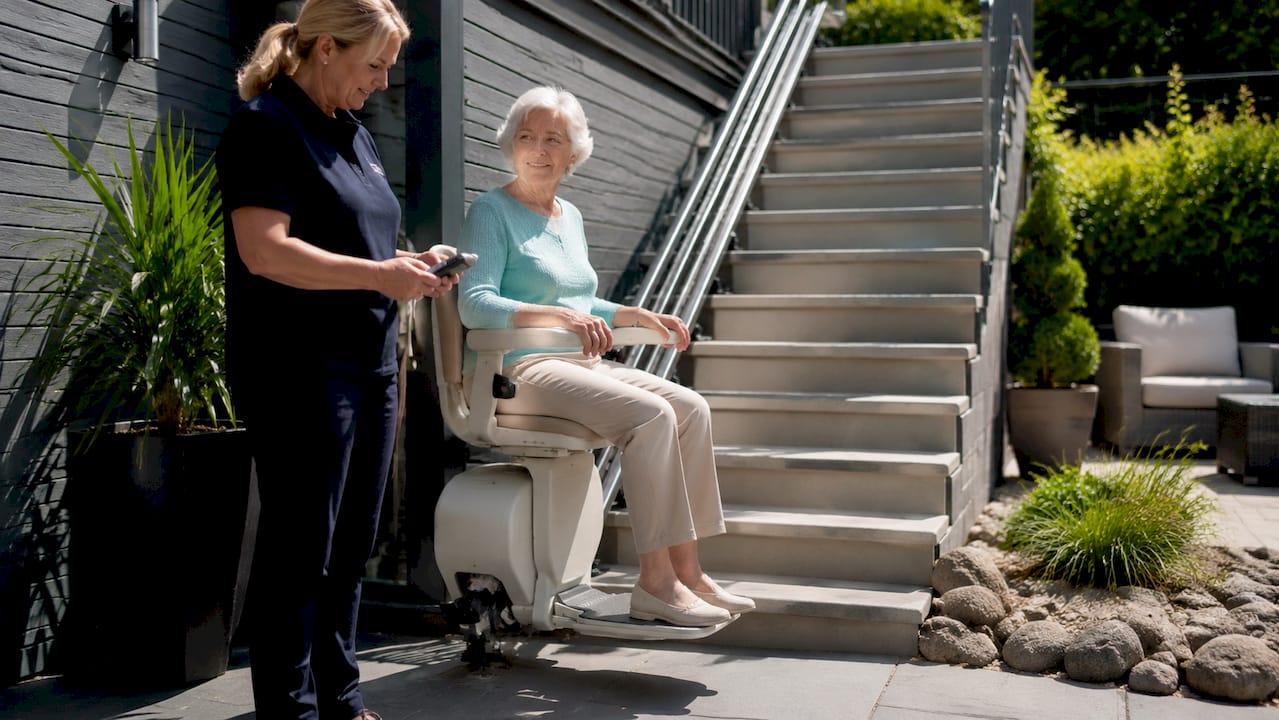
Powered swivel seats are the single most important upgrade. Manual levers require strength and reach that many users simply do not have, particularly those recovering from surgery or managing arthritis. A powered swivel rotates the seat automatically at the top landing, ensuring the user faces away from the stairs before standing. The cost premium is typically £160 to £320, and it is standard in mid-range and premium models in 2026.
Space-efficient rail systems have transformed installation in smaller UK homes. Modern rails are as narrow as 12 to 15 cm with powered folding footrests and hinged rail sections that fold flat against the wall when the lift is parked. This matters enormously in Victorian terraces and narrow Edwardian staircases where every centimetre counts.
The rack-and-pinion drive system is the mechanical heart of a next-gen stairlift. A toothed rack runs along the rail and a pinion gear on the carriage engages it precisely, producing smooth, controlled movement at consistent speed regardless of the stair angle. Combined with soft-start and soft-stop electronics, this eliminates the jolts that characterised earlier cable-driven models.
Key mechanical features to look for:
- Powered swivel seat with automatic rotation at the top landing
- 24V battery system with trickle-charge parking points
- Ultra-slim rail profile (12 to 15 cm) with powered folding sections
- Rack-and-pinion drive for consistent, smooth travel
- Obstruction sensors on the footrest and carriage with automatic stop
Pro Tip: If you are choosing between models, prioritise the powered swivel and battery backup before any cosmetic or digital upgrade. These two features address the most serious safety risks and deliver the most tangible benefit in daily use.
How do smart technologies enhance modern stairlift functions?
Smart stairlift technology adds a digital layer to the mechanical foundation, and its value depends largely on who is using the lift and who is responsible for its upkeep. For caregivers and family members managing a relative's mobility from a distance, WiFi connectivity, usage logging, and predictive maintenance alerts provide genuine peace of mind. For the primary user, the most appreciated feature is often simply a smartphone app that calls the lift to the correct floor without having to walk to the remote.
The practical benefits of smart stairlift features include:
- Remote diagnostics: Service technicians can assess fault codes and usage patterns without a home visit, reducing downtime and call-out costs.
- Smartphone app control: Users or carers can send the lift to a specific floor, lock the controls, or check battery status from a phone.
- Predictive maintenance alerts: The system flags components approaching wear thresholds before they fail, allowing planned servicing rather than emergency repairs.
- Voice control integration: Compatibility with Amazon Alexa and Google Assistant allows hands-free operation, which is particularly useful for users with limited hand mobility.
- Usage data tracking: Logs of daily trips and timing patterns can help caregivers identify changes in a user's routine that may indicate a health concern.
The honest assessment is that smart features aid caregivers and reduce maintenance interruptions but are non-essential for the core lift function. A stairlift without WiFi still carries you safely up the stairs. The smart layer is most valuable when someone other than the user is monitoring the lift's condition or when the household already uses a smart home ecosystem. If you are exploring the latest stairlift trends for 2026, smart integration is the area moving fastest.
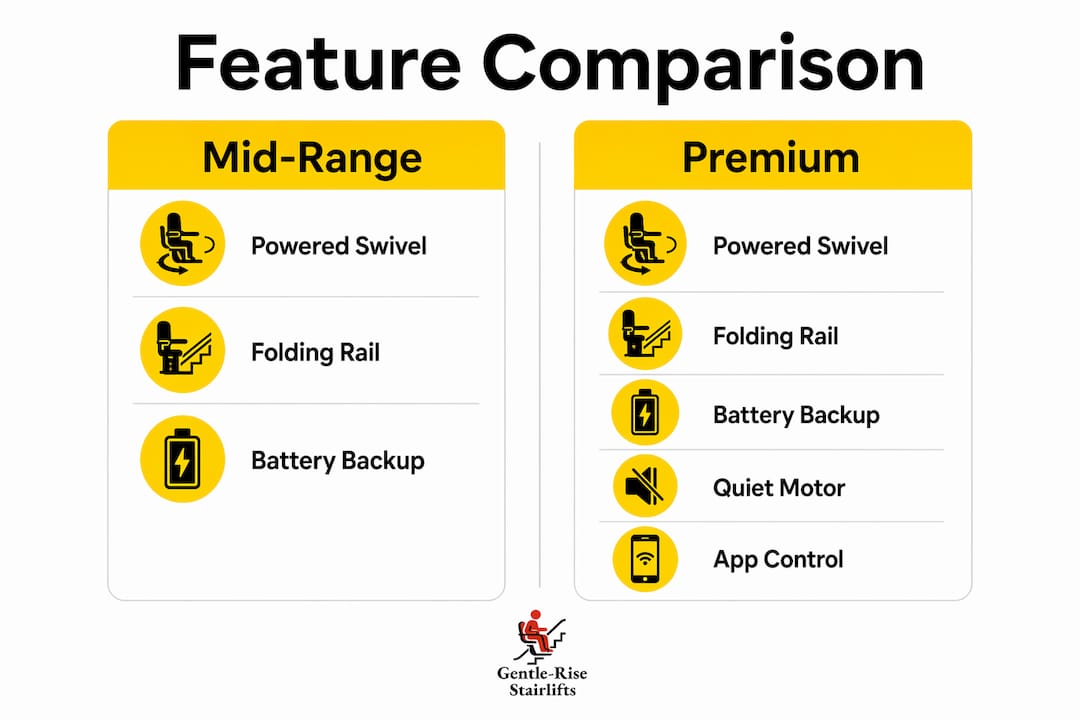
Mid-range vs premium next-gen stairlifts: which features are worth it?
Understanding the difference between mid-range and premium next-generation stairlifts helps you spend money where it genuinely improves your experience rather than on features that look impressive in a brochure.
| Feature | Mid-range models | Premium models |
|---|---|---|
| Powered swivel seat | Standard | Standard |
| Folding rail and footrest | Standard | Standard, often motorised |
| Battery backup system | Standard | Standard |
| Motor noise level | Moderate | Noticeably quieter |
| Rail profile width | 14 to 15 cm | 12 to 13 cm |
| Custom colour options | Limited | Broad range |
| Smart connectivity | Optional add-on | Often included |
| Soft-start/stop electronics | Standard | Enhanced |
Mid-range models typically include powered swivel and folding rails, which means the safety-critical features are not reserved for the top tier. The premium bracket adds quieter motors, slimmer rail profiles, and a wider choice of upholstery and frame colours. These are real improvements, but they are comfort and aesthetic improvements rather than safety ones.
Adding features like powered swivel, folding rail, and powered footrest typically costs an additional £430 to £950 beyond the base price, depending on the model and supplier. That is a meaningful sum, and it is worth asking your installer which of those features are included as standard before agreeing to any upgrade package.
Pro Tip: Ask your installer to separate the cost of safety-critical upgrades from cosmetic ones. A quieter motor is pleasant; a powered swivel seat is protective. Allocate your budget accordingly.
Installation and safety: what you need to know before buying
Installing a next-generation stairlift is less disruptive than most people expect, and understanding the process helps you plan realistically.
- Survey and measurement. A qualified installer measures the staircase, identifies any obstructions, and determines whether a straight or curved rail is required. Gentlerise Stairlifts offers free home surveys across the UK.
- Rail fitting. Stairlift rails bolt directly into the stair treads, not the walls. This means installation is possible in rented properties, homes with drywall, and even staircases with glass balustrades, without any structural modification. Removable zero-damage mounting systems are increasingly common in 2026.
- Carriage and seat installation. The drive carriage and seat assembly are fitted to the rail, electrical connections are made, and the trickle chargers are installed at the parking points.
- Testing and handover. The installer runs the lift through its full range, tests all sensors and safety functions, and walks the user through the controls.
A typical straight stairlift installation takes between two and four hours. Curved staircases require a custom-bent rail and a longer lead time, but the installation day itself is similarly brief.
On safety: obstruction sensors on the footrest and carriage detect any object in the lift's path and stop the carriage automatically. The path must be clear before the lift will restart, which prevents both injury and mechanical damage. The battery system acts as a fail-safe: if the mains supply fails mid-journey, the lift completes its travel to the nearest landing rather than stopping on the stairs.
Pro Tip: If you live in a rented property, confirm with your installer that the rail mounting system is fully removable before purchase. Most next-gen systems are, but it is worth verifying in writing to protect your deposit.
For a broader view of how stairlifts fit into home accessibility, the combination of rail design and safety sensors makes modern models far more compatible with varied UK housing stock than earlier generations.
Key takeaways
Next-gen stairlift technology delivers its greatest value through powered swivel seats and battery backup systems, not through digital features.
| Point | Details |
|---|---|
| Powered swivel is the priority upgrade | It rotates the seat to face the landing automatically, reducing fall risk during dismount. |
| Battery systems are a safety design | 24V rechargeable systems provide 15 to 30 round trips and operate during power outages. |
| Rails attach to treads, not walls | Installation requires no structural changes, making next-gen stairlifts suitable for rentals. |
| Mid-range covers the safety essentials | Powered swivel and folding rails are standard in mid-range models, not just premium ones. |
| Smart features serve caregivers most | WiFi diagnostics and app control add value for remote monitoring rather than primary users. |
Why the powered swivel deserves more attention than it gets
I have spoken with a lot of people researching stairlifts, and the pattern is consistent. They ask about WiFi connectivity, voice control, and colour options. Very few ask about the powered swivel seat. That gap concerns me, because manual swivel levers require dexterity and strength that the very users who need a stairlift most are often unable to provide reliably.
The dismount at the top landing is the moment of highest risk. The user is at height, often fatigued from the journey, and needs to rotate, stand, and step onto the landing in a controlled sequence. A powered swivel removes the rotation step from that equation entirely. It is the one feature I would never compromise on, regardless of budget.
Soft-start and soft-stop technology is the second underrated feature. The absence of jolts at the beginning and end of travel is not just comfortable. It prevents the involuntary grip-and-brace response that can strain joints and unsettle users with balance conditions. Earlier models felt mechanical. Current ones feel controlled.
On smart features: I think their value is real but frequently oversold to the wrong audience. The primary user wants a lift that works quietly, smoothly, and reliably. The caregiver or adult child managing the situation remotely is the one who benefits from usage logs and remote diagnostics. If you are buying for yourself, do not pay a premium for connectivity features you will rarely use. If you are buying for a parent you check in on weekly, the data those features provide can be genuinely reassuring.
The direction of travel in 2026 is towards tighter sensor integration and lighter rail profiles. Both of those trends serve real users in real homes. That is the right focus.
— lee
How Gentlerise Stairlifts brings next-gen technology to your home

Gentlerise Stairlifts installs next-generation stairlift solutions across the UK, with models featuring powered swivel seats, 24V battery backup, and space-saving folding rail systems as standard. Whether you need a straight stairlift from £795, a curved model for a more complex staircase, or a short-term rental while recovering from surgery, Gentlerise Stairlifts provides professional installation, often completed within hours, and ongoing support through the Protect+ maintenance programme. Every installation begins with a free home survey, so you get an accurate recommendation before committing to anything. Explore the full range of stairlift solutions from Gentlerise and take the first step towards safer, more confident movement at home.
FAQ
What is the most important safety feature in a next-gen stairlift?
The powered swivel seat is the single most important safety feature, rotating automatically at the top landing so the user faces away from the stairs before standing. This directly reduces fall risk during dismount, which is the highest-risk moment of any stairlift journey.
How do stairlifts work during a power cut?
Modern stairlifts run entirely on rechargeable 24V battery systems, not mains power during operation. The batteries charge via trickle chargers at the parking points and provide 15 to 30 round trips on a full charge, keeping the lift operational during power outages.
Can a stairlift be installed in a rented property?
Yes. Stairlift rails bolt into the stair treads rather than the walls, requiring no structural modification. Many next-gen systems use removable zero-damage mounting, making them fully suitable for rented homes without affecting the property.
Are smart stairlift features worth the extra cost?
Smart features such as WiFi diagnostics, app control, and predictive maintenance alerts are most valuable for caregivers monitoring a user remotely. For the primary user, the mechanical features, particularly powered swivel and battery backup, deliver more direct daily benefit.
What is the difference between mid-range and premium stairlift models?
Mid-range models include the safety-critical features: powered swivel, folding rails, and battery backup. Premium models add quieter motors, slimmer rail profiles, and broader cosmetic choices. The functional safety difference between the two tiers is smaller than the price gap often suggests.