
TL;DR:
- A mobility safety workflow in the UK is a structured process involving assessment, planning, intervention, and review to improve safety and independence for individuals with mobility challenges. It must align with regulatory frameworks like HSE and NICE guidelines to produce consistent, evidence-based outcomes. Implementing digital tools, involving the person receiving support, and conducting regular reviews are key to effective and ongoing safety management.
A mobility safety workflow in the UK is a structured, evidence-based process that enables individuals with mobility challenges to move safely and independently within their environment. The term sits within the broader discipline of mobility risk management, which covers clinical assessment, environmental audit, and ongoing monitoring. For UK professionals and organisations, this process must align with frameworks from the Health and Safety Executive (HSE), the National Institute for Health and Care Excellence (NICE), and government road safety strategy. Getting the workflow right reduces falls, prevents serious injury, and restores confidence for the people you support.
What does a mobility safety workflow UK involve?
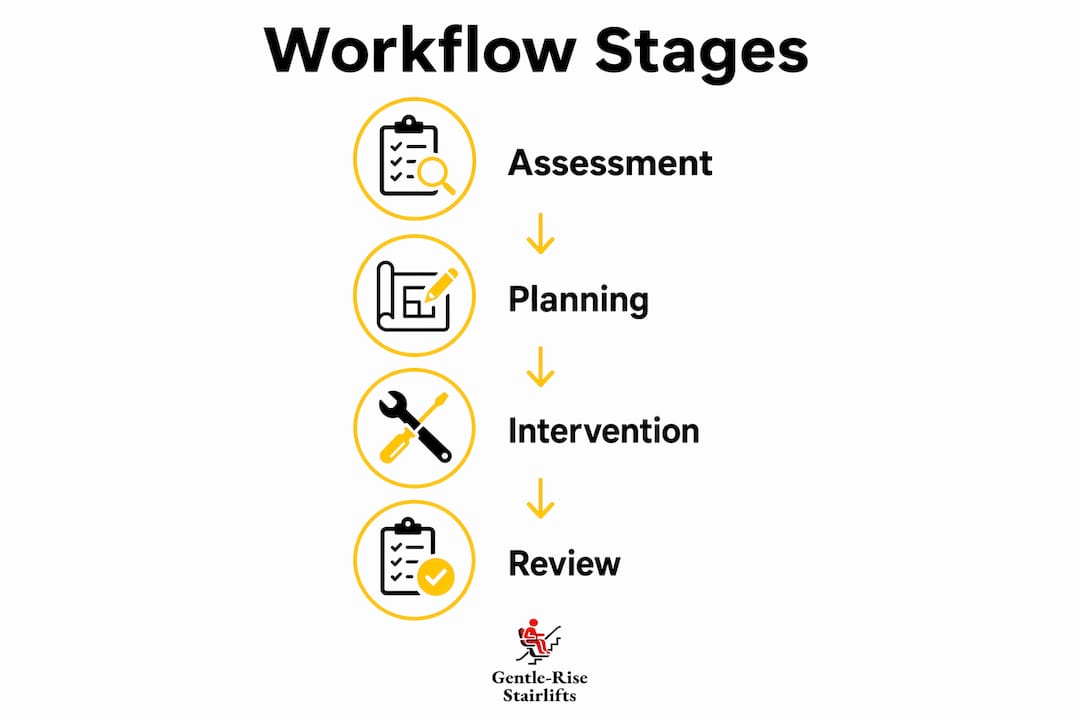
A mobility safety workflow is built on four sequential stages: assessment, planning, intervention, and review. Each stage draws on clinical evidence and regulatory guidance to produce outcomes that are measurable and repeatable. Skipping any stage creates gaps that lead to missed hazards and poor outcomes for the people in your care.
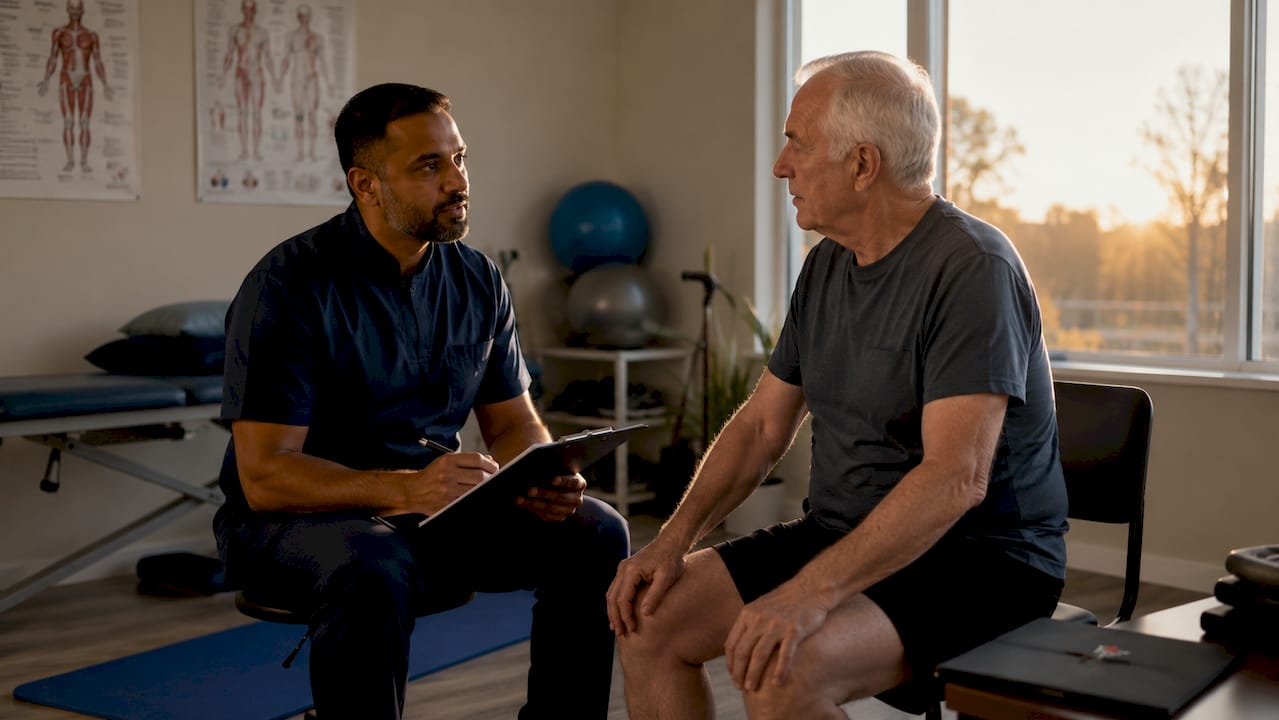
Professional mobility assessments typically follow an 80-minute structured workflow covering medical history, clinical tests, home environment audit, and exercise demonstration. That structure matters because it forces practitioners to move from subjective history-taking to objective measurement before recommending any intervention. Without that sequence, clinical decisions rest on incomplete data.
The UK government's road safety strategy sets a target to reduce people killed or seriously injured on roads by 2035, with an average of 4 lives lost daily in 2024. That figure underlines why systematic safety workflows are a national priority, not just a clinical preference. Organisations that treat workflow management for safety as optional are working against the direction of UK policy.
Pro Tip: Map your current workflow against the four stages before introducing any new tool or technology. Gaps in your existing process will not be fixed by adding technology on top of them.
What are the essential tools and assessments in a UK mobility workflow?
The Timed Up and Go (TUG) test is the most widely used clinical screening tool in UK mobility assessment. It measures the time taken to rise from a chair, walk three metres, turn, and return to the seat. A result above 12 seconds indicates a meaningful fall risk and triggers further assessment under NICE fall prevention guidelines.
Home environment audits are equally critical. Small, non-obvious hazards in home environments are routinely missed without a dedicated 10–15 minute hazard walkthrough during a mobility assessment. A loose mat, a poorly lit staircase, or a step threshold that is barely raised can each cause a serious fall. Practitioners who skip the home audit are relying on the person to self-report hazards they may not even recognise as dangerous.
Wearable biomechanical systems represent the most significant shift in assessment technology available to UK professionals. Sensor-driven assessments cut risk evaluation time from up to two hours to approximately 20 minutes while maintaining comparable accuracy. That reduction frees clinical time for intervention rather than data collection.
| Assessment approach | Time required | Key strength | Limitation |
|---|---|---|---|
| Traditional manual assessment | 90–120 minutes | Clinically established | Time-intensive, observer-dependent |
| Structured physiotherapy workflow | 80 minutes | Covers clinical and environmental factors | Requires trained practitioner on site |
| Wearable biomechanical systems | ~20 minutes | Objective, real-time data | Higher equipment cost |
| Digital cloud-based modelling | Variable | Tests multiple scenarios without physical trial | Less suited to individual clinical assessment |
Pro Tip: For home-based assessments, always conduct the environment audit before the clinical tests. Seeing the person move within their actual environment often reveals risks that a clinic-based TUG test cannot capture.
How can organisations implement mobility safety workflows effectively?
Effective implementation follows a clear sequence. Organisations that try to run all stages simultaneously produce inconsistent results because each stage depends on the outputs of the one before it.
- Gather baseline data. Collect medical history, current mobility aids in use, and any previous falls or near-misses. Use standardised forms aligned with NICE guidance to keep data comparable across cases.
- Conduct the clinical assessment. Apply validated tools such as the TUG test, the Berg Balance Scale, or the Functional Reach Test depending on the person's presentation. Document results numerically, not descriptively.
- Complete the home environment audit. Walk through every area the person uses daily. Log hazards using a structured checklist. Photograph risks where possible to support later review.
- Develop the intervention plan. Match each identified hazard or clinical finding to a specific intervention. Interventions may include equipment installation, exercise programmes, or referral to occupational therapy.
- Implement geo-aware monitoring. Geo-aware systems enable early hazard logging and location-triggered safety alerts, reducing administrative burden and improving compliance. This is particularly valuable for organisations managing multiple sites or community-based caseloads.
- Schedule structured review. Set a review date at the point of intervention, not retrospectively. Use the same assessment tools at review to produce comparable data.
Stakeholder collaboration is not optional in this process. UK mobility hubs, for example, are vision-led and require direct community involvement to tailor objectives to local needs. The same principle applies to individual care settings: the person receiving support must be involved in planning, not just assessed and told what will happen.
What common challenges arise in mobility safety workflows?
Inconsistent hazard identification is the most common failure point in UK mobility safety practices. Two practitioners assessing the same environment often produce different findings because they are using different criteria or no structured checklist at all. Standardising your hazard identification tool across your team is the single most effective corrective action.
Administrative burden is the second major challenge. Manual data entry, paper-based reporting, and duplicated records consume time that should go to direct assessment and intervention. Safety management is moving toward geo-aware, automated hazard alerts to reduce this burden and improve worker compliance. Organisations that have not yet adopted digital recording are carrying an avoidable cost.
Common workflow mistakes and their corrections:
- Skipping the home audit. Corrective action: make the home walkthrough a mandatory, timed stage with its own checklist, not an optional add-on.
- Using descriptive rather than numerical outcome measures. Corrective action: replace phrases like "balance improved" with TUG test scores recorded at each visit.
- Failing to involve the person in planning. Corrective action: present the intervention plan before finalising it and document any changes made in response to the person's input.
- No scheduled review date. Corrective action: set the review appointment at the same time as the intervention, not after a problem recurs.
- Treating workflow as a one-off process. Corrective action: build continuous monitoring into the workflow structure, with defined triggers for reassessment such as a fall, a change in medication, or a change in living situation.
Pro Tip: Audit a random sample of five completed cases each month. Check whether every mandatory stage was completed and documented. This takes less than an hour and reveals systemic gaps faster than any other method.
Which UK standards and policies guide mobility safety workflows?
The HSE provides three core frameworks for manual handling and mobility risk assessment: the Manual handling Assessment Charts (MAC), the Risk Assessment of Pushing and Pulling (RAPP), and the Assessment of Repetitive Tasks (ART). Each framework applies to a different type of physical activity and produces a colour-coded risk rating that guides intervention priority.
NICE guidelines on fall prevention in older people set the clinical standard for individual mobility assessment in UK health and social care settings. They specify that any person aged 65 or over who presents with a fall or balance problem should receive a multifactorial assessment covering gait, balance, muscle strength, vision, medication, and home hazards. Organisations that follow this framework produce more consistent outcomes than those using locally developed approaches.
Digital cloud-based modelling for public safety allows professionals to test hundreds of scenarios consistently before physical implementation, reducing disruption and errors. Transport for London has trialled this approach for street works management. The principle transfers directly to mobility planning: testing an intervention digitally before committing resources reduces the risk of a poorly matched solution.
| Framework | Issued by | Application area |
|---|---|---|
| MAC / RAPP / ART | HSE | Manual handling and physical task risk |
| Fall prevention guidelines | NICE | Clinical mobility assessment, older adults |
| Road safety strategy | UK Government | Population-level injury reduction targets |
| Mobility hubs guidance | UK Government | Community transport and accessibility planning |
Mobility hubs in the UK promote integrated, safe, and user-centred transport options with emphasis on safety, accessibility, and behavioural change. For organisations working across community settings, aligning with mobility hub principles means building safety into the physical environment, not just the clinical encounter.
Key takeaways
An effective mobility safety workflow in the UK requires structured assessment, standardised tools, regulatory alignment, and continuous review to produce consistent, measurable improvements in safety and independence.
| Point | Details |
|---|---|
| Follow a four-stage structure | Assessment, planning, intervention, and review must run in sequence, not simultaneously. |
| Use validated clinical tools | Apply TUG test scores and NICE-aligned checklists to produce comparable, numerical outcomes. |
| Conduct the home audit every time | A dedicated 10–15 minute walkthrough reveals hazards that clinical tests cannot detect. |
| Adopt digital and sensor-based tools | Wearable systems cut assessment time by 75%, freeing clinical capacity for intervention. |
| Align with HSE, NICE, and government frameworks | MAC, RAPP, ART, and NICE fall prevention guidelines set the minimum standard for UK practice. |
What I have learned from watching UK mobility workflows evolve
The biggest shift I have observed over the past decade is not technological. It is attitudinal. Organisations that genuinely improve mobility safety outcomes are the ones that treat the workflow as a living document rather than a compliance exercise. They review it, challenge it, and change it when the evidence changes.
Technology helps, but only when the underlying process is sound. I have seen wearable assessment systems introduced into teams where the basic home audit was still being skipped. The technology produced excellent data that nobody acted on because the intervention planning stage was missing. The tool was not the problem. The workflow was.
The most effective teams I have encountered share one characteristic: they involve the person receiving support at every stage, from assessment to review. That involvement is not just good ethics. It produces better data, better adherence to interventions, and better long-term outcomes. For professionals working with older adults or those recovering from surgery, mobility assistance for independent living is most effective when the person understands and agrees with the plan.
Cross-sector collaboration is the next frontier. Clinical teams, housing providers, local authorities, and equipment specialists rarely share data or coordinate planning. When they do, the results are markedly better. That is where the field needs to go.
— lee
How Gentlerise Stairlifts supports safer home mobility
Gentlerise Stairlifts works directly with UK residents and care professionals to address one of the most common hazards identified in home mobility audits: the staircase. Straight stairlifts start at £795, with curved and reconditioned models available to suit different budgets and stair configurations. Installation typically completes within hours, which matters when a person's safety cannot wait for a lengthy procurement process.

For professionals conducting home environment audits, Gentlerise Stairlifts offers free home surveys to assess stair configuration and recommend the most appropriate solution. The Protect+ maintenance programme provides ongoing aftercare, keeping the equipment safe and functional after installation. Whether the need is permanent or temporary, Gentlerise Stairlifts' full range covers rental and purchase options across the UK. Contact Gentlerise Stairlifts to arrange a free survey as part of your next home mobility assessment.
FAQ
What is a mobility safety workflow in the UK?
A mobility safety workflow is a structured process covering clinical assessment, home environment audit, intervention planning, and review. It aligns with HSE and NICE frameworks to produce consistent, evidence-based outcomes for individuals with mobility challenges.
Which clinical tools are used in UK mobility assessments?
The Timed Up and Go test is the most widely used screening tool, with the Berg Balance Scale and Functional Reach Test applied for more detailed assessment. NICE guidelines specify that multifactorial assessment must cover gait, balance, strength, vision, medication, and home hazards.
How do wearable systems improve mobility safety workflows?
Wearable biomechanical systems reduce assessment time by 75% compared to traditional manual methods while maintaining comparable risk accuracy. They align with HSE MAC, RAPP, and ART frameworks, making them directly applicable to UK compliance requirements.
What are the most common mistakes in mobility safety workflows?
The most frequent errors are skipping the home environment audit, using descriptive rather than numerical outcome measures, and failing to set a review date at the point of intervention. Each mistake reduces the consistency and measurability of the workflow.
How does the UK government's road safety strategy affect mobility workflows?
The UK government's road safety strategy targets a reduction in people killed or seriously injured by 2035, with 4 lives lost daily on UK roads in 2024. This policy context reinforces the national importance of systematic, data-driven mobility safety practices across both clinical and community settings.