
TL;DR:
- Start by assessing and improving entryways, ramps, and door widths to ensure safe, accessible pathways into the home. Prioritize bathroom modifications like grab bars, curbless showers, and non-slip flooring to reduce fall risks, followed by kitchen and bedroom adjustments for comfort and usability. Use low-cost fixes first and seek government grants for major structural work, ensuring all improvements follow proper safety and funding protocols.
An inclusive home upgrades list is an organised plan of accessibility and comfort modifications designed to make any living space safe and usable for everyone, regardless of mobility or ability. In the UK, the term "universal design upgrades" is the recognised industry standard for this approach, though both phrases describe the same goal: removing barriers before they become hazards. The most effective strategy is to work room by room, starting with entryways and progressing through bathrooms, kitchens, bedrooms, and whole-home safety. This guide gives you a practical, phased plan with real cost figures, government funding options, and the specific changes that deliver the greatest impact first.
How to prioritise your inclusive home upgrades list
The single most important rule in any home accessibility checklist is to start with the path of travel. If someone cannot get through the front door safely, no amount of bathroom grab bars will help. Accessibility improvements in every other room depend entirely on safe, usable access routes being in place first.
Work through this order of priority:
1. Entryways and exterior access
Step-free or gently ramped entrances are the foundation of any accessible home. Modular aluminium ramps cost between £1,000 and £5,000 depending on length and configuration, making them one of the more significant early investments. That said, a well-installed ramp removes the single biggest barrier to independent entry and exit, which justifies the spend.
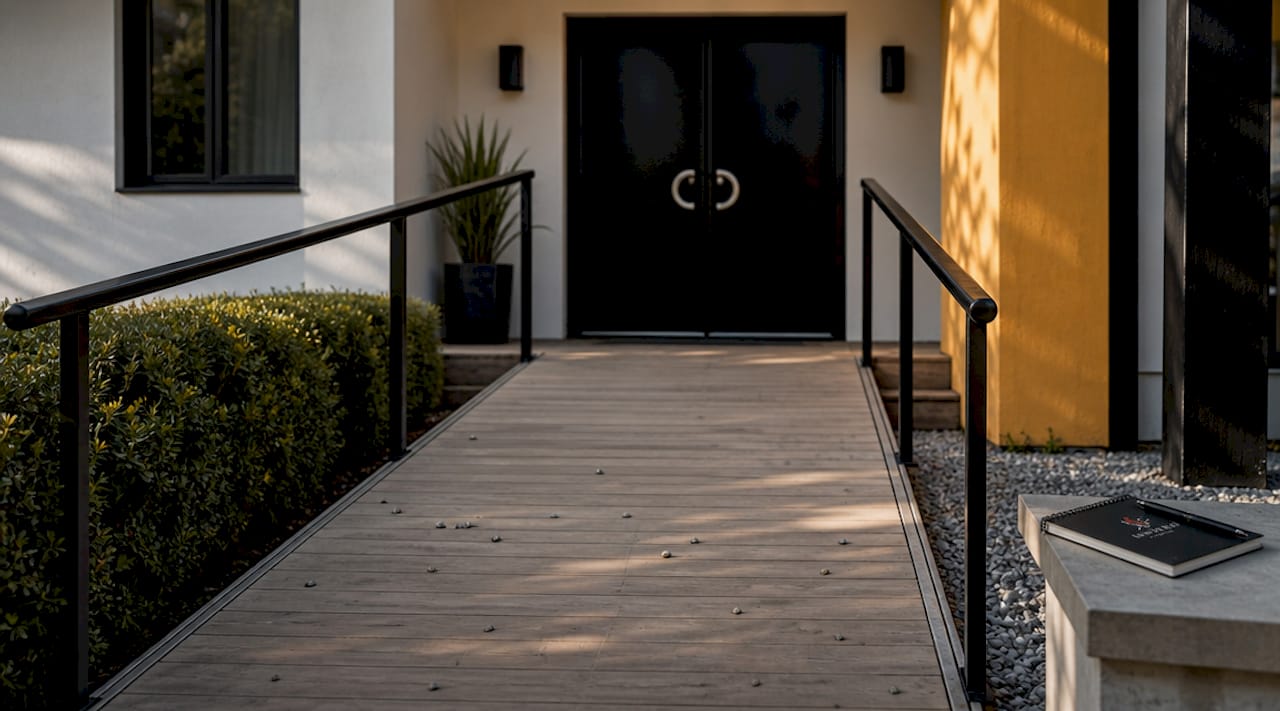
Doorway width is the next priority. Accessible home standards specify a minimum clear width of 36 inches (approximately 91 cm) to allow wheelchair and walking frame passage. Widening a doorway professionally costs between £700 and £2,500. Threshold ramps, which bridge small height differences at door bases, cost far less and can be fitted in minutes.
Lever-style door handles replace round knobs and require no gripping strength to operate. They cost as little as £10 to £30 per handle and can be fitted without professional help. Slip-resistant walkway surfaces and motion-sensor exterior lighting complete the exterior picture, reducing fall risk in low-light conditions.
Pro Tip: When assessing your entrance, crouch or sit in a chair and approach the door as someone with limited mobility would. You will immediately notice obstacles that are invisible when standing.
2. Bathrooms: the highest-risk room in any home
The bathroom is where the majority of home falls occur, which is why it ranks second on any home modifications checklist. Grab bars installed at 33 to 36 inches from the floor beside the toilet and inside the shower are the single most protective structural change you can make. Each bar costs between £150 and £400 installed, and they must be anchored to wall studs rather than plasterboard to bear weight safely.
Key bathroom upgrades to prioritise:
- Curbless or low-threshold shower: Eliminates the step that causes the majority of bathroom falls. Paired with a built-in fold-down seat and a handheld showerhead on a sliding rail, this creates a fully usable shower for people of all abilities.
- Comfort-height toilet: Seat height of 17 to 19 inches reduces strain on knees and hips and makes transfers from a wheelchair far safer. Allow at least 18 inches of clear space on one side for lateral transfers.
- Non-slip flooring: Textured vinyl or ceramic tile with a high slip-resistance rating (R10 or above) is the standard for wet areas. Loose bath mats are a fall hazard and should be removed entirely.
- Lever taps and thermostatic controls: Lever taps require no grip strength. Thermostatic valves prevent scalding, which is a particular risk for people with reduced sensation.
"Safety anchors such as grab bars securely installed on wall studs take precedence over cosmetic upgrades for effectiveness and long-term usability in bathrooms." — Senior Home Safety Modifications Guide 2026
3. Kitchens and laundry: accessible work zones
The kitchen presents a different set of challenges. Most standard kitchens are designed for a standing adult of average height, which excludes wheelchair users, shorter individuals, and anyone with limited reach or grip strength. Accessible kitchen layouts require lowered work surfaces at 30 to 34 inches, clear floor space of 40 to 48 inches between counters, and front-mounted appliance controls that do not require reaching over a hot hob.
Pull-out shelving and drawer-style base units replace deep fixed shelves that require bending and reaching. Replacement kitchen doors with D-ring or bar-style handles are far easier to operate than small knobs and can be swapped without replacing entire units. Slip-resistant flooring in the kitchen and laundry area reduces fall risk on surfaces that frequently get wet.
For the laundry area, front-loading machines raised on a plinth to approximately 30 to 36 cm from the floor eliminate the need to bend deeply. Lever-style taps on the sink and a pull-out spray head add usability without structural change.
Pro Tip: Before investing in new cabinetry, try pull-out shelf inserts first. They cost between £20 and £80 per unit and transform deep, inaccessible cupboards without any structural work.
4. Bedrooms and living areas: clearance and comfort
Bedrooms and living areas are where people spend the most time, yet they are often overlooked in accessible home improvement plans. The core requirement is clear pathways of at least 36 inches wide throughout, with a 60-inch turning circle beside the bed for wheelchair users. Furniture arrangement, not renovation, often achieves this at no cost.
Bed height matters more than most people realise. A bed that is too low forces a difficult rise from a near-floor position, while one that is too high creates a fall risk during transfers. The ideal seat height is 18 to 20 inches from the floor, matching the height of a standard chair with arms. Adjustable bed frames allow this to be set precisely.
Seating throughout the living area should have firm cushions and arms that extend to the front edge of the seat. Chairs that are too soft or too low make standing up independently very difficult. Removing or securing loose rugs and trailing cables is a low-cost safety fix that costs nothing and reduces fall risk immediately.
5. Staircase safety and vertical access
Stairs are the most dangerous feature in a multi-storey home for anyone with reduced mobility. Handrails on both sides of every staircase, extending beyond the top and bottom steps, are the minimum standard. High-contrast stair nosing, a strip of contrasting colour on the front edge of each step, dramatically improves depth perception for people with visual impairment.
For those who can no longer use stairs safely, a stairlift is the most practical solution that avoids the cost and disruption of moving to a ground-floor property. Stairlift costs in the UK start at £795 for straight models, with curved and reconditioned options available across a wider range. This is significantly less than the cost of a ground-floor extension or relocation.
6. Whole-home lighting and smart controls
Poor lighting is a fall risk in every room, not just on the stairs. Motion-activated night lights along the route from bedroom to bathroom are one of the most effective and affordable adaptive home features available. They cost between £5 and £20 per unit and can be fitted without an electrician.
Smart home controls, including voice-activated switches, app-controlled thermostats, and video doorbells, reduce the need to move around the home for routine tasks. Smart plugs allow lamps and appliances to be controlled from a phone or smart speaker, which is particularly useful for people with limited mobility. The Warm Homes: Local Grant, with £0.5 billion allocated for delivery from 2025 to 2028, supports energy efficiency upgrades for low-income households in England, including insulation and heating improvements that directly support safe mobility in cold conditions.
7. Funding your accessible home improvements
The Disabled Facilities Grant is the primary funding route for home modifications for disabilities in the UK. Grants reach up to £30,000 in England, £36,000 in Wales, and £25,000 in Northern Ireland. Grants generally do not require repayment unless the property is sold within 10 years and the grant exceeded £5,000 in England. The process requires an occupational therapist assessment and council approval before any work begins, so plan your timeline accordingly.
Many effective home safety upgrades cost under £500 and can be completed quickly, including grab bars, improved lighting, and removing loose rugs. These low-cost fixes are the right first step before applying for grant funding, as they reduce immediate risk while the application is processed. For affordable wheelchair-friendly improvements that sit outside grant criteria, phased implementation across 12 to 24 months keeps costs manageable.
Pro Tip: Contact your local council's housing adaptation team before spending anything significant. They can tell you exactly which upgrades qualify for grant funding and connect you with an occupational therapist at no cost to you.
Key takeaways
The most effective inclusive home upgrades list works room by room, starting with entryways, then bathrooms, kitchens, bedrooms, and whole-home safety, using low-cost fixes first and grant funding for larger structural changes.
| Point | Details |
|---|---|
| Start with the path of travel | Fix entryways, ramps, and door widths before tackling any other room. |
| Bathrooms carry the highest risk | Grab bars, curbless showers, and non-slip flooring deliver the greatest safety return. |
| Grants can cover major costs | Disabled Facilities Grants reach up to £36,000 in Wales and require an OT assessment first. |
| Low-cost fixes work immediately | Grab bars, night lights, and rug removal cost under £500 and reduce fall risk at once. |
| Smart controls extend independence | Voice-activated switches and app-controlled thermostats reduce unnecessary movement throughout the home. |
Why I always tell people to walk their own home first
The most common mistake I see when people start planning accessible home improvements is jumping straight to the big-ticket items. Someone reads about stairlifts or wet rooms and immediately starts getting quotes, when the loose rug at the bottom of the stairs is the actual hazard causing daily near-misses.
My advice is always the same: walk your home as if it were your first day using a walking frame or wheelchair. Map every route you use between waking up and going to bed. The bedroom to the bathroom at 3am. The kitchen to the living room with a cup of tea. That exercise will show you more about your real priorities than any checklist.
I have also seen people miss out on Disabled Facilities Grant funding because they started work before getting council approval. The grant process requires an occupational therapist assessment, a formal application with quotes, and written approval before a single screw is turned. If you begin work first, you lose eligibility. Contact your council housing team before you do anything structural.
One thing that rarely appears in standard age-friendly home modification guides is thermal comfort. A cold home stiffens joints, slows movement, and increases fall risk. The Warm Homes: Local Grant exists precisely because warmth and mobility are connected. If your home is poorly insulated, that is an accessibility issue, not just an energy bill issue.
— lee
How Gentlerise Stairlifts supports your inclusive home plan
Planning a full set of home accessibility upgrades is a significant undertaking, and stairs are often the point where independent living becomes genuinely at risk. Gentlerise Stairlifts provides straight, curved, and reconditioned stairlift models with installation often completed within hours, starting from £795. Rental options are available for short-term recovery needs, and the Protect+ maintenance programme covers ongoing safety and servicing.
Gentlerise Stairlifts offers free home surveys across the UK, giving you a clear picture of which stairlift solution fits your staircase and budget before you commit. For those exploring grant funding, the team can advise on how stairlifts align with Disabled Facilities Grant criteria. Visit Gentlerise Stairlifts to book your free survey and take the next step towards a safer, more independent home.
FAQ
What are inclusive home upgrades?
Inclusive home upgrades are accessibility and comfort modifications that make a living space safe and usable for people of all abilities. They follow universal design principles and range from low-cost fixes like lever handles and night lights to structural changes such as ramps and wet rooms.
Where should I start on a home accessibility checklist?
Start with entryways and the main path of travel through your home. Step-free access, lever handles, and clear 36-inch pathways are the foundation on which all other accessible home improvements depend.
Can I get financial help for home modifications for disabilities?
Yes. The Disabled Facilities Grant provides up to £30,000 in England, £36,000 in Wales, and £25,000 in Northern Ireland for eligible residents. The process requires an occupational therapist assessment and council approval before work begins.
How much do common accessible home improvements cost?
Grab bars cost £150 to £400 installed, door widening costs £700 to £2,500, and modular ramps range from £1,000 to £5,000. Many effective safety upgrades, including improved lighting and rug removal, cost under £500 in total.
Do I need a professional for all inclusive home upgrades?
Not all of them. Lever handles, plug-in night lights, pull-out shelf inserts, and rug removal are straightforward DIY tasks. Grab bars, ramps, and door widening require professional installation to meet safety standards and grant eligibility requirements.