
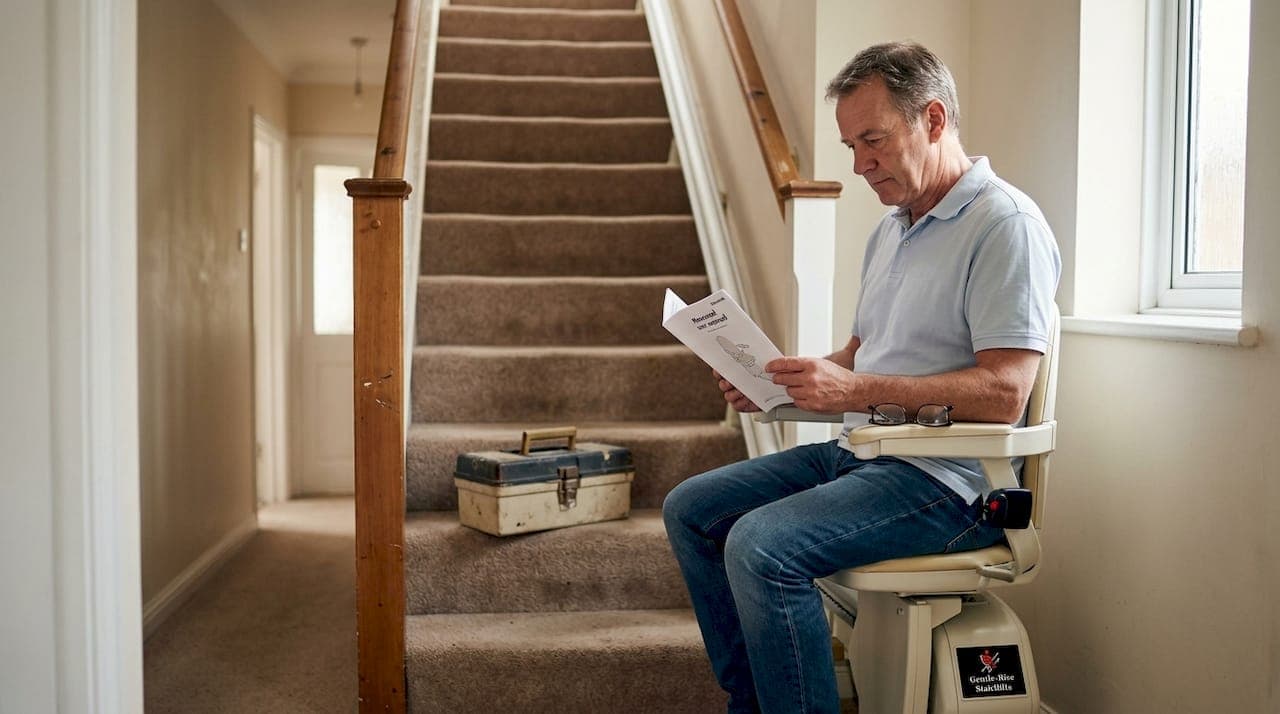
Picture this: it's early morning, your Stannah stairlift sits motionless on the rail, and the person who depends on it cannot safely reach the bedroom or bathroom. A stairlift fault is not merely an inconvenience — it directly threatens independence and safety. The good news is that many common problems are straightforward to diagnose and fix at home, while others simply need a qualified engineer. This guide walks you through understanding your stairlift, preparing for repairs, troubleshooting faults step by step, and knowing when to call in professional help.
Table of Contents
- Understanding your Stannah stairlift and common problems
- What you need before you start repairs
- Step-by-step: Diagnosing and repairing common Stannah stairlift faults
- When to call a professional and what to expect
- How to keep your Stannah stairlift running smoothly
- Need expert help or a stairlift tune-up?
- Frequently asked questions
Key Takeaways
| Point | Details |
|---|---|
| Most faults are minor | Common Stannah stairlift issues like battery loss or remote faults can often be solved at home. |
| Know your safety limits | If you notice odd smells, noises, or recurring faults, call a qualified engineer for your protection. |
| Prevention saves money | Regular checks and annual servicing extend your stairlift’s life and help avoid expensive repairs. |
| Professional help is easy | Both Stannah and independent engineers offer repair options—compare to find what best suits you. |
Understanding your Stannah stairlift and common problems
Stannah stairlifts are battery-powered units that travel along a steel rail fixed to your staircase. Two rechargeable batteries sit inside the chair unit and charge automatically whenever the lift rests at a charging point at the top or bottom of the stairs. A motor drives a rack-and-pinion mechanism along the rail, while safety sensors on the footrest and carriage stop the lift if an obstruction is detected. Understanding this basic setup helps you pinpoint faults quickly.
Our Stannah stairlifts overview shows just how varied these machines can be, from compact straight models to bespoke curved tracks. Despite their reputation for quality, some users experience delays and service faults that need prompt attention. Knowing the most common symptoms saves time and money.
Common fault symptoms at a glance:
- The stairlift will not move at all
- Continuous or intermittent beeping
- Sluggish or jerky movement along the rail
- Remote handset stops responding
- The chair stops mid-journey
- Charging indicator light not illuminating
| Symptom | Most likely cause | Urgency |
|---|---|---|
| No power, no lights | Flat or failed batteries | High |
| Constant beeping | Obstruction on track or footrest | Medium |
| Sluggish movement | Dirty or dry rail, low battery | Medium |
| Remote not working | Dead remote batteries or signal issue | Low |
| Stops mid-journey | Safety sensor triggered | High |
| Charging light off | Charger not at docking point | Medium |
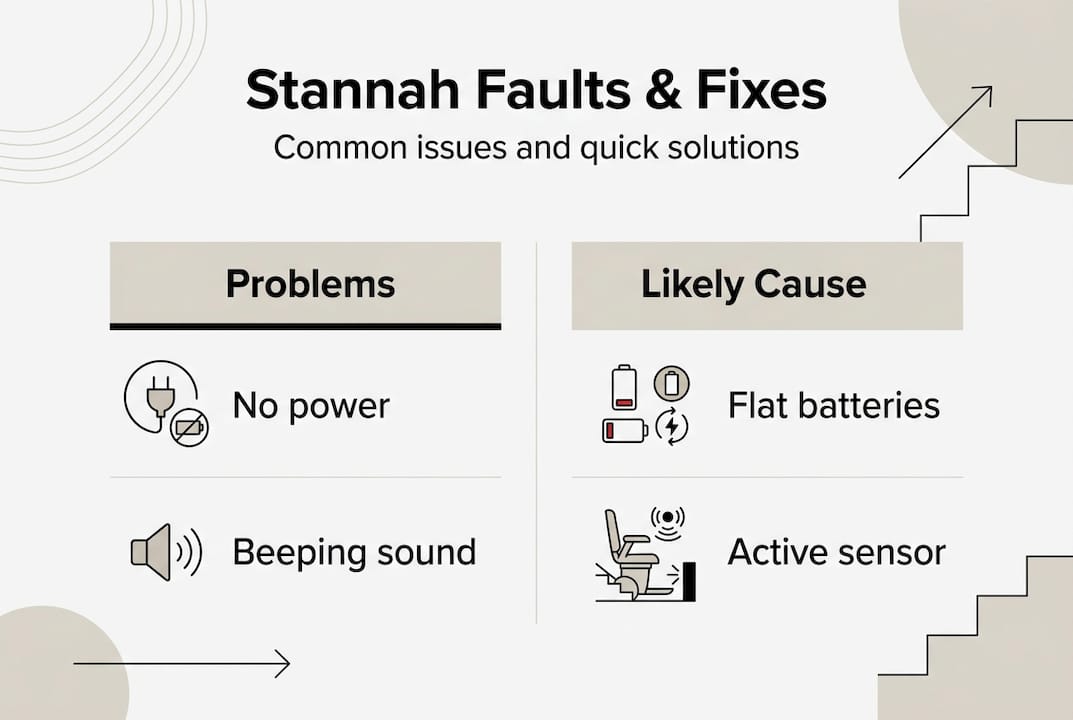
These stairlift maintenance tips from Which? reinforce that most faults have a simple root cause. Matching your symptom to the table above is the first productive step before touching any component.
What you need before you start repairs
Rushing into a repair without preparation is how minor faults become expensive ones. Before you touch the stairlift, gather everything you need and take a moment to make the environment safe.
Safety precautions first:
- Switch off the mains power supply to the stairlift at the wall socket
- Clear the staircase of any loose items, rugs, or obstacles
- Wear sturdy, non-slip footwear while working on or near the stairs
- Never attempt repairs if you feel unsteady or unwell
- Keep a mobile phone within reach in case you need assistance
| Item needed | Purpose |
|---|---|
| User manual | Fault codes and reset procedures |
| Screwdriver set (flat and Phillips) | Accessing battery compartment |
| Replacement AA or rechargeable batteries | Remote handset fix |
| Clean, dry cloth | Wiping down the rail and sensors |
| Torch | Inspecting the underside of the carriage |
| Service log or warranty documents | Confirming service history |
Pro Tip: Keep your stairlift service log in a labelled folder near the unit. A written record of past faults and engineer visits helps you spot patterns and gives any technician an instant history of the machine.
Experts recommend regular stairlift checks and note that servicing every 6 to 12 months alongside battery replacement every three to five years keeps most faults at bay. If your stairlift is still under warranty, check whether a DIY repair could void it before proceeding. Exploring affordable stairlift options or understanding VAT on stairlifts can also help you budget for professional servicing if needed.
Important: If you smell burning, see scorch marks, or notice any exposed wiring, do not attempt any repair yourself. Switch off the power immediately and call a qualified engineer.
Step-by-step: Diagnosing and repairing common Stannah stairlift faults
With your tools ready and safety measures in place, work through these steps methodically. Do not skip ahead — each check builds on the last.
-
Confirm the mains power is on. Check the wall socket and any fuse or circuit breaker serving the stairlift circuit. A tripped breaker is a surprisingly common cause of a completely dead unit.
-
Check the key switch. Most Stannah models have a key switch on the arm or control panel. Ensure it is turned to the "on" position. It is easy to knock accidentally.
-
Inspect the charging points. Move the chair manually to the top or bottom charging point and listen for a click or watch for the charging light. If the light does not come on, clean the charging contacts with a dry cloth.
-
Replace the remote handset batteries. This solves a large proportion of "remote not working" calls. Use fresh AA batteries and test the handset from both ends of the staircase.
-
Clear the safety sensors. Run your hand along the footrest and the underside of the carriage, removing any dust, pet hair, or small objects. A blocked sensor will prevent movement entirely.
-
Check the track for obstructions. Walk the full length of the rail and look for anything resting on it, including clothing, toys, or cleaning equipment. Even a small item can trigger the safety stop.
-
Attempt a soft reset. Turn the key switch off, wait 30 seconds, then turn it back on. On many Stannah models this clears minor electronic errors and restores normal operation.
-
Test the stairlift slowly. If it moves but feels sluggish, wipe the rail with a clean dry cloth to remove dust and grime. Do not apply lubricant unless your manual specifically recommends it and states the correct product.
Pro Tip: Beeping is your stairlift's way of communicating. A single beep often means a safety sensor is active; a series of beeps may indicate a battery fault. Count the beeps and cross-reference with your user manual's fault code table.
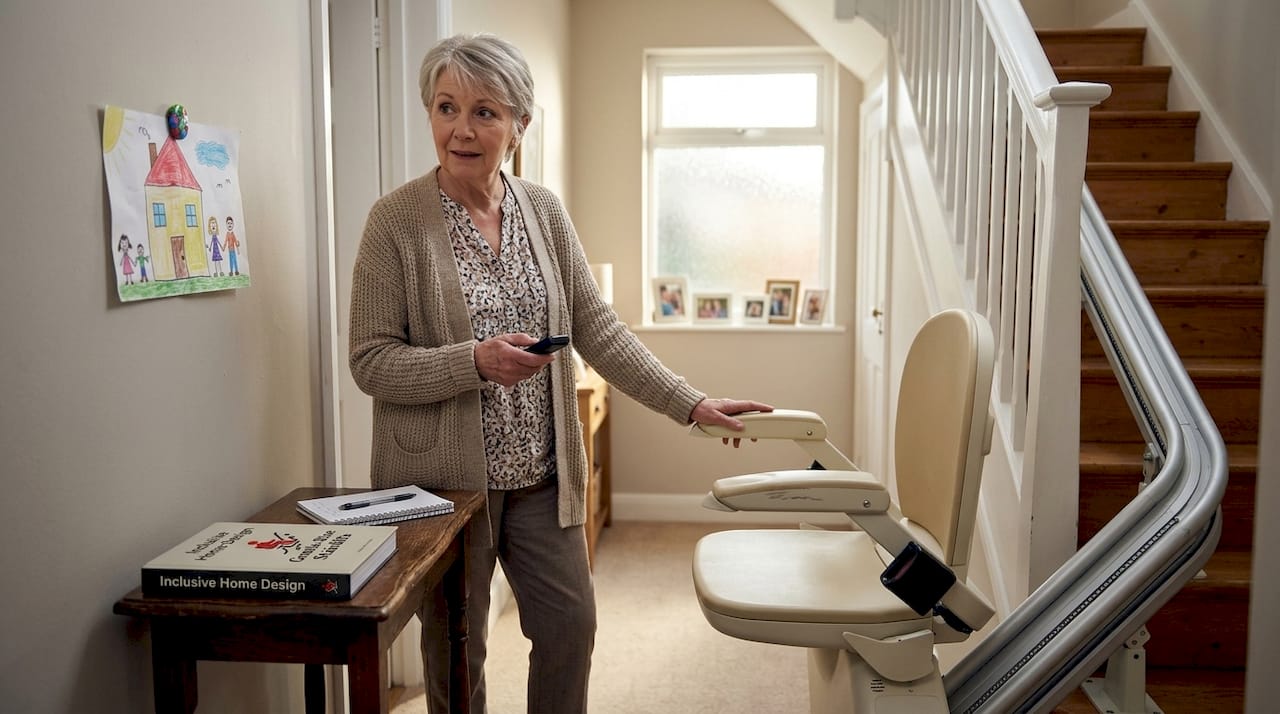
According to Which?, batteries last 3 to 5 years and the annual running cost sits at roughly £30 to £36, making stairlifts genuinely economical to run. For a broader view of ownership costs, our UK stairlift guide covers everything from purchase to long-term upkeep. If you want ongoing protection, stairlift service subscriptions can spread the cost of professional maintenance across the year. You can also check Stannah customer ratings to see how other owners rate their repair experiences.
When to call a professional and what to expect
Some faults are simply beyond safe DIY repair. Recognising these situations quickly protects both the user and the machine.
Red flags that require a qualified engineer:
- A burning smell or visible scorch marks anywhere on the unit
- The rail has shifted, cracked, or feels loose on the wall brackets
- The stairlift repeatedly stops mid-journey despite cleared sensors
- Unusual grinding or clicking noises from the motor or gearbox
- Water ingress or visible corrosion on electrical components
- The chair rocks or feels unstable during travel
| Factor | Stannah official engineer | Independent engineer |
|---|---|---|
| Response time | Typically 1 to 3 working days | Often same day or next day |
| Parts used | Genuine Stannah parts | May vary; confirm before booking |
| Warranty protection | Preserved | Check terms carefully |
| Average call-out cost | Higher, but includes aftercare | Often lower upfront |
| Familiarity with model | Very high | Depends on experience |
While Stannah engineers are well regarded, some customers report delays and difficulties reaching phone support during busy periods. An independent engineer who specialises in stairlifts can be a practical alternative, particularly for older models outside the manufacturer's service area. Our UK stairlift repair coverage page explains what to look for when choosing a local specialist.
During a professional callout, expect the engineer to carry out a full safety inspection, not just fix the reported fault. They should provide a written estimate before starting any chargeable work and leave you with a service report. For advice on what to ask during installation or repair visits, our stairlift installation advice page is a useful reference. Which? also highlights the value of trusted stairlift aftercare as a key factor in long-term satisfaction.
How to keep your Stannah stairlift running smoothly
Prevention is far cheaper than repair. A few simple habits, carried out consistently, can add years to your stairlift's working life and dramatically reduce the chance of an unexpected breakdown.
Easy weekly and monthly habits:
- Wipe the rail with a dry cloth weekly to remove dust and debris
- Check the footrest and carriage sensors are free from obstruction
- Ensure the charger is always plugged in and the lift rests at a charging point when not in use
- Test the remote handset from both ends of the staircase monthly
- Listen for any new sounds during travel and note them in your service log
- Keep the area around the base of the staircase clear at all times
Maintenance contracts are recommended by industry experts to prevent costly breakdowns and to ensure the stairlift remains safe between annual services. An annual professional service is also a condition of some home insurance policies and council-funded equipment agreements, so it is worth checking your paperwork.
Pro Tip: Start a simple notebook log for your stairlift. Write down the date of every check, any unusual behaviour, and each service visit. Patterns often emerge months before a fault becomes serious, giving you time to act before a breakdown occurs.
Understanding running costs is part of good ownership too. Our guide on stairlift electricity usage shows just how little these units cost to run day to day, which makes investing in a maintenance contract even more sensible by comparison.
Need expert help or a stairlift tune-up?
If you have worked through this guide and still need support, or if you would simply prefer a professional to handle things from the start, we are here to help. At Gentle Rise Stairlifts, we understand how much a reliable stairlift matters to daily life, and we offer prompt, friendly service across the UK.

Our team can arrange GentleRise stairlift repairs quickly, with engineers who know Stannah and other leading models inside out. For ongoing peace of mind, our Stairlift Protect+ aftercare plan covers routine servicing, priority callouts, and parts, so you are never left waiting. If your current stairlift is beyond economical repair, our range of reconditioned stairlifts offers a cost-effective, fully tested alternative starting from just £795. Book a free home survey today and let us restore your confidence on the stairs.
Frequently asked questions
How often should my Stannah stairlift be serviced?
Service your Stannah stairlift every 6 to 12 months to maintain safety and keep it in good working order. Which? notes that ongoing costs include servicing alongside battery replacement every three to five years.
What are the signs I need a professional repair?
Burnt smells, unusual grinding noises, or the stairlift stopping mid-journey are all signals to call an engineer immediately rather than attempting a DIY fix.
Can I use independent engineers for Stannah repairs?
Yes, independent engineers are a valid option, but always confirm they are qualified, use genuine parts, and that using them will not void your warranty. Which? experts stress the importance of checking aftercare credentials before booking.
How long do Stannah stairlift batteries last?
Stannah stairlift batteries typically last 3 to 5 years before needing replacement, with an annual running cost of around £30 to £36.
Is a maintenance contract worth it?
A maintenance contract helps prevent costly breakdowns and extends the stairlift's lifespan, making it a sensible investment for most households. Maintenance contracts are recommended by industry experts as the most reliable way to avoid unexpected repair bills.