
TL;DR:
- Proper planning is essential for managing temporary mobility needs during recovery, ensuring suitable equipment and safe transport. Early assessment involves measuring home dimensions, identifying specific activity limitations, and confirming recovery timelines to select appropriate aids. Using verified providers and mobility management services simplifies the process and reduces stress, leading to a smoother recovery experience.
Temporary mobility management is the process of organising short-term accessible equipment and transport to maintain independence and safety during recovery or short-term disability. Whether you are recovering from a hip replacement, a knee operation, or a fracture, the right planning makes the difference between feeling stranded at home and moving freely through it. This guide covers how to manage temporary mobility solutions from the first assessment of your needs through to installation, daily use, and the common pitfalls to avoid. Gentlerise Stairlifts supports people at every stage of this process, from quick stairlift hire to professional installation within hours.
How to assess your temporary mobility needs
The first step in temporary mobility management is identifying exactly which activities you cannot do safely on your own. This sounds obvious, but most people underestimate the number of daily tasks affected by a single mobility limitation. Climbing stairs, getting in and out of a vehicle, reaching the bathroom, and moving between rooms all become separate problems requiring separate solutions.
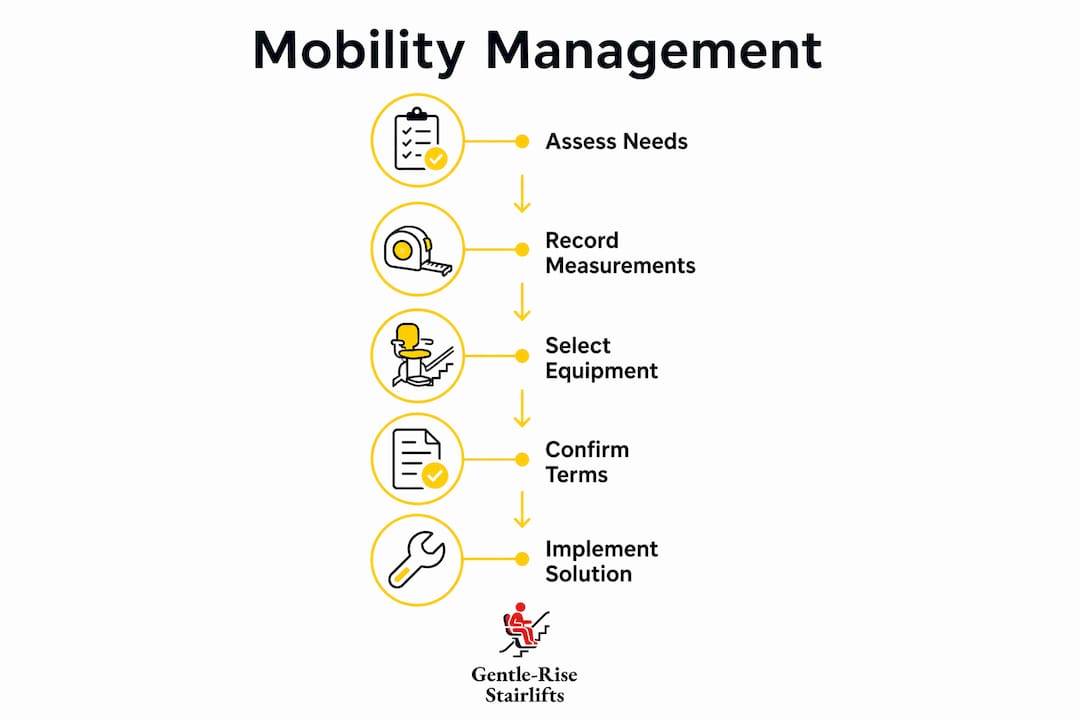
Start by writing down every movement you struggle with or cannot do at all. Then note the expected duration of your recovery, because a six-week recovery after knee surgery calls for different equipment than a six-month rehabilitation after a stroke. Your GP or physiotherapist can give you a realistic recovery timeline, which directly shapes which hire options make financial sense.
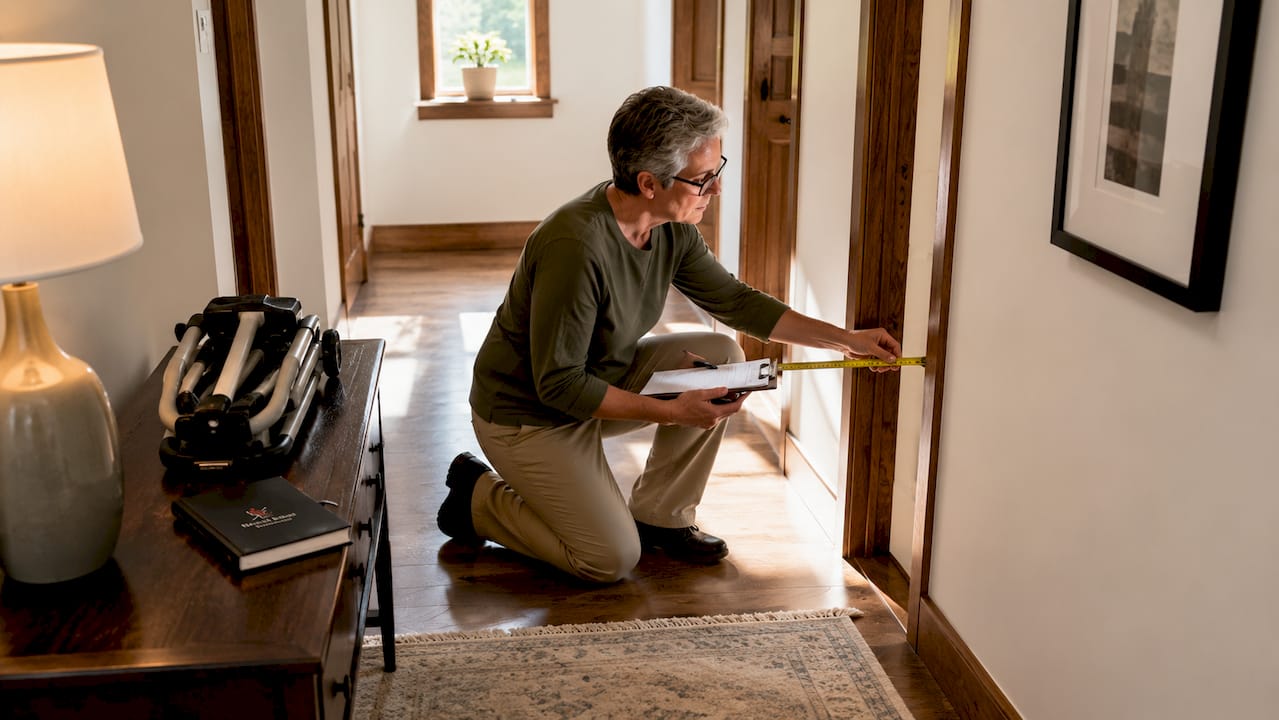
Home dimensions matter as much as your physical condition. Measure doorway widths, staircase length and angle, and any tight corners between rooms. These measurements determine whether a standard wheelchair fits through your hallway, whether a portable ramp will clear your front step, or whether a straight or curved stairlift suits your staircase. Suppliers use exact unfolded dimensions of your mobility aid, including height, width, and weight capacity, to confirm vehicle and equipment compatibility before booking.
Pro Tip: Write your measurements down before contacting any provider. Having doorway widths, stair counts, and step heights ready speeds up every conversation and avoids repeat visits.
If you need transport as well as home equipment, document the number of passengers travelling with you and the typical distances involved. This information helps providers match you with the right vehicle type and confirm whether certified ramps and restraints meet the safety standards required for your specific aid. Rushing this step leads to mismatched bookings and wasted time.
What tools and resources help you organise temporary mobility?
Choosing the right type of aid depends on where your mobility is limited and for how long. The table below outlines the most common temporary options and their primary use cases.
| Aid type | Best suited for | Key consideration |
|---|---|---|
| Stairlift (hire) | Multi-storey homes, post-surgery recovery | Staircase dimensions; straight vs curved track |
| Portable wheelchair ramp | Front steps, single-storey access | Step height and ramp gradient |
| Manual or powered wheelchair | Indoor and outdoor movement | Doorway width and turning radius |
| Mobility scooter | Outdoor errands, longer distances | Pavement access and storage space |
| Accessible hire vehicle | Medical appointments, travel | Wheelchair dimensions and restraint type |
Stairlift hire is one of the most overlooked options for people recovering at home. Many people assume stairlifts are permanent fixtures, but short-term rental is widely available and can be installed within hours. For a closer look at how stairlift rental supports recovery, the practical differences between hire and purchase are worth understanding before you commit.
Regional mobility management programmes connect individuals with transport providers, offer reduced fares for people with disabilities and older adults, and often require only standard ID documentation to access. These programmes are coordinated by mobility managers who handle travel planning and provider liaison on your behalf. Contacting your local council or disability services team is the fastest way to find out what is available in your area.
Before you book any equipment or service, work through this checklist:
- Measurements of your mobility aid in its unfolded state (height, width, weight)
- Staircase dimensions and step count if a stairlift is needed
- Doorway widths throughout the home
- Recovery timeline confirmed by a medical professional
- Insurance details for hired equipment
- Delivery, collection, and demonstration arrangements confirmed in writing
- Emergency contact number for the provider
Verifying safety features before accepting any equipment is non-negotiable. Ramps must be certified, wheelchair restraints must be stable, and interior headroom in any transport vehicle must accommodate your aid and your posture comfortably.
Step-by-step process to implement temporary mobility solutions
Planning at least one to two weeks ahead is the single most effective strategy for avoiding last-minute supply gaps. Early booking secures availability, allows time to swap equipment if the first choice is unsuitable, and removes the stress of searching during peak demand periods. If your surgery date is confirmed, start your mobility planning the same week.
Follow these steps to put your plan into action:
- Confirm your recovery timeline with your GP or surgeon and note the earliest and latest dates you expect to need support.
- List every piece of equipment you need, from home aids to transport, and rank them by urgency.
- Contact providers with your measurements, timeline, and specific requirements. Ask directly about insurance coverage, delivery schedules, collection arrangements, and what happens if your recovery takes longer than expected.
- Book a demonstration before your first solo use. Hands-on familiarisation with equipment such as stairlifts, ramps, or powered wheelchairs prevents user errors and builds confidence after surgery or injury.
- Arrange a trial run of any transport booking before a critical appointment, such as a hospital follow-up. This confirms the vehicle is compatible and the driver understands your needs.
- Set a review date two weeks into your recovery to reassess whether your equipment still matches your improving or changing condition.
- Keep a written log of provider contact details, booking references, and any agreed terms. This protects you if a dispute arises.
Clear communication with providers about insurance, delivery, and usage policies prevents misunderstandings and aligns services with your actual recovery needs. Providers respond better to specific questions than vague requests. Ask "What is included in the hire fee and what is charged separately?" rather than "What does it cost?"
Pro Tip: Ask every provider for a written confirmation of agreed terms before equipment is delivered. A brief email summary protects both parties and removes ambiguity about collection dates or damage liability.
For guidance on selecting and fitting temporary ramps at home, the mobility ramp selection guide covers gradient requirements, weight ratings, and surface materials in practical detail.
What are the common challenges in temporary mobility management?
The biggest barrier is rarely the availability of equipment. Psychological pressure is the most significant obstacle, and a calm, methodical approach reduces stress while keeping your autonomy at the centre of every decision. Recognising this early helps you plan with a clearer head.
Common challenges and how to address them:
- Confusing provider policies. Ask providers to explain any term you do not understand before signing. If the language in a hire agreement is unclear, request a plain-English summary.
- Finding verified providers. Generic internet searches often surface unverified listings. Local mobility management offices and disability advocacy groups hold vetted provider lists and can identify reliable services far more reliably than a search engine alone.
- Unexpected recovery changes. Build flexibility into every booking. Confirm in advance whether hire periods can be extended and what notice is required.
- Accessibility gaps at destinations. Check the accessibility of every venue you plan to visit, including GP surgeries, pharmacies, and family homes. Many venues have access information on their websites, and a quick phone call confirms what is not listed.
- Equipment that does not fit on arrival. This almost always results from incomplete measurements. Providing exact dimensions at the booking stage eliminates this problem in most cases.
"The biggest obstacle is not the availability of temporary mobility options but the psychological pressure. Calm planning reduces stress and prioritises your autonomy throughout the recovery process."
Seeking support from a mobility management service rather than managing every provider relationship alone saves time and reduces the mental load. These services exist precisely to coordinate the moving parts of temporary mobility, and using them is a sign of good planning, not dependency.
Key takeaways
Effective temporary mobility management requires early planning, accurate measurements, and clear communication with providers at every stage.
| Point | Details |
|---|---|
| Assess needs thoroughly | List every affected activity and confirm your recovery timeline before contacting any provider. |
| Measure everything first | Provide exact unfolded dimensions of your mobility aid to confirm equipment and vehicle compatibility. |
| Book at least one to two weeks ahead | Early booking secures availability and allows time to swap unsuitable equipment without stress. |
| Insist on a demonstration | Hands-on familiarisation with stairlifts, ramps, or wheelchairs prevents errors during first solo use. |
| Use mobility management services | Local offices and advocacy groups provide vetted provider lists and travel coordination support. |
What I have learnt from watching people plan temporary mobility
Most people wait too long before making the first call. I have seen it repeatedly: someone leaves hospital with a discharge date confirmed, a multi-storey home, and no stairlift arranged. The result is a ground-floor camp in the living room for three weeks, which is undignified and unnecessary.
The detail that surprises people most is how much a single accurate measurement changes the conversation with a provider. Knowing your doorway is 72 centimetres wide, your staircase has 13 steps, and your wheelchair weighs 18 kilograms turns a vague enquiry into a confirmed booking in one call. Providers are not being difficult when they ask for specifics. They are trying to send the right equipment the first time.
The other thing I would say plainly: do not rely on a general internet search to find a mobility provider. Disability advocacy groups and local mobility management offices hold lists of verified, reliable services that search results simply do not surface. One phone call to the right office can replace two hours of frustrating browsing.
Temporary mobility planning is not about accepting limitation. It is about removing the barriers that stand between you and your normal life, for as long as recovery requires. Done well, it preserves your independence, reduces carer burden, and gets you back on your feet with far less stress than improvising as you go.
— lee
Gentlerise Stairlifts: temporary and permanent mobility support
Recovering at home is far easier when your staircase is not an obstacle. Gentlerise Stairlifts provides stairlift hire and installation across the UK, with straight stairlifts available from £795 and installation often completed within hours of your booking.

Whether you need a short-term hire to cover a post-surgery recovery or a permanent solution for ongoing mobility challenges, Gentlerise Stairlifts offers free home surveys to match the right equipment to your staircase and budget. The Protect+ maintenance programme covers ongoing safety checks so you are never left without support. For a full overview of stairlift costs in the UK, including hire versus purchase comparisons, the Gentlerise Stairlifts website sets out your options clearly. Contact the team today to arrange your free survey.
FAQ
How far in advance should I arrange temporary mobility equipment?
Book at least one to two weeks before you need the equipment. Early planning secures availability and gives you time to swap anything unsuitable before your recovery begins.
What measurements do I need before contacting a mobility provider?
Provide the unfolded height, width, and weight of your mobility aid, plus doorway widths and staircase dimensions at home. Suppliers use these figures to confirm equipment and vehicle compatibility.
Are stairlifts available to hire for short-term recovery?
Yes. Short-term stairlift hire is widely available in the UK, with installation often completed within hours. Gentlerise Stairlifts offers both hire and purchase options to suit different recovery timelines and budgets.
How do I find a verified temporary mobility provider?
Contact your local mobility management office or a disability advocacy group rather than relying on a general internet search. These organisations hold vetted provider lists and can match you with reliable services quickly.
What safety features should I check on hired mobility equipment?
Confirm that ramps are certified, wheelchair restraints are stable, and any transport vehicle offers adequate interior headroom for your aid. Always request a hands-on demonstration before your first solo use.