
Start by asking your local council or NHS team for an occupational therapy (OT) assessment. This one step unlocks the whole pathway: minor aids like grab rails and better lighting are usually assessed and often fitted free, while anything structural, a stairlift, a wet room, a widened doorway, typically runs through the Disabled Facilities Grant (DFG) eligibility process or gets self-funded.
Two funding rules matter more than anything else on your checklist:
- Adaptations costing under £1,000 are generally provided free by the council under Care Act guidance, covering things like grab rails, basic ramps and lighting upgrades.
- Bigger jobs, stairlifts, level-access showers, extensions, generally need a DFG application or private funding, and DFG-funded work must finish within 12 months of approval.
Expect the OT assessment stage to take a few weeks depending on your council, with major works stretching into months. Alongside the council and NHS, a local Home Improvement Agency can help coordinate quotes and paperwork once you know which route you're taking.
Key Takeaways
Adapting a home for an elderly relative works best when free minor fixes come first, an OT assessment guides major decisions, and funding routes are confirmed before any structural work begins.
| Point | Details |
|---|---|
| Start with an OT assessment | Contact your council or NHS team first; this determines whether you need minor aids or major works. |
| Minor adaptations are usually free | Items under £1,000, grab rails, basic ramps, lighting, are typically provided free under Care Act guidance. |
| DFG covers major works | Structural changes like wet rooms or stairlifts usually need Disabled Facilities Grant approval before work starts. |
| Approval comes before work | Starting a DFG-funded project early can disqualify it from funding entirely. |
| Small fixes prevent big problems | Lighting, decluttering and lever handles reduce falls risk immediately, at almost no cost. |
Table of Contents
- How to adapt homes for elderly residents, room by room
- Getting an occupational therapy assessment: what to expect
- Paying for adaptations: the DFG and other funding routes
- What major structural work actually involves
- Quick, low-cost changes you can make this week
- Choosing installers and contractors you can trust
- When a stairlift makes sense
- Why the small changes get overlooked
- Where to check the details yourself
- Sources
- FAQ
How to adapt homes for elderly residents, room by room
Once you understand the funding pathway, the next question is practical: what actually needs changing? Walking through the house room by room, with an OT's eye or your own, reveals most of what matters for elderly accessibility solutions.
Entrance and circulation. A single step at the front door causes more falls than people expect. Ramps, threshold reducers, an external handrail and a porch light with good contrast at night make entry safer. Clear pathways with no clutter matter as much as any fitted equipment.
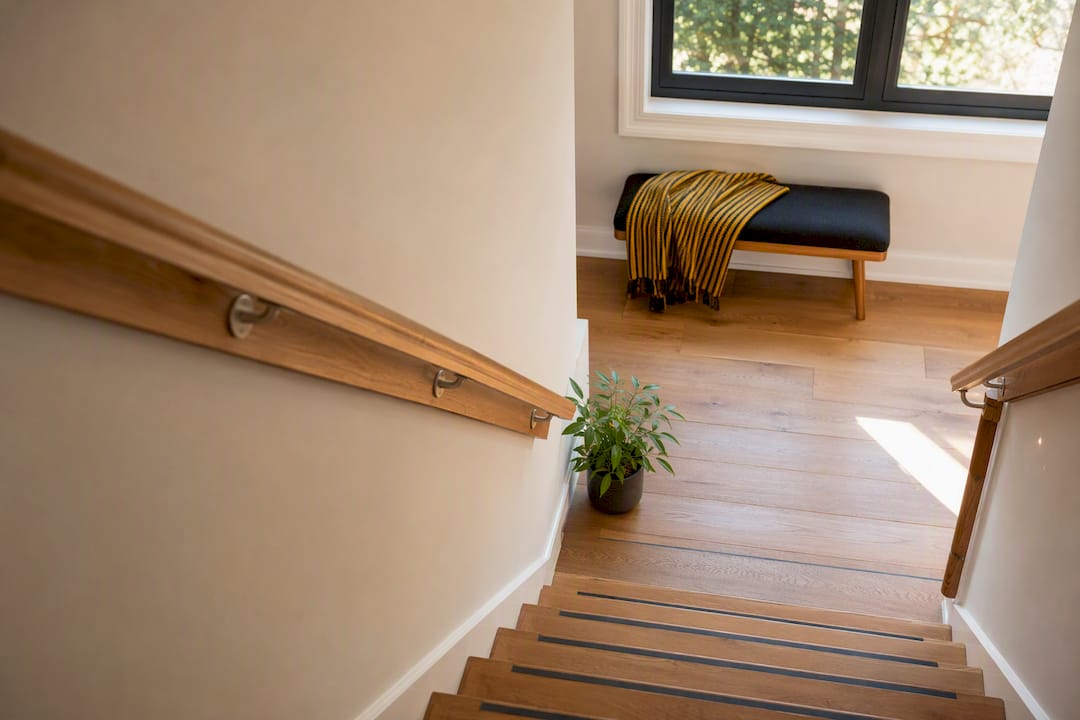
Stairs. Handrails on both sides, not just one, give far more stability than a single rail. Non-slip stair nosings and a landing rest point help anyone with limited stamina. Where stairs themselves become the barrier rather than a temporary inconvenience, a stairlift often solves the problem without the disruption of a full renovation, something we'll return to shortly.
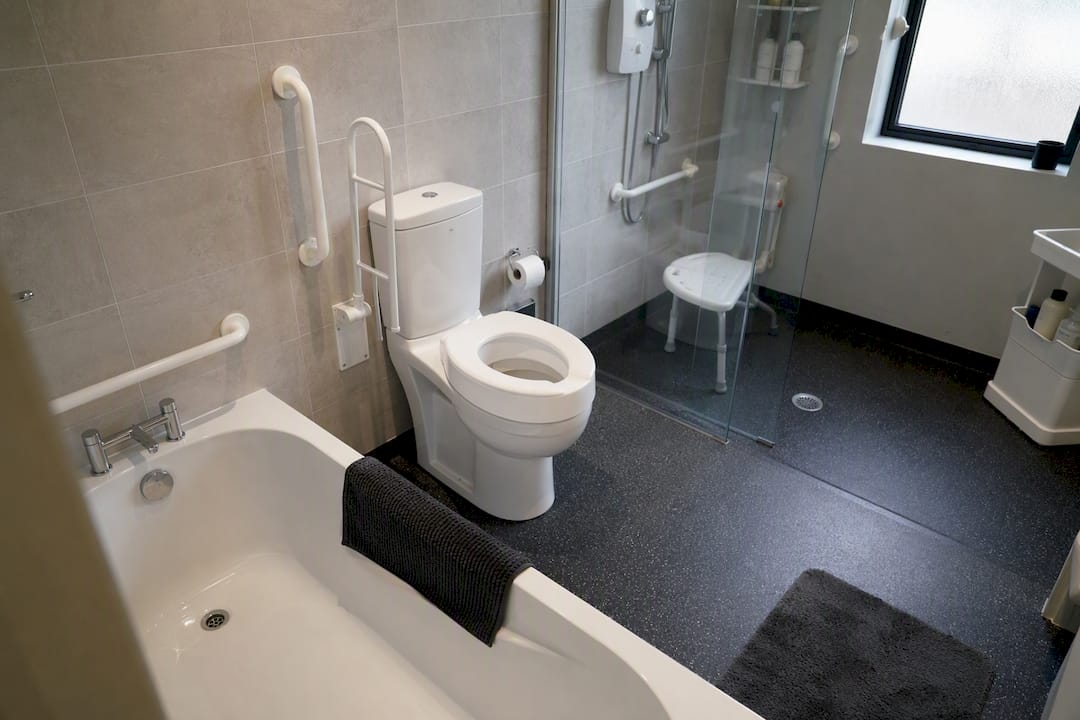
Bathroom and toilet. This is usually where the biggest safety gains sit. Grab rails near the bath and toilet, a raised toilet seat, slip-resistant flooring and a walk-in or level-access shower reduce the two riskiest transfers in the house: getting in and out of the bath, and standing up from the toilet. A full wet room removes the step entirely and suits people with more advanced mobility or balance issues.
Kitchen. Lower or adjustable-height worktops, lever taps instead of twist handles, and pull-out shelving reduce reaching and gripping strain. Small changes here matter for anyone with arthritis as much as anyone with mobility loss.
Living spaces and bedrooms. Widen circulation routes, remove trailing cables, add contrasting edges to steps or furniture, and consider an adjustable bed if getting in and out has become difficult.
Garden and external access. Level paths, secure gates and gentle ramps keep the garden usable rather than off-limits.
Assistive technology and telecare. Personal alarms, motion-sensor lighting and simple reminder systems extend independence well beyond what physical adaptations alone achieve, and they're often the cheapest addition on this whole list.
Pro Tip: If budget or time is limited, prioritise keeping the bedroom, bathroom and kitchen accessible on one level before anything else. Everything else is a comfort improvement; those three rooms are the ones that determine whether someone can keep living at home at all.
For a fuller breakdown by room, see this room-by-room upgrade guide.
Getting an occupational therapy assessment: what to expect
Request an assessment through your local council's adult social care team, your GP or NHS community team, or a hospital discharge planner if the need has followed a fall or surgery. Many councils now offer virtual triage before booking a face-to-face visit.
- Contact the right team. Adult social care handles most home assessment requests; some areas run a duty team that can send equipment out quickly while you wait for a full visit.
- Prepare before the visit. Write down which daily tasks are difficult, note who else lives in the property, and take photos of problem areas like the bathroom or stairs.
- The assessment itself. An OT will observe how you manage daily tasks rather than just asking questions, and the visit usually lasts at least an hour.
- Sign-off and next steps. For major work, the OT produces an Occupational Therapy Major Adaptation Report (OTMAR), which formally starts the DFG process.
Waiting times vary sharply by council, and some local OT services report waits of up to 12 months for a full assessment. If that's not workable, a private OT can speed things up, but check with your council first that they'll accept a privately commissioned report for a DFG application.
The typical stages run: triage → assessment → equipment or minor works, or OTMAR for anything structural. Knowing which stage you're at helps you plan the rest of the timeline realistically.
Paying for adaptations: the DFG and other funding routes
The clearest rule in this whole process: anything under £1,000, grab rails, basic ramps, lighting, is normally free through the council under Care Act guidance. No means test, no lengthy application.
For anything bigger, stairlifts, wet rooms, door widening, extensions, the Disabled Facilities Grant is the main route. Councils apply a "necessary and appropriate" test, and larger grants may involve a means assessment depending on the applicant's circumstances and tenure.
- Approval must come before work starts; starting early typically disqualifies the project from funding.
- Completed work is usually required within 12 months of grant approval.
- Some professional fees, architect or surveyor costs on structural jobs, can be included within the grant.
- Home Improvement Agencies, charitable funds and council discretionary schemes can supplement or replace DFG funding where eligibility is unclear.
Councils are encouraged to treat minor adaptations as a cost-effective, high-value intervention, not a lesser priority than major structural grants, because preventing a fall is cheaper than treating one.
Check gov.uk's DFG eligibility page for your council's specific process, since local delivery standards vary.
What major structural work actually involves
Stairlifts, through-floor lifts, wet rooms, door widening and downstairs bedroom extensions all fall into "major adaptation" territory, and they behave differently from a quick grab-rail fit.
Expect a feasibility visit, OTMAR sign-off, contractor quotes and a planning or permissions check before any work starts. From first assessment to finished installation, several months is realistic for anything involving building work, though a stairlift alone can move far faster once approved.
- Phase work where possible so at least one bathroom and one bedroom stay usable throughout.
- Keep a temporary mobility aid, a commode, a bed rail, on hand for the gap between assessment and installation.
- DFG-funded major works usually require multiple independent contractor quotes, and structural jobs often need an architect or surveyor involved.
- Ask installers about aftercare from day one. Maintenance contracts matter as much as the initial fit for anything mechanical.
Quick, low-cost changes you can make this week
Not every improvement needs a grant application or a waiting list. Some of the most effective falls-prevention changes cost very little and take an afternoon.
- Add task lighting in the kitchen and bathroom, the two rooms where poor visibility causes the most near-misses.
- Clear trip hazards: secure loose rugs, tidy trailing cables, widen walkways.
- Swap twist taps and round door handles for lever versions, add non-slip tape to steps, and fit a raised toilet seat.
- Use contrasting colours on step edges and add plug-in night-lights along the route to the bathroom.
Pro Tip: Buy mobility aids that don't look clinical if appearance matters to the person using them. Many high street and online retailers now sell grab rails and raised seats designed to blend into a normal bathroom rather than look hospital-issue, which noticeably improves how willingly people actually use them. More ideas along these lines sit in this safe independence guide.
Choosing installers and contractors you can trust
Council-approved contractor lists, Home Improvement Agencies and established local tradespeople are the safest starting points, particularly if you're applying for a DFG.
- Ask for evidence of experience specifically with elderly or accessibility adaptations, not just general building work.
- Confirm public liability and employer's insurance, and ask for written guarantees on the finished work.
- Request references from recent similar jobs, and ask what maintenance or aftercare is included.
- If you're going through the DFG route, you'll likely need at least two independent quotes, sometimes with an architect or surveyor for structural elements.
- Avoid anyone who pressures you to start before grant approval is confirmed in writing, that alone can void your funding.
- Keep every quote, permission letter, and piece of OTMAR correspondence together in one file for the DFG application.
When a stairlift makes sense
A stairlift suits people who can still transfer safely on and off a seat but find the stairs themselves the main obstacle, whether that's a long-term mobility issue or a shorter recovery period after surgery. It's often the fastest way to restore access to a whole floor without the disruption of a downstairs conversion.
- Options typically include buying new, buying reconditioned, or renting for shorter-term needs.
- Gentlerise Stairlifts installs straight models from £795, with many jobs completed within hours of survey.
- A proper on-site survey matters for curved staircases, where the rail has to be custom-built to the exact stair shape.
- Aftercare counts: ask about warranties and ongoing maintenance plans, such as Gentlerise Stairlifts' Protect+ programme, before you commit.
One recent case involved an elderly homeowner who'd been sleeping in a downstairs living room for weeks after a hip operation, unable to manage the stairs safely. A straight stairlift, survey to fitted, took under a day, and she was back in her own bedroom that same evening.
Why the small changes get overlooked
Most guidance on home adaptations, and most families, jump straight to the big-ticket items: the wet room, the stairlift, the extension. That's understandable, they're visible, they solve an obvious problem. But the evidence on what actually prevents falls and hospital admissions points the other way. Grab rails, better lighting and decluttering a hallway do more for day-to-day safety than people expect, and they cost nothing under Care Act guidance. Get the free, minor fixes done first. The big structural decisions become clearer once the smaller risks are already off the table.
Where to check the details yourself
- NHS home adaptations guidance explains how assessments work.
- Gov covers grants and local council rules.
- Room to improve (Centre for Ageing Better) reviews the evidence on outcomes.
Sources
- Gov
- Home adaptations (NHS)
- Disabled Facilities Grant guidance for local authorities (DFG guidance PDF)
- Major adaptations step-by-step guide – getting an occupational therapy assessment (Surrey County Council)
FAQ
Who pays for home adaptations?
Minor adaptations under £1,000 are generally free through the council under Care Act guidance. Major adaptations usually need a Disabled Facilities Grant, self-funding, or a combination of both.
What are some ways to adapt homes for the elderly?
Common changes include grab rails, ramps, better lighting, walk-in showers, lever taps, widened doorways and stairlifts, alongside simple telecare devices like personal alarms.
What is a home adaptations assessment?
It's a visit from an occupational therapist who observes daily tasks and home use, usually lasting at least an hour, to recommend equipment, minor changes or major structural work.
Can I get a grant to adapt my home?
Yes, the Disabled Facilities Grant funds necessary and appropriate major adaptations, though larger grants may involve a means assessment and work must finish within 12 months of approval.
If you're weighing up whether a stairlift is the right next step, Gentlerise Stairlifts offers free home surveys across its service area, with straight stairlifts starting at £795 and rental options for shorter-term needs. Its Protect+ aftercare plan covers ongoing maintenance once your stairlift is fitted, so safety doesn't stop at installation day.