
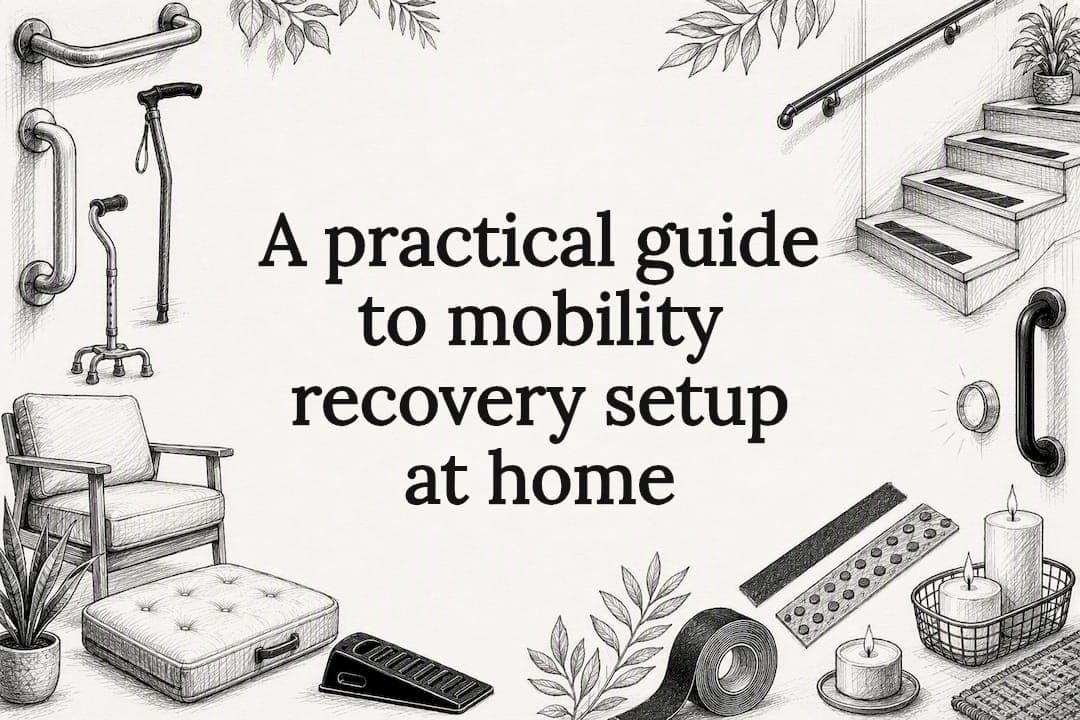
The single most important step is this: clear one safe walking route through your home today, build a simple recovery station within arm's reach of your bed or chair, and book a free occupational therapist (OT) home assessment through your council before you do anything else. Everything else, from grab rails to stairlifts, follows from that.
- Clear your main walking path of rugs, cables and clutter
- Set up a recovery station: phone, water, medication, torch, remote
- Call your local Adult Social Care team to request an OT home assessment
- If stairs are unavoidable in the short term, check same-day rental options with a supplier such as Gentle Rise Stairlifts Ltd
Pro Tip: Photograph each room on your phone before you start moving furniture. It sounds trivial, but you'll use those photos when the OT asks what your home normally looks like.
Key Takeaways
Setting up a mobility recovery space works best when cheap, reversible changes come first and permanent adaptations wait for professional confirmation of real, ongoing need.
| Point | Details |
|---|---|
| Clear routes first | Remove rugs, cables and clutter from your main walking path before anything else. |
| Book the OT assessment early | A free council OT home assessment shapes every later decision, including DFG eligibility. |
| Rent before you buy | Short-term stairlift rental controls cost and avoids committing before recovery is confirmed. |
| Build a recovery station | Keep phone, water, medication and a torch within reach to reduce fatigue-driven falls. |
| Consider Gentlerise Stairlifts for speed | Gentlerise Stairlifts offers rental and purchase stairlifts with installation often within hours and Protect+ aftercare. |
Table of Contents
- Setting up mobility recovery room by room
- How do I get professional help and funding for home adaptations?
- Should you rent, buy, or wait on equipment?
- Pacing and energy management during recovery
- Getting your home ready before surgery
- What should you prioritise, and what needs urgent attention?
- What actually helps most in a recovery setup
- If you need a stairlift quickly
- Sources
- FAQ
Setting up mobility recovery room by room
A full mobility recovery setup rarely needs a tradesperson on day one. Most of the highest-impact changes cost nothing and take an afternoon. Work through the house in this order, because it mirrors how people actually move through a recovery day.
Bedroom. Raise or lower the bed so your feet sit flat on the floor when seated on the edge, not dangling or straining. Keep a lamp, torch and phone on the nightstand, and if you're at real fall risk, a pendant alarm too. A firm chair with arms nearby makes getting dressed far safer than perching on a mattress edge.
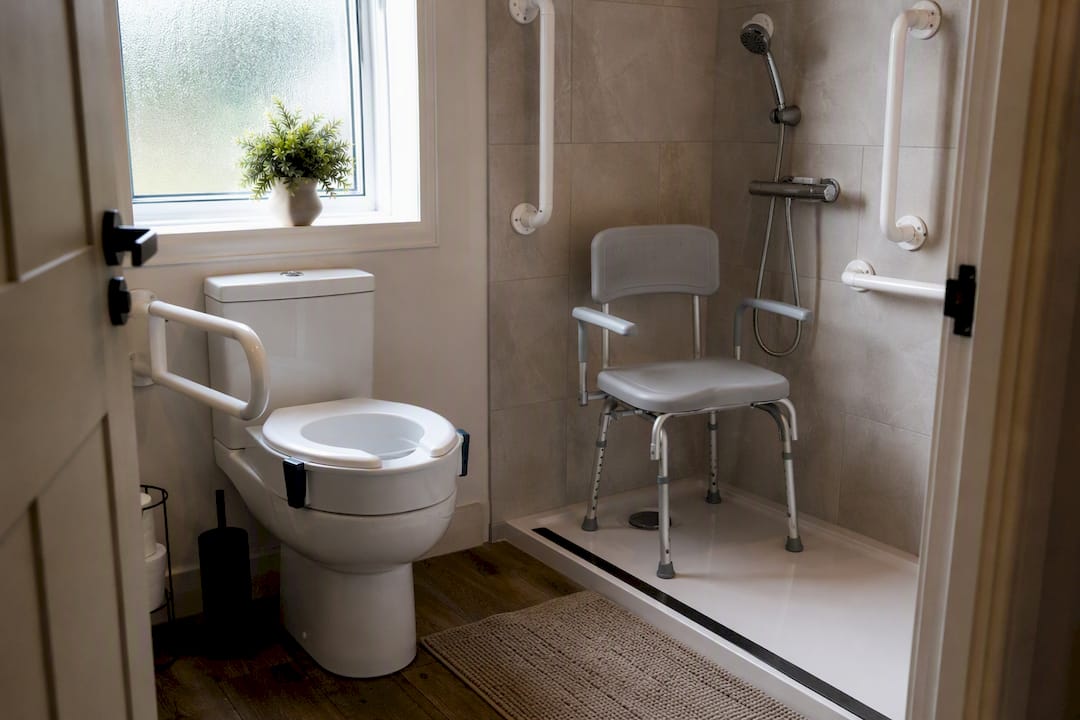
Bathroom. This is where falls happen most, so prioritise it. Grab rails need fixing into wall studs, not just plasterboard. A raised toilet seat and a shower chair with a handheld shower head reduce the bending and balancing that causes the most trouble, and Living Made Easy has a useful directory if you're unsure which model suits your bathroom layout. Adhesive non-slip strips in the shower tray cost a few pounds and matter more than most people expect.
Kitchen. Move everyday items to between waist and shoulder height so nothing requires bending or a stretch on tiptoe. A stool at the counter lets you sit while preparing food. Batch-cook or freeze meals in advance so lifting pans and carrying hot dishes isn't part of your daily routine in the first fortnight.
Living room. Remove low coffee tables that catch shins and walking aids. Raise your usual seat with a firm cushion or chair risers, and keep the remote, water and any reading material within reach so you're not making unnecessary trips.
Stairs and outdoors. Check that the handrail is fixed firmly and runs the full length of the staircase. Clear anything sitting on the steps. If stairs are genuinely a problem in the early weeks, a short-term stairlift rental or a temporary downstairs bed avoids the risk entirely while you heal.
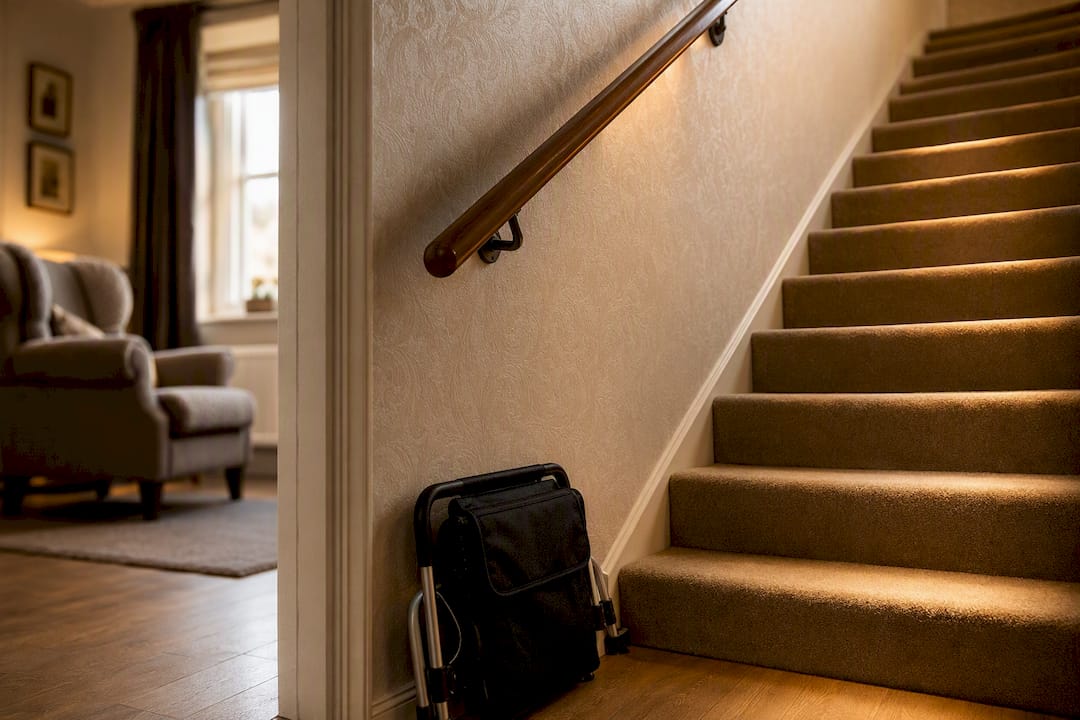
Pro Tip: Secure loose carpets and rugs with double-sided tape rather than removing them entirely if that changes the room's whole feel. A walker bag or small backpack also means you're never tempted to carry a mug in one hand while gripping a frame with the other. Sort pet care and rubbish collection cover in advance too. These small logistics get forgotten until the moment they become urgent.
How do I get professional help and funding for home adaptations?
You don't need to fund every change yourself, and you don't need to guess what your home actually needs. The route is straightforward:
- Contact your local Adult Social Care team or council and request a free OT home assessment.
- During the visit, which typically lasts at least an hour, the OT will look at your daily tasks, current risks and equipment needs. Having someone else present helps you remember everything discussed.
- Small adaptations under £1,000, such as grab rails or outdoor step rails, are often provided free by the council once assessed.
- For larger work, stairlifts or wet rooms, the OT assessment usually becomes your gateway into a Disabled Facilities Grant (DFG) application.
Before the visit, prepare:
- Photos of tricky spots (stairs, bathroom, entrances)
- A list of daily tasks that currently feel hard or unsafe
- Your current medication list
- Details of anyone helping you at home
Our guide to stairlift grants walks through the DFG process in more detail if a stairlift looks like part of your longer-term plan.
Should you rent, buy, or wait on equipment?
Temporary aids do the heaviest lifting in the first few weeks. A commode, shower stool, perching stool, raised toilet seat and a walking frame or stick cover most immediate needs, and none of them require builders or planning permission.
Stairs are the trickier decision. Short-term stairlift rental gives you controlled costs, same-day or next-day installation, and time to let your OT review your actual recovery before you commit to anything permanent. Clinical guidance on post-hip and post-stroke recovery suggests rental is often the sensible early choice, with rental commonly reviewed after two to three months and the financial breakeven of buying versus renting sitting around 14 to 18 months. That's a useful number to keep in mind before you sign anything.
Weighing it up:
- Cost: temporary aids are cheapest; rental controls spend; permanent adaptations cost most upfront but nothing long term
- Installation time: rental stairlifts can often go in within hours; permanent wet rooms take weeks
- Reversibility: rentals and small aids are fully reversible; permanent adaptations aren't
Gentlerise Stairlifts offers straight and curved stairlift rental alongside quick installation and a Protect+ aftercare plan, which makes it a practical stopgap while you and your OT decide what's genuinely needed long term.
Pro Tip: Don't buy a stairlift outright in week one. Rent first, let the OT reassess your mobility at the two to three month mark, and convert to purchase only if the need looks permanent.
Pacing and energy management during recovery
Fatigue causes falls more often than people expect. A predictable daily routine, with your recovery station stocked and essentials genuinely within reach, does more to prevent trips than any single piece of equipment.
- Build in scheduled rest breaks rather than pushing until you're exhausted
- Move little and often to avoid stiffness, rather than saving activity for one big effort
- Limit stair trips to what's essential each day
- Follow the no-carry rule: never carry items while using a walking aid; use a walker bag or small backpack instead
- Batch errands and visitors rather than spreading them thinly across the day
Pro Tip: If you're tracking how tired you feel, a simple 1 to 10 scale after each activity helps you spot the pattern before you push too far. If you're consistently exhausted by midday, that's the signal to ask your OT or GP for extra support, not to push through it.
Getting your home ready before surgery
Preparation before admission saves real stress after it. Two weeks before surgery, sort clean bedding and clothing, freeze several meals, and confirm transport and any carer support for the first week home.
- Reserve short-term hire equipment now, not after discharge: commode, shower chair, walking frame
- Ask about a discharge plan if your hospital offers one
- Set up your home in advance: essentials on the main floor, food stocked, frequently used items between waist and shoulder height
- Rehearse your planned routes and test your recovery station while you're still fully mobile
Our checklist for preparing a home for recovery mobility is worth working through alongside this.
What should you prioritise, and what needs urgent attention?
Not every change matters equally. Sort your priorities in this order:
- A clear primary walking route with nothing to trip over
- A secure, full-length handrail on any stairs you must use
- Your phone within reach at all times, day and night
- Toilet and shower access on the same floor as your bedroom, if at all possible
A handrail that wobbles, a phone left in another room, or dizziness that keeps returning when you stand up are not "wait and see" problems. These are the signs an OT or GP needs to know about now, not next week.
If stairs simply can't be avoided and a rail alone isn't enough, short-term stairlift rental is usually faster to arrange than moving a bedroom downstairs. New severe weakness, repeated falls, or an inability to reach help are reasons to contact health services directly rather than waiting for a scheduled OT visit.
What actually helps most in a recovery setup
The biggest mistake people make is spending on permanent fixes before they know what they'll actually need. A wet room fitted in the first fortnight might be the wrong call entirely once mobility improves at eight weeks. Temporary solutions, rented stairlifts, borrowed commodes, a downstairs bed, buy you the one thing that matters most here: time to let recovery actually happen before you commit money to guesswork.
If there's one question worth asking your OT directly, it's this: "What's the earliest point you'd expect to reassess this equipment?" That single answer tells you whether you're looking at weeks or months, and it should shape every purchase decision that follows.
If you need a stairlift quickly
There are other ways to manage stairs during recovery, a downstairs bed, a stairlift purchase, going without, but if your OT assessment points towards a stairlift and time matters, Gentlerise Stairlifts offers something the slower routes don't: installation that's often measured in hours rather than weeks, with straight stairlift rental and purchase options starting at £795 and a Protect+ aftercare plan covering ongoing servicing.

That speed matters most in exactly the situation this guide covers: a short recovery window where you need stair access sorted before discharge, not after a six-week wait. Rental gives you flexibility if your mobility improves faster than expected, and it can convert to purchase later if your OT confirms the need is longer term. A free home survey is the natural next step, and it costs nothing to find out what's possible for your staircase. Visit the Gentlerise Stairlifts homepage to book a survey or discuss rental availability, alongside the OT assessment that should still guide your final decision.
Sources
- Home adaptations - Social care and support guide - NHS
- Getting your home ready - knee or hip surgery: MedlinePlus Medical Encyclopedia
- Stairlift options after a stroke or a hip operation - Stairlift Costs
This article is general information, not a substitute for advice from a qualified doctor. Consult a qualified healthcare professional about your own circumstances before acting on anything here.
FAQ
What is the first step in a mobility recovery setup?
Clear your main walking route of trip hazards and build a recovery station with your phone, water and medication within reach, then request a free OT home assessment through your council.
How much do small home adaptations cost?
Small adaptations such as grab rails or step rails, typically under £1,000, are often provided free by the council once an OT confirms the need.
Should I rent or buy a stairlift after surgery?
Rental is usually the sensible early choice, since it controls cost and lets your OT reassess mobility, with financial breakeven against purchase typically around 14 to 18 months. Gentlerise Stairlifts offers rental with same-day installation for exactly this situation.
How do I qualify for a Disabled Facilities Grant?
An OT home assessment through your council is usually the gateway to a DFG application for larger adaptations like stairlifts or wet rooms.
What are the biggest red flags during home recovery?
An unstable handrail, an inability to reach a phone for help, or repeated dizziness on standing all need urgent attention from your GP or OT rather than waiting for a routine review.