
TL;DR:
- Council support for mobility includes equipment and structural adaptations funded through the Disabled Facilities Grant. Applicants must undergo an occupational therapist assessment, provide proper documentation, and avoid starting work before approval to ensure eligibility. Local authorities are mandated to approve and fund qualifying applications within set statutory deadlines, and applicants can appeal unlawful refusals.
Council mobility support is financial and practical assistance from local authorities to help people improve home accessibility through grants, equipment, and structural adaptations. The formal term for the main funding mechanism is the Disabled Facilities Grant (DFG), and any complete guide to council mobility support must start there. Local councils in England, Wales, and Northern Ireland have a statutory duty to provide this support when eligibility conditions are met. Occupational therapists (OTs) act as the gatekeepers, assessing what adaptations are "necessary and appropriate" for each person's needs. Understanding how the system works gives you a real advantage before you make your first call.
What types of mobility support are available through councils?
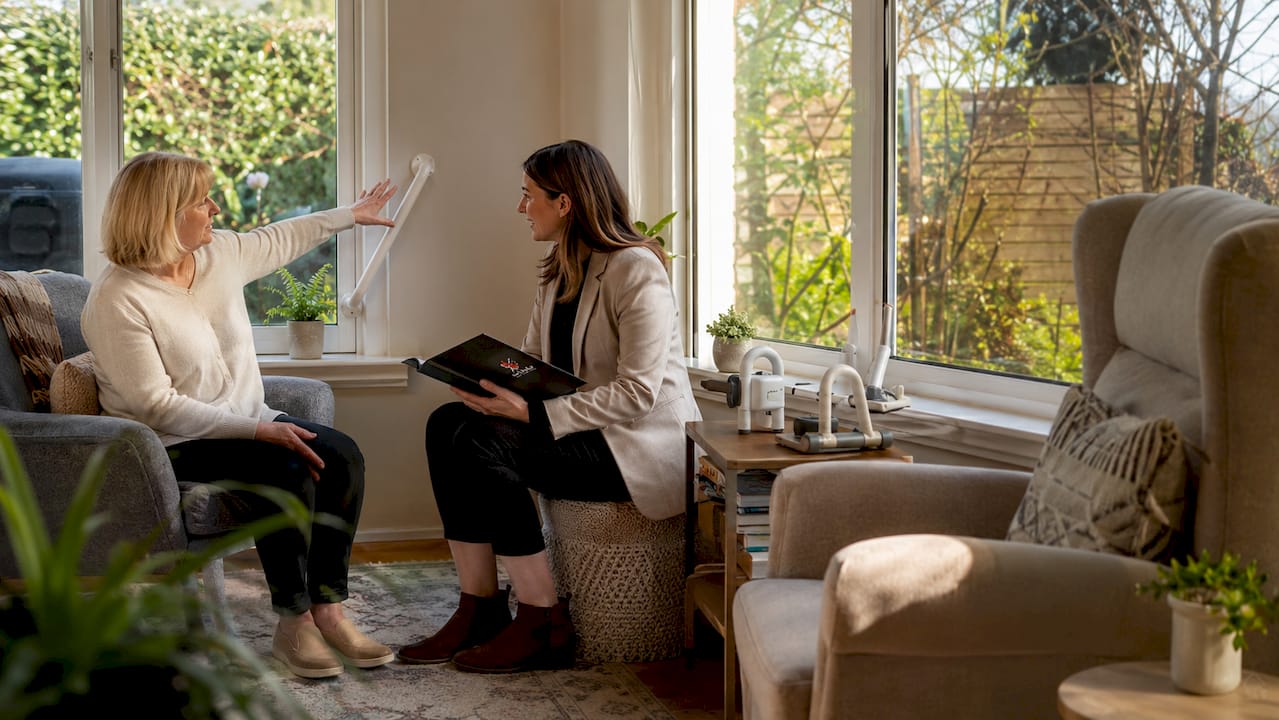
Council assistance for mobility covers a wider range than most people realise. Support falls into two broad categories: equipment provision and structural adaptations.
Equipment provision includes smaller aids such as grab rails, non-slip mats, raised toilet seats, and portable ramps. These items are often supplied and fitted directly by the council's occupational therapy team. Minor adaptations costing £1,000 or less may be provided and fitted free of charge following a successful care needs assessment. That threshold removes a significant financial barrier for people who need small-scale help quickly.
Structural adaptations are larger projects funded through the Disabled Facilities Grant. These include stairlifts, level-access showers, widened doorways, and through-floor lifts. DFG funding caps vary by region: England allows up to £30,000, Wales up to £36,000, and Northern Ireland up to £25,000. Scotland operates a separate scheme with its own rules and funding structure.
The distinction between equipment and structural work matters practically. Equipment arrives faster, often within weeks of assessment. Structural adaptations require a formal DFG application, contractor quotes, and council approval, which takes longer. Knowing which category your need falls into helps you set realistic expectations from the start.
- Grab rails and handrails
- Ramps and threshold ramps
- Stairlifts (straight and curved)
- Level-access or walk-in showers
- Widened doorways for wheelchair access
- Through-floor lifts
- Improved lighting for safety
Pro Tip: If your need is urgent and the adaptation costs under £1,000, ask your council's adult social care team specifically about minor adaptations. You may receive help within weeks rather than months, without going through the full DFG process.
For a broader look at affordable home adaptations that complement council-funded work, the options are wider than most people expect.
Who is eligible for council mobility support?
Eligibility for council mobility support services rests on three main factors: disability status, property conditions, and financial circumstances.
You must have a disability or health condition that affects your ability to move safely around your home. This includes physical disabilities, sensory impairments, and conditions that cause progressive mobility loss. The property must be your primary residence, and you must either own it or have the landlord's written consent for adaptations. Tenants in private or social housing can apply, but landlord agreement is required before structural work begins.
The means test applies to DFG applications for adults. Your council calculates a contribution based on your income and savings. People receiving certain means-tested benefits, such as Universal Credit or Pension Credit, often pay no contribution at all. Children's DFG applications are not means-tested, meaning families with disabled children receive the full grant regardless of income.
The OT assessment is the single most important step in the process. OTs conduct vital assessments that define which adaptations are "necessary and appropriate." Their report becomes the primary document supporting your entire application. Being thorough and honest during this assessment is not optional. If you understate your daily difficulties, the OT may recommend fewer adaptations than you actually need.
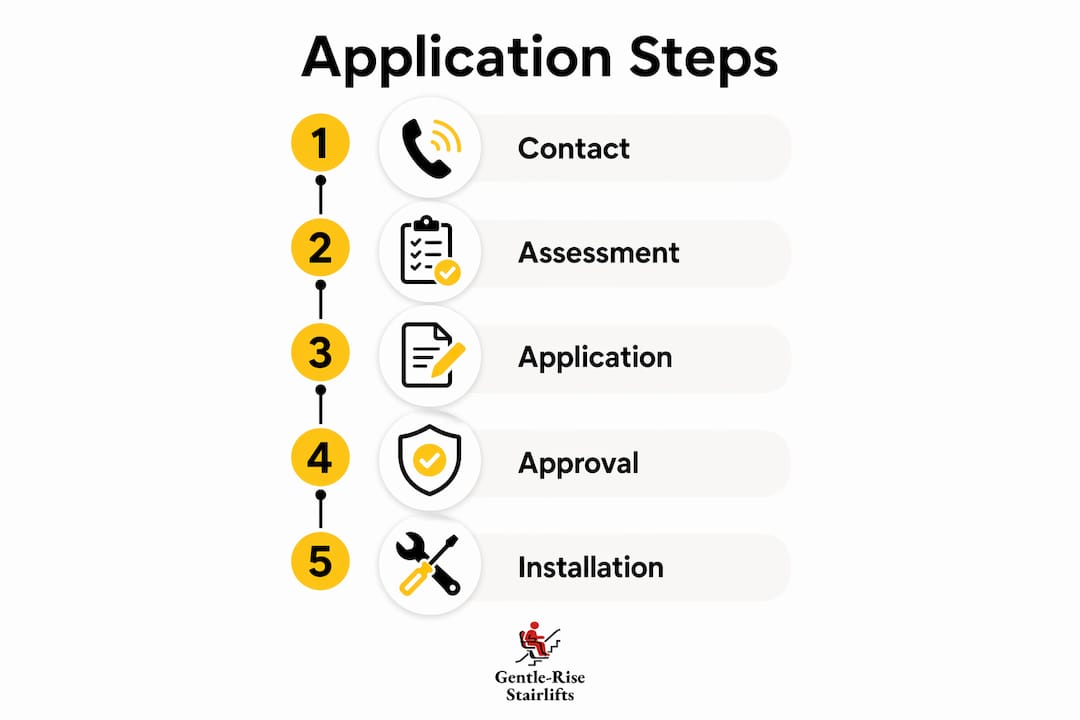
The eligibility process follows this sequence:
- Contact adult social care to request a care needs assessment.
- An OT visits your home and evaluates your mobility challenges.
- The OT produces a report recommending specific adaptations.
- The council uses this report to determine what the DFG will fund.
- A means test calculates any financial contribution you must make.
Pro Tip: Before your OT assessment, write down every task you find difficult at home, from climbing stairs to getting in and out of the bath. Specific examples give the OT a clearer picture and lead to more accurate recommendations.
How to apply for council mobility support: step by step
The application process for council mobility support has several distinct stages, and skipping any one of them causes delays or disqualification.
Step 1: Contact the right department. Directing queries to housing or grants teams and adult social care for OT assessments prevents the delays that come from misdirected enquiries. Do not call the general council switchboard. Ask specifically for the housing grants and adaptations team, or the adult social care team if you need an OT referral.
Step 2: Request an occupational therapist assessment. Adult social care arranges this visit. The OT assesses your home and your mobility needs together. Their written report is the foundation of your application.
Step 3: Gather your documents. A complete application requires:
- The completed DFG application form
- The OT assessment report
- At least two contractor quotes for the work
- Proof of property ownership or landlord consent
- Financial evidence for the means test (bank statements, benefit letters)
Step 4: Submit a valid application. The 6-month decision clock starts only when the council receives a complete application with all required documents. An incomplete submission does not trigger the statutory timeline. Check with your council what "valid" means for their specific process.
Step 5: Wait for approval before starting any work. Starting adaptation work before council approval disqualifies applicants from receiving grant funding. You would then be liable for the full cost personally. This is the most common and costly mistake applicants make.
Step 6: Respond promptly to council requests. Councils may ask for additional information during the review. Delays in responding extend the timeline. Keep copies of every document you submit and note the date of every communication.
Organising your paperwork thoroughly from the start is the single biggest factor in a smooth application. A guide on organising home adaptation paperwork can help you structure your documents before submission.
What happens after you apply?
Once you submit a valid application, the council has clear legal obligations regarding decisions and payments.
Local authorities must provide a written decision within 6 months and make payment within 12 months of receiving a valid application. These are statutory deadlines, not targets. The 6-month clock starts from the date your complete application is received, not from your initial enquiry. Keep your submission date on record.
There are three possible outcomes after the council reviews your application:
| Outcome | What it means |
|---|---|
| Full approval | The council funds the full cost of recommended adaptations up to the regional cap. |
| Partial approval | The council funds part of the work; you may need to cover the remainder. |
| Refusal | The council determines the adaptations do not meet the legal criteria. |
DFGs are mandatory: councils cannot use budget constraints to refuse an application that meets the legal requirements. If your application is refused on grounds of resource limits, that refusal is unlawful. You have the right to appeal or complain, and independent advisory bodies can support you through that process.
If your adaptation costs exceed the regional funding cap, the council must signpost you to alternative financial help. This may include council top-up grants, charitable funds, or low-interest loans. Local authorities may prioritise cases but must still respect legal deadlines for decisions and payments regardless of prioritisation.
Pro Tip: Keep a dated log of every letter, email, and phone call with the council. If deadlines are missed, this record supports a formal complaint or appeal. Independent bodies such as the Local Government and Social Care Ombudsman can investigate failures to meet statutory timelines.
Key takeaways
Council mobility support, delivered primarily through the Disabled Facilities Grant, is a statutory entitlement that councils cannot lawfully refuse when eligibility conditions are met, provided applications are complete and submitted correctly.
| Point | Details |
|---|---|
| Know your funding limits | DFG caps are £30,000 in England, £36,000 in Wales, and £25,000 in Northern Ireland. |
| Minor adaptations are often free | Adaptations costing under £1,000 may be provided and fitted at no charge after assessment. |
| The OT report is critical | Be specific about daily difficulties during assessment; the OT report drives the entire application. |
| Never start work early | Beginning adaptation work before approval disqualifies you from grant funding entirely. |
| Statutory deadlines protect you | Councils must decide within 6 months and pay within 12 months of a valid application. |
What I've learned from watching people navigate this system
The most common mistake I see is treating a DFG application like a simple funding request. It is not. Successful applications require thorough organisation and documentation that links each adaptation directly to a specific mobility need. People who submit vague applications wait months for decisions, then receive partial approvals that do not cover what they actually need.
The second mistake is contacting the wrong part of the council. I have spoken with people who spent weeks going back and forth with a general enquiries team, achieving nothing. The housing grants team and adult social care are the two departments that matter. Everything else is a detour.
Transparency during the OT assessment is where applications are won or lost. People often understate their difficulties because they do not want to appear dependent or because they are having a better day than usual. The OT needs to understand your worst days, not your best ones. If climbing the stairs takes you ten minutes and leaves you breathless, say so clearly.
Finally, patience combined with persistence is the right posture. The system has legal teeth. Councils must meet their deadlines. If yours does not, you have real recourse. Document everything, follow up in writing, and do not hesitate to seek advocacy support from organisations such as Age UK or the Royal British Legion if the process stalls.
— lee
Stairlifts and council support: how Gentlerise Stairlifts can help
Stairlifts are one of the most commonly funded adaptations under the Disabled Facilities Grant, and getting the right product matters as much as securing the funding.

Gentlerise Stairlifts specialises in straight, curved, and reconditioned stairlift installation across the UK, with prices starting at £795 and installation often completed within hours. If your OT has recommended a stairlift as part of your adaptation plan, Gentlerise Stairlifts can provide the contractor quotes your council requires as part of a valid DFG application. The team also offers rental options for short-term needs and the Protect+ maintenance programme for long-term peace of mind. Book a free home survey through Gentlerise Stairlifts to get a clear picture of costs and options before your council application moves forward. You can also read more about understanding stairlift solutions to prepare informed questions for your OT assessment.
FAQ
What is council mobility funding?
Council mobility funding refers to financial assistance from local authorities, primarily through the Disabled Facilities Grant, to help people with disabilities fund home adaptations and mobility aids. Grants are means-tested for adults and cover adaptations such as stairlifts, ramps, and level-access showers.
How long does a DFG application take?
Councils must issue a written decision within 6 months of receiving a valid, complete application, and payment must follow within 12 months. The clock starts only when all required documents, including OT reports and contractor quotes, are submitted.
Can a council refuse a DFG application due to budget constraints?
No. Disabled Facilities Grants are mandatory, and councils cannot lawfully refuse an application that meets the legal criteria on the grounds of limited resources. Applicants can appeal or complain to independent bodies if a refusal is unlawful.
Do I need to own my home to apply for council mobility support?
No. Tenants in private or social housing can apply, but they must obtain written consent from their landlord before any structural adaptation work begins. Owner-occupiers must provide proof of ownership as part of the application.
What role does an occupational therapist play in the process?
An occupational therapist assesses your home and your specific mobility difficulties, then produces a report recommending which adaptations are "necessary and appropriate." This report is the primary document the council uses to approve and fund your DFG application.