

TL;DR:
- Choosing the right mobility ramp depends on accurate measurement of the vertical rise, appropriate width, and adherence to safety standards.
- Aluminium ramps are preferred for durability and low maintenance, especially in UK weather conditions, while planning for future needs is essential.
A mobility ramp is a sloped surface that provides safe, unobstructed access across steps, thresholds, or level changes for wheelchair users, scooter riders, and those using walking aids. Choosing the wrong one is not simply inconvenient. It can cause injury, restrict independence, and in some cases create legal liability. This guide to choosing mobility ramps covers the measurements, materials, safety standards, and installation steps you need to make a confident, informed decision. Whether you are selecting a ramp for a front doorstep or planning a permanent home adaptation, the criteria are the same: slope, width, load capacity, and material must all match the user and the environment.
How to measure your space and assess user needs
Accurate measurement is the single most important step in any mobility ramp selection guide, and it is where most people go wrong. The most common mistake is measuring by step count rather than actual vertical rise. Two steps in one house may measure 14 inches total; in another, they may measure 18 inches. That four-inch difference changes the required ramp length significantly and affects the slope angle, which directly affects safety.
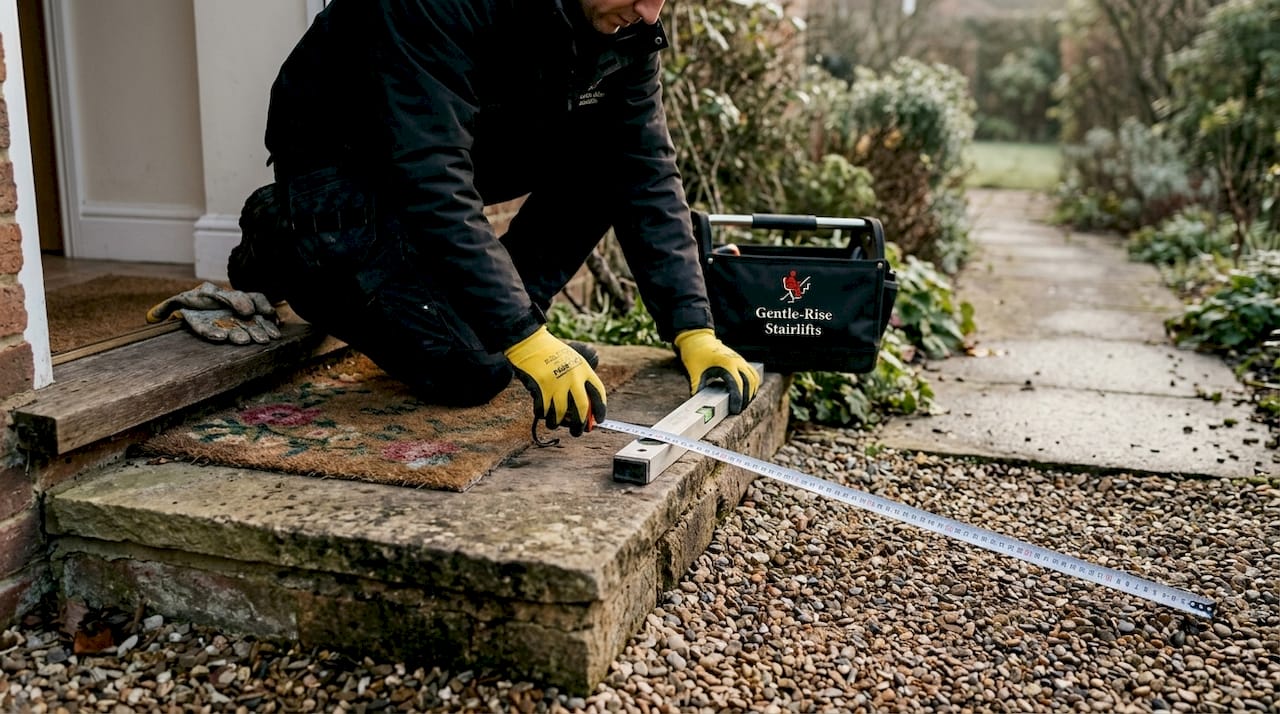
To measure correctly, place a spirit level horizontally at the top of the step and measure straight down to the ground. That number is your vertical rise. Using the standard 1:12 slope ratio, a 6-inch rise requires a 72-inch (6-foot) ramp. A 12-inch rise requires a 12-foot ramp. Always work from the actual measurement, not an estimate.
Width is equally critical. Ramp width must allow at least 4 inches of clearance beyond the width of the mobility device on each side, to accommodate footrests, armrests, and natural hand movement. Standard manual wheelchairs are approximately 24 to 26 inches wide. Power chairs and scooters can reach 30 to 36 inches. A ramp with less than 36 inches of clear width creates a genuine safety risk.
Beyond dimensions, consider these user-specific factors before purchasing:
- Load capacity: Reliable ramps should support at least 800 pounds to safely handle the combined weight of the user, the chair, and any caregiver assistance. Power chairs alone can exceed 300 lbs.
- Turning space: If the user needs to turn at the top or bottom of the ramp, a landing of at least 60 inches by 60 inches is required for a wheelchair to complete a full turn safely.
- Frequency of use: Daily, heavy use demands a permanent or modular ramp. Occasional use may suit a portable option.
- Future needs: A condition that is manageable today may require a wider or longer ramp within two years. Sizing up now avoids a costly replacement later.
Pro Tip: If you are unsure about measurements or the space is complex, a professional site survey removes the guesswork. Professionals account for slope, clearance, and landing dimensions in ways that a tape measure alone cannot.
What are the main types of mobility ramps?
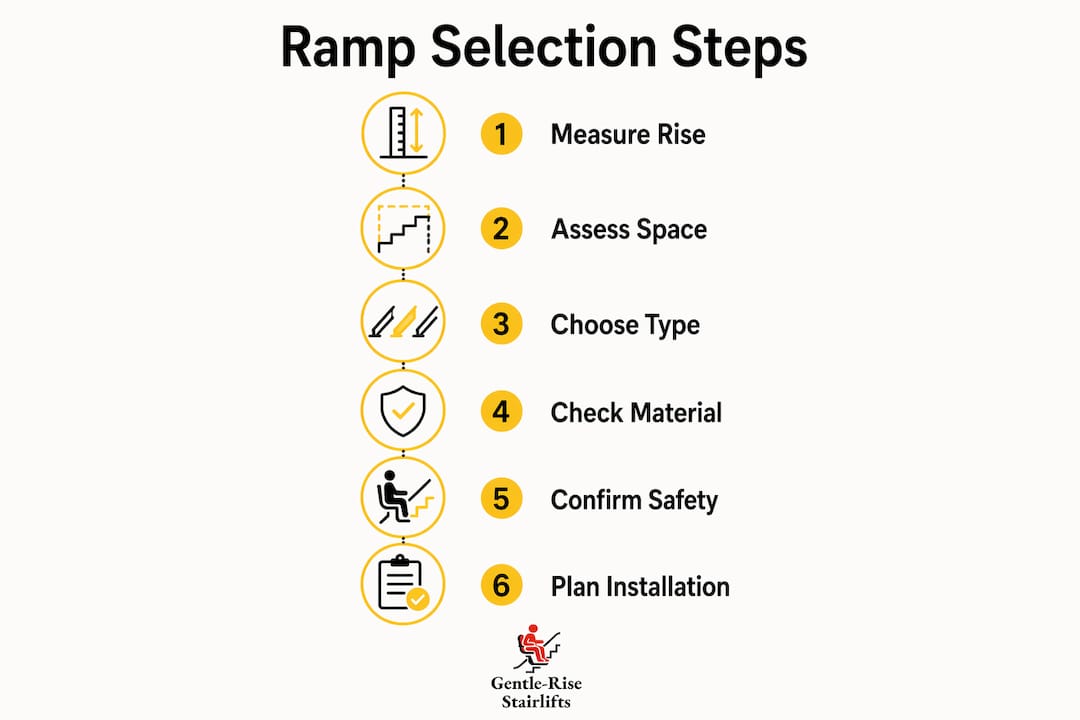
Selecting the right ramp type is as important as getting the measurements right. The best mobility ramp options for your situation depend on how permanent the need is, how much vertical rise you are dealing with, and where the ramp will be installed.
Portable ramps fold or roll up for transport and storage. They suit temporary needs, travel, or access at a single low step. However, portable ramps are less suitable for heavy daily use or rises above 6 to 8 inches, where a steeper angle becomes unsafe and the ramp itself may shift under load.
Modular aluminium ramps are assembled from interlocking sections and can be configured to fit almost any space. They are the preferred choice for permanent home installations because they can be extended, reconfigured, or relocated if circumstances change. They also meet most UK accessibility guidelines without modification.
Threshold ramps address minor elevation changes of 1 to 4 inches, such as a raised door threshold or a small lip between rooms. Rubber and aluminium versions are both widely available, and rubber threshold ramps are particularly useful indoors where noise and floor protection matter.
The table below compares the four main ramp types across the factors that matter most when selecting mobility ramps:
| Ramp type | Best use case | Material | Key limitation |
|---|---|---|---|
| Portable folding ramp | Travel, temporary access, low steps | Aluminium | Not suited to steep or high-traffic use |
| Modular aluminium ramp | Permanent home installation | Aluminium | Higher upfront cost, requires installation |
| Threshold ramp | Door lips, minor level changes | Rubber or aluminium | Limited to rises under 4 inches |
| Wooden ramp | Custom builds, aesthetic preference | Treated timber | Higher maintenance, weather-sensitive |
On the question of material, aluminium is the gold standard for residential ramps. It is lightweight, rust-resistant, and requires minimal maintenance over its lifespan. Wood can be built to any specification but demands regular sealing and inspection, particularly in the UK's wet climate. Steel is durable but heavier and prone to corrosion without protective coating. For most home users, aluminium modular or portable ramps offer the best long-term value.
What safety and regulatory standards apply to UK mobility ramps?
Safety standards for mobility ramps in the UK are not optional guidelines. They are the baseline below which a ramp becomes a hazard rather than an aid. Understanding them protects both the user and, in the case of landlords or councils, the property owner from legal exposure.
The core standards to know are:
- Slope ratio: The recommended residential slope is 1:12, meaning one inch of rise for every 12 inches of ramp length. Steeper ratios such as 1:8 or 1:6 are only acceptable for very short ramps and should be used with caution. For powered scooters and heavier chairs, a gentler 1:16 slope is preferable.
- Minimum width: The minimum clear width is 36 inches for safe single-user access. Where space allows, sizing up to 48 inches provides a meaningful safety margin and accommodates a wider range of devices.
- Weight capacity: The ramp must comfortably exceed the combined weight of the user and device. A minimum 800-pound rating covers most scenarios, including heavy power chairs and bariatric users.
- Non-slip surfaces: Non-slip surfaces and edge protection are non-negotiable, particularly in outdoor settings exposed to rain, frost, or leaf fall. Raised side guards prevent wheels from slipping off the edge, which is especially important for users with limited grip strength.
- Handrails: For ramps longer than 2 metres, handrails on both sides are strongly recommended. They provide support for ambulant users and act as a guide for wheelchair users navigating independently.
- Landings: Any ramp with a change of direction requires a flat landing of at least 1,500mm by 1,500mm to allow safe manoeuvring.
Poor ramp design is not just uncomfortable. A council in the UK was required to remove a wheelchair ramp entirely after it was found to present a significant risk of injury due to inadequate turning space and poor placement. The cost of removal and replacement far exceeded the cost of a proper assessment at the outset.
Future-proofing matters here too. A ramp that meets today's needs may fall short if the user's condition progresses or if a second user with different requirements joins the household. Building to the more generous standard now avoids a second installation later.
How to select, install, and maintain your ramp
With measurements confirmed and ramp type chosen, the practical steps below will take you from purchase to safe, long-term use.
- Confirm your measurements twice. Recheck vertical rise, available run length, and device width before ordering. A ramp that is 6 inches too short creates an unsafe slope; one that is 6 inches too narrow creates a daily hazard.
- Choose the surface finish. Aluminium ramps should have a punched or serrated surface for grip. Avoid smooth finishes for any outdoor installation.
- Position the ramp correctly. The base must sit on a firm, level surface. Gravel, uneven paving, or soft ground will cause the ramp to shift under load. A concrete pad or compacted base is the safest foundation for a permanent installation.
- Weatherproof where needed. For outdoor ramps, check that the material and fixings are rated for outdoor use. Aluminium handles UK weather well, but any steel fixings should be stainless or galvanised.
- Inspect regularly. Check non-slip surfaces monthly for wear. Surface degradation is gradual and easy to miss until it becomes dangerous. Replace grip tape or anti-slip inserts as soon as wear is visible.
- Check the warranty. Reputable ramp manufacturers offer warranties of at least two to five years. Confirm what is covered before purchasing, particularly for modular systems where individual sections may need replacing.
Pro Tip: Do not assume a ramp sold as "standard" will fit your doorway. Measure the clear opening width of the door as well as the ramp. A 36-inch ramp positioned in a 34-inch doorway creates an obstruction, not an access solution. For broader home mobility planning, consider how the ramp integrates with other adaptations such as grab rails, widened doorways, and level thresholds.
Common mistakes to avoid include using a ramp that is too short (creating a slope steeper than 1:12), failing to secure portable ramps at both ends, and neglecting to account for the door swing when positioning the ramp at an entrance. A door that opens outward over the top of a ramp is a serious hazard that is easy to miss during planning.
Key takeaways
Choosing the right mobility ramp requires accurate vertical rise measurement, correct width clearance, appropriate material selection, and compliance with UK slope and safety standards from the outset.
| Point | Details |
|---|---|
| Measure vertical rise precisely | Count steps only as a guide; always measure actual rise in inches for correct ramp length. |
| Allow 4 inches of width clearance | Add at least 4 inches beyond device width on each side to accommodate footrests and movement. |
| Use the 1:12 slope standard | One inch of rise per 12 inches of ramp length is the safe residential benchmark. |
| Choose aluminium for longevity | Aluminium is rust-resistant, lightweight, and low maintenance, making it the best material for UK conditions. |
| Plan for future needs | Size up on width and capacity now to avoid a costly replacement if mobility needs change. |
What I have learned from watching people get ramps wrong
Most ramp problems I have seen come down to one thing: the ramp was chosen to fit the budget or the available space rather than the actual user. A ramp that is technically installed but forces a caregiver to push hard uphill, or leaves a scooter user with no room to straighten up at the top, is not a solution. It is a daily frustration that erodes confidence and independence over time.
The detail that surprises most people is how much weather affects usability. A ramp that works perfectly in July can become genuinely dangerous in November if the surface has no grip and there is no edge protection. I would always recommend testing any outdoor ramp in wet conditions before relying on it daily.
The other thing worth saying plainly: get a professional assessment if the installation is anything other than a simple portable ramp on a single step. The cost of a survey is small compared to the cost of removing and replacing a ramp that was installed incorrectly. For anyone thinking about age-friendly home modifications more broadly, a ramp is rarely the only change needed, and it makes sense to plan all adaptations together rather than piecemeal.
— lee
How Gentlerise Stairlifts can support your accessibility planning
If you are thinking beyond a single ramp and considering how to make your home genuinely accessible for the long term, Gentlerise Stairlifts offers free home surveys across the UK to help you plan the right combination of solutions. Whether you need a stairlift, a ramp, or guidance on how different adaptations work together, the team brings practical experience to every assessment.

Gentlerise Stairlifts specialises in straight, curved, and reconditioned stairlifts starting from £795, with rental options available for short-term needs. The Protect+ maintenance programme covers ongoing safety checks so your equipment stays reliable. To explore the full range of mobility and accessibility solutions or to book a free home survey, visit the Gentlerise Stairlifts website and take the first step towards safer, more independent living at home.
FAQ
What slope ratio is recommended for a home mobility ramp?
The standard residential slope is 1:12, meaning one inch of vertical rise for every 12 inches of ramp length. Steeper ratios such as 1:8 are only suitable for very short ramps and should be used with caution.
How wide should a mobility ramp be for a wheelchair?
The minimum safe clear width is 36 inches, though 48 inches is preferable where space allows. Ramp width must also provide at least 4 inches of clearance beyond the width of the mobility device on each side.
What is the best material for an outdoor mobility ramp in the UK?
Aluminium is the preferred material for outdoor residential ramps in the UK. It is lightweight, rust-resistant, and requires minimal maintenance, making it well suited to the UK's wet climate.
Are portable ramps suitable for everyday use?
Portable ramps work well for occasional or travel use but are not recommended for heavy daily traffic or rises above 6 to 8 inches. For regular daily use, a modular or permanently installed ramp is the safer and more durable choice.
Do I need a professional to install a mobility ramp?
For simple portable ramps on a single low step, self-installation is usually straightforward. For permanent or modular ramp installations, a professional survey is strongly recommended to confirm slope, clearance, and landing dimensions are correct and safe.