
TL;DR:
- Environmental assessment for stairlifts evaluates both user abilities and home conditions to ensure safe installation. It involves clinical and technical evaluations to match the right stairlift model and meet safety standards, preventing costly mistakes. Proper sequencing of assessments and attention to environmental factors, such as cold weather and sustainability, are essential for safety, compliance, and user acceptance.
Environmental assessment for stairlifts is the combined process of evaluating both a person's physical abilities and their home environment to ensure safe, effective, and sustainable stairlift installation. Known in professional practice as a stairlift suitability assessment, it brings together clinical and technical expertise to match the right equipment to the right person in the right space. The role of environmental assessment for stairlifts goes well beyond measuring a staircase. It determines whether a stairlift is appropriate at all, which model fits the space, and whether the installation meets safety and compliance standards. For homeowners and mobility service providers alike, understanding this process is the difference between a successful installation and a costly mistake.
What is the role of environmental assessment for stairlifts?
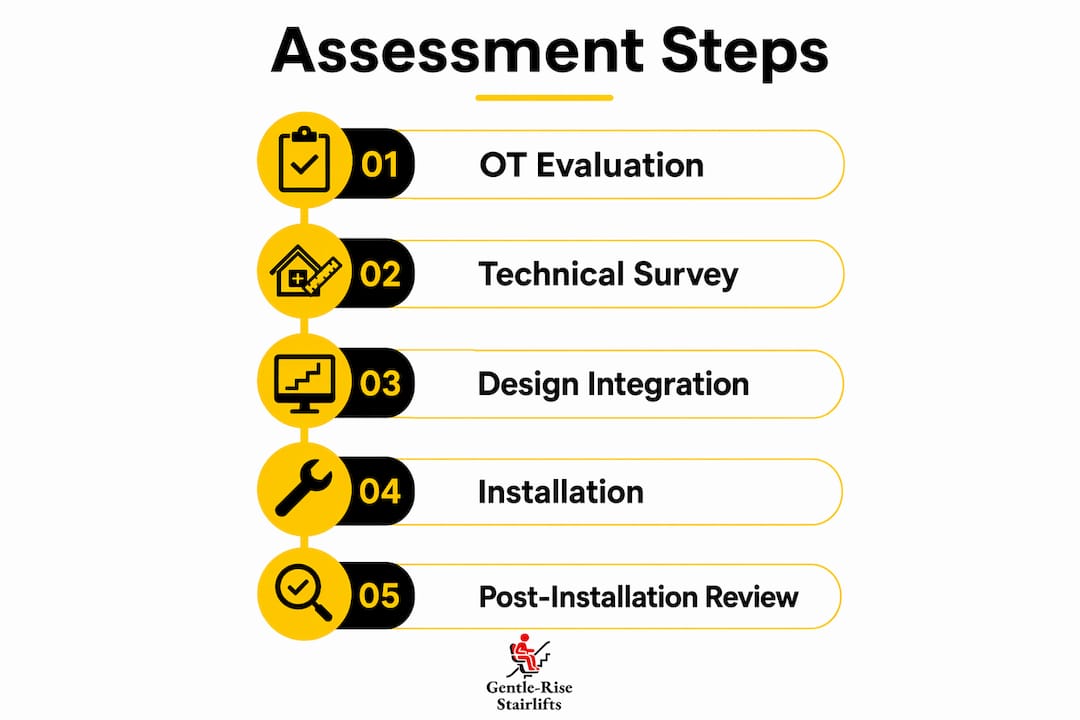
Environmental assessment for stairlifts is a dual-phase evaluation process combining a clinical review of the user and a technical survey of the home. Neither phase alone is sufficient. The clinical phase identifies whether a stairlift is the right solution for the person. The technical phase confirms whether the home can accommodate it safely.
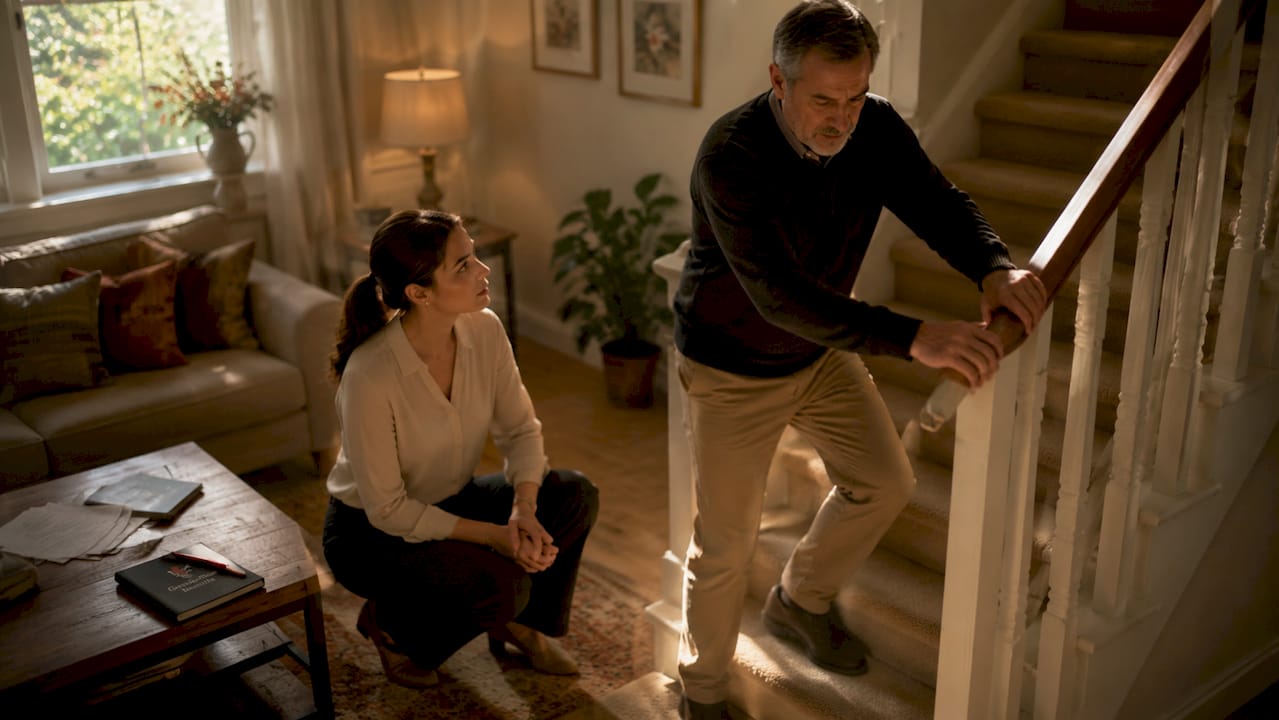
The clinical evaluation is carried out by an Occupational Therapist (OT). The OT assesses the person's balance, mobility, cognition, and ability to transfer on and off the stairlift seat. This is not a formality. A person with significant cognitive decline, for example, may be unable to operate a stairlift safely regardless of how well it fits the staircase.
The technical survey follows the OT assessment. A stairlift dealer measures the staircase geometry, checks power access, and identifies any structural constraints. Proper assessment sequencing matters here. Completing the technical survey before the OT assessment risks selecting equipment that fits the home but not the user. That sequence error leads to failed installations, safety incidents, and wasted expenditure.
Pro Tip: Always request the OT assessment before booking a technical survey. The clinical findings should guide the technical brief, not the other way around.
How does environmental assessment influence stairlift design and sustainability?
Sustainability in stairlift design has become a measurable priority in 2026, not a marketing afterthought. The environmental impact of stairlifts is shaped significantly by material choice, energy consumption, and product longevity.
Key sustainability factors assessed during the environmental review include:
- Aluminium construction: Recycled aluminium requires only 5% of the energy needed to produce new aluminium. Stairlift rails and frames made from recycled aluminium carry a substantially lower lifecycle carbon footprint.
- Hydro energy in production: Aluminium extrusion uses up to 70% hydro energy, which further reduces lifecycle emissions compared to steel or plastic alternatives.
- Energy-efficient motors: Modern stairlift motors draw minimal power during operation, making daily use cost-effective and environmentally considerate.
- Battery charging systems: Most stairlifts charge continuously when parked at a landing, avoiding the energy waste of scheduled charging cycles.
Design integration is equally significant. Modern stairlift design now prioritises compact profiles, sculpted ergonomic seats, subtle lighting, and smooth audio feedback. Stannah, recognised with a Red Dot award for its design-led approach, demonstrates how restraint in aesthetics reduces the visual stigma associated with mobility aids. That matters because user acceptance directly affects whether the equipment gets used at all.
| Design factor | Environmental or user benefit |
|---|---|
| Recycled aluminium rail | Lower lifecycle carbon emissions |
| Energy-efficient motor | Reduced daily electricity consumption |
| Compact profile | Reduced material use; better home integration |
| Ergonomic seat design | Improved user confidence and acceptance |
Stairlifts also carry an indirect environmental advantage over the alternatives. Home relocation or major structural modifications, such as installing a through-floor lift, consume far greater resources. A well-assessed stairlift installation is often the lower-impact choice.
Pro Tip: Ask your stairlift provider whether the rail and chassis are made from recycled aluminium. Eco-friendly stairlift options are increasingly available without a price premium.
What practical factors and hazards are evaluated during the assessment?
The technical survey covers every physical characteristic of the staircase and its surroundings. These are not box-ticking exercises. Each factor directly affects whether the installation is safe and whether the stairlift will function reliably over time.
Stairlift assessment procedures typically examine:
- Staircase width: Staircases under 700mm require specialist compact solutions. Standard models will not fit safely, and forcing them creates clearance hazards.
- Staircase pitch and geometry: Curved staircases require bespoke rail fabrication. The pitch angle affects seat positioning and the comfort of the ride.
- Landing space: Both the top and bottom landings must provide sufficient room for the user to mount and dismount safely. Tight landings are a common cause of post-installation falls.
- Lighting conditions: Poor lighting near landings increases trip hazard risk. The assessment identifies whether additional lighting is needed before installation.
- Obstacles and trip hazards: Loose carpeting, door swings, and storage items near the staircase are flagged during the survey. These must be resolved before the stairlift is fitted.
- Transfer zones: Safe transfer zones at the top and bottom of the staircase are critical. The OT and installer must agree on where the user will stand, pivot, and sit during each journey.
- Outdoor and unheated spaces: For outdoor stairlifts or units installed in cold porches or garages, temperature effects on battery performance must be assessed separately.
Falls risk is multifactorial, involving personal capability, the physical environment, and daily routine. A stairlift addresses the physical effort barrier most effectively when the environment has been properly assessed and prepared. Skipping any element of this checklist leaves risk on the table.
Battery performance deserves particular attention in cold environments. Battery capacity can drop by 40% at 0°F, which is relevant for any installation in an unheated space. That drop affects how many trips the stairlift can complete before needing to recharge. The assessment must account for this to avoid the stairlift becoming unreliable in winter.
How do environmental assessments support compliance, funding, and user safety?
Environmental assessments are the primary mechanism for securing funding and demonstrating regulatory compliance. Without documented clinical and technical evidence, funding applications fail and installations may not meet safety standards.
- Documenting functional need: The OT assessment records the person's reduced mobility, falls history, and safety concerns. Funders typically require clinical evidence of functional need before approving grants or equipment funding. In the UK, this includes local authority Disabled Facilities Grants and charitable funding bodies.
- Strengthening grant applications: A well-documented OT report transforms a funding application from a request into a clinical case. It specifies the diagnosis, the functional limitations, and the risk of harm without the equipment.
- Confirming user capability: The assessment confirms the person can operate the stairlift safely and transfer on and off without assistance. If they cannot, the assessment redirects the solution towards a more appropriate option, such as a through-floor lift.
- Meeting safety standards: Technical surveys confirm the installation meets UK safety requirements, including clearance distances and electrical supply standards. Installations that skip this step risk non-compliance.
- Supporting service planning: For mobility service providers, the assessment documentation informs aftercare planning, maintenance scheduling, and the Protect+ type maintenance programmes that cover ongoing safety checks.
| Assessment phase | Compliance and funding benefit |
|---|---|
| OT clinical evaluation | Provides clinical evidence for grant applications |
| Technical survey | Confirms installation meets safety and clearance standards |
| Combined documentation | Supports local authority and charitable funding decisions |
| Ongoing review | Informs maintenance planning and equipment suitability over time |
The importance of environmental review for stairlifts extends beyond the installation day. As the user's condition changes, the original assessment provides a baseline for reviewing whether the stairlift remains appropriate or whether additional adaptations are needed.
Key takeaways
A thorough environmental assessment is the single most important step in ensuring a stairlift is safe, suitable, and compliant with funding and regulatory requirements.
| Point | Details |
|---|---|
| Follow the correct sequence | Complete the OT clinical assessment before the technical survey to avoid unsuitable equipment choices. |
| Account for battery performance | Cold or unheated installation environments can reduce battery capacity significantly, affecting reliability. |
| Use sustainable materials | Recycled aluminium and energy-efficient motors reduce the environmental impact of stairlifts over their lifecycle. |
| Document everything for funding | Clinical evidence from the OT assessment is required by most UK funders, including Disabled Facilities Grant bodies. |
| Address hazards before installation | Lighting, trip hazards, and transfer zones must be resolved prior to fitting to reduce post-installation falls risk. |
Why the assessment sequence matters more than most people realise
The most common mistake I see in stairlift planning is skipping straight to the technical survey. A dealer visits, measures the staircase, recommends a model, and the homeowner buys it. The OT assessment never happens. The stairlift fits the stairs perfectly and fails the person completely.
This is not a rare edge case. Many homeowners skip the proper sequence of OT assessment before technical survey, and the consequences range from equipment that goes unused to genuine safety incidents. The clinical evaluation is not a bureaucratic hurdle. It is the step that determines whether a stairlift is the right answer at all.
Battery performance in cold environments is another factor that gets overlooked far too often. A stairlift installed in an unheated porch or garage will behave differently in january than it does in july. Planning for that from the outset, rather than discovering it when the lift stops mid-staircase in winter, is what separates a good assessment from a poor one.
The shift towards human-centred stairlift design is genuinely encouraging. When a stairlift looks and feels like a considered piece of furniture rather than a clinical appliance, people use it. And a stairlift that gets used is the only kind that actually reduces falls risk. For homeowners and mobility service providers, I would say this: prioritise the combined clinical and technical assessment every time, and treat the design conversation as part of the safety conversation, not separate from it.
— lee
Gentlerise Stairlifts: expert assessments for every home
Gentlerise Stairlifts provides in-home stairlift assessments across the UK, combining technical surveys with guidance on clinical evaluation to ensure every installation is safe, suitable, and compliant. The team works with homeowners and mobility service providers to identify the right solution, whether that is a straight stairlift from £795, a curved model, or a reconditioned unit for shorter-term needs.

Gentlerise Stairlifts supports the full process, from the initial free home survey through to aftercare under the Protect+ maintenance programme. Every assessment addresses staircase geometry, environmental hazards, and accessibility for independence to give you confidence that the installation will work safely for years to come. Contact Gentlerise Stairlifts to book your free home survey today.
FAQ
What does an environmental assessment for a stairlift involve?
An environmental assessment for a stairlift combines an Occupational Therapist's clinical evaluation of the user's physical abilities with a technical survey of the staircase and surrounding space. Both phases are needed to confirm the stairlift is safe and suitable.
Why should the OT assessment happen before the technical survey?
Completing the OT assessment first ensures the equipment is chosen to match the user's needs, not just the staircase dimensions. Reversing the sequence risks selecting a stairlift that fits the home but cannot be used safely by the person.
How does cold weather affect a stairlift installation?
Battery capacity can drop by 40% in very cold conditions, which reduces the number of trips the stairlift can complete before recharging. Installations in unheated spaces such as garages or porches require specific planning during the assessment stage.
Can an environmental assessment help secure funding for a stairlift?
Clinical documentation from an OT assessment is typically required by UK funders, including local authority Disabled Facilities Grant bodies. The assessment records functional need and falls risk, which strengthens the funding application.
Are there eco-friendly stairlift options available?
Stairlifts made with recycled aluminium rails and energy-efficient motors carry a lower environmental footprint. Recycled aluminium requires only 5% of the energy needed to produce new aluminium, making it a meaningful sustainability choice.