
TL;DR:
- The emergency mobility aid process provides urgent access to equipment and assessments during sudden safety risks. Prompt action and multiple sourcing avenues, including voluntary schemes and private hire, can prevent hospital readmissions and long-term care needs. Early requests, clear communication, and thorough documentation maximize the chances of timely support during a mobility crisis.
The emergency mobility aid process is the formal and informal set of steps that enables people with sudden or worsening mobility challenges to access equipment, assessments, and support without delay. When a fall, hospital discharge, or rapid decline in health creates an immediate safety risk, knowing the correct route matters more than almost anything else. Local councils, the NHS, and voluntary organisations such as the British Red Cross each play a distinct role. Understanding which door to knock on first can mean the difference between a safe return home and an avoidable readmission.
What qualifies as an emergency need for mobility aids?
The threshold for triggering the emergency mobility aid process is deliberately low. Under the Care Act 2014, any person with an appearance of need has a legal right to a free care needs assessment, typically completed within 4–6 weeks but fast-tracked when urgency is clear. You do not need a formal diagnosis or a GP referral to request one.
Urgent triggers recognised by local authorities include:
- Hospital discharge where returning home without equipment creates an immediate safety risk
- Recent falls or near misses that indicate a person cannot manage stairs or daily movement safely
- Sudden deterioration in a condition that previously allowed independent mobility
- Carer breakdown, where the person who normally provides support is no longer available
- Post-surgical recovery, particularly after hip or knee replacement surgery
Early requests help avoid crisis escalation and emergency readmissions. The 'appearance of need' standard exists precisely so that people do not have to wait until a situation becomes dangerous before asking for help.
Pro Tip: If you are unsure whether your situation qualifies, request the assessment anyway. Local authorities cannot legally refuse to assess someone who presents with an apparent need.
How to request and expedite a care needs assessment
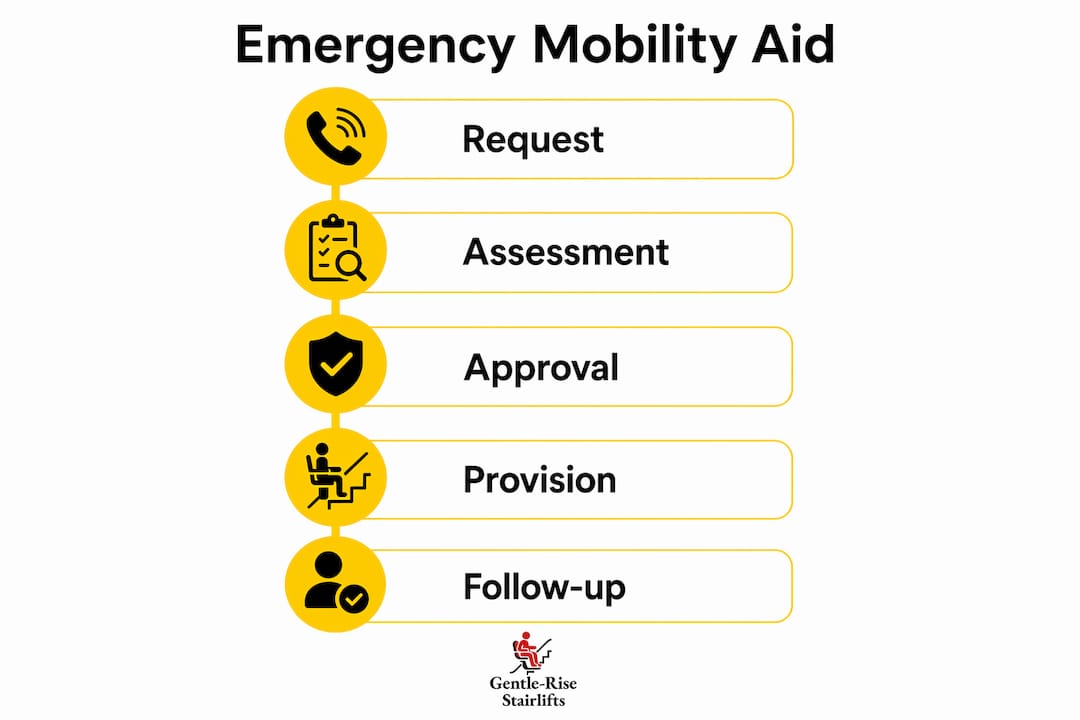
Speed in the assessment process depends almost entirely on how you communicate your request. Contact your local council's adult social care department by phone, online portal, or, outside office hours, through their emergency duty line. All three routes are valid, but the phone call is the fastest for conveying urgency.
Follow these steps to move through the process as quickly as possible:
- State the word 'urgent' immediately. Using the keyword 'urgent' in your request, especially alongside hospital discharge context, prompts local councils to shift the case into a priority pathway that can move within 24–48 hours rather than weeks.
- Describe the specific safety risk. Say clearly why waiting is dangerous: "I cannot use the stairs safely," or "I was discharged from hospital yesterday and have no equipment at home."
- Provide discharge paperwork if available. A hospital discharge summary or letter from a ward nurse strengthens the case for priority treatment.
- Ask for the assessment to be recorded as urgent. Request confirmation in writing or by email so there is a paper trail.
- Follow up within 24 hours if you hear nothing. Councils are under statutory duty to respond; chasing is not rude, it is necessary.
During the assessment itself, a social worker or occupational therapist visits your home to observe how you manage daily tasks. They gather information about your living environment, your support network, and the specific activities you struggle with. The outcome determines what equipment or adaptations the council will fund.
If delays occur despite stating urgency, contact your local council's complaints team or ask a hospital discharge coordinator to intervene on your behalf. Discharge coordinators carry significant influence with social care teams.
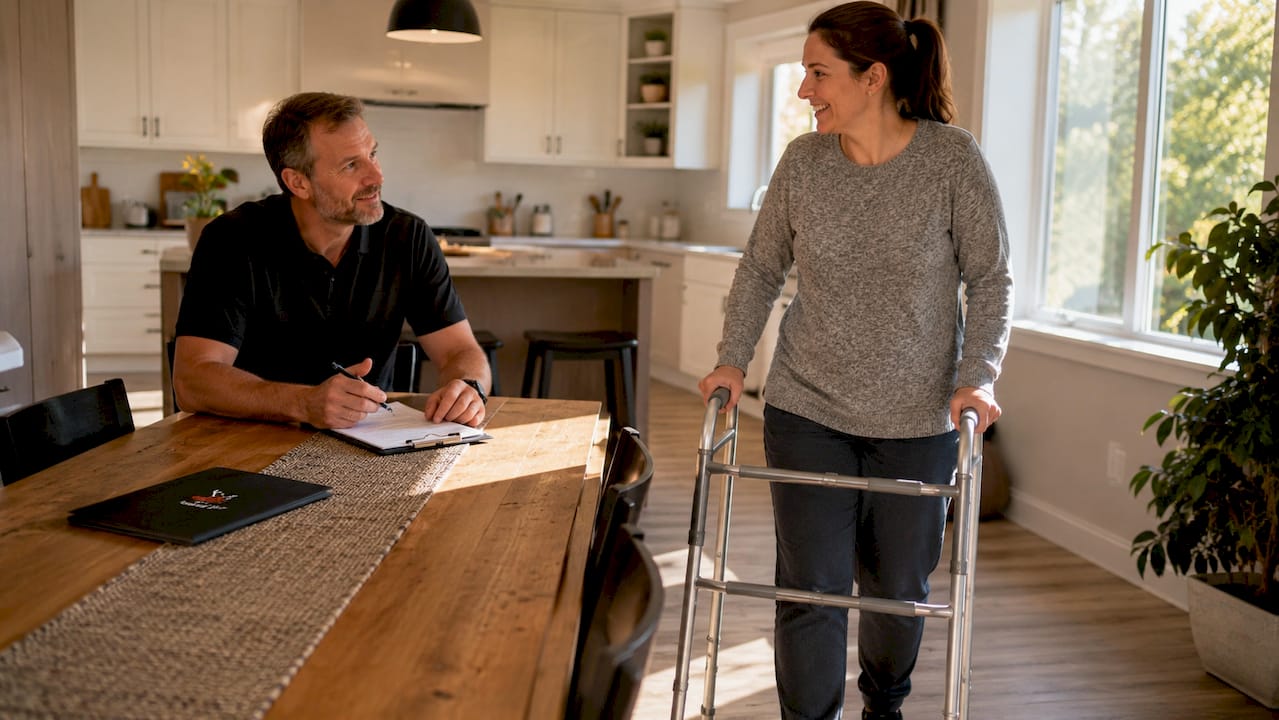
Pro Tip: Write down three specific things you cannot do safely before the assessment. Concrete examples carry far more weight than general descriptions of difficulty.
What interim mobility aids are available while you wait?
Statutory provision takes time even on a priority pathway. Interim solutions fill the gap and should be pursued at the same time as your formal assessment, not after it.
The British Red Cross loan scheme offers short-term loans of mobility aids, typically for eight-week periods, often on a donation basis. Equipment available through the scheme includes manual wheelchairs, crutches, and basic walking frames. Delivery is available for those who cannot visit a loan outlet in person.
For heavier or more complex equipment, private hire is the only route that guarantees same or next-day delivery. Private hire companies provide hospital beds, hoists, and powered wheelchairs with minimum hire periods of around two weeks. Statutory provision focuses on longer-term clinical necessity, so immediate crisis coverage for this category of equipment almost always requires a commercial rental solution.
Key differences between your main interim options:
- British Red Cross loans: free or donation-based, eight-week maximum, suited to standard aids like wheelchairs and crutches
- Private hire: same or next-day delivery available, cost applies, suited to hospital beds, hoists, and powered chairs
- Donation-based community schemes: variable availability, no cost, limited to basic equipment
Accessing multiple channels simultaneously is the approach professionals recommend for urgent cases. Waiting for one route to confirm before trying another wastes time you may not have.
Community equipment is fundamental clinical infrastructure. Efficient provision prevents hospital delays and avoidable long-term care admissions. When access to the right aid is delayed, the consequences extend well beyond the individual. Improved equipment access reduces system bottlenecks by maintaining independence and preventing falls across the wider health and social care system.
How to balance immediate needs with longer-term planning
Short-term mobility solutions are a bridge, not a destination. Once the immediate crisis is managed, longer-term planning becomes the priority.
Purchasing basic safety aids privately before a formal NHS assessment is a pragmatic safety strategy. Delaying acquisition increases the risk of falls and injuries, which raises clinical urgency and consequences. A grab rail, a raised toilet seat, or a basic walking frame bought privately costs far less than a fall-related hospital admission.
Key considerations for the transition from temporary to permanent aid:
- Request a follow-up assessment once your immediate situation stabilises. Needs change, and the equipment provided in a crisis may not suit long-term requirements.
- Ask about personal budgets. Under the Care Act 2014, eligible people can receive a direct payment to manage their own care and equipment choices rather than accepting council-allocated provision.
- Check funding thresholds. Minor home adaptations costing under £1,000 must be provided free by local authorities if eligibility criteria are met. Larger adaptations may qualify for a Disabled Facilities Grant.
- Avoid waiting too long to request reassessment. Needs that have changed significantly but go unreported leave people using equipment that no longer fits their situation safely.
For home mobility planning that extends beyond basic aids, a stairway adaptation guide can help you understand what structural changes are possible and how to fund them.
Pro Tip: Keep a written record of every piece of equipment you receive, who provided it, and when. This record is invaluable during reassessments and financial assessments.
What safety tips improve emergency mobility aid use?
Using mobility aids correctly during a crisis reduces injury risk significantly. Equipment that is damaged, poorly fitted, or used in an unsuitable environment causes falls rather than preventing them.
Before using any loaned or hired aid, check the following:
- Inspect for visible damage. Look for cracks, loose fittings, or worn rubber tips on frames and crutches before putting weight on them.
- Adjust to your height. Frames and crutches set at the wrong height create poor posture and increase fall risk. A physiotherapist or occupational therapist can advise on correct settings.
- Notify your support network. Tell a family member, neighbour, or carer that you are using new equipment. They can check in and assist if something goes wrong.
- Adapt your home environment. Remove loose rugs, improve lighting, and clear pathways before using a walking frame or wheelchair indoors. Wheelchair-friendly home improvements do not need to be expensive to be effective.
- Keep emergency contacts visible. Write key numbers on paper and place them near your phone. Do not rely solely on a mobile device that may run out of charge.
- Use protective accessories. Gloves reduce hand fatigue when using a manual wheelchair for extended periods. Non-slip footwear reduces fall risk when using a walking frame.
Key takeaways
The emergency mobility aid process works fastest when you state urgency clearly, pursue multiple sourcing routes at the same time, and follow up every request in writing.
| Point | Details |
|---|---|
| State urgency explicitly | Using the word "urgent" with hospital discharge context can reduce assessment waiting times to 24–48 hours. |
| Pursue multiple routes at once | Contact the council, British Red Cross, and private hire providers simultaneously rather than sequentially. |
| Private purchase is valid | Buying basic aids privately before assessment prevents falls and injury during waiting periods. |
| Minor adaptations are free | Local authorities must provide adaptations costing under £1,000 free of charge if eligibility criteria are met. |
| Follow-up assessments matter | Needs change after a crisis; request reassessment once your situation stabilises to ensure equipment still fits. |
Why early action changes everything in a mobility crisis
Having worked alongside people navigating sudden mobility challenges, the pattern I see most often is the same: people wait too long before asking for help. They assume the threshold for requesting an assessment is higher than it is, or they feel reluctant to "bother" the council when they are not certain they qualify. By the time they do ask, the situation has already become a crisis.
The 'appearance of need' standard under the Care Act 2014 exists precisely to prevent this. You do not need a diagnosis, a referral, or a social worker's prior approval. You need to pick up the phone and say the word "urgent." That single act can compress a weeks-long process into 24–48 hours.
What I find most underused is the combination of interim routes. People treat the British Red Cross loan scheme and private hire as fallbacks rather than first steps. Running all three channels at once, statutory assessment, voluntary loan, and private hire or purchase, is not excessive. It is the correct approach when safety is at risk. Understanding your home mobility options before a crisis arrives puts you in a far stronger position when one does.
— lee
Gentlerise Stairlifts: specialist support for urgent home mobility
When a mobility crisis makes the stairs in your home a genuine safety risk, a stairlift is often the most practical long-term solution. Gentlerise Stairlifts provides specialist stairlift installation, rental, and refurbishment across the UK, with prices starting at £795 for straight stairlifts and installation often completed within hours.

Whether you need a short-term rental stairlift while recovering from surgery or a permanent solution to support independent living, Gentlerise Stairlifts offers a free home survey to match the right product to your specific staircase and needs. The Protect+ maintenance programme provides ongoing aftercare so your equipment stays safe and reliable long after installation. Contact Gentlerise Stairlifts to arrange your free consultation and take the first step towards safer home mobility.
FAQ
What is the emergency mobility aid process in the UK?
The emergency mobility aid process is the set of steps used to obtain mobility equipment urgently through local councils, the NHS, voluntary organisations, or private hire. It is triggered by sudden safety risks such as hospital discharge, falls, or rapid health deterioration.
How quickly can I get a care needs assessment in an emergency?
Stating urgency, particularly in the context of hospital discharge or a safety risk, can trigger a priority assessment pathway that moves within 24–48 hours rather than the standard 4–6 weeks.
Can I borrow a wheelchair or mobility aid for free?
The British Red Cross offers short-term equipment loans for up to eight weeks, typically on a donation basis. Availability varies by location, so contact your nearest outlet or request delivery if you cannot travel.
What if I need a hospital bed or hoist urgently at home?
Private hire is the only route that guarantees same or next-day delivery for complex equipment such as hospital beds and hoists. Statutory provision through the NHS or council focuses on longer-term clinical need and cannot reliably meet immediate crisis timescales.
Do I have to pay for mobility aids provided by the council?
Minor home adaptations under £1,000 must be provided free by local authorities if you meet the eligibility criteria under the Care Act 2014. Larger adaptations and equipment may be subject to a financial assessment.